

9 Of The Biggest Scandals In Taco Bell History
If you can't imagine getting through the week without your favorite chalupa, crunchy taco, or double-shell Gordita from Taco Bell, you're not alone. Since it was founded back in the 1960s, Taco Bell has evolved into a cornerstone of the American fast food industry — literally speaking. With more than 8,200 restaurants across the country, this TexMex titan is ubiquitous. But popularity doesn't equal perfection. In fact, there are many changes one of our writers would make if they had the chance, including offering vegan meat and more seafood. But menu changes aside, there are more serious reasons why Taco Bell isn't perfect. This fast food giant has seen some major scandals over the years.
We've taken a trip down Taco Bell memory lane to uncover some of the worst controversies of the fast food chain's past. We won't give too much away before we start, but just a heads up, this list features 50 Cent, more than one concerning outbreak of foodborne disease, and an alarming rodent infestation. If you're halfway through your nachos, you might want to stop eating before you get stuck in.
The following article includes brief mentions of sexual harassment allegations.
Taco Bell's link to the 2026 cyclosporiasis outbreak
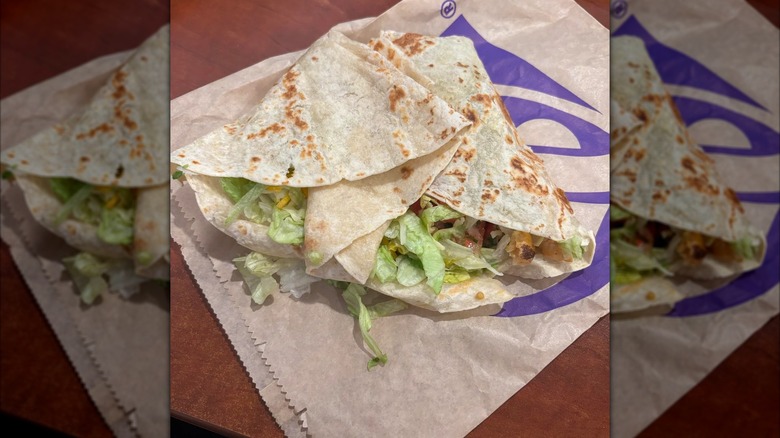
On July 7, 2026, Heather Kebert did what millions of Americans do every single day: She went to Taco Bell. She chowed down on an Avocado Ranch Chicken Stacker and went about her business. Everything was pretty normal — until a few days later. Kebert started to experience stomachaches, fatigue, and diarrhea. It turns out, the Stacker contained more than chicken and avocado; it also contained iceberg lettuce contaminated with the cyclospora parasite, which causes cyclosporiasis. According to court documents obtained by People, in August 2026, Kebert sought compensation for the ordeal, filing a lawsuit against the fast food chain (and the lettuce supplier) for failing to protect her from a serious bout of food poisoning.
Kebert wasn't alone. The 2026 outbreak of cyclospora first came to light in July, and by the time it was declared over in September, thousands of people had reported illnesses after eating iceberg lettuce. While most experienced mild symptoms, nearly 600 people were hospitalized, and two people died. Not all of the contaminated lettuce was eaten at Taco Bell; the produce (which was voluntarily recalled by mid-July) was supplied by Taylor Farms de Mexico in Central Mexico, and it was sent to multiple locations in the U.S., including Walmart stores.
But Taco Bell was, without a doubt, seen as one of the worst offenders. And as a result, it has found itself on the receiving end of multiple lawsuits, including Kebert's. Many claim that, even though Taco Bell didn't actually grow the lettuce, the fast food chain still has a responsibility to ensure its supply chain is safe and parasite-free. At the time of this writing, these legal proceedings remain ongoing.
The false advertising lawsuit
Heather Kebert isn't the only diner to feel majorly let down by Taco Bell. In July 2023, New Yorker Frank Siragusa decided that he, too, would take the fast food giant to court, per documents obtained by Top Class Actions. But Siragusa's complaints had nothing to do with food poisoning. Nope, his problem was that he felt misled by the chain's advertising.
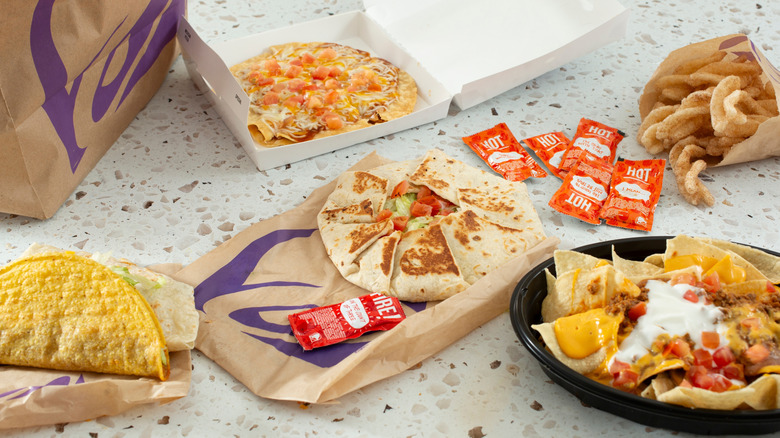
Specifically, Siragusa was of the opinion that many of Taco Bell's popular menu items, like the Mexican Pizza and the Crunchwrap Supreme, were considerably smaller in real life than depicted in the chain's advertising. And as a result, the lawsuit claimed that many customers were being duped into spending their hard-earned cash on food they might not have otherwise ordered. By November 2023, this civil suit was voluntarily dismissed by the plaintiffs. But that hasn't quieted the controversy.
Siragusa might have been unique in taking his gripes to court (he was seeking no less than $5 million in damages), but he definitely isn't alone in feeling let down by Taco Bell's portion sizes. Many customers agree and have argued that the chain's menu items are getting smaller while the prices are getting higher. "Taco Bell has been shrinkflating for over a decade," said one Redditor in r/shrinkflation. "People need to stop going to these places." In fact, shrinkflation is one reason why some fans believe the chain's Crunchwrap Supreme is now overrated.
The lawsuit over Taco Bell's beef content
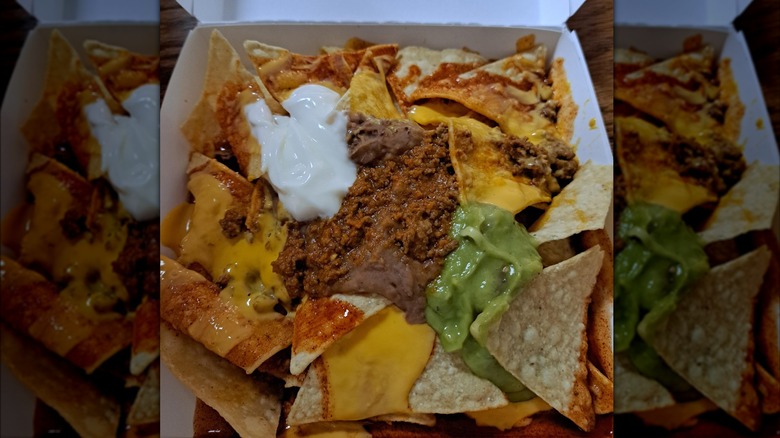
Amanda Obney never wanted money from Taco Bell; she just wanted honesty. Back in January 2011, the California customer filed a lawsuit against the fast food giant for false advertising, per court docs obtained by CBS News. Unlike Frank Siragusa, though, she wasn't annoyed about portion sizes but about the content of menu items — specifically those with ground beef. According to Obney's lawsuit, while Taco Bell's menu lists beef as a taco filling, the meat is also combined with several additives and extenders (think: maltodextrin, oats, water, soy lecithin, etc.). In fact, she claimed it was less than half actual beef. Obney's attorneys said she filed the lawsuit in a bid to encourage the fast food chain to be more transparent with customers about its ingredients.
Taco Bell, though, wasn't on board. It was adamant that Obney and her lawyers had the recipe wrong, that its beef taco filling was actually almost 90% meat, and even threatened to retaliate with its own lawsuit. It appears that Obney eventually backed down, and in April 2011, the lawsuit was withdrawn.
The 50 Cent v. Taco Bell lawsuit
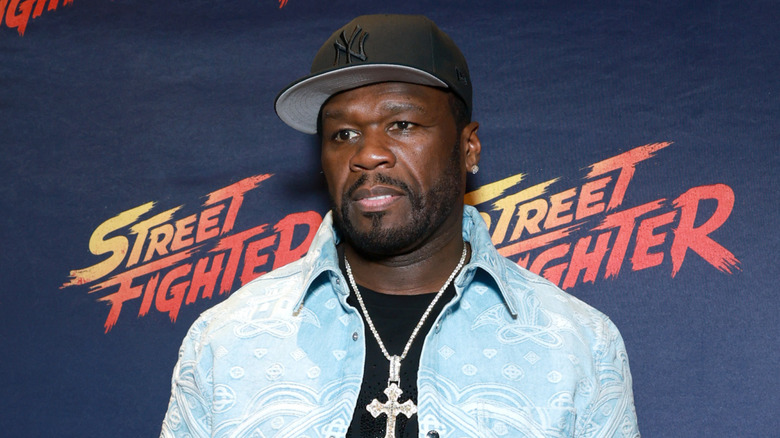
Back in 2008, the marketing team at Taco Bell thought they had come up with a genius idea. They thought they could capitalize on 50 Cent's popularity (who was, quite frankly, huge in the 2000s) and promote Taco Bell at the same time — apparently without going to the effort of asking the rapper's permission. In some of its "79-89-99 Cent Why Pay More?" ad campaigns, the fast food chain started challenging 50 Cent (who was born Curtis Jackson) to change his stage name to 79 Cent, 89 Cent, or 99 Cent, promising to donate $10,000 to charity if he did. We told you: Genius, right? Well, no, not really. At least, Jackson did not think so.
In fact, the rapper was extremely irritated that Taco Bell had attempted to use his name and success for profit without involving him. And what do you do when you're annoyed with Taco Bell? You file a lawsuit, of course. Yep, in one of the biggest chain restaurant lawsuits ever, 50 Cent took Taco Bell to court for $4 million, per court docs obtained by Reuters. If you're wondering what came of the lawsuit, it's a little underwhelming, we're afraid. In 2009, Taco Bell and Jackson settled, but we don't know the terms, because they were not released to the public.
The sexual harassment lawsuit
It seems that Taco Bell has seen a fair amount of lawsuits in its time. In 2025, the U.S. Equal Employment Opportunity Commission (EEOC) also took six Taco Bell franchisees to court over accusations that they did nothing to protect multiple female employees from being sexually harassed by a senior area manager. According to the EEOC, the manager allegedly frequently made inappropriate sexual comments to employees, including teenagers. He also reportedly touched several employees inappropriately and asked an assistant manager for sexual videos. The lawsuit claims that when these incidents were reported, no action was taken. In fact, after one report was made, an assistant manager who made the complaint was apparently fired on the same day.
Unfortunately, sexual harassment appears to be an industry-wide problem, and it has been for some time. Back in 2016, a national survey revealed that 40% of women fast food employees had experienced sexual harassment at work. And since then, multiple fast food giants, including McDonald's, KFC, and Burger King, have all faced sexual harassment lawsuits, alongside Taco Bell.
While the Taco Bell franchisees in question did not admit liability, they agreed to pay a $100,000 total settlement to the employees affected in January 2026. As of this writing, the assistant manager's separate retaliation and harassment lawsuit over her termination remains ongoing.
If you or anyone you know has been a victim of sexual assault, help is available. Visit the Rape, Abuse & Incest National Network website or contact RAINN's National Helpline at 1-800-656-HOPE (4673).
Taco Bell's huge recall over bioengineered corn
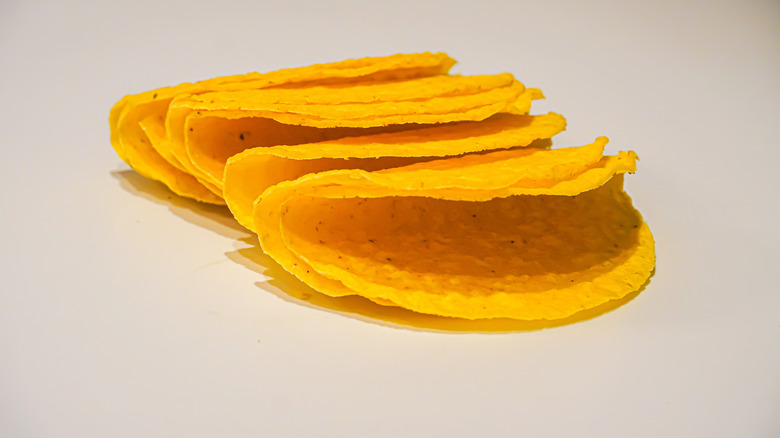
Back in 1996, Taco Bell decided that selling its products in its own restaurants simply wasn't enough. It wanted to reach its customers through grocery stores, too, so it partnered with Kraft to put some of its signature menu items, including sauces and taco shells, on the shelves. But just four years later, the partnership ran into trouble. The problem? Starlink.
It might sound a little like a spaceship, but Starlink is actually a type of corn that has been bioengineered to contain a toxin that kills some of the larvae that feed on corn. It was developed in the late 1990s, but it was approved for animal use only. Yes, animals. Not humans — largely because the added toxin can't be broken down in the human gastrointestinal tract. But in 2000, tests by Friends of the Earth revealed that some of Taco Bell's taco shells contained Starlink. Cue a monumental recall: The shells had to be pulled from around 7,000 stores across the U.S.
Fortunately, nobody became ill from the taco shells, but for some, it raised serious questions over the safety of the food system. In fact, Tricon Global Restaurants (now called Yum! Brands, Inc.), the owner of Taco Bell, reported reduced sales over customer confusion. In 2001, the group banded together with several other food companies in the U.S. to file a lawsuit against multiple corn suppliers, and it received $60 million in compensation.
The E. coli outbreak
Unfortunately, the 2026 cyclosporiasis outbreak wasn't the first time that Taco Bell has been accused of giving people food poisoning. Nope, the company has previous. In 2006, dozens of people fell ill with E. coli after dining at Taco Bell restaurants in the Northeast U.S. The culprit? You guessed it, it was the lettuce. Again. Just like with the cyclosporiasis outbreak, the lawsuits started flooding in. And again, even though Taco Bell didn't grow the lettuce (that was Ready Pac Produce in Philadelphia), it was still on the hook for making people ill with its food. And it's not surprising. E. coli infections are usually mild, but they can be very serious; for some, they can even develop into life-threatening hemolytic uremic syndrome (HUS). In this instance, 53 people needed hospital treatment, and eight people became ill with HUS.
We wish we could tell you that this, together with the 2026 cyclosporiasis incident, was the only incidence of food poisoning at Taco Bell. But in 2000, it was implicated in an outbreak of hepatitis, and in 2010, several people became ill with Salmonella after dining at the chain.
Taco Bell's shell-licking employee
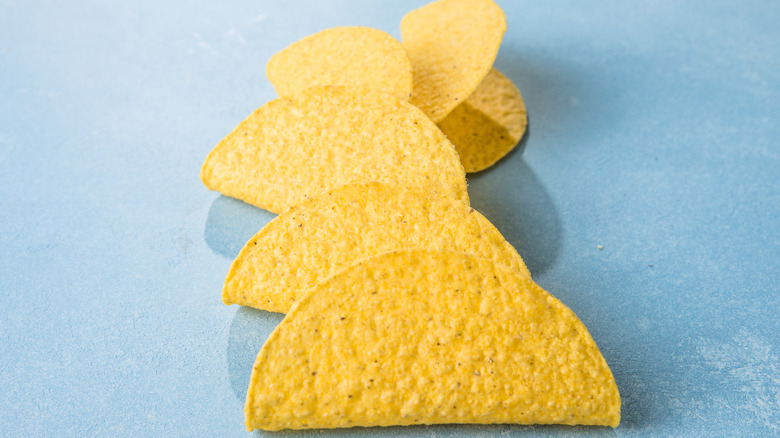
Here's a bit of advice for anyone working with food: If you want to keep your job, don't lick the ingredients. It might seem obvious to most, but apparently not everyone. Back in 2013, a Taco Bell employee was fired after a photo of them licking a stack of taco shells started doing the rounds on social media. Taco Bell attempted to reassure customers that the taco shells were never intended for sale — and were instead tossed in the garbage after being used for training purposes — but still admitted that the image, taken as part of a photo contest for Taco Bell employees, was not okay. It undeniably gave a bad impression about the chain's food hygiene practices to customers, and Taco Bell was quickly embroiled in a PR crisis.
Strangely, this kind of incident has happened a few times in the fast food industry. Also in 2013, KFC fired a worker in Tennessee for licking mashed potatoes. And in May 2026, a video went viral of a McDonald's worker licking fries before serving them to a customer.
The KFC-Taco Bell rat infestation
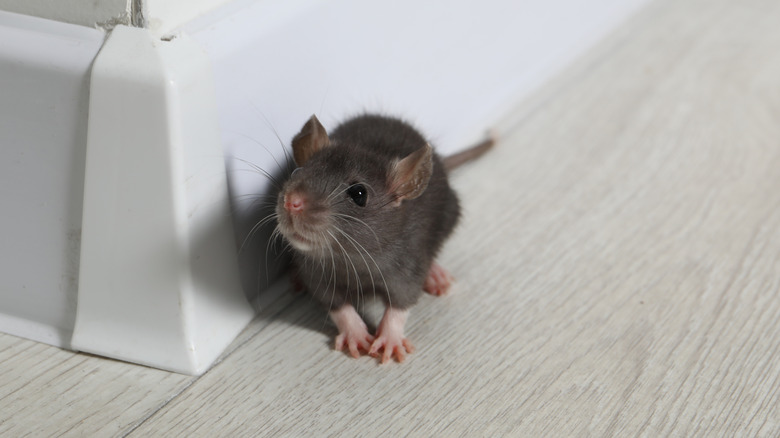
The idea of eating a Crunchwrap with rats running around the table legs isn't pleasant. But the idea of a rat falling from the ceiling above your head while you're eating a Crunchwrap? Well, that's the stuff of some people's nightmares. But it actually happened. In 2007, a KFC-Taco Bell in Greenwich Village, Manhattan remained open despite the fact that several rats had taken over the restaurant. In "Ratatouille," it's cute, but in real life, rats can gnaw through walls, contaminate ingredients, and poop everywhere — not so cute. In fact, it's a very serious health code red flag that New York City's health department admittedly initially failed to take seriously when it inspected the restaurant that February. Fortunately, after multiple inspections, the KFC-Taco Bell hybrid restaurant was finally closed down to the public.
But this wasn't the last of Taco Bell's rat-related problems. In 2023, rumors started circulating that an employee in Colorado had deliberately added rat poison to a disgruntled customer's food. However, the investigators in the Arapahoe County Sheriff's Office's closed the case due to a lack of evidence.