

15 Of The Biggest Chain Restaurant Lawsuits Of All Time
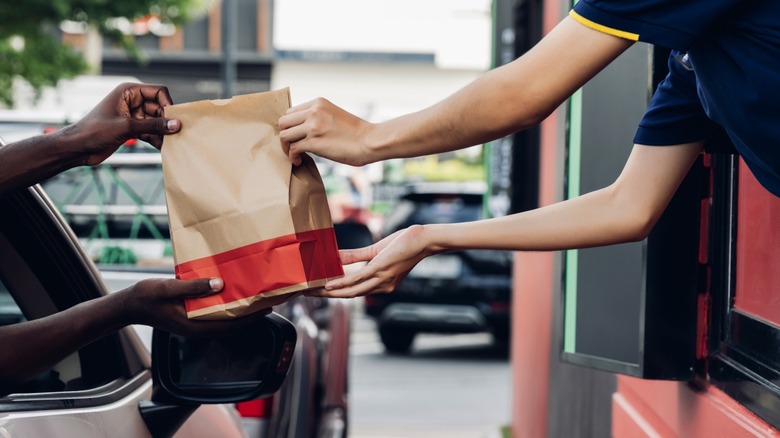
When we can't be bothered to cook, or we're celebrating a special occasion, or we just feel like making an average Tuesday a little more exciting, most of us head to a restaurant. But one thing that can seriously ruin a meal? Getting sick because the food you were served contained foodborne bacteria. Another thing? Suffering third-degree burns because you were served a beverage that was dangerously hot. Slipping on a bathroom floor and ending up with life-changing injuries is another thing guaranteed to leave you with a bad taste in your mouth forever.
As you've probably guessed, the above are just a few of the issues that have led to major, multi-million-dollar lawsuits against restaurant chains in the past. And legal action isn't limited to bad customer experiences. Restaurant chains have also faced class-action lawsuits over issues such as unfair dismissal and a lack of wage transparency. In fact, in one incident, it was because they seriously annoyed 50 Cent. Find out about this and more of the biggest restaurant chain lawsuits of all time below.
Jack in the Box's E.coli outbreak ended up in settlements of more than $50 million
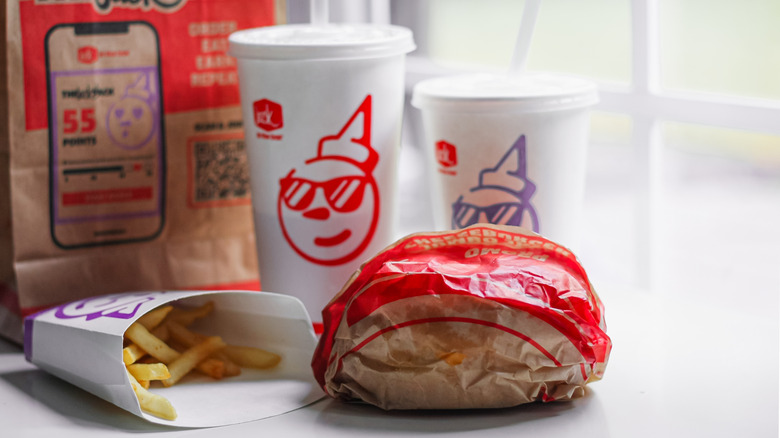
In the early 1990s, Jack in the Box was responsible for one of the biggest scandals involving foodborne bacteria of all time. In 1993, after the Washington State Department of Health launched an investigation into an E.coli outbreak in the area, it was revealed that 73 locations of the fast-food chain had sold contaminated burgers. As a result, more than 700 people fell ill, more than 170 people were admitted to the hospital, and four people died.
The initial source of the E.coli outbreak wasn't actually Jack in the Box's fault. In fact, the source of the bacteria was actually eventually traced back to slaughterhouses run by the Von Corporation of California. But Jack in the Box wasn't off the hook. It turned out that the fast food chain had been knowingly serving undercooked burgers to customers. Why? Well, the higher-ups at the chain simply decided that they tasted better this way.
Needless to say, people were not happy with Jack in the Box, and plenty took legal action against the fast-food chain. A lawyer acting for one nine-year-old girl, who was left in a coma for 42 days after eating the undercooked meat, managed to secure a $15.6 million settlement. The young girl wasn't alone. More than 100 people sued Jack in the Box, and the company ended up having to pay out more than $50 million in settlements.
A McDonald's hot coffee incident cost the chain nearly $3 million
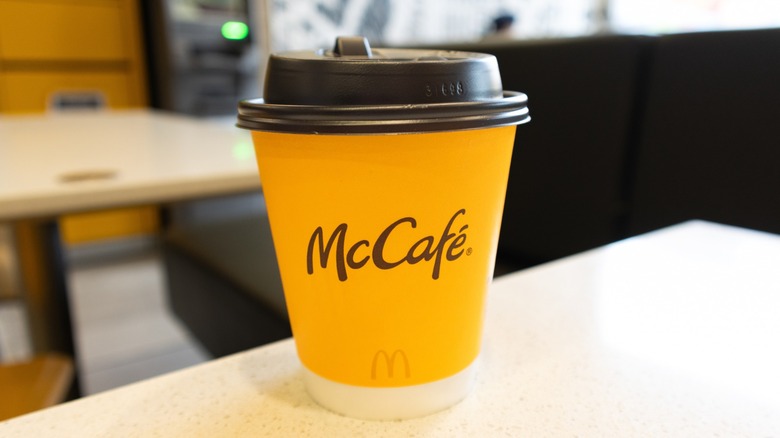
If you have ever accidentally splashed a little hot water on yourself while you're cooking or pouring a drink, you'll know it is not a pleasant experience. Even a little bit of hot liquid can leave you with an uncomfortable and painful superficial burn. If you were to spill an entire cup of boiling hot drink on yourself, you'd probably be in second-degree burn territory, or far worse, third-degree burns. Unfortunately, that's exactly what happened to 79-year-old Stella Liebeck in 1992.
Liebeck had just bought a cup of coffee from McDonald's and was parked in her car to drink it. She started mixing in the cream and sugar, but then tragedy struck: The cup tipped, and boiling hot coffee poured out onto her lap. The incident left her with third-degree burns, and she required a skin graft on her legs. Liebeck proceeded to sue McDonald's for the incident, and she ultimately received nearly $3 million from the fast-food chain.
Liebeck's case isn't unique, and since the 1990s, there have been many similar incidents. In 2025, for example, one Starbucks customer was awarded a substantial $50 million sum after being burned by hot tea served by the chain. Like Liebeck, the person involved had to undergo skin grafts following the incident.
Starbucks was forced to pay a former manager $25 million
The 2025 hot tea incident is far from the only controversy in Starbucks' history, and it's also not the only time the company has had to pay out a monumental sum because of a lawsuit. In 2023, the coffee giant also had to pay one of its former regional managers more than $25 million. This time, it wasn't because of a hot beverage, but because the former employee, named Shannon Phillips, claimed she had been unfairly punished by the chain.
Here's some background: In 2018, two Black men were sitting in a Starbucks in Philadelphia. They were not doing anything wrong, but they weren't ordering anything. In response, a store manager called the police. The men, who had been waiting for a business meeting, were cuffed by police. Rightfully, the men were let go, but the whole incident had been recorded and resulted in national outrage at Starbucks.
Phillips wasn't actually in the Philadelphia store when the incident occurred, but she was the regional operations manager in Philadelphia at the time. When she refused to place another district manager on administrative leave over the incident — whom she claimed was uninvolved — she was fired. After filing a lawsuit against Starbucks, Phillips won her case and received a payout of more than $25 million from the coffee company.
McDonald's was sued for $900 million over broken ice cream machines
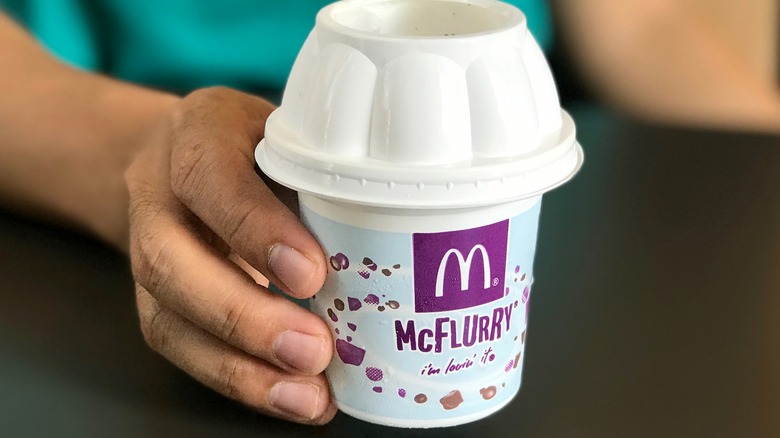
The grass is green, the sky is blue, and McDonald's ice cream machines are always broken. At this point, it's just a fact of life. In fact, there is even a website, called McBroken, that monitors the number of McDonald's ice cream machines that are broken in the U.S. at any one time. In case you were wondering, at the time of this writing, 12% of them are not in operation.
Frustrated with the problem, entrepreneurs Melissa Nelson and Jeremy O'Sullivan created a solution. Through their company Kytch, they invented a small device to sit inside the machines, diagnose the problem, and help franchise owners troubleshoot. But in 2020, McDonald's told all of its restaurants not to use the device, saying it wasn't safe.
Nelson and O'Sullivan have since claimed that McDonald's lied to franchisees, perhaps because of another deal they had done with a longtime partner that involved a similar device. And they backed up this claim with a lawsuit. In fact, in 2022, they attempted to sue McDonald's for a whopping $900 million. According to the founders, the huge sum was intended to compensate them for the damage that the fast food giant had done to their reputations and business.
Burger King had to pay nearly $8 million because of a slippery floor
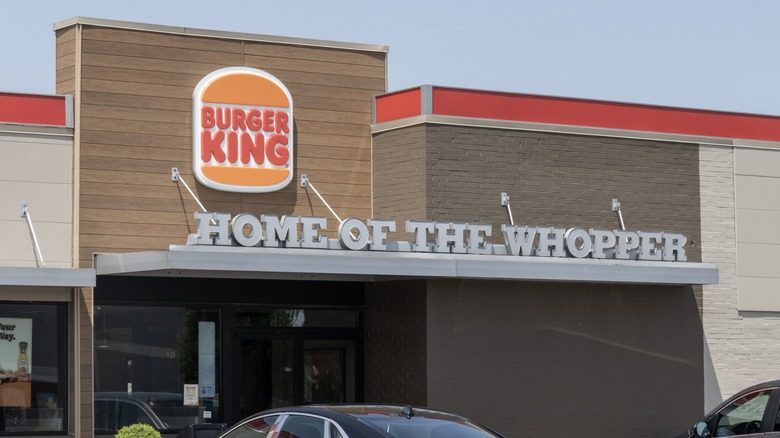
Hot beverage spills aren't the only accidents restaurant chains have had to pay out for. In 2019, a man named Richard Tulecki fell in a bathroom in a Burger King in Hollywood, Florida, because of a slippery floor. He ended up needing surgery for his injuries, and he still lives with complications today. Fortunately, his personal injury lawyers managed to secure him a major payout from the fast food chain. In fact, in one of the biggest slip and fall payouts in Florida in decades, they secured him nearly $8 million in compensation.
Burger King has faced a few lawsuits over the years. In 2022, just a year before it was ordered to pay Tulecki millions for his injuries sustained in 2019, Burger King faced another lawsuit. Only this time, it was because of the size of its Whoppers. Yes, you read that correctly. Nineteen people sued the fast-food chain for financial damages because they claimed misleading advertising portrayed the burgers as bigger than they are in real life. Burger King tried to have the case thrown out, but in May 2025, a federal judge allowed the lawsuit to proceed.
50 Cent sued Taco Bell for $4 million
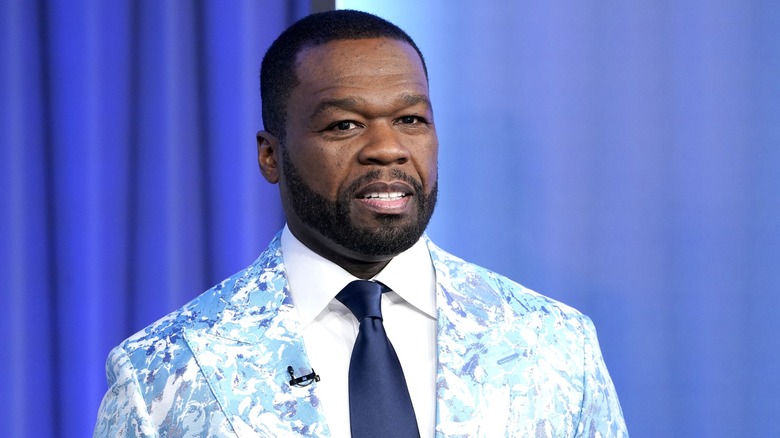
It's safe to say that 50 Cent probably still isn't a big fan of Taco Bell. In 2008, the rapper, whose real name is Curtis Jackson, sued the TexMex chain for $4 million after it used his name in an advertising campaign without his permission. Part of the "79-89-99 Cent Why Pay More" campaign included an open letter addressed to Jackson, encouraging him to change his name to 79 Cent, 89 Cent, or 99 Cent and come to one of its restaurants to rap his order. In return, Taco Bell would make a donation to charity.
But Jackson was not happy about the campaign. He filed a lawsuit against Taco Bell, claiming that they had used his name without permission, which led many fans to believe that he was working with the fast-food chain. The lawsuit was settled in 2009, with both parties agreeing to cover their own legal fees.
KFC pays out $5.2 million over Salmonella case
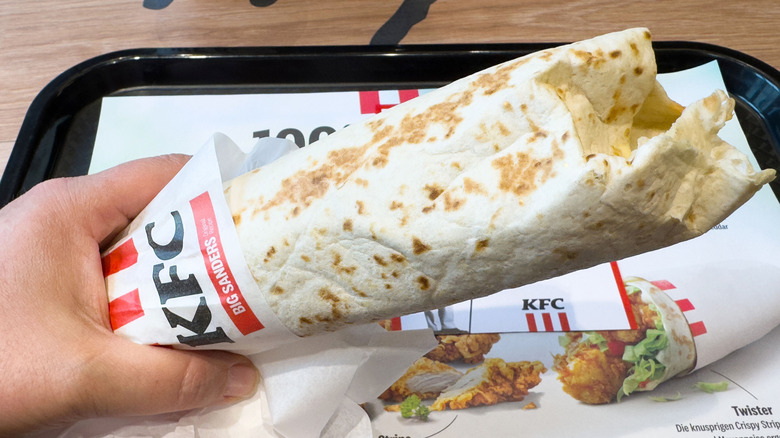
Jack in the Box isn't alone in having to settle major lawsuits over foodborne bacteria. In 2012, KFC also had to make a major payout after an Australian family filed a lawsuit against the chain over Salmonella contamination.
After eating a wrap at a KFC location in Sydney in 2005, a seven-year-old girl fell seriously ill with a type of brain damage called Salmonella encephalopathy. She was in a coma for six months and ended up requiring the use of a wheelchair. Other members of her family who ate at the chain also fell ill, although their symptoms were not as serious.
In the end, an Australian court ruled that KFC employees had been negligent, and this resulted in the spread of Salmonella bacteria. A payout of $8.3 million Australian dollars was ordered (which is around $5.4 million in USD). At the time, KFC vowed to appeal the verdict.
Red Lobster's $65 million lawsuit against Thai Union
Red Lobster has had a difficult few years. There was the highly publicized failure of the endless shrimp deal, for example, which ultimately cost the chain around $11 million. Then there was a bankruptcy filing, brought on by factors like increasing operational costs and the COVID-19 pandemic. In 2024, after emerging from bankruptcy, Red Lobster's new owner, Fortress, attempted to recover some losses by suing former minority owner Thai Union for $65 million.
According to Fortress, Thai Union owes the company the money because it did not hold up its end of a financing agreement, which would have supported Red Lobster with liquidity management. Thai Union, however, maintains that the agreement only applied to a specific timeframe, and it is therefore not liable to make the payments. As of spring 2025, the case was still ongoing, and at the time of writing, there have been no major updates on the multi-million dollar lawsuit.
One woman sought $1 million from Olive Garden over mushroom burns
When you head out for a meal, the last thing you want to end up with is serious burns. But unfortunately, sometimes, that's exactly what happens. In fact, according to The Law Offices of Sean M. Cleary, around 12,000 burns happen in the food service industry every single year. We mentioned earlier two cases involving hot beverages, but food is also a risk. In 2019, one woman named Danny Howard sought damages of up to $1 million from Olive Garden after she ate a stuffed mushroom that was too hot.
According to Howard, after she bit into the mushroom, her mouth started burning, and she started choking. She then claims that she went to the hospital, struggling to breathe, and she was then moved to a specialist burns unit. As a result of the incident, Howard filed the lawsuit. She claimed that none of the Olive Garden staff had warned her in advance about how hot the mushrooms were, so she sought between $200,000 and $1 million in damages.
IHOP paid out $6.3 million in a wage transparency settlement
It's not always customers, employees, or companies who get involved in legal action; sometimes, it's job applicants. This is what happened to Mesk Investments, the owner of several IHOP locations. The problem? When it posted job advertisements for IHOP locations in Washington State, it failed to include any information about wages. And that's against Washington law.
Washington has very strict rules around transparency. Any company that employs more than 15 people must always provide salary or wage information when it posts a job listing. This is to ensure that everyone is paid fairly. If not, the company could face legal action, like Mesk Investments.
As a result of the failure to disclose wage information between January and November 2023, Mesk Investments had to pay up to $6.3 million to anyone who applied for a job in Washington during this time. Each applicant was allowed to make a claim for up to $5,000.
The Cheesecake Factory paid out more than $1.2 million in a wage transparency settlement
The idea behind Washington's wage transparency law is that job applicants have a clear understanding of the type of wage and benefits they will receive before they submit an application. This keeps everything fair and allows potential employees to make informed decisions before they start working somewhere. But not everyone complies. Like IHOP's owner, The Cheesecake Factory has also been caught by Washington State law.
In fact, a lawsuit alleged that the restaurant chain failed to disclose wage information in many of its job listings in Washington State between January 2023 and March 2025. As a result, anyone who had applied for a job at The Cheesecake Factory in Washington during this time was entitled to claim just over $1,300 by June 2025. As a result of the settlement, the chain, which actually denied the allegations against it, agreed to pay out more than $1.2 million in claims from job applicants.
Denny's settled a discrimination lawsuit for $54 million
In the 1990s, Denny's was called out for racism in a big way. Black customers of the chain claimed that they had been asked to prepay for their meals before they were seated, for example, and one former manager of the restaurant chain claimed he had been asked to close down the restaurant if it had too many Black customers. And that's just scratching the surface. Thousands of Black customers made complaints against the chain, accusing its restaurants of discrimination and blatant racism.
Those complaints turned into lawsuits, and Denny's ultimately agreed to pay out more than $54 million in settlements. In total, more than 4,300 claims were filed by Black customers. The lawsuits didn't just result in monetary action; Denny's parent company, Flagstar, denied discrimination but also agreed to investigate the issue by sending in Black actors posing as customers to its restaurants. The settlement also dictated that any money left over would be donated to civil rights nonprofits.
Subway paid $30.9 million in major FACTA lawsuit
The Fair and Accurate Credit Transactions Act (FACTA) is in place in the U.S. to try to help protect consumers from major issues like identity theft. Under the act, companies are required to take appropriate measures to protect their customers' sensitive financial information. This means things like obscuring key credit or debit card information on any paperwork, and not, say, printing it on a receipt for anyone to find. Yep, as you've probably guessed, that last part is exactly what Subway did.
In 2017, following a class action lawsuit, Subway agreed to pay more than $30 million to its customers because it had been printing credit card expiration dates on its receipts. The sandwich chain attempted to have the class-action lawsuit dismissed, but its motion was denied. It turned out that roughly 2.6 million former customers of the chain had receipts with their credit card expiration dates printed on them. Each was entitled to a share of the $30 million settlement fund.
Texas Roadhouse had to pay $12 million over age discrimination
Denny's isn't the only restaurant chain to get into hot water over discrimination. In 2017, Texas Roadhouse settled a lawsuit for $12 million, not because of racial discrimination, but because of age discrimination. The legal action was filed on behalf of hundreds of workers, all aged 40 and above, who claimed they had been denied front-of-house roles due to their age since 2007. Evidence presented in the case included job applications labeled with yellow stickers noting that some applicants were too old or too "chubby" for the role.
Following the lawsuit, Texas Roadhouse agreed it would change its ways and overhaul its hiring practices to make them more inclusive. But you can't please everyone. In 2025, the chain came under fire from America First Legal, which is claiming that it is now discriminating against white men because of its diversity, equity, and inclusion policies.
Panda Express settled a class action lawsuit for $1.4 million over delivery costs
When you've had a long day, or you simply fancy a treat, ordering takeout is seriously tempting. It's simple: Choose your food, place the order, pay for the order, and sit back and wait for it to arrive. But if there's one thing that can really take the shine off of the whole experience, it's hidden costs. However, if you ordered from Panda Express on the chain's website or app between July 2020 and February 2022, you were likely subjected to this issue.
In 2023, the popular American Chinese restaurant chain agreed to pay out $1.4 million after a lawsuit accused it of misleading customers over delivery fees. Basically, the company had advertised low-cost deliveries, but then proceeded to add service charges to delivery orders. Panda Express did not admit that it had done anything wrong, but it did agree to settle to resolve the issue quickly. As a result, any impacted customers could apply for either Panda Express vouchers or a $10 cash payment.