

5 Secrets For Making A Super Moist Chocolate Cake
We may receive a commission on purchases made from links.
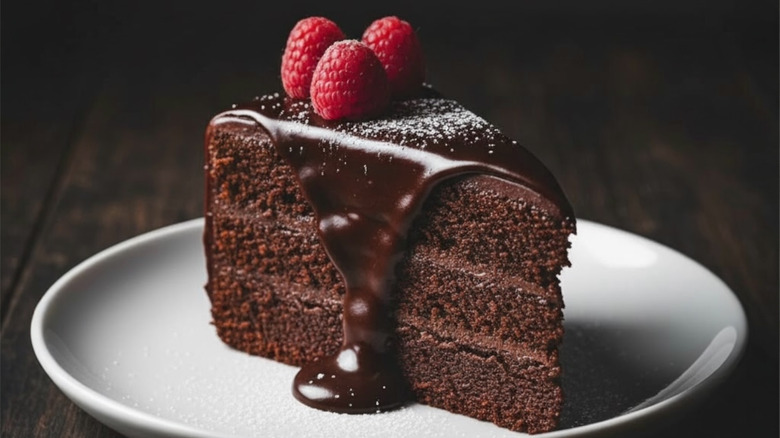
There is nothing more disappointing than anticipating a nice, moist chocolate cake and getting a crumbling, dry bite instead. It's a problem that plagues plenty of cakes, but its extra sad with chocolate cake, which you want to almost melt in your mouth, reveling in the indulgently rich flavor and texture.
Many things can make a cake turn out dry, from careless ingredient ratios to the wrong pans, but chocolate cake is especially susceptible. That's because both chocolate and cocoa powder can be high in starch, which sucks up moisture and increases the risk of a parched, less tender crumb. The dark color of chocolate cake also makes it easier to overbake, because you can't tell when the exterior is browning, so you lose the easy visual clues when the cake is done cooking.
Thankfully, there are plenty of tricks you can use to keep your chocolate cake recipe super moist. Some of these are simple best practices for almost any cake, like keeping ingredients at room temperature, but there are also secret ingredients to increase the fat content, and potential problems with your cocoa powder you may not have even realized. But none are actually complicated or difficult to pull off, and they will all help you avoid one of the greatest tragedies in baking.
Use vegetable oil instead of butter
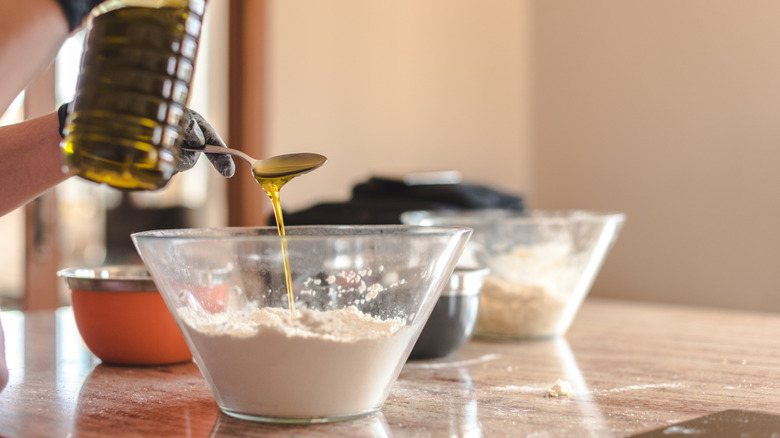
This is the first change you should try with almost any chocolate cake. Lots of chocolate cakes, or cakes in general, default to butter as the main fat because it brings so much flavor. But butter has issues. It's around 15 % water, and that actually causes several drying problems. Some of that moisture is going to be lost to evaporation as the cake cooks. Water also interacts with flour to form gluten, and that can make cakes tough, with a less tender, moist-feeling texture. Beyond the water content, butter is also solid at room temperature, which means your cake is going to dry out as it cools.
Oils fix this. It's 100% fat, so nothing is lost when you cook, and less gluten is formed. In fact, that extra fat coats the flour more evenly, which will further prevent it from being tough. No oil is lost to evaporation as the cake cooks, so it retains more moisture, and the oil is liquid at room temperature.
You can even use oil to get the best of both worlds. If you don't want to give up the butter flavor in your chocolate cake entirely, try substituting 20 to 25% of your butter by weight with vegetable oil. But don't be afraid of going all in on chocolate cakes using mostly with oil. Yes, you'll lose some of that butter flavor, but with high quality-chocolate your cake should be plenty delicious on its own.
Incorporate some sour cream
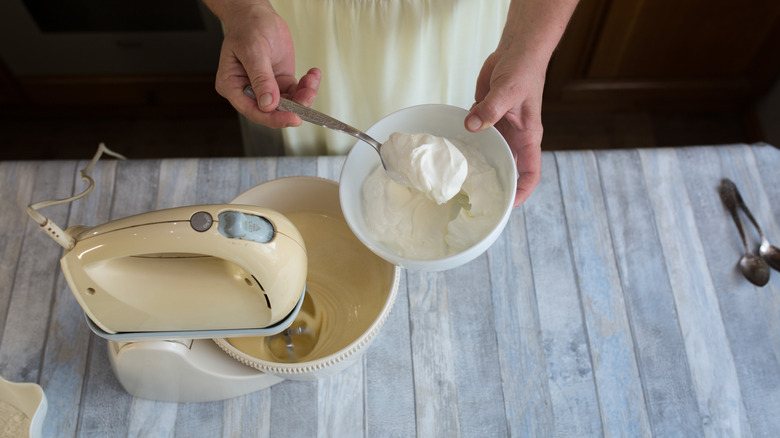
Butter and oil aren't the only answer for fat and moisture in chocolate cake, and sour cream can bring an extra dimension. Sour cream is high in fat, more so than other dairy ingredients like milk, so it will have the same extra tenderizing and moisturizing effect that oil does. But sour cream also has the advantage of a thicker texture. That means you can swap sour cream for other sources of moisture in cake, like milk, without thinning out the batter. That creates a more deliciously soft and tender crumb in your chocolate cake.
But it's not just about fat with sour cream, as it also brings acidity. That might not seem like it has much to do with moisture, but acids actually help tenderize gluten, preventing a tough cake. And those acids also react with common cake leaveners like baking soda, giving your cake a better rise. That also produces a richer, moister texture than a dense cake.
And of course, a good sour cream also helps bring a tangy undertone to a cake. That may not make it more moist, but it's a nice bonus, and acidic ingredients also just bring out more flavor in rich foods like chocolate cake overall. Sour cream can also be added in small amounts (like a few tablespoons) to bring in these benefits to a chocolate cake without changing anything. But if you go higher than that, you'll have to start removing moisture somewhere else to keep the recipe balanced.
Make sure you use cocoa higher in fat
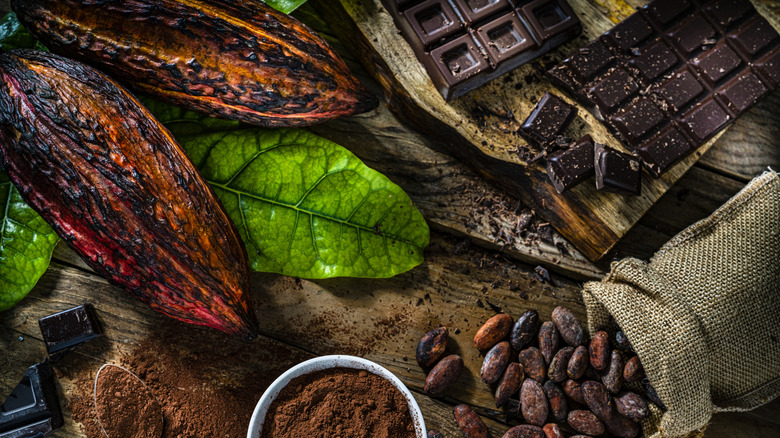
Cocoa is one area many home cooks don't even realize they can upgrade. It's the backbone of your entire cake's flavor, but almost all the common cocoa powders you find at the supermarket are low- to medium-quality. And a big part of this is the fat. Cocoa powder is made by removing the fatty cocoa butter from cocoa beans, leaving mostly cocoa solids. But this process leaves behind some fat, which is key to getting the best flavor. By law, cocoa powder must be at least 10% fat, and most brands get by with close to the bare minimum. This doesn't just mean less moisture from the fat, but also a higher ratio of starch in the chocolate, which, as we noted before, can dry out your cake.
However, there are different types of cocoa powders available with more fat. Dutch-process cocoa powders are more likely to be higher in fat, but it's not a guarantee. Instead, you should look at the nutrition facts. You can easily calculate the fat content by dividing the fat per serving by the serving size. So a brand with 2 grams of fat per 10-gram serving would be 20% fat, which is the baseline you should be aiming for in good cocoa powder. And while you local grocery store might not have it, there are brands available online like Droste Cocoa Powder that hit the mark.
Keep your ingredients at room temperature when you prep
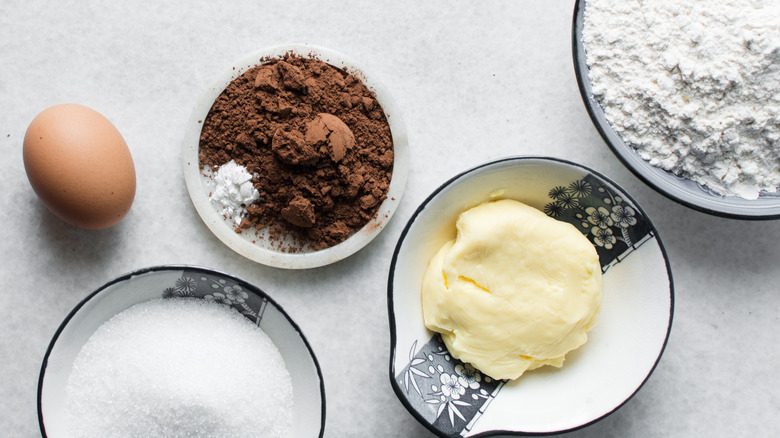
This is a great baseline rule for almost any cake that will help keep them moist. You may not have realized it, but even with the exact same ingredients, mixing room-temperature versus cold can make a huge difference in the final texture of your chocolate cake. First, room-temperature wet ingredients like eggs, butter, milk, or sour cream will bind better to other ingredients, giving you a smoother, more homogenous mix. A room temperature mixture will also incorporate more air when you beat it, helping with the rise and that light, moist texture. Finally, colder ingredients will take longer to bake in the oven once the cake is mixed, which can lead to more moisture loss before it's cooked through.
Room temperature can mean different things to different people, but in general you should be aiming for a temperature between 65 and 70 degrees Fahrenheit. Butter, eggs, and other things you store in the fridge will still be a little cool to the touch, but not as cold as they were when you removed them. You can do this by just removing them an hour before you start mixing, but it's also easy to speed up bringing baking ingredients to room temperature. Butter can be cut up into smaller pieces to warm faster, and eggs can be placed in a bowl of warm water.
Add more brown sugar
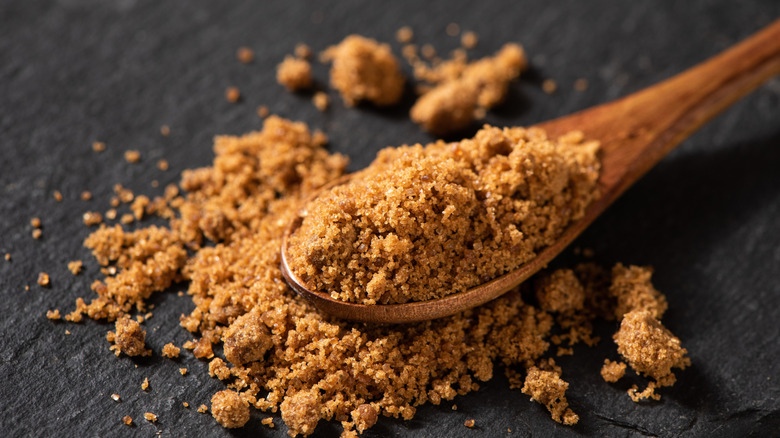
Swapping out some of the white sugar in your recipe for brown sugar is a classic way to make cookies and other baked goods more chewy and moist, and it works just as well with chocolate cake. There are two reasons for this. First, brown sugar has more moisture to start. It's basically white sugar with added molasses, with light brown sugar being roughly 3.5% molasses by weight, and dark brown sugar being around 6.5%. And of course, that molasses has moisture in it. Brown sugar is more hygroscopic than white sugar, meaning it also attracts and holds onto more moisture. Both white sugar and brown sugar have this quality, but brown sugar more so than white.
If you are looking for more moisture in your chocolate cake, you can substitute however much brown sugar for white sugar as you want at a 1:1 ratio. Using brown sugar in place of half of your recipe's white sugar is a good place to start to make sure your cake doesn't get too stodgy. If you do a large swap for brown sugar, you may need to remove a little moisture elsewhere, about one to two tablespoons of liquid per cup of brown sugar.