

Classic Spicy Tuna Roll Recipe
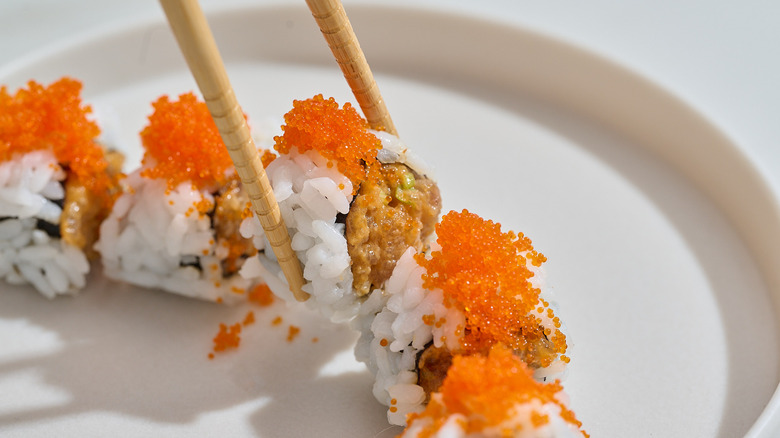
I hate to admit it, but I order the same few items at every sushi restaurant I visit. One of those items, without a doubt, is the spicy tuna roll, which finds itself on every menu, no matter how fancy the restaurant. A simple, small roll, the spicy tuna is composed of soft minced tuna, a select few seasonings, spicy Sriracha, and a tightly rolled rice and nori exterior. It never fails me — and is almost always available at an incredibly reasonable price.
Making sushi at home is a surprisingly approachable process and gives you the freedom to customize even the simplest, most classic sushi rolls with plenty of unique flavors. The very best tuna rolls that I have had have been flavorful, a little creamy, pleasantly spicy, and stuffed with fresh, tender tuna. At home, I can make it exactly as I want it every time, and add scallions or sesame seeds into the filling or sprinkle the finished roll with crunchy fried onion or poppable fish roe. This recipe walks through step-by-step how to make perfect spicy tuna rolls, and delivers all the flavor of your favorite takeout order right from your own kitchen.
Gathering the ingredients to make a classic spicy tuna roll
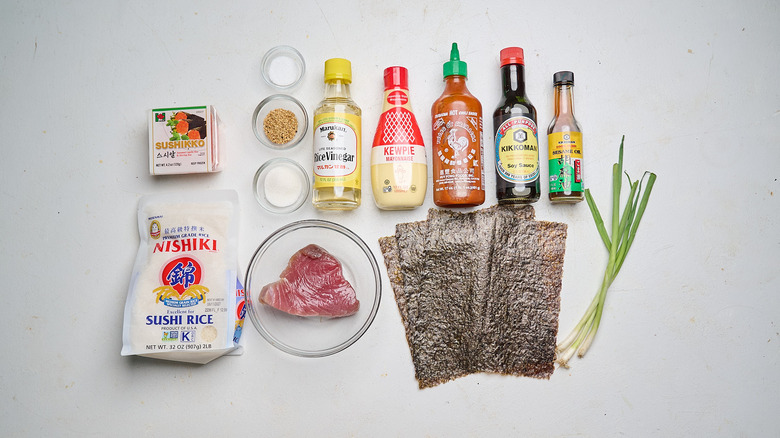
You'll first need sushi rice, rice vinegar, sugar, salt, and nori for rolling the sushi. Sushi rice is different from sticky rice, and it is important to grab rice specifically labeled as sushi rice, shari, sumeshi, or Japanese rice. For the filling, you will need fresh ahi tuna, Kewpie mayonnaise, Sriracha, soy sauce, toasted sesame oil, scallions, and sesame seeds. Because you won't be cooking the tuna, be sure to source the fish from a reputable fishmonger who labels their tuna as "sushi grade," which means it has been flash frozen to remove bacteria.
Step 1: Rinse the rice
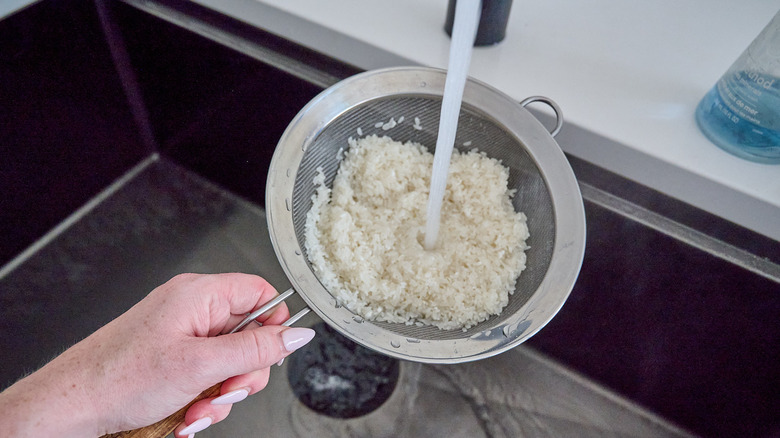
To prepare the sushi rice, rinse the rice in a fine-mesh strainer until the water runs clear.
Step 2: Cook the rice
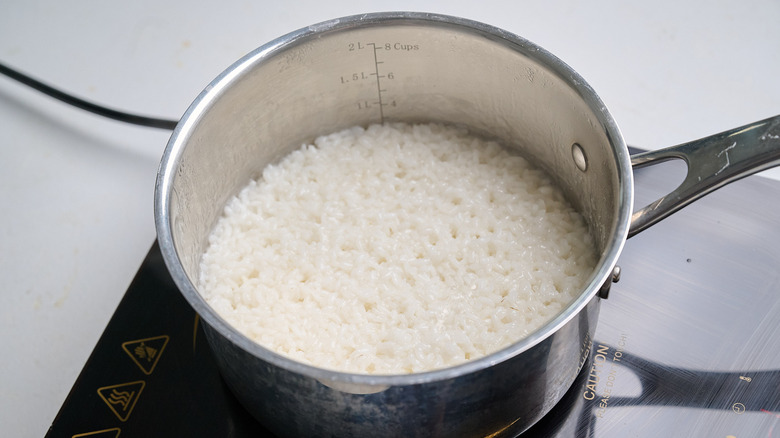
Cook according to the package directions.
Step 3: Dissolve the sugar in vinegar
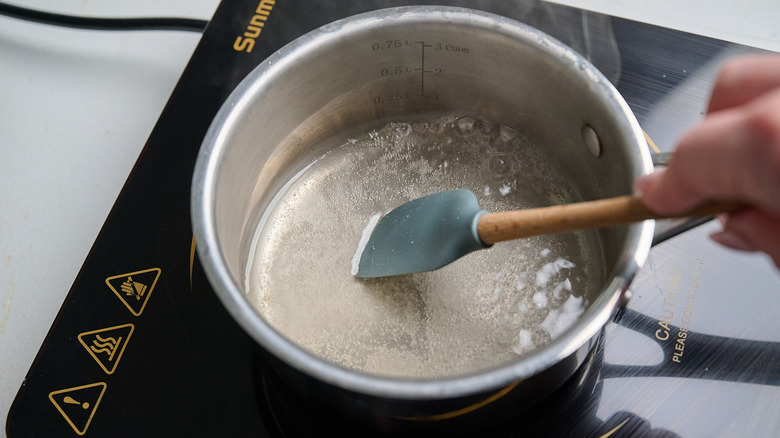
Meanwhile, heat the rice vinegar, sugar, and salt in a small saucepan over medium heat. Stir until the sugar is dissolved, then remove from the heat.
Step 4: Mix the rice with vinegar
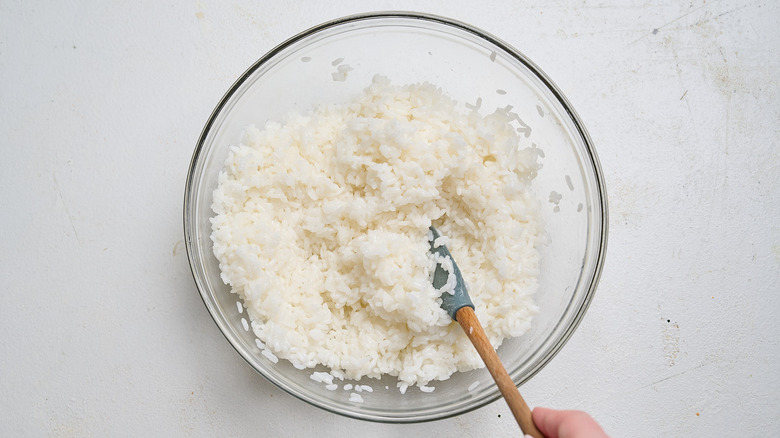
Transfer the cooked rice to a large bowl and mix gently with the vinegar mixture until fully coated, then cover the rice with a towel and let it cool while preparing the filling.
Step 5: Chop the tuna into cubes
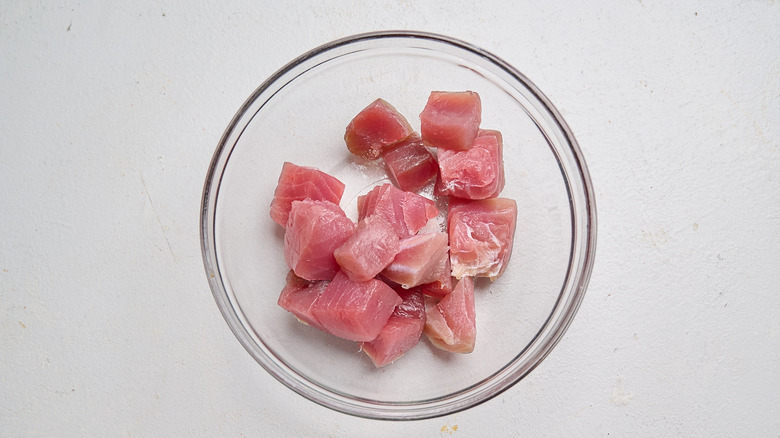
To prepare the tuna, first cut it into 1-inch cubes.
Step 6: Pulse the tuna until just chopped
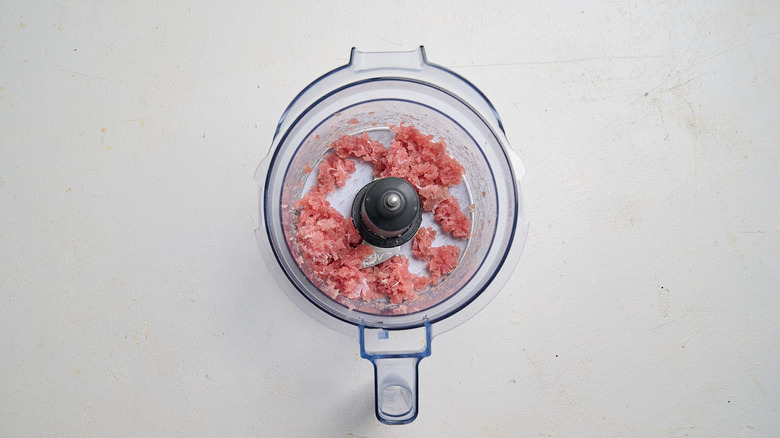
Add the tuna to a food processor and pulse 3-5 times, or until just chopped but not gummy or smooth.
Step 7: Mix the tuna with filling ingredients
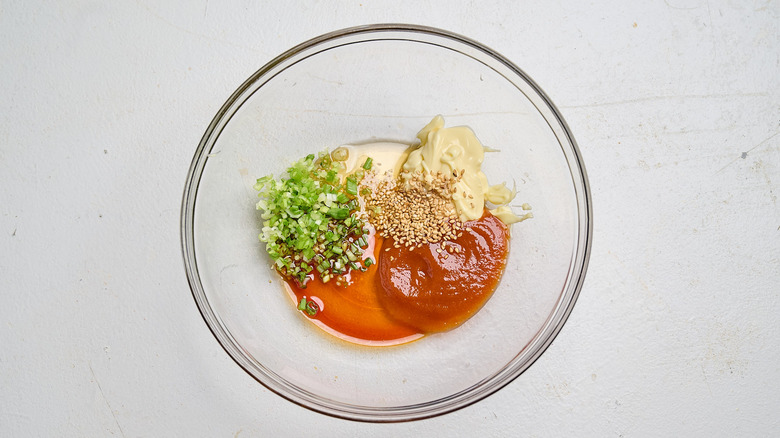
Transfer the tuna to a bowl and combine it with Kewpie mayonnaise, sriracha, soy sauce, sesame oil, green onions, and sesame seeds.
Step 8: Combine well
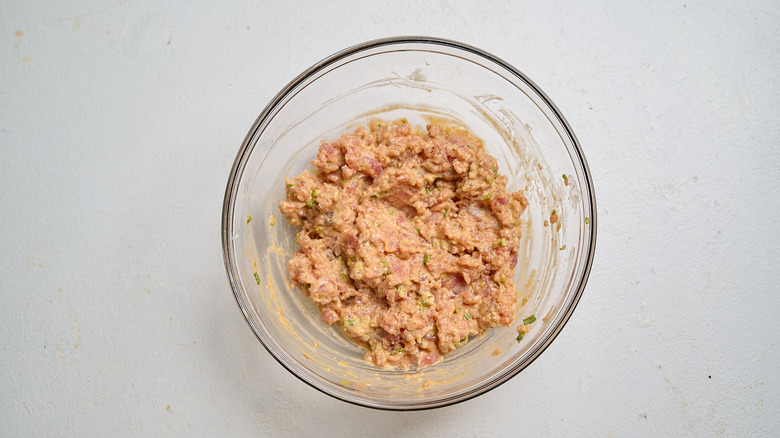
Stir to combine.
Step 9: Cover a bamboo mat with plastic wrap
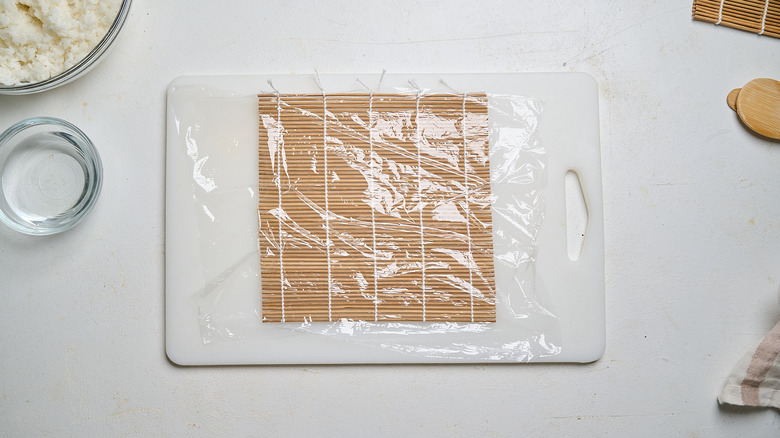
To assemble the sushi, cover the bamboo mat with plastic wrap.
Step 10: Cut a nori sheet
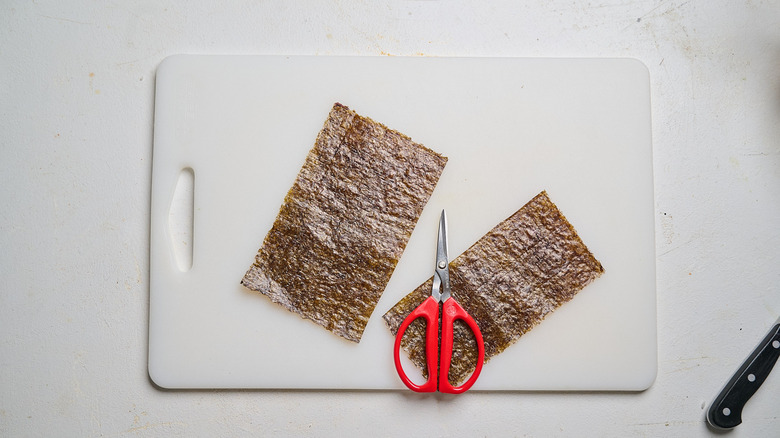
Cut the nori sheet to about 4 inches wide (or about 4 segments).
Step 11: Place the nori on the mat
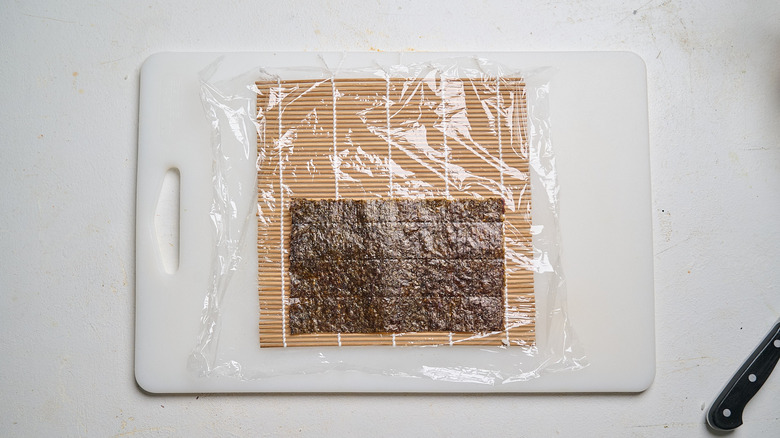
Add the nori sheet shiny side down.
Step 12: Layer with rice
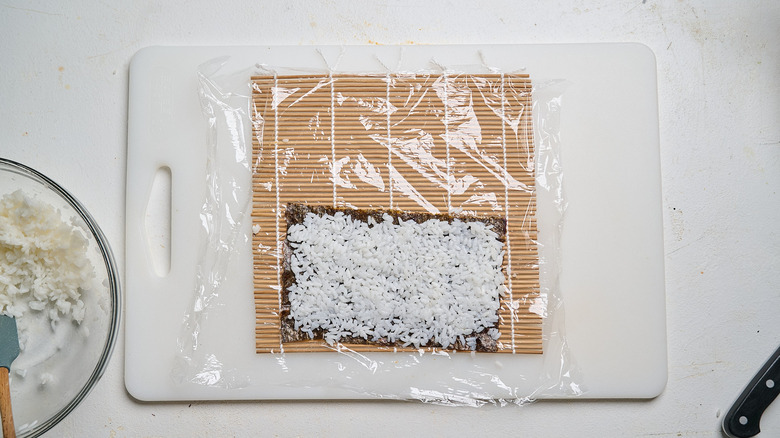
Cover it with a thin layer of sushi rice.
Step 13: Flip the nori
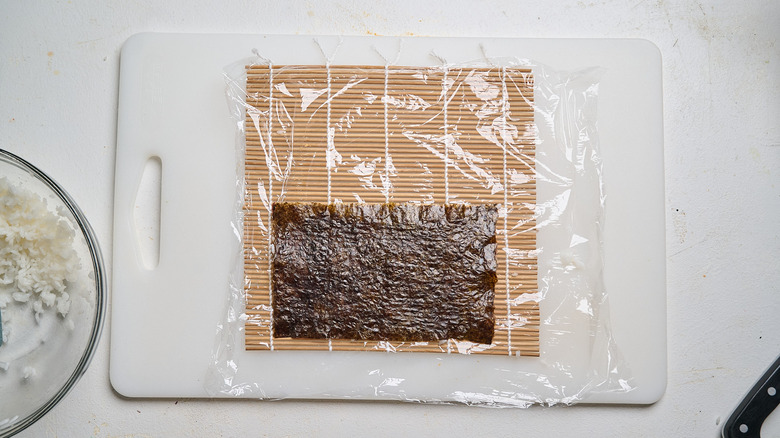
Carefully flip the nori so that the sushi rice is facing down, towards the plastic wrap.
Step 14: Add the filling
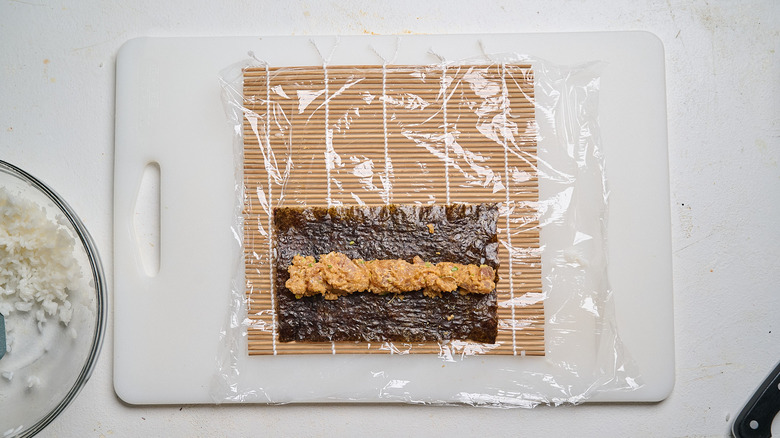
Spoon ¼ of the filling into a straight horizontal line in the center of the nori.
Step 15: Roll the sushi
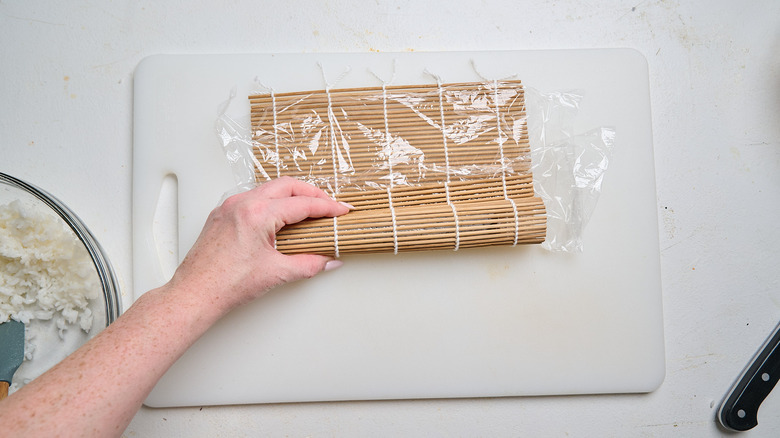
Use the mat to roll the rice and nori around the filling, creating a cylinder.
Step 16: Slice into 8 pieces
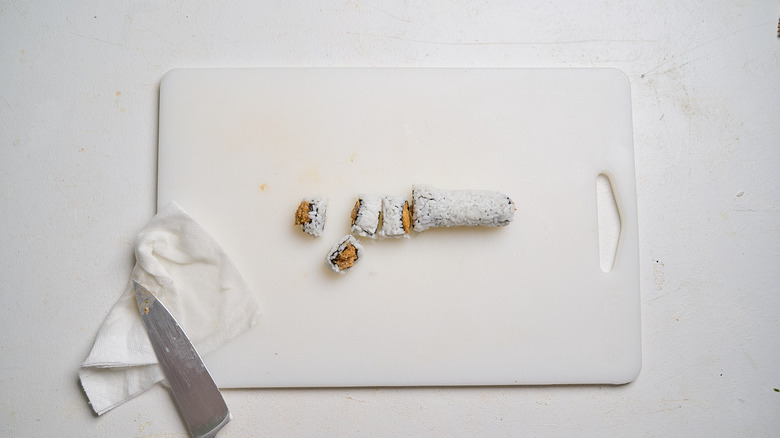
Slice the sushi into 8 pieces.
Step 17: Serve the sushi
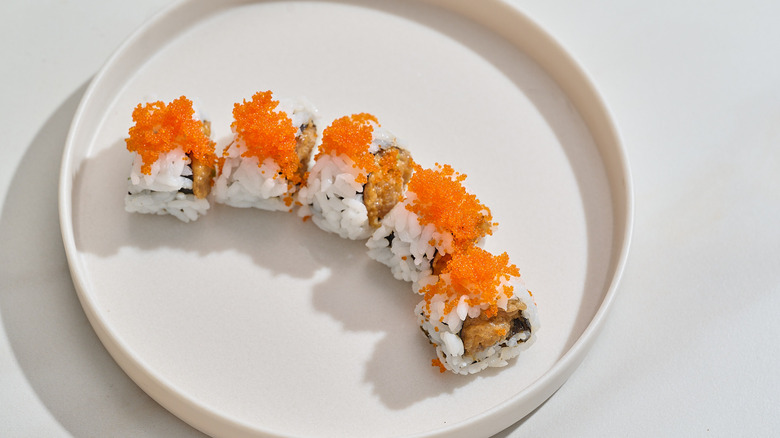
If desired, top with fish roe to serve.
What can I serve with tuna rolls?
Classic Spicy Tuna Roll Recipe
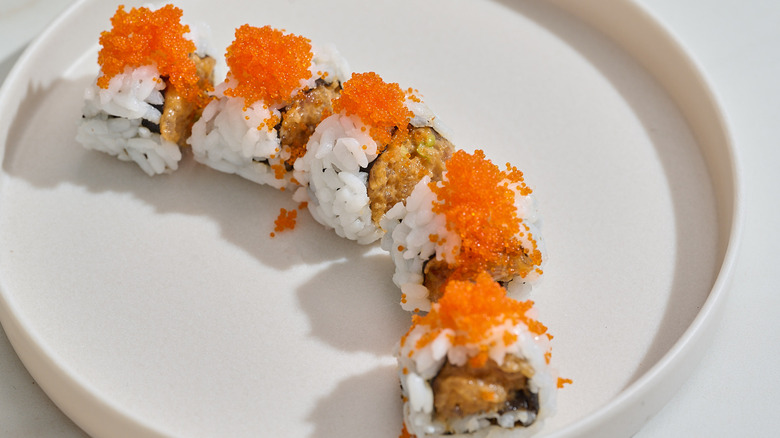
Fresh, tender tuna is given a kick of creamy heat from sriracha and Kewpie mayonnaise and wrapped tightly in seasoned rice and nori in our easy tuna rolls.
Ingredients
- For the sushi rice
- 1 ½ cups uncooked Japanese short-grain sushi rice
- 3 tablespoons unseasoned rice vinegar
- 1 tablespoon granulated sugar
- 1 teaspoon salt
- For the filling and assembly
- 1 pound raw ahi tuna, sushi grade
- 2 tablespoons Kewpie mayonnaise
- 1 tablespoon sriracha
- 1 teaspoon soy sauce
- ½ teaspoon toasted sesame oil
- 2 green onions, finely chopped
- 1 teaspoon toasted sesame seeds
- 4 sheets nori
Optional Ingredients
- 2 tablespoons Sushikko or tobikko (fish roe), for topping
Directions
- To prepare the sushi rice, rinse the rice in a fine-mesh strainer until the water runs clear.
- Cook according to the package directions.
- Meanwhile, heat the rice vinegar, sugar, and salt in a small saucepan over medium heat. Stir until the sugar is dissolved, then remove from the heat.
- Transfer the cooked rice to a large bowl and mix gently with the vinegar mixture until fully coated, then cover the rice with a towel and let it cool while preparing the filling.
- To prepare the tuna, first cut it into 1-inch cubes.
- Add the tuna to a food processor and pulse 3-5 times, or until just chopped but not gummy or smooth.
- Transfer the tuna to a bowl and combine it with Kewpie mayonnaise, sriracha, soy sauce, sesame oil, green onions, and sesame seeds.
- Stir to combine.
- To assemble the sushi, cover the bamboo mat with plastic wrap.
- Cut the nori sheet to about 4 inches wide (or about 4 segments).
- Add the nori sheet shiny side down.
- Cover it with a thin layer of sushi rice.
- Carefully flip the nori so that the sushi rice is facing down, towards the plastic wrap.
- Spoon ¼ of the filling into a straight horizontal line in the center of the nori.
- Use the mat to roll the rice and nori around the filling, creating a cylinder.
- Slice the sushi into 8 pieces.
- If desired, top with fish roe to serve.
Nutrition
| Calories per Serving | 465 |
| Total Fat | 7.5 g |
| Saturated Fat | 1.3 g |
| Trans Fat | 0.0 g |
| Cholesterol | 47.0 mg |
| Total Carbohydrates | 62.1 g |
| Dietary Fiber | 0.3 g |
| Total Sugars | 3.4 g |
| Sodium | 521.8 mg |
| Protein | 33.0 g |

Can I make spicy tuna rolls with the nori on the outside?
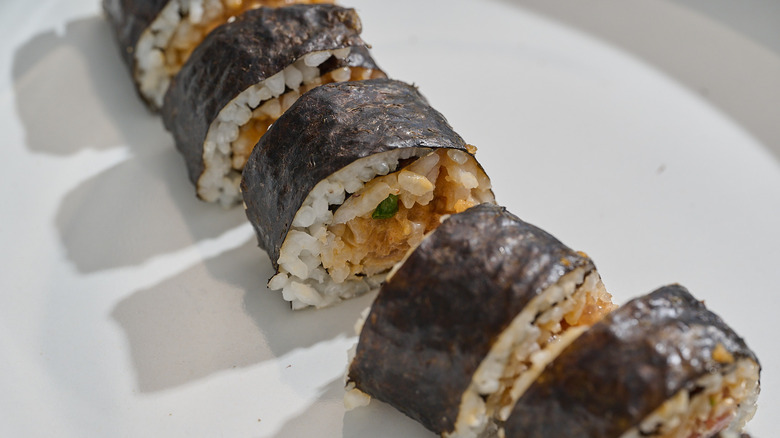
There are many types of sushi you can make by using the same ingredients but arranging them in different ways. If you flip the rice to the outside of the roll, you make uramaki, which is a slightly more advanced technique in that it can be tricky to flip, roll, and slice the seasoned rice without the nori keeping it contained. If you are having trouble with it, you can skip flipping the nori and simply make the rolls with the nori on the outside, which is referred to as norimaki or hosomaki. You can also leave the nori as a full sheet for bigger futomaki rolls, which are often the rolls restaurants label as "specialty rolls" and fill with added ingredients.
To make hosomaki rolls, simply follow the recipe as written, and when adding the rice to the nori, leave space at the top of the nori to roll and adhere the nori into a sturdy roll. Add the filling to the center, then use the bamboo mat to roll the maki into a tight cylinder with the nori on the outside, using the exposed edge of the nori to seal the roll closed. Then, just use a sharp knife to slice the sushi into pieces and serve.
What variations can I try with the spicy tuna filling?
One of the best things about making sushi at home is how easily the rolls can be customized. For an easy, classic crunch, add a layer of julienned cucumbers or carrots next to the tuna. For a more savory crunch, add crispy fried onions or tempura flakes. For something more creamy, try adding sliced avocado or softened cream cheese into the roll. You can also adjust the filling itself, adding heat with more Sriracha, a sprinkle of togarashi, or even some chili crisp.
You can also experiment with making your own futomaki specialty rolls with the spicy tuna filling as the base. You can add shrimp tempura, avocado, and cucumber for a satisfying roll with a complex creamy-crunchy texture. You can also balance the heat with sweet mango slices and pair them with avocado or cucumber for a sweet heat tropical roll. If you want to make more elaborate rolls, you can also opt for more involved toppings like thinly sliced avocado, spicy mayonnaise, or crunchy onion — or you could roll the rice exterior in tobiko.