

6 Lunch Meats That Were Popular In The '70s You Rarely See Anymore
There's nothing that's more satisfying than a really great sandwich, and while there are a ton of underrated deli meats and cheeses that should be on your radar, we want to take a minute and look to the past. Specifically, we want to look at the 1970s, a decade defined by disco, punk rock, cool cars, bellbottoms, and — it turns out — some unique lunch meats that you don't really see around anymore.
There were a slew of sandwiches in every lunchbox in the 1970s, and some of them fully deserve a revival. When was the last time you had a tuna melt? Or a Monte Cristo? The ingredients for those can still be found in pretty much any grocery store, but we want to go obscure. We wanted to dig back into the shadowy corners of a GenX cafeteria, to see what lunchtime delights — or travesties — still haunted dreams and/or brought up the kind of fond memories that only really develop with the passing of years.
We weren't disappointed, either. With the help of some old advertising and plenty of folks who were happy to share their memories on forums like Reddit, we took a stroll down memory lane. Did some of these leave us with more questions than answers? Absolutely.
Olive loaf
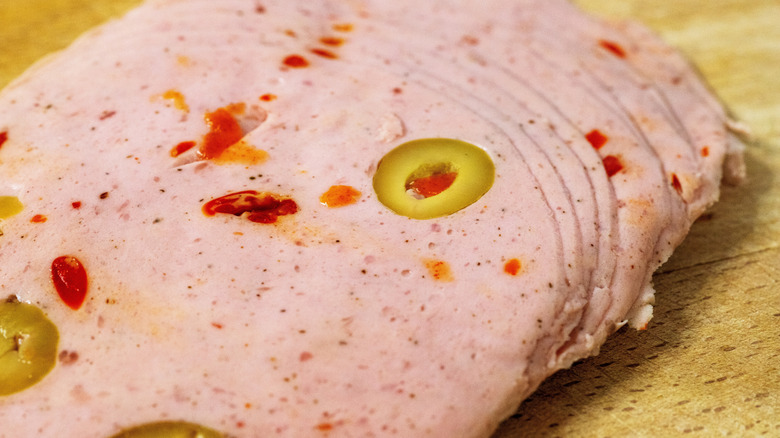
Ah, olive loaf. It's an old-school deli meat with a name that tells you what you're going to get, and yes, it's a loaf of meat with olives embedded in it. Olive loaf might look like mortadella, but it's very, very different — and depending on the brand, it could be made with beef, chicken, pork, or a combination. Back in 2009, a Kraft spokesperson named Sydney S. Lindner told the Chicago Tribune how it was made: "The olives are mixed into the meat and remain in place, similar to how chocolate chips stay in cookies. The meat-olive mix is then baked in a giant loaf pan, packaged, and sent out to supermarkets and delis."
Was the analogy too incredible not to share? It was. Olive loaf, like other packaged deli meats, became popular after World War II as a slightly more sophisticated cousin of bologna. It's the kind of thing that was so popular that it forms the backbone of some serious childhood memories, and while some curse the neighborhood adults who turned to this one for a quick meal to feed some hungry kids, you'll hear others saying it was the pinnacle of a 1970s-era sandwich.
You can still find olive loaf occasionally, and there are perhaps a surprising number of people who remember it fondly. One Reddit user reminisced, "Olive loaf was good too ... if you liked olives. I would steal my dad's martini olives, so [olive loaf] was some gourmet pig parts for my palate."
Liverwurst
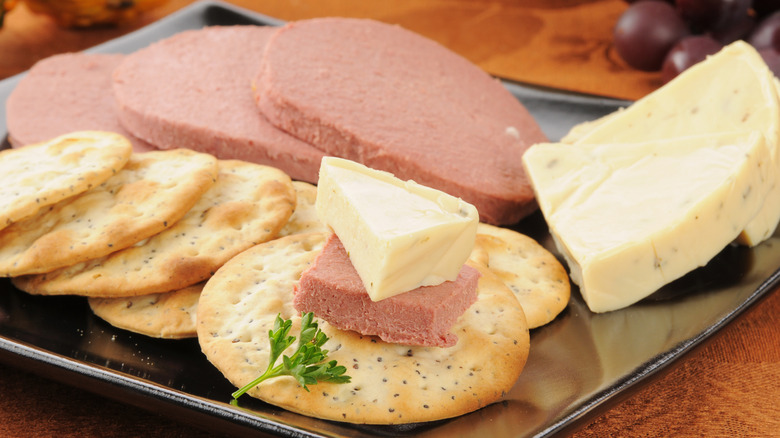
Liverwurst is a deli meat traditionally made with liver. It's an old-school European meat, and it's easy to see how it developed from the need to use every part of an animal to stretch food as far as possible. And honestly, that's admirable. Liverwurst came in slices and spreads, and had a moment in the sun when it was featured in an episode of "Leave It to Beaver" in the 1950s. It held on for a while, but these days, it's known more as an old-school deli meat that defines a generational divide.
Head to Reddit, and you'll find folks remembering that it was a favorite of mothers, fathers, and grandparents, while some in the GenX subreddit say that it was a longtime staple. One Reddit user recalled, "You better believe liverwurst was a common sandwich ingredient in my household. As a toddler, I called it dragon meat." Liverwurst and onion sandwiches were a favorite, while others went for liverwurst and jam. (A go-to for this writer's father was liverwurst and limburger, and it's just as bad as it sounds. Sorry, Dad.)
Liverwurst has something of a less-than-stellar end. While it certainly never regained the popularity it had in the 1970s, you could still find it. Boar's Head carried a liverwurst, but that was discontinued back in 2024 on the heels of a deadly listeria outbreak. It was traced back specifically to the company's liverwurst and the production processes behind it, coloring this longtime staple with heartbreaking infamy.
Head cheese
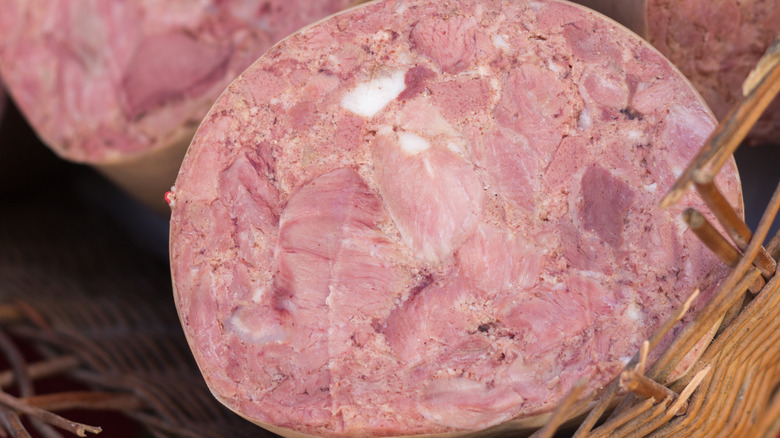
What exactly is head cheese? It's been around for a long time and has been made in different ways, but this truly medieval meat — and we mean that literally, as it's been around since the Middle Ages — was made by boiling a pig's head until it was broken down into something edible. Anyone who picked some up at the grocery counter in the 1970s would have likely gotten slices of head meat, gelatin, and coloring, and if you're wondering about the "cheese" part of the name, that's a nod to the texture.
Back in the 1970s, it was part of the standard lineup of deli meats, with even Oscar Mayer putting out a version in that oh-so-distinctive yellow packaging. And yes, it was polarizing even back in the day, with some Reddit users saying they always eyeballed it with suspicion, while others recall how they used it to get revenge on the bullies who stole their lunches in school.
While some say it was strictly an older-generation sort of thing, there are still some who are stoked to find it in the odd deli case. One Reddit user shared their saga of finding it at a newly opened Kroger. Ecstatic over the find, they wrote that when they ordered it, "The deli person then got on the PA system and announced that someone was buying the headcheese. Other employees came to the deli to view the person buying the headcheese. Not long after that, they didn't stock headcheese anymore."
Lebanon bologna
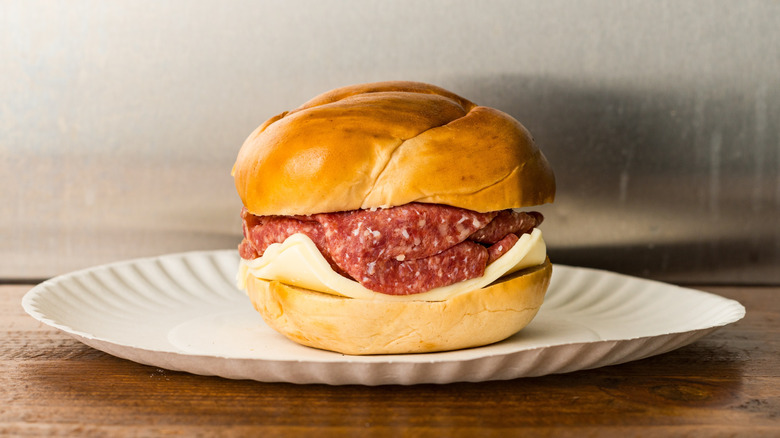
It doesn't get much more 1970s than bologna, but that one's still around. There are still plenty of ways that you can and should be using bologna — and it's so versatile that you shouldn't be restricting it to a sandwich — but we want to talk about Lebanon bologna. That's a kind of lunch meat that was also in Oscar Mayer's 1970s-era lineup, and it's got a pretty interesting history that goes back to the town it's named for. That's Lebanon, Pennsylvania, where it was developed among the Pennsylvania Dutch communities in the early 19th century.
As for what it is, imagine your standard bologna, and then picture something that's the exact opposite. It's got a salami-like texture and is made extra-spicy by a blend that can include things like paprika and allspice. Its distinctive texture and tangy, smoky flavor develop through fermentation and a traditionally days-long smoking process. Some versions lean into the sweet-and-honey end of things, some have a more funky edge, but one thing Lebanon bologna is not? Boring.
It's mostly receded to a regional specialty these days, and that's kind of a shame. Those in the know say it's the perfect thing to dress up an otherwise ordinary ham and cheese sandwich, that it's the perfect bedtime snack, and that it's wonderful when slathered with a mix of cream cheese and horseradish. Some say that all it needs is just a little bit of mustard, and it brings back memories of childhood in Pennsylvania.
Luxury Loaf
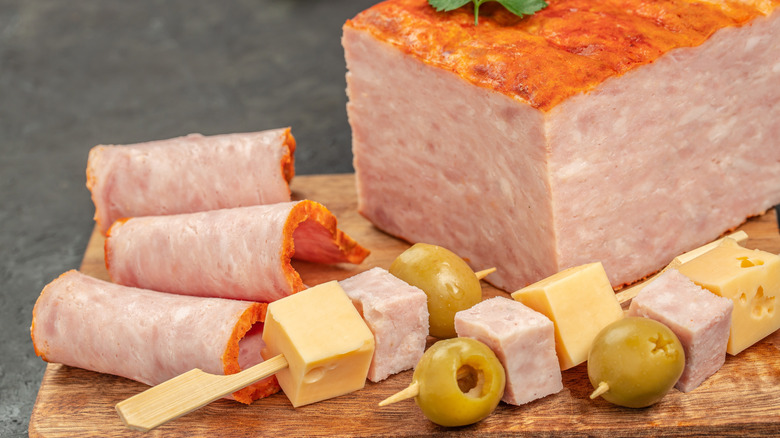
There are plenty of foods that have delightfully descriptive names, and Luxury Loaf is undeniably vague. If we were to ask you what you think it was and you were to respond, "Fancy!" we'd have to give you the win. Why? Because we found so little concrete information on this one, we would have thought it was a disco-induced fever dream if not for Oscar Mayer advertisements that clearly show Luxury Loaf as a part of its product line in the '70s.
Based on the image, it was a square slice of processed meat that seems to have included several different types, based on the color. That's a theory supported by a Reddit user who suggests they remember it as being a mix of beef, chicken, and pork, but many of those who lived through the era tend to be a little baffled by this one.
Others suggest even more meats that might have found their way into this one, like veal and various organs like liver. Whatever it was, those who remember it are a little bummed that they don't have the chance to share with and/or inflict it upon their children.
Honey Loaf
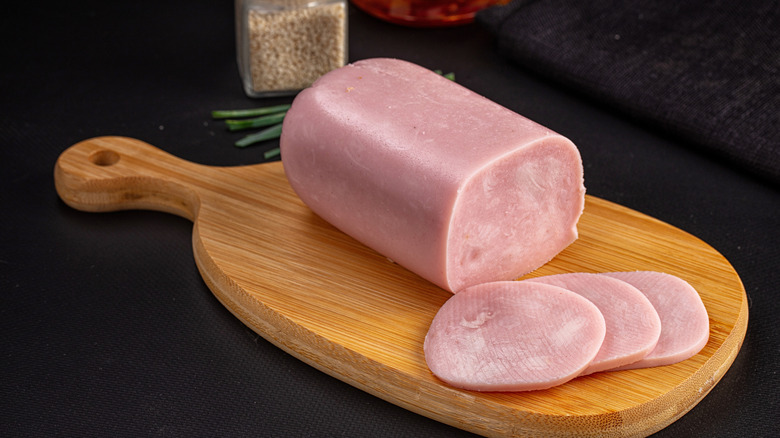
Here's another one that we couldn't find much on, and it's the mysterious Honey Loaf. Buried in some long-archived information on processed meat products is the claim that this particular lunch meat was about half beef and half pork, typically sweetened with honey and sometimes made with pickles or pimentos. That puts it somewhere next door to an olive loaf, but vintage advertising from Oscar Mayer suggests it was a square of a variety of meat-centric products, with nary a pimento in sight.
Intriguing? Yes, particularly because we found Reddit users who fondly remember getting the variety packs of lunch meat, and having the Honey Loaf taking a place of honor on a sandwich that combined it with bologna, olive loaf, and salami for what we can only imagine would result in a very interesting texture. Add mayo, mustard, and tomato, and you apparently had a lunch that tasted like the 1970s felt.
So, why did all these meats go from lunchtime staples to almost or completely nonexistent? Part of the shift happened when people became more conscious of things like sodium content, and also began to worry about what extreme processing might do to a slab of mystery meat. Additives became something to worry about, and something else happened, too. With the rise of microwaves in the 1980s, hot lunches were a more readily available option. Manufacturers have since adjusted products to changing tastes, and headcheese just doesn't make the cut anymore.