

8 Foods And Drinks That Were Invented By The US Military
We might think we're familiar with the things that shape our foodie landscape, but things are much more complicated than you might expect. In today's 21st-century world, we are — for better or worse — used to things like viral videos and influencers creating the next big thing. However, one of the forces that has been hugely influential in shaping our food culture today is one you might not ever think of — and that's the U.S. military.
Wait, what? If you're thinking that took a left turn as Weirdville and then just escalated quickly from there, you'd be correct. It's absolutely true, though, and historians have done deep dives into how the needs of the U.S. military have helped shape advancements in food. It turns out that many things — such as the popularization of canned foods and research into prolonging shelf life — came from the military's need to feed its troops. Huh. Who would have thought, right?
There are a ton of foods that you probably have in your kitchen or pantry right now that owe their existence to the military, but we wanted to take a look at some specifics. We wanted to know exactly what foods and drinks came about thanks to direct investment by the military, so we started digging. There are, in fact, a number of items that are the direct result of military contracts and needs, and it might just put some of these now-common foods in a whole new light.
Orange juice concentrate
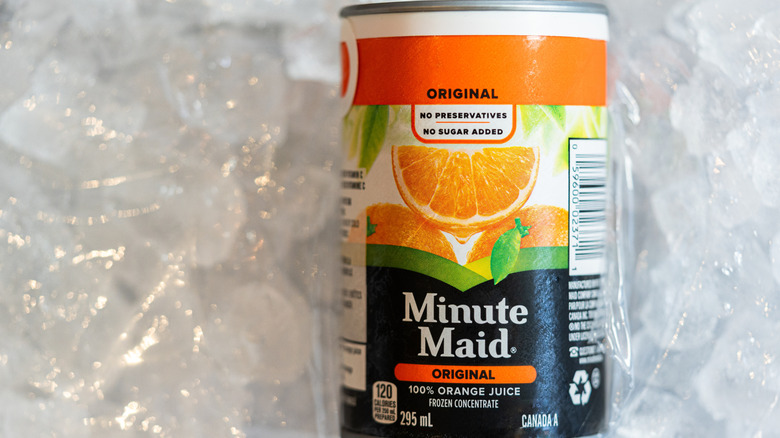
It's one of those things that gets weirder the longer you think about it: Orange juice tastes the same no matter what time of year you crack open a container. There's a ton of logistics that go into making sure orange juice is a standardized product, but we want to talk about a specific type of orange juice. That's frozen concentrate, and if you've ever mixed up a batch, you can thank the ingenuity used to solve a massive World War II-era problem.
We've known about scurvy for a long time – that's the vitamin C deficiency that killed millions of sailors between the 15th and 19th centuries. World War II troops faced the consequences of this deadly disease as well, so the U.S. government got researching. California- and Florida-grown citrus was key, but keeping it fresh for shipping overseas was easier said than done.
So, the military called for intrepid researchers and tasked them with developing a way to preserve orange juice while keeping it palatable. It was slow going until the USDA stumbled upon a method that worked. It was done by basically removing the water from the juice to prevent spoiling, and there's a footnote to this: It was a tech that never benefited the military as intended. Instead, it was released commercially stateside, and thanks to Minute Maid and a marketing campaign featuring Bing Crosby, it became a breakfast staple.
Energy bars
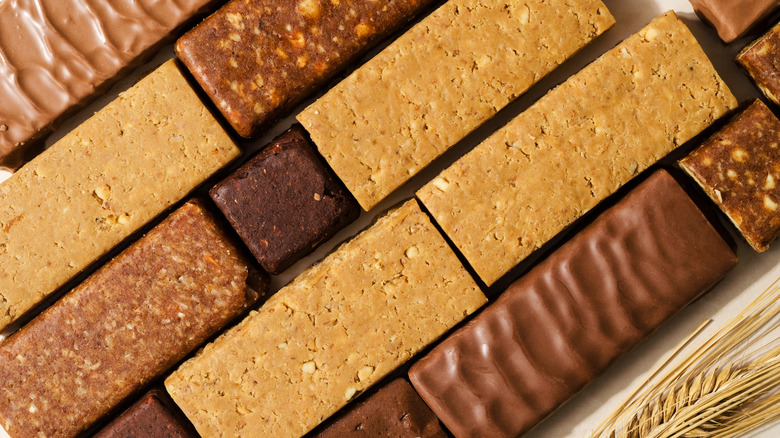
Energy and protein bars are perfect for today's busy life on the go, and it's easy to see how energy bars would have been a massive success in the fight to keep the military fed. Troops have long been given ration kits designed for use during active conflict, but things really changed in a big way in the years leading up to the U.S. involvement in World War II. The Army knocked on the door of Hershey's and asked the company to work on creating a durable energy bar that soldiers could easily carry and that would provide some emergency nutrition.
Interestingly, it came with a massive caveat — it couldn't taste good, as it was supposed to be a last resort kind of thing. The final product was called the Field Ration D bar, and as far as being the sort of thing that no one would want to eat unless it was absolutely necessary, Hershey's knocked that out of the park. It tasted terrible, was notorious for wreaking some havoc on the digestive system, and was also known to crack some teeth.
They were so bad that the original went through some changes, but by the end of the war, billions had been made and shipped. At the same time, the idea was taken and changed for commercial and civilian consumption; the military continued to tweak the idea. Descendants of the Field Ration D bar have been used in NASA missions and were handed out to troops in Desert Storm.
Bagged salads
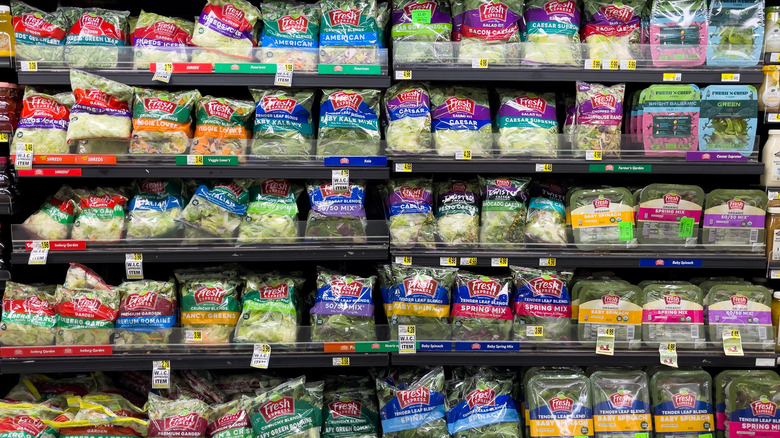
Of all the foods you might expect to see popping up in a conversation about military research, bagged salads might be one of the last guesses. But it's true, and you can thank the U.S. Navy for all your favorite bagged salad kits — at least partially. The other part of the partnership was the Whirlpool Corporation, and these two joined forces back in the 1960s to come up with a way to ship fresh greens overseas to Vietnam.
They did it by developing something called modified atmosphere packaging technology, and it's basically a process where air is removed from a container and is replaced with something that prevents spoilage instead of encouraging it. That usually includes nitrogen, carbon dioxide, or a combination of gases, and while it was initially done on a large scale, it's the same tech that's now used to keep those salad kits fresh in your fridge for much longer than you might expect.
We're talking about specific foods here, but we do also want to share another interesting little tidbit we found. At around the same time, NASA and the Air Force also got involved in the government collaboration with Whirlpool. That led to the development of kitchens suited for use on spacecraft and in zero gravity, which is pretty neat!
Cheese powder
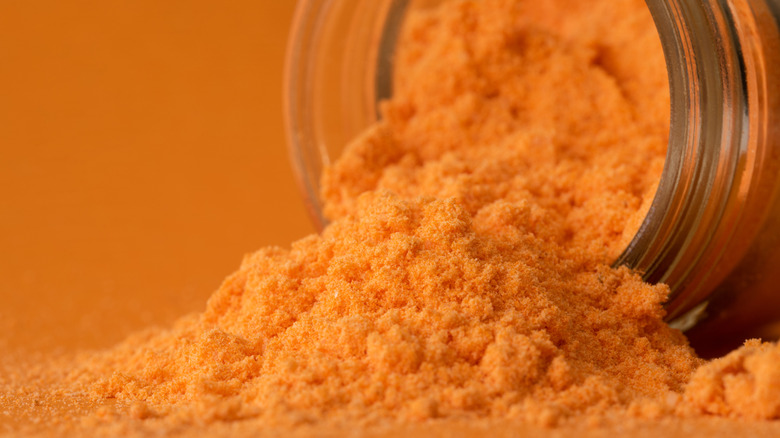
These days, making your own cheese powder is easier than you think. In the grand scheme of things, though, the idea is a fairly recent one that goes back to the U.S. military and its World War II-era problem of how to preserve and ship food for the troops. The military had already been buying loads of different types of processed cheese that had been developed to withstand things like extreme temperatures, but we're talking about military-driven inventions here. For that, we have to look to the Quartermaster Corps partnership with the USDA.
In 1943, a scientist working in associated research facilities developed a method for shredding then drying and dehydrating cheese. George Sanders' process was a huge deal, as previously, heating cheese just led to — unsurprisingly — melted cheese. The process was a huge hit, and tons of cheese powder was made. When the war ended, the surplus was sold — which is when things got super interesting.
Fast forward a few years to 1948, when Frito got its hands on some cheese powder. Very quickly, the company turned it into one of the best snacks on the market today — Cheetos. It is, of course, far from the only food that came from the invention. If you've ever hacked a box of mac and cheese for an easy yet delightfully upgraded meal, you can thank the military for that cheese powder.
Restructured meat
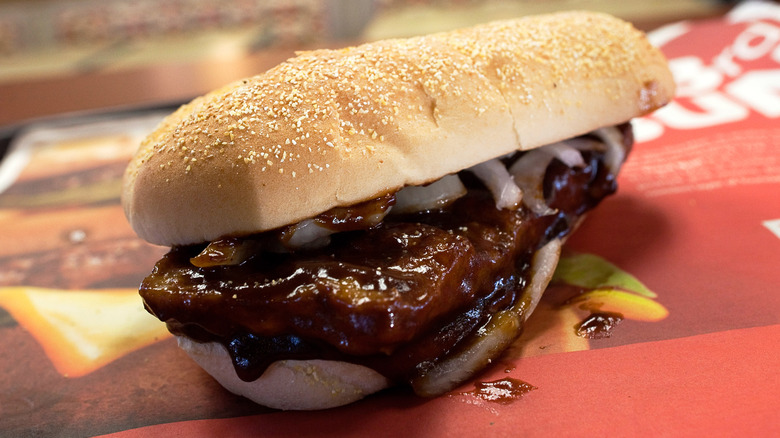
Just calling something "restructured meat" might leave you giving this one a bit of a side-eye, and we totally get that. However, there are other names for this product that you might be more familiar with, and we'll go out on a limb and say there's a good chance you have some in your freezer right now. Restructured meat is basically what's used to make many chicken nuggets and — perhaps most famously — McDonald's McRib. And yes, you can thank — or blame — the military for these, too.
We have to go back to the 1960s, and the idea was a pretty simple one: find a way to make affordable yet tasty rations for troops. That was a task that the military handed to the Natick Soldier Center for Research and Development, and that's where the idea originated. This involved taking scraps from standard meat processing operations, processing them again, and turning them into sort of a meat pudding that was then reshaped into something that, if it wasn't quite appetizing, was a little more edible than the scraps alone had been.
The military used that technology to make MREs for its troops. Meanwhile, Natick reached out to civilian corporations to offer to share the new process that had been developed, and of course companies wanted to maximize profits and turn scrap meats into something they could sell. McDonald's almost immediately hopped on board, and both the McRib and McNuggets were born.
Shelf-stable supermarket bread
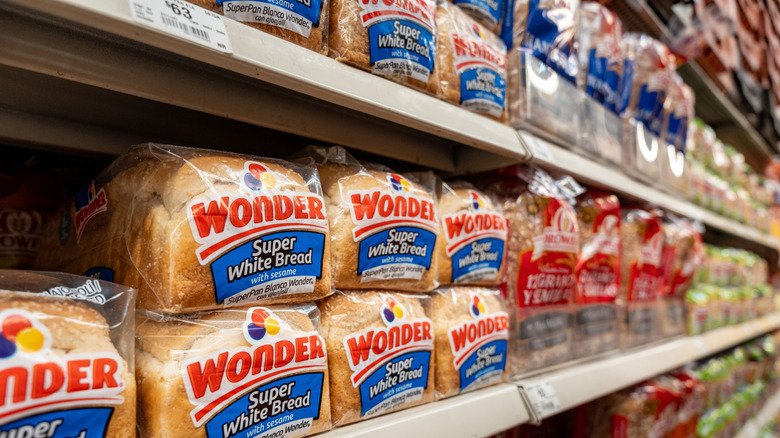
You're probably familiar with the fact that the bread you bake at home, or buy from a bakery, doesn't last very long — certainly not as long as the bread you get from the supermarket. The reason for supermarket bread's longevity is the fact that these loaves contain enzymes called amylase. These enzymes are linked to things like changing the texture of dough, improving the final shape of bread, and extending the shelf life. The reason we know about them and how to maximize their usefulness is — you guessed it — the military.
Amylase is present in all bread-making, but when you're making that loaf from scratch in your kitchen, the processes — including baking and the activation of yeast — destroy most of these enzymes. Thanks to a World War II-adjacent partnership between the military and Kansas State College, it was discovered that certain types of amylase survive the process and live to continue working their magic.
Bread with this new, longer shelf life was originally used in military rations, and spread to the commercial market. There's another sort of next-door neighbor to this tech, too. If you've ever wondered why products like tortillas can last so long on the shelves, that's because of another military-developed technology. That one involves things like the addition of various preservatives and antibacterials, which were developed back in the 1950s.
Salisbury steak
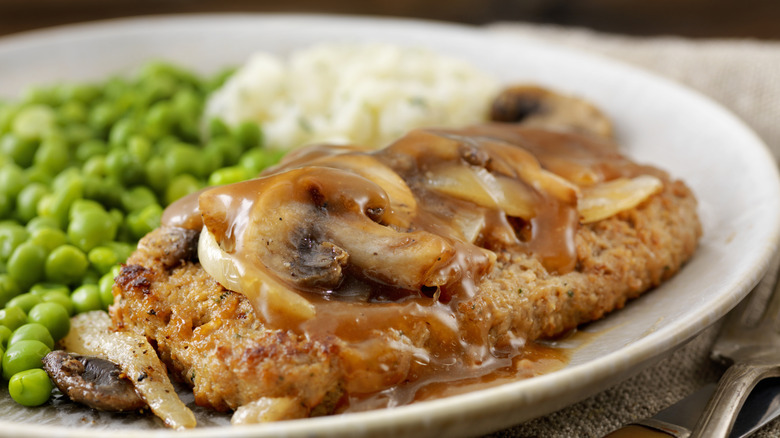
If you're craving some serious comfort food, Salisbury steak is guaranteed to hit the spot — and it's been comforting people for a long, long time. It's named for Dr. James Salisbury, a Civil War-era doctor who did a ton of research into how what we eat impacts how we feel.
At the time, Civil War soldiers' diets left much to be desired — and it left a lot of them ill. Salisbury was already an established doctor when he ultimately ended up joining the Union Army and was tasked with finding new ways to keep soldiers healthy. Based on his research into the importance of a varied diet, he advised giving men who were suffering from various ailments more meat.
He got specific, too, saying that finely chopped beef that was broiled and seasoned was the best option. Salisbury published his findings, and the idea spread, particularly the idea that his recommended preparation made it easy for an ailing digestive system to handle. It then became wildly popular, particularly during World War I, as a way to feed huge groups of people efficiently.
Self-stable sandwiches
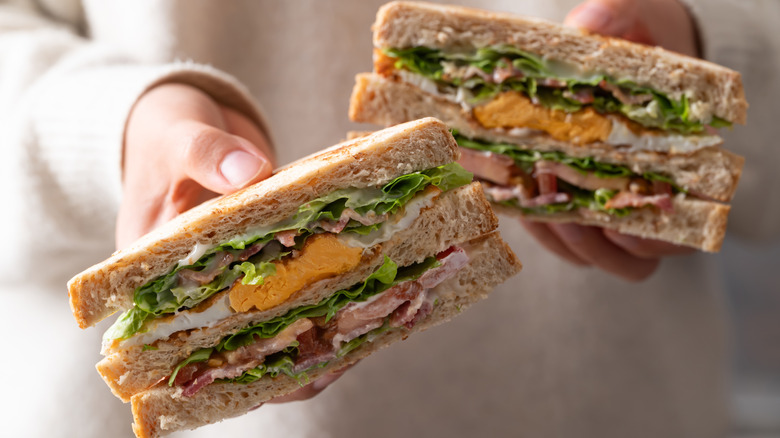
Everyone up to and including celebrity chefs has their tips for building stellar sandwiches, and it turns out that the U.S. military has some ideas on the matter, too. For them, it's all about longevity and shelf stability, and in 2011, a pretty neat discovery made headlines. The military — specifically, the U.S. Army Natick Soldier Research, Development, & Engineering Center — had created a sandwich with a two-year shelf life.
It's a wildly complicated procedure that basically required researchers to look at every component of the sandwich and figure out how to adjust things like moisture content and pH in order to stop bacterial growth — and they managed to do it. The sandwiches were reportedly pretty tasty, and they're still being made.
Fast forward to 2023, and there is a variety of these shelf-stable sandwiches being handed out to U.S. troops around the world. The military's food scientists have figured out how to prolong the freshness of everything from a barbecue chicken sandwich to an Italian pepperoni-and-sausage sandwich, which is pretty cool. They'll last about three years now, and while you might not find these at your favorite grocery store, you can find them in stores where you might go to get your apocalypse prep essentials.