

The Fast Food Fries That Stay Crisp The Longest
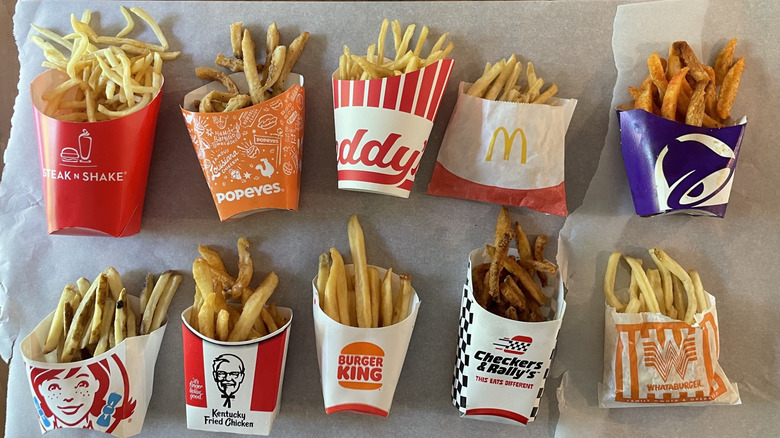
Have you ever wondered how long a French fry stays crisp? Like the age-old question, "How many licks to get to the center of a Tootsie Pop," the answer can seem highly subjective, as each restaurant offers a different size, cut, and recipe for their French fries. However, if you treat it like a standard science experiment with carefully monitored variables, you can get pretty close to an empirical truth about French fry crispness.
For this Tasting Table test, I set out to discover how long major fast food chain French fries stayed crisp. I focused on the classic rectangular shape, since curly and crinkle-cut fries soften at a different rate. The testing parameters were equally simple: I'd eat the fresh, hot fries immediately, trying a fry every minute to evaluate the texture, and stop the clock once the entire fry had gone soft and chewy.
Along the way, I noted when the fry first began to lose its crispness, usually starting at the chewy center. Only when the ends completely lost their snap did I deem it no longer crispy. Unsurprisingly, few of these fries made it past the 30-minute mark, with the overall range running from 0 to 33 minutes.
10. Taco Bell Nacho Fries
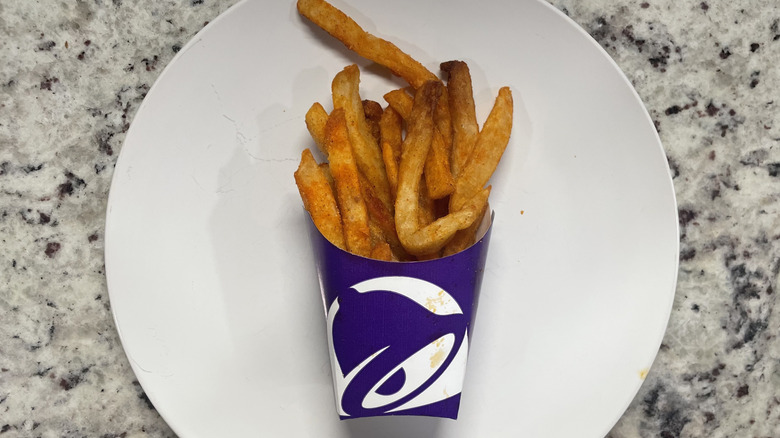
I followed one key guideline when ordering each French fry on this list: I asked for them freshly fried. It seemed only fair to try them while they were still hot, straight from the fryer basket. However, I don't know if my Taco Bell server didn't hear me or if these fries were truly this dismally mushy fresh out of the fryer, which seems improbable. Maybe they passed through a massive steam cloud or were pulled too early. Either way, these fries, while perfectly hot, were never crisp to begin with.
I couldn't start the clock, so I marked it as a zero. As mentioned above, there are a couple of possibilities for why these might not have had any crispness to note. First, the Taco Bell fries are significantly thicker than usual, so they soften faster because of the extra moisture from the extra potato. The other is that Taco Bell doesn't fry their fries long enough, which can lead to massively soggy fries. Sure, you could save them with the nifty air fryer trick, but why bother with something that never offered crisp texture to begin with?
9. Whataburger French Fries
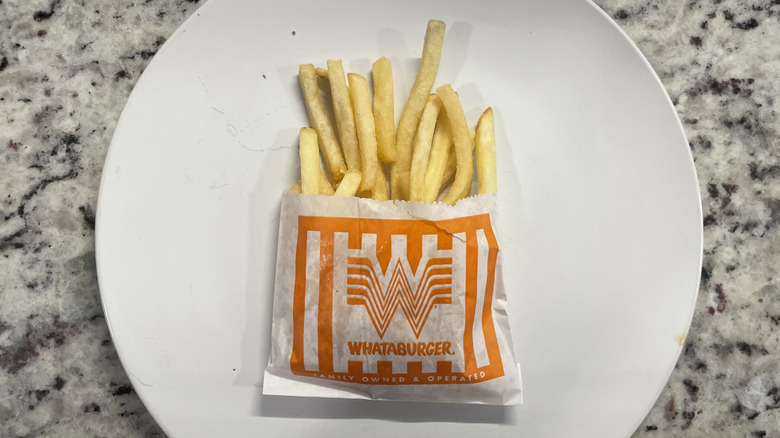
I'm a big fan of Whataburger fries, so much so that I've even claimed they should take the crown from McDonald's in taste. But there's a catch to this delicious fast food treat. You either eat them fast, or you don't eat them at all. Let's walk through the timeline.
On the first bite, you'll find the hot crispiness reminiscent of traditional fast-food fries. The tops and edges are crisp, but the middle filling still has a hint of tenderness. This lasts a good ten minutes, which, admittedly, is usually how long it takes me to finish these bad boys. But imagine, if you will, getting delayed by a bathroom break or a phone call. By the 12-minute mark, you'll notice the centers start to get mushy, and at 14 minutes, only the tips still have crispness. At 16 minutes, I had to call it.
8. Steak N Shake Beef Tallow Fries
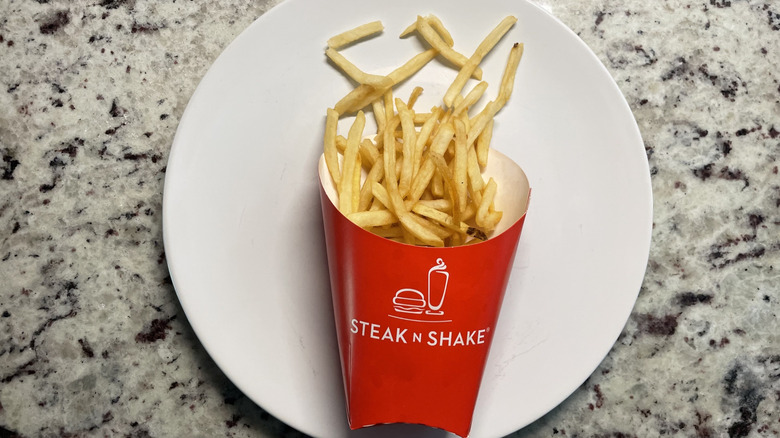
In 2025, Steak N Shake made the flavorful decision to switch from seed oils to 100% beef tallow for their French fries. I'm just one new fan won over by the retro restaurant's upgrade to quality ingredients, but I was curious how this different frying medium would affect the fries' crispness. Scientifically, beef tallow should make these crispier and less greasy than vegetable oil because it's more hydrophobic, meaning it's less likely to soak into the potato while frying. While I think tallow boosts the flavor of these fries and helps ensure an initially crisp exterior, I don't think it adds much longevity to the equation.
In the crispy timeline testing, I found it started off very strong, with superior crispiness thanks to its thin shape and the tallow fry. At 10 minutes, it was still good, but things took a turn at 14 minutes, with the middles going noticeably chewy. Over the next six minutes, the tips and ends lost the fight as well, with the fries going completely soft at the 20-minute mark. That's a respectable amount of time, but not as long as most of the other fries.
7. KFC Secret Recipe French Fries
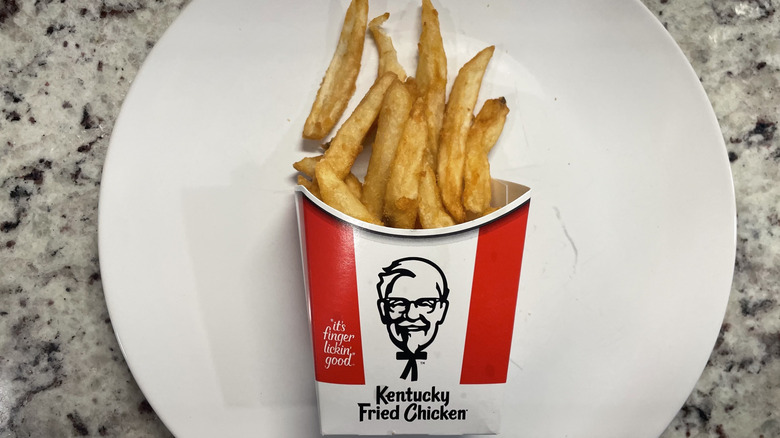
Once upon a time, I didn't even know KFC offered fries. Of course, they're a relatively recent addition to the KFC menu, debuting in 2020 as a replacement for the beloved potato wedges, a cult favorite that now only makes rare returns. The Secret Recipe Fries lean on a hefty dose of the classic secret seasoning, a mysterious mix that seems to include carrot powder, tomato powder, and onion powder. They also take a page out of Checkers' book and batter the fries before frying, creating an extra-thick, crispy coating. So how does this battered fry stand up to the timed test?
While I can't really recommend the slightly sour flavor of these fries (there's a reason they ranked so low in our KFC side-item review), they were perfectly crispy on my first bite. The uniform crunch lasted a good fourteen minutes before the middle softened. From there, the crispiness in the tips only lasted another 7 minutes, becoming completely mushy at 21 minutes. Since these weren't all that tasty even when hot, this mediocre crisp lifespan does little to redeem them.
6. Burger King Fries
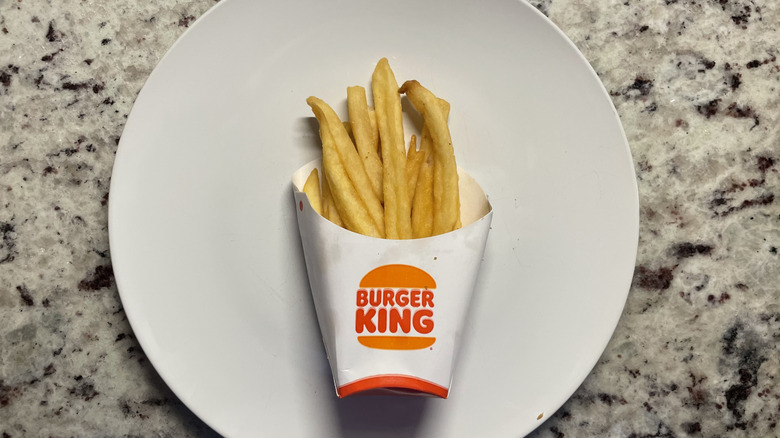
To set itself apart from fast-food fries like McDonald's and Wendy's, Burger King changed its recipe and offered these thicker fries around 2011. As a general rule, thicker fries tend to soften faster because of the added fluffy potato filling. This excess potato holds more steam, which makes the fry soggier. Still, I went in with an open mind, since Burger King claimed the coating it added to the fries made them significantly crispier.
When I started the clock on these fries, I wasn't as impressed with the overall crispness, as the centers already had a slightly soft give. However, the sharp, crunchy tips lasted an admirable amount of time, losing some of that textural brittleness around 14 minutes. They soldiered on for another 10 minutes before losing the rest of their crispness by minute 24. While I don't think the fries' thickness contributed to faster softening, I do think it kept them from reaching peak initial crispiness, which was a disappointment in its own right.
5. McDonald's Fries
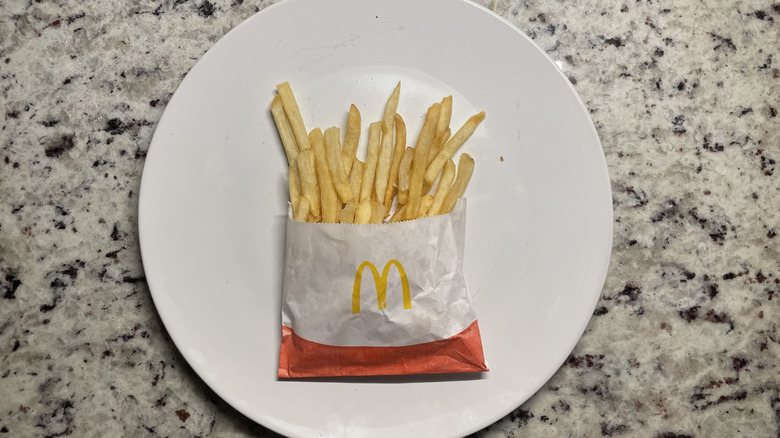
You can't talk about fast food French fries without the McDonald's brand looming large in the room. The Golden Arches may not have invented fries, but the chain certainly streamlined and refined them into the beloved staple they are today.
Though the franchise switched its frying medium from beef tallow to vegetable oil in 1990, McDonald's still uses a beef flavoring agent in the oil to preserve the iconic savory taste. Beyond the fries' relatively thin shape, McDonald's has maintained a reputation for crisp fries by keeping them hot and limiting batches to no more than 5 minutes in heat-lamp areas, according to procedure. With that in mind, I was curious how long the world's most famous French fry could stay crisp.
Well, despite its grandiose reputation, this fry landed right smack dab in the middle of my stopwatch times. It was excellently crisp for the first ten minutes, waffling at 12, and then began softening at the 15-minute mark (only one minute ahead of the KFC and Burger King fries' first signs of chewiness). At 25 minutes, the mealy softness reached the fry's very tip, making it borderline inedible.
4. Popeyes Cajun Fries
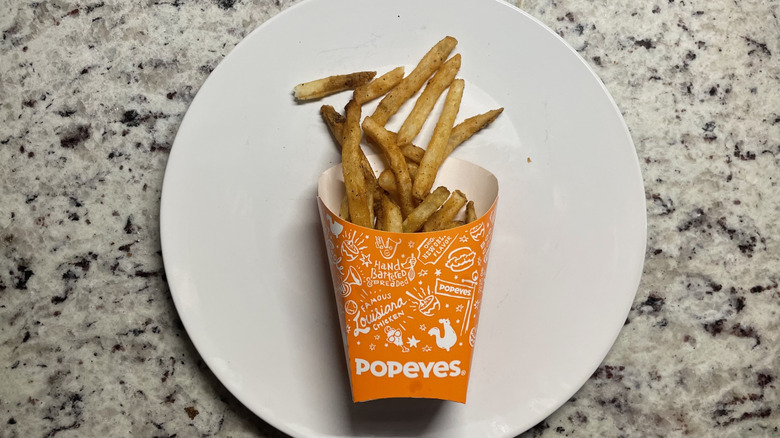
The Popeyes Cajun Fries look a lot like the KFC ones on paper. Both are heavily seasoned, thicker than average, and come with an extra-crunchy coating. But where the KFC fries fell flat on flavor, Popeyes brings a much better-balanced, zesty seasoning blend. Flavor notes aside, the initial crispiness and fry texture were almost identical. Did that mean that the fries would have similar crunchy lifespans?
In the end, Popeyes has the edge, mainly because the fries, though thick, were not nearly as chunky as the KFC ones. I found these to be holistically crispy for 16 minutes, a truly impressive stretch, before they started to soften in the middle. Even with chewier centers, the crunchy ends held up for another 13 minutes, meaning these fries offered crispness for 29 minutes. One small flaw in the container design is that the longer container seemed to trap smaller pieces in a steam pit at the bottom, making them soggy almost immediately. However, the majority of the fries still had plenty of room to breathe and stay crisp.
3. Wendy's Hot & Crispy French Fries
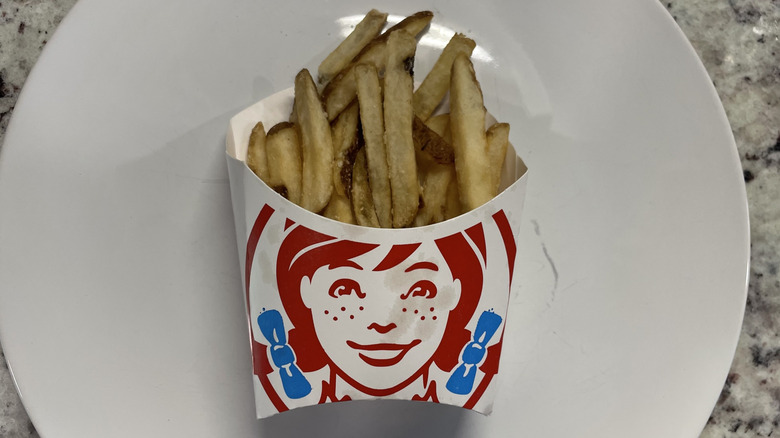
In 2021, Wendy's changed its French fry formula after an exhaustive round of tests. The fries would still sport the natural cut, with actual potato skin peeking at the tips, but they'd lack uniform edges and feature a new, super-thin batter that would aid in an extra-crispy texture. During the rollout of the new fry, Wendy's made a bold claim: from the fryer to the container, the new and improved Hot & Crispy French Fry should stay crisp and toasty for 30 minutes. And I'll be dipped if the mad scientists over at Wendy's didn't deliver on this outlandish promise.
Beyond the flavor and extra bit of texture from the potato skin, the Wendy's fries were divinely crispy right out of the gate. This uniform crispiness held out until the 20-minute mark, when I finally noticed soft chewiness in the center of the fry. Sure enough, the fries only lost the crunchy fight at the 30-minute mark, no more, no less.
2. Checkers/Rally's Fries
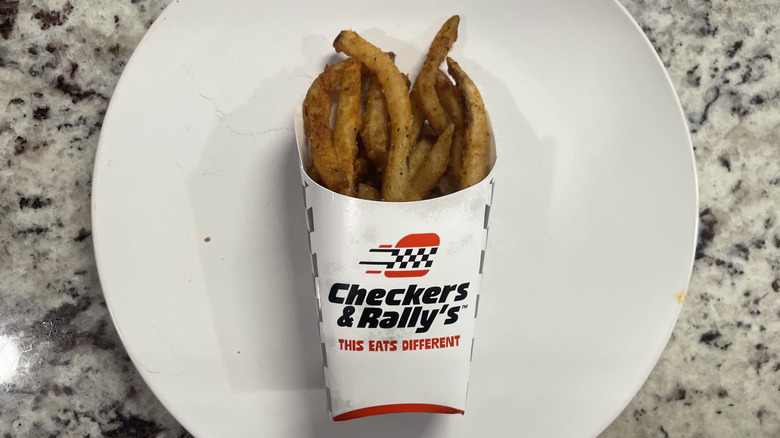
Nothing is tastier than a hot, crispy batch of fries from Checkers. There may also be nothing more disgusting than a cold batch of fries from Checkers. Time is particularly unkind to these deep-fried spuds, possibly because the fries have a thick batter that traps moisture in with the potato and soaks up excess oil as it cools, turning them into a greasy, gooey mess.
Luckily, these fries can stay crisp for a while. I got superior crunch for the first 13 minutes, but at 14 the middles began to go squishy. That's not surprising considering that Checkers fries tend to be quite long. Though the middles went relatively quickly, the crispy ends had serious staying power, only giving up the ghost at 31 minutes.
One catch to the crispy test, though. While many fries maintained crispiness for half an hour, the ones that settled at the bottom were as spongy and soft as gummy worms. Like the Popeyes container, the Checkers cup is too long and narrow, which can leave the base unappetizing. For even crispness across the board, pull them out of the box so heat condensation doesn't ruin the bottom fries.
1. Freddy's Shoestring Fries
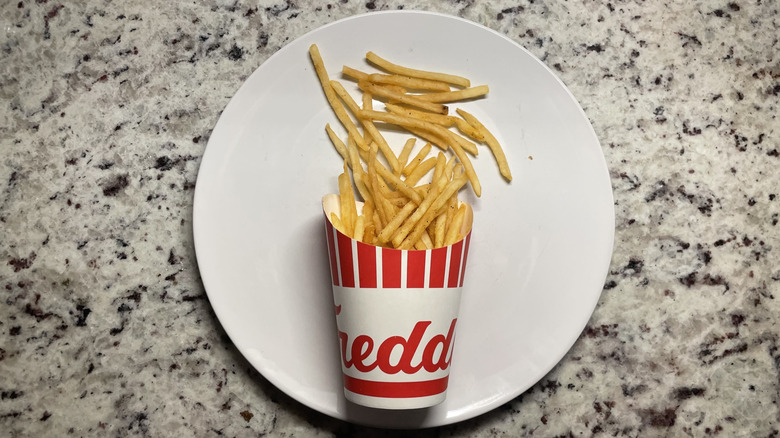
If I had to bet on which fries would stay crisp the longest, I'd probably choose these for obvious scientific reasons. As true shoestring fries, these are the thinnest on the list, so they have less potato inside, which helps them stay crisp longer. Sure enough, these reminded me more of a potato chip than a French fry, keeping their complete crispy composure for over half an hour.
For the first 15 minutes, I couldn't tell the difference between a fresh fry and a fourteen-minute-old fry. They all were crisp and expertly crunchy. Only by the 20-minute mark did I notice a slight softness toward the center. The crispy ends held up for another 13 minutes, giving Freddy's Shoestring Fries a winning lifespan of 33 minutes. Though I give the shoestring cut a lot of credit for these fries' enduring crunchiness, I have to hand it to Freddy's for achieving these dual textures. Sure, it was crispy in the right spots for a long time, but it was also fluffy where it counted.
My Methodology
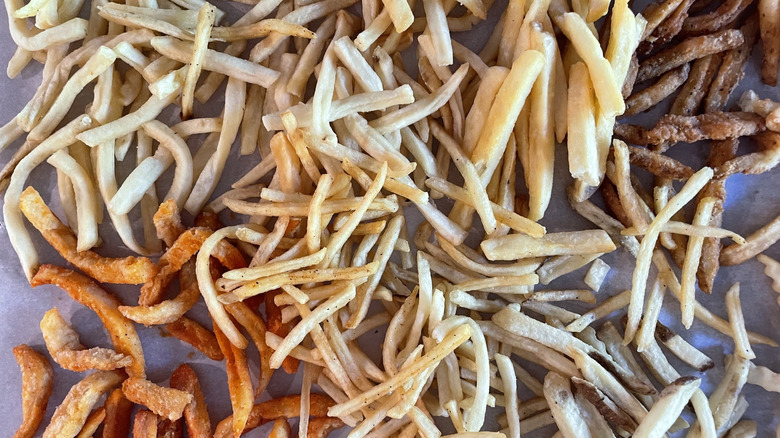
When choosing which fries to test, I narrowed my focus to traditional, rectangular-cut fries, since curly and crinkle-cut fries seemed to soften at a different rate because of their significant shape differences. Otherwise, I selected restaurants based on whether they were fast-food chains (as opposed to fast-casual spots like Shake Shack and Five Guys) and their geographic proximity to my location in Northern Florida.
While ordering, I asked for each batch of fries to be made fresh to give the fairest appraisal of crispness. After ordering, I immediately began tasting and timing the fries, trying one every minute until they went completely soft. While evaluating each fry, I tried to note how the texture changed over time, documenting when the centers became soft versus the tips. I also noted when the fries packed or buried near the bottom of the container went mushy, as those tended to go soft much faster than the rest.
This test focuses on texture, not taste. Some of the fries that went soft quickly were tasty, ranking very highly in our best fast food French fry round-up. That also means that while the fries may have kept their crisp texture, the flavor wasn't at its best. So, just as you should enjoy your fries, take this texture measurement with a grain of salt.