

The 11 Most Important Food Inventions Of The '80s
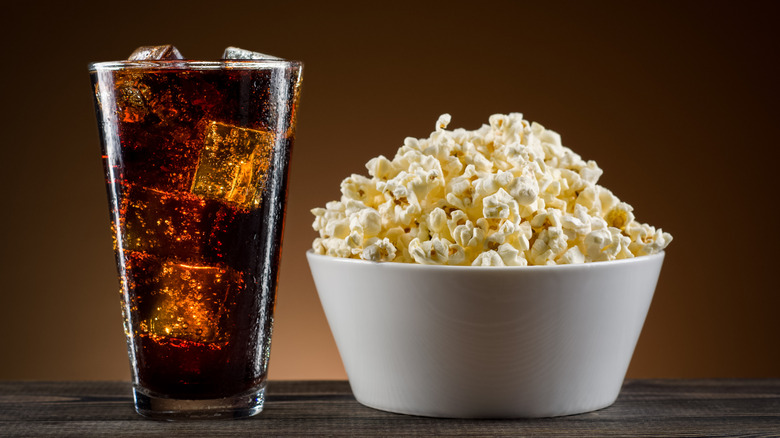
Along with big hair, bright clothes, and synthpop, the 1980s also gave us many enduring food inventions. While we've forgotten plenty of foods from the '80s, others have stood the test of time. It was a magical time for food inventions, with advertising campaigns that made us feel like we were part of something big and exciting (we were!), along with World's Fair displays for products that well deserved their spot.
Not all the food inventions of the 1980s were the first of their kind, but their inventors found ways to create products that stood apart from what came before, with attributes or advertising campaigns that made them unique. Many of these inventions inspired future food inventions or even whole food or drink genres. Some inventions changed foods forever by improving shelf stability. And, of course, some inventions created new options for convenience meals.
People are still crazy about most of these food inventions from the '80s, and a few are even gaining popularity momentum today. This list of 1980s food inventions will not only take you down memory lane, but also show you the beginnings of foods you likely still enjoy today.
Lean Cuisine brought us healthier frozen dinners
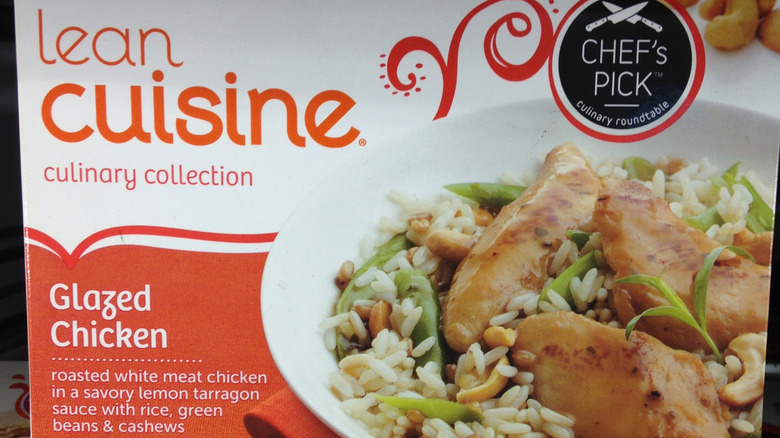
TV dinners were a groundbreaking invention in the 1950s, but they needed a makeover for the Reebok- and leg-warmer-wearing aerobics enthusiasts of the 1980s. The health-conscious set certainly wasn't going to buy a Hungry-Man TV dinner after a workout, which is what Lean Cuisine counted on when it hit the frozen-food aisle in 1981.
The brand has traditionally marketed itself to women concerned about their health and figure. By 1980, women made up 43% of the U.S. workforce, according to the Institute of Education Sciences. Lean Cuisine recognized a market for healthier frozen food for women (or men) who were more health-conscious but sometimes too busy to make a home-cooked meal. Rather than huge portions, the portions were well controlled. Plus, they focused on the calories and nutritional content of these meals. Additionally, these frozen meals were fancier than meat-and-potatoes fare, with options like chicken à l'orange over wild rice and chicken cacciatore over pasta.
Lean Cuisine's success brought other health-conscious brands to the market. If you've shopped for frozen TV dinners lately, you've likely seen brands like Healthy Choice and Vital Pursuit, which still focus on portion control and nutritional macros, all thanks to Lean Cuisine leading the way.
All-purpose Yukon Gold potatoes hit the produce aisles
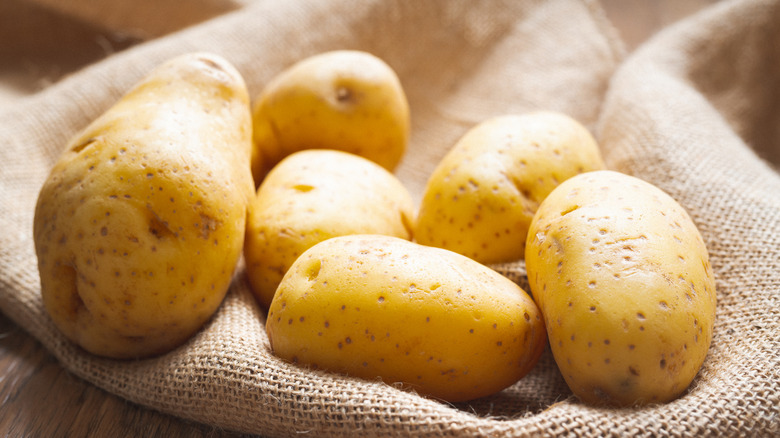
A less glamorous but enduring food invention that showed up in grocery stores in the 1980s was the Yukon Gold potato. Yukon Golds work in practically any potato dish, with thin, smooth skin; moist, creamy flesh; medium starchiness; and a rich, buttery flavor that potato lovers appreciate.
The breeding process began in 1966, but it wasn't until 1980 that Canada officially registered it. As the 1980s progressed, it started appearing in more and more stores in Canada and the U.S. While potatoes come in a wide range of varieties and colors, yellow potatoes weren't common in North America at the time. So, it was somewhat of a novelty at first. However, once people tried this variety, they kept buying it because it wasn't overly waxy or overly starchy, so it worked for a variety of potato dishes, from boiled and roasted to fried and mashed.
Granted, they weren't as fluffy as russets, which meant people might not buy them as often for baked potatoes. Still, having these in your pantry meant you had a medium-starch potato that works for everything from French fries and gratin to potato salad and soups. While other potatoes have come to market over the years, this one remains a steady favorite you can still find in almost any grocery store.
Ultra high temperature milk changed milk's potential shelf life
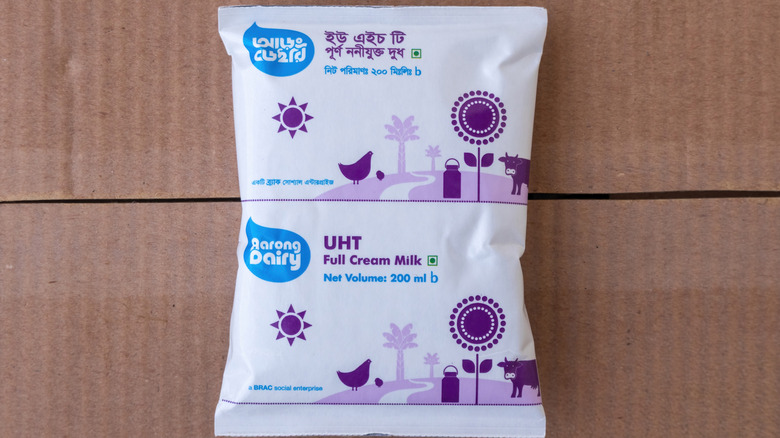
Louis Pasteur developed pasteurization in 1862 to heat liquids and kill numerous pathogens that could make people sick. In 1981, the FDA approved a packaging process for ultra-high-temperature (UHT) milk. UHT pasteurization kills even more pathogens, extending milk's shelf life without refrigeration. This shelf-stable milk got plenty of publicity, including a display at the 1982 World's Fair.
Pasteurized milk differs significantly from ultra-high-temperature pasteurized milk. Producers heat ordinary pasteurized milk only to 161 degrees Fahrenheit for 15 seconds. The lower processing temperature, below the boiling point, kills many pathogens while helping preserve the milk's nutritional value. Afterward, the milk can stay fresh in the refrigerator for only 10-21 days before it starts to spoil.
However, ultra-high-temperature pasteurization heats milk above the boiling point and provides even more protection against spoilage by killing more pathogens. Producers heat UHT milk to 280 degrees Fahrenheit for two to four seconds, then cool it rapidly. Those few seconds of high heat make the milk shelf-stable for six months or more in a sterile, hermetically sealed container without refrigeration. However, once it's opened, it must be refrigerated and has the same shelf life as regular pasteurized milk.
The world started drinking Diet Coke
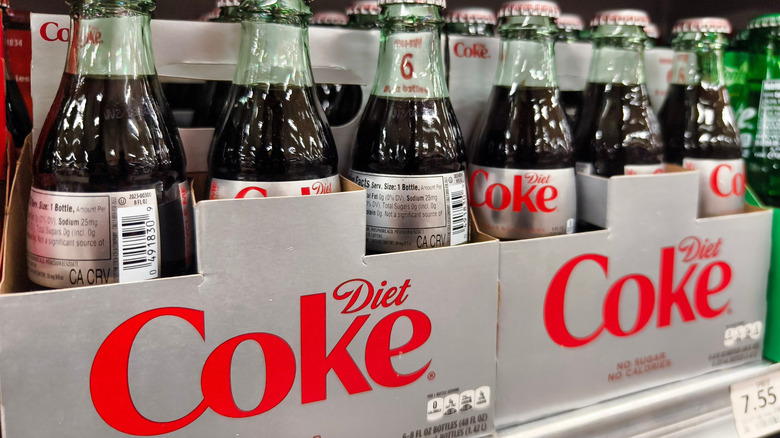
It's hard to imagine a world without diet sodas, and Diet Coke wasn't the first, but it was the first to focus on flavor rather than just being a low- or no-sugar alternative. The first diet sodas came out locally in the 1950s, with Coca-Cola launching TaB as the first diet soda available nationwide in 1963. However, when Coca-Cola announced a new diet version of its classic Coke beverage in 1982, it changed the diet soda industry forever.
When Coca-Cola unveiled Diet Coke, classic Coca-Cola had been on the market for nearly 100 years, and the company considered it its most significant new offering since the original hit the market. Its advertising dominated the airwaves, emphasizing that it had fewer than one calorie, tasted great, and that people would buy it for the flavor alone. After its launch, Diet Coke immediately became the most popular diet soda. Within a year, it was the most popular soda among women and ranked third in total soda sales, behind Coca-Cola and Pepsi.
Interestingly, Diet Pepsi had existed since 1964, riding on TaB's success. However, Diet Coke's "just for the taste of it" campaign changed how people thought about diet sodas forever. Suddenly, diet sodas weren't just for dietary restrictions; they were poised to become a pop culture phenomenon.
Vegetarians got their first commercially available veggie burgers
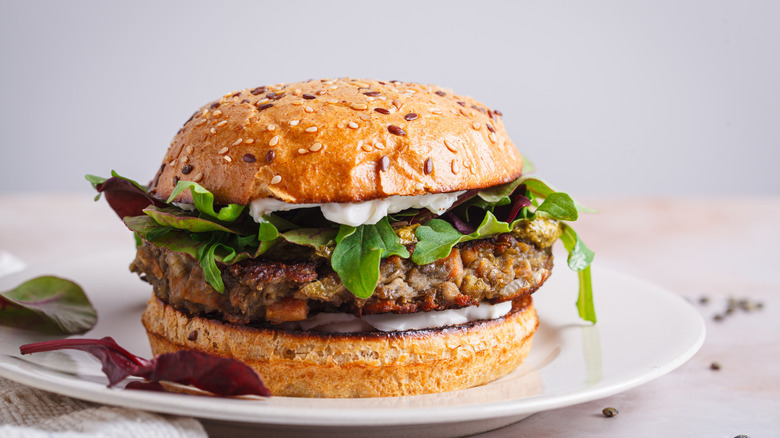
It's never been easy for vegetarians to find great meal options at restaurants, but the first real progress came with the invention of the first commercially available veggie burger in the U.K. in 1982. The concept wasn't new in the 1980s, as recipes for meatless burgers had existed since at least 1969. However, it wasn't until the 1980s that you could buy them to make at home without creating them from scratch.
Gregory Sams, a vegetarian who had never even eaten a beef burger, created this veggie burger. It required much experimentation at his London restaurant, SEED, before it was ready for the masses. His original VegeBurger was a dry mix that consumers had to rehydrate with water and fry into a patty. The mix contained oats, wheat gluten, a proprietary mixture of dried herbs, dried tomatoes, dried onions, sesame, and soy. It was wildly successful and sold in the millions.
By 1984, he was selling a frozen version of the VegeBurger that looked much more like today's frozen veggie burgers. It wasn't until the 1990s that other companies like Gardenburger and Boca figured out how to make their own commercially available veggie burgers and started raking in profits like VegeBurger. Today, the market is flooded with veggie burger options, some tasting better than others.
The first bottled ranch dressing arrived on the scene
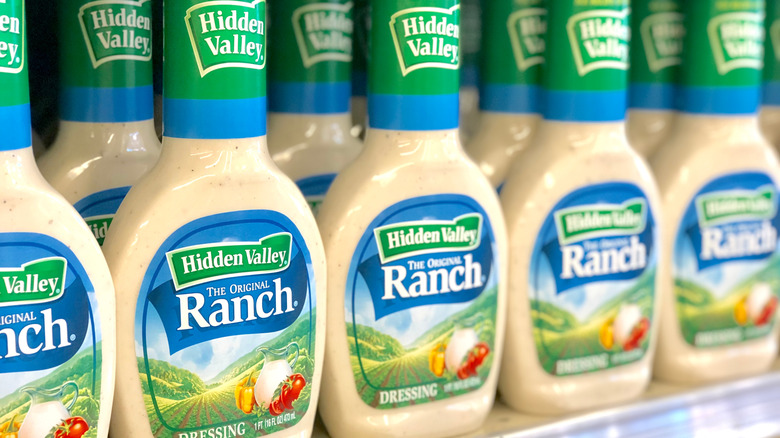
Ranch dressing has been the top-selling dressing since the early 1990s, and much of that success stems from the introduction of the first bottled ranch dressing in 1983. The obsession with bottled ranch dressing shows no sign of slowing, with visitors to the U.S. for the 2026 World Cup leaving with bottles of ranch dressing in their luggage.
Ranch dressing dates back to 1954, when Steve Henson invented the salad dressing to add to the salads he made for guests at his dude ranch in California, Hidden Valley Ranch. Guests loved the dressing so much they wanted to take it home. So, he started selling packets of dried Hidden Valley Ranch mix.
In 1983, Hidden Valley Ranch dressing expanded into a shelf-stable bottled dressing in various flavors. Homemade ranch dressing made with fresh ingredients or packets of dried ranch mix might taste better and cost less to make, but the convenience of having it pre-made and ready to pour is undeniable. It wasn't long before other brands followed suit and created their own versions. The first ones we remember from the 1980s were Kraft Ranch and Wish-Bone Ranch, with many more to follow.
We got our first shelf-stable buttery microwave popcorn
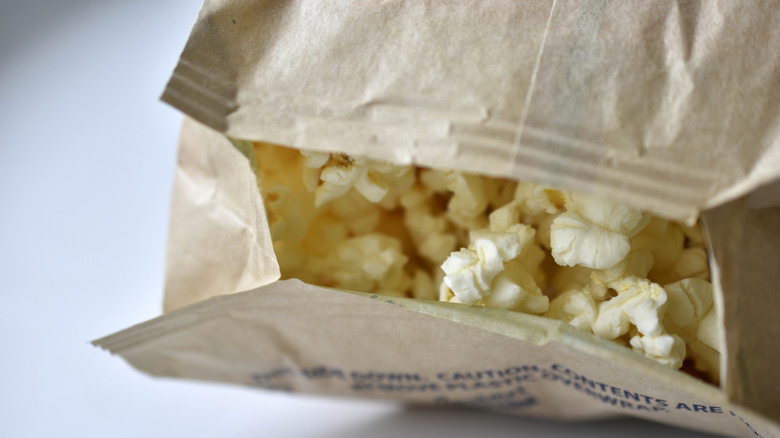
Buttery microwavable popcorn might seem like it's been around forever, but it wasn't always shelf-stable. The earliest microwave popcorn with real dairy butter had to stay cold to avoid spoiling, which is why Golden Valley's 1984 invention of Act II shelf-stable, buttered microwave popcorn was so groundbreaking.
Popcorn actually helped lead to the invention of the microwave in the first place: in 1945, Percy Spencer noticed that microwaves could make popcorn pop and went on to invent the microwave oven. Spencer then patented the idea of popping a cob of popping corn in a bag in 1949. Granted, that didn't turn out to be the best way to pop corn in the microwave. By the 1970s, companies were selling loose-kernel microwave popcorn in vending machines. Before Act II, if you wanted microwave popcorn made with real dairy butter, it had to be frozen or refrigerated.
So, those vending machines had to be refrigerated, too. If you can't remember seeing refrigerated or frozen microwave popcorn for sale, or having to get it from a refrigerated vending machine, since the 1980s, you'll realize how revolutionary shelf-stable, buttery microwave popcorn was for the industry.
Lunchables began a new craze of premade lunchbox meals
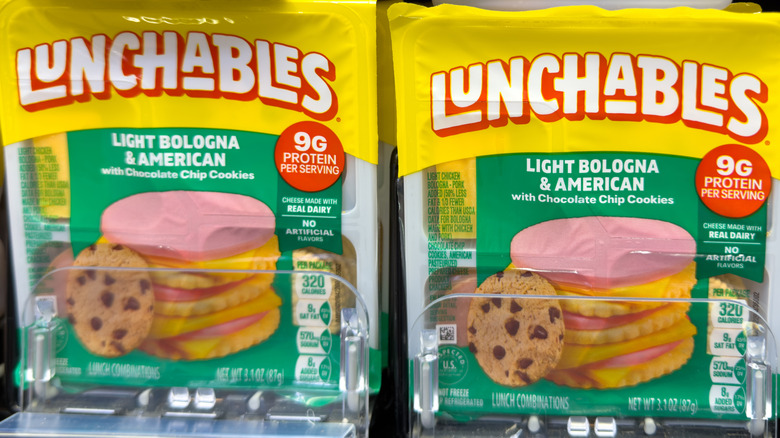
Processed convenience foods had been popular for decades by the 1980s, but Lunchables' creation in 1985 made it possible to pack a multi-ingredient lunch with a single product. Oscar Mayer created Lunchables to sell more of its bologna, which was declining in popularity. However, marketing these new Lunchables to children and working mothers was effective enough to turn the concept into an enduring lunchbox classic.
The first Lunchable was designed to mimic the feel of a TV dinner on a smaller scale, cheap and convenient rather than tailored to specific dietary needs. Each compartment contained a different ingredient you could mix and match: buttery crackers, cracker-sized pieces of cheap processed cheese, and cracker-sized pieces of bologna. People started buying the product repeatedly, and it went from a way to sell bologna people no longer bought to a product that made the company millions in profit.
The product has evolved over the years, with Lunchables ranging from disappointing mozza sticks to superior, extra-cheesy pizzas. Plus, you now get cookies with your bologna-themed Lunchables. Oscar Mayer's competitors still make similar products today, like Armour LunchMakers and Hillshire Farm's snack kits.
Cherry Coke inspired more flavored soda remixes
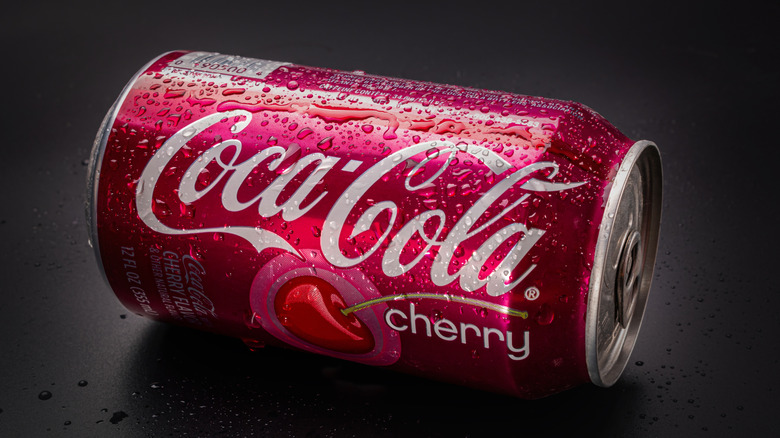
The Coca-Cola Company seems to have made a habit in the 1980s of "inventing" something that was not necessarily new, but that redefined the genre. In 1982, that product was Cherry Coke. It was the first launch of a cherry-flavored version of its popular soda, and it inspired many more flavor upgrades to come.
You're absolutely right that you could get cherry Cokes at soda fountains long before 1982. Cherry Coke's popularity as a fountain drink dates back to the late 1800s, which helped Coca-Cola predict that a canned version would be a hit. So, when the World's Fair came to the U.S. in 1982, the Coca-Cola company was ready with canned Cherry Coke to offer fairgoers.
Granted, Cherry Coke didn't hit shelves nationwide until 1985, giving Pepsi a chance to put Cherry Pepsi on shelves in many locations before Cherry Coke. Other companies soon followed Coke's lead in making cherry versions of their sodas, like Cherry 7-Up in 1987. Now, we can hardly imagine the soda landscape without cherry versions of the OG drink, plus a revolving door of other flavor flankers like blackberry, orange cream, mango, and even strawberry kiwi. Still, Cherry Coke remains a classic that never fails to please.
Snapple iced tea became the first flavored bottled iced tea
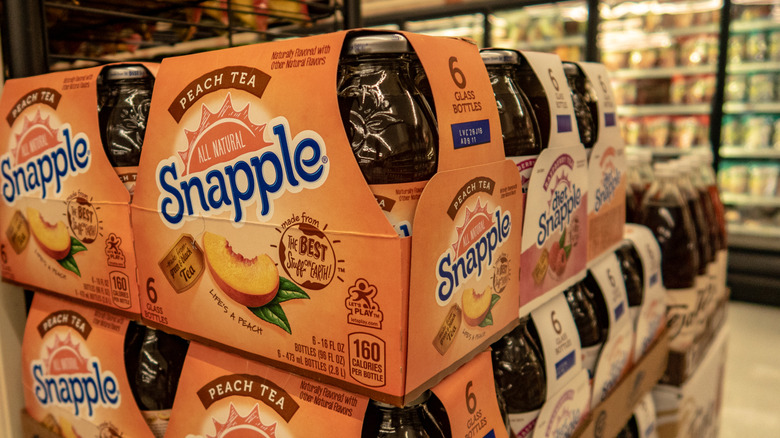
When Snapple put its first bottled iced tea on shelves in 1987, it was an instant hit. Lipton had already launched canned iced tea in 1972, but Snapple was different. Its hot-bottling process let the company offer it without additives or preservatives. Plus, it offered a myriad of flavors.
The first Snapple iced tea flavor was lemon, but soon a variety of fruit flavors joined the lineup. Snapple represented something new, and perhaps healthier, on convenience store shelves because it contained natural flavors and no preservatives. One of the company's founders, Arnold Greenberg, told the New York Times that Snapple tea was so successful because it was "the first ready-to-drink iced tea that didn't taste like battery acid." After Snapple's success, Coca-Cola and Pepsi launched their own lines of cold tea, and more companies like Arizona jumped on the cold-tea bandwagon as well.
Snapple iced tea not only changed the cold tea industry, but also helped usher in the new era of New Age drinks that emerged and grew stronger in the 1990s. Many of these New Age drinks, like Clearly Canadian, focused on offering a variety of fruit flavors, having less sugar, or having natural ingredients.
Boba tea first gave us tea with texture
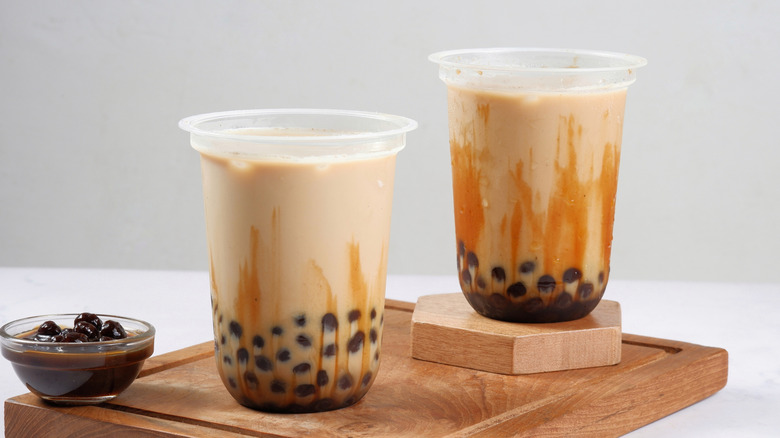
While it might not have hit your city or country until much later, boba tea (or bubble tea) first became a phenomenon in Taiwan tea shops in the 1980s. We're not sure which specific tea shop invented it because two tea shops claimed it (and sued each other over it), but someone in Tainan, Taiwan, first created the drink concept in 1986. While boba tea made it to the U.S. in the 1990s, it didn't become popular until the 2010s, when the viral "Bobalife" song on social media propelled it into the mainstream.
The boba tea origin story varies depending on who is telling it. The Chun Shui Tang tea shop says it created boba tea while experimenting with toppings and trying tapioca balls for textural interest. Meanwhile, the founder of the Hanlin Tea Room claims he invented it, inspired by his grandmother selling sugar water with tapioca balls.
While the earliest version of bubble tea was a simple mix of black tea and non-dairy creamer with tapioca balls, boba tea has changed a lot over the years. You'll find it with various fruit powders, flavored syrups, and even textural ingredients beyond tapioca balls, like various jellies or red beans. So, the creativity was just beginning when people added tapioca balls to tea decades ago.