

Thrifters Beware: 5 Vintage Dishware Brands You May Not Realize Contain Lead
We may receive a commission on purchases made from links.
The saying that "they don't make them like they used to" is certainly true, but in some cases, that's not a bad thing. It wasn't until 1971 that the FDA began to implement standards around the concentration of lead in ceramics, and subsequently banned the use of lead paint on dishware and other consumer items in 1978. Before this time, the use of lead was completely unregulated, which means your attractive vintage dishware could contain what would now be considered dangerous levels of lead.
Lead was traditionally added to ceramic glazes to provide a durable surface, a glossy finish, and rich, bright colors. It's been used for thousands of years, even though the dangers were well documented. The federal limit for the total lead content in any product to be used by children is 90 parts per million (ppm), but there are separate limits for the amount of leachable lead in tableware — meaning lead that can potentially enter your food. The levels vary between pieces, but range from 0.5 ppm for cups to 3 ppm for flatware.
The FDA maintains that there are no safe levels of lead exposure, but these are the limits at which it will consider legal action against manufacturers. This is the case for dinnerware being produced now, but vintage plates are a completely different story. Any food or drink served on this tableware can pick up lead from the glaze, which will then make its way into your body, so you might want to consider leaving behind those vintage dishes you've been eying at the thrift store — and if you already own plates or cups from any of the five brands listed below, perhaps switch to using them for display purposes only.
Corelle
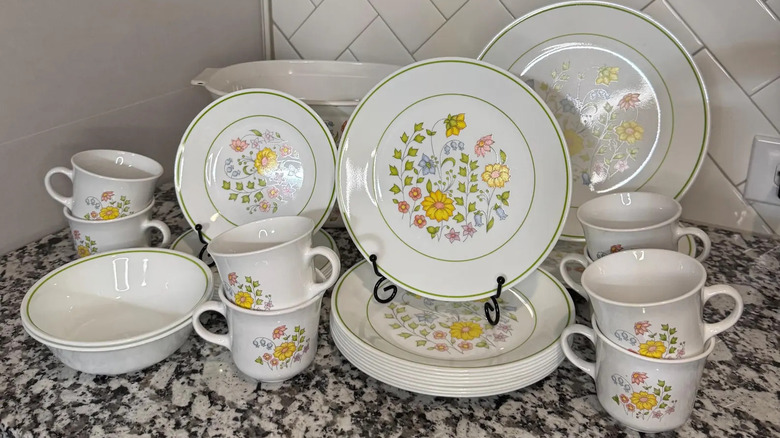
Corelle (and sister brand CorningWare) is one name that might not be a total surprise to see here, after making the news in 2022. A Facebook post from the New Hampshire Department of Health and Human Services singled out vintage Corelle dishes as a potential source of lead exposure in the home. Although lead was commonly used before modern regulations, Corelle executives decided to publicly respond on the topic after the post went viral.
The brand confirmed the use of lead in their products made before 2000, but pointed out that the levels complied with regulations at the time of production. As for pieces produced before 2000, Corelle stated that further testing was needed to determine their safety. However, in a separate statement issued to a consumer, Corelle's customer service team suggested that pre-2000 pieces be used for decorative purposes only.
It's these older pieces that are the most valuable Corelle finds, so it's possible you weren't planning to eat off them anyway, but the lead levels will probably make that decision easier. A plate with the famous Meadow pattern was tested to reveal 11,300 ppm of lead, while a Butterfly Gold plate had 18,700 ppm lead. Now, these figures tell you the total amount of lead in the product, not how much can leach into your food, but they are still well above the 90 ppm considered safe for use by children.
Fiestaware
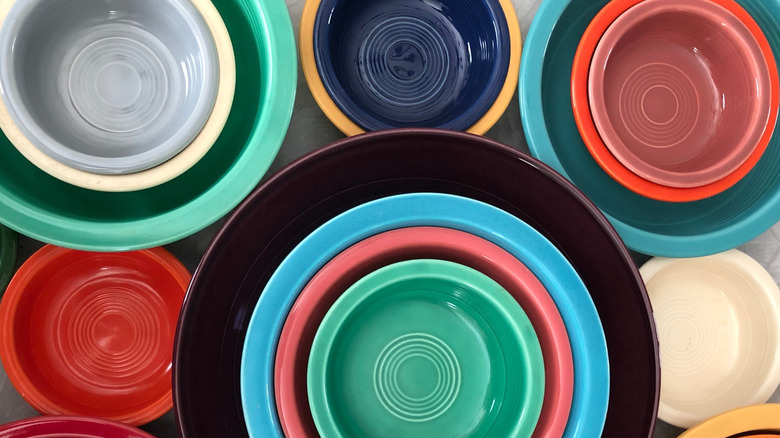
Once you understand that lead was responsible for creating almost impossibly bright glazes, you're going to look at Fiestaware in a new light. The original Fiesta collection was released in 1936, with a modern design in keeping with the Art Deco movement and a bright color palette intended to lift spirits during the Great Depression. The original line consisted of five colors — red, ivory, blue, green, and yellow — with turquoise introduced a year later. These eye-catching colors certainly had the desired effect, with more than a million pieces produced in the first two years.
Fiestaware is well known for using uranium in its glazes, with the red colorway often nicknamed "radioactive red," but during the original run, these plates also contained high levels of detectable lead. Independent testing on vintage Fiestaware has turned up results of 289,400 ppm on the turquoise-glazed pieces, and 563,800 ppm of lead on plates with the yellow glaze.
What's handy for collectors of Fiesta tableware is that the brand has two distinct eras, as the original line ceased production in 1972 before production was revived in 1986. Modern Fiestaware has been lead-safe since day one, meaning that none is added during production and that the levels of leachable lead meet FDA standards.
Pyrex
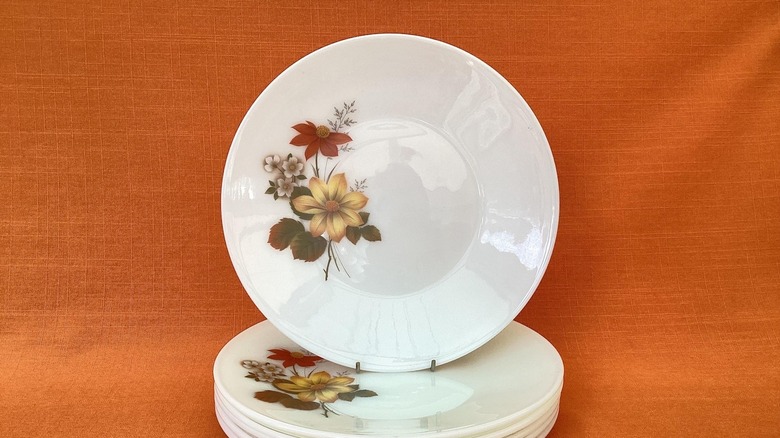
Pyrex is probably best known for its cookware, but from the 1950s through to the 1980s, the brand also produced a range of colorful, patterned tableware for homes and restaurants. It's this tableware that's possibly more relevant when considering the lead content of vintage Pyrex. The colored patterns on pieces are thought to be the source of the lead, rather than the underlying glass. On classic mixing bowls and baking dishes, these vibrant designs are found on the exterior where they don't come into contact with food.
For tableware, dinner plates and saucers in particular, you're going to be eating off of the patterned (and potentially lead-laden) surface. Soup bowls with the design on the outside could be considered safer, but with any cups, you're putting the decorated exterior up to your mouth every time you take a sip. This becomes problematic when you see just how much lead is present in these designs. One example from the Crazy Daisy line contained 39,300 ppm of lead.
It's not just the intricate patterns you need to look out for either — any colored glaze on vintage Pyrex pieces could contain lead. A cup from the Pyrex pink stripe dinner set was shown to contain 249,700 ppm total detectable lead, while a plain blue Pyrex mug showed levels of 71,800 ppm.
Franciscan
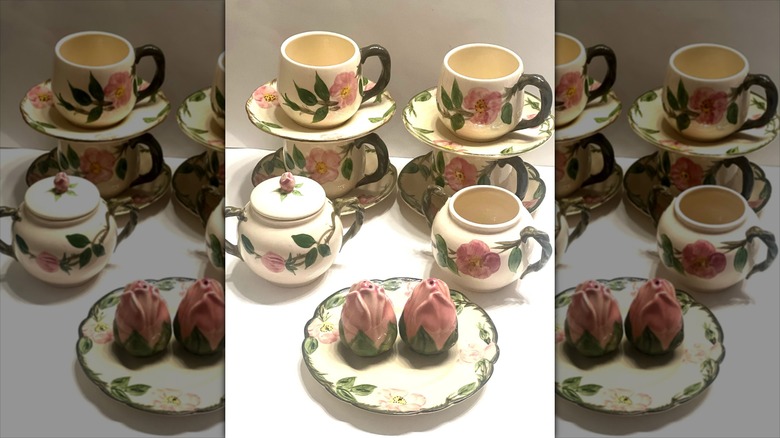
Along with bright colors and glossy glazes, raised or hand-painted decorative designs can be an indication that your dinnerware contains lead. This is probably going to bring to mind many of the plates you ate off as a child: the pink flowers and green leaves of a Desert Rose set, a red ripe Apple design, or the iconic Ivy pattern that "I Love Lucy" popularized. These popular designs were all made by Franciscan tableware, and despite their ubiquity at one time, are now considered valuable collectibles.
Franciscan tableware was first produced all the way back in 1934, long before any FDA regulations, and, as with many ceramics at the time, contained lead in the glaze. Just how much lead depends on the date and place of manufacture. The brand's most popular design, Desert Rose, was produced from 1941 to 1984 in the U.S., then in England after the company was acquired by Wedgwood, followed by offshore production in China from 2003 under the Wedgwood name.
Testing from a 1941 Desert Rose plate showed levels of 122,200 ppm of detectable lead, which is high even for ceramics of this era. What's more concerning is that a plate from 1995 with the same design tested at 47,800 ppm. A statement from the FDA suggests that it's only cracked or pitted glaze that could lead to leaching, but other experts suggest using pieces sparingly to limit exposure.
Spode
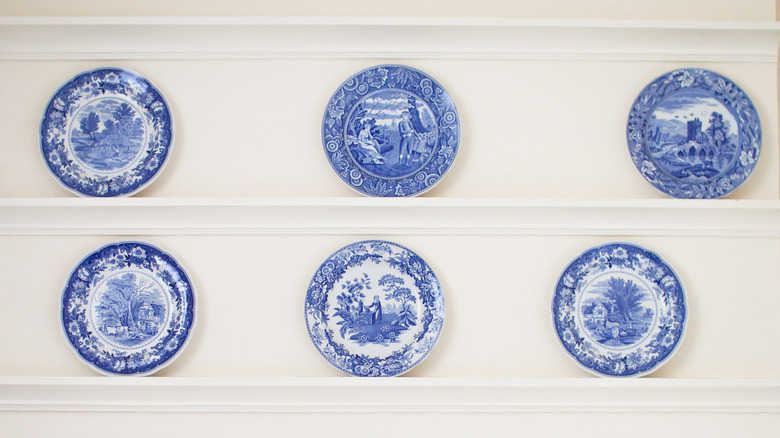
The tricky thing about buying (or even inheriting) vintage Spode is that it's not always obvious at a glance just how old it is. Part of the appeal of the brand is that classic patterns such as Blue Willow and the collectable Blue Italian line have remained consistent for decades. This is good news if you're trying to get your hands on missing pieces to a set, but it also means you'll need to investigate further if you want to know the lead content.
The website for the Spode brand (now owned by the Portmeirion Group) contains a safety section on the topic. It states that they have voluntarily complied with U.S. regulations for the past 50 years (despite being produced in England), and in many cases kept the content well below the maximum. Before that time, however, it's probably wise to assume that Spode tableware contained lead in the glaze, with some vintage items shown to have levels of 65,100 ppm of detectable lead.
Unless you have your hands on a limited release pattern, the best way to determine age is to look at the backstamp. Between 1847 and 1970, the piece will bear the name Copeland or W.T. Copeland, sometimes in conjunction with the Spode name. From 1970 onwards, you'll see a Spode logo.