

The Radioactive Dishware You Could Find At The Thrift Store (Take Your Geiger Counter)
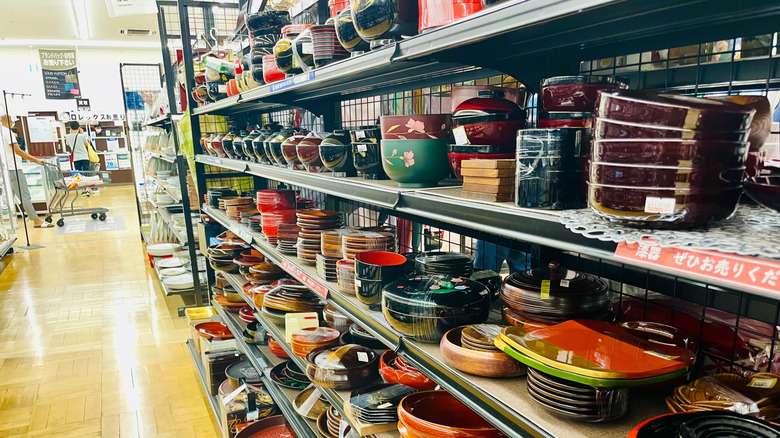
Those who love collecting dishware from the bygone decades know Fiestaware as one of the popular vintage brands that are the ultimate thrift store find. The company behind the brand has been making dinnerware since the 1870s, but the modern practices of making dishes are very, very different from what they used to be. It often pays to brush up on the history of vintage dishware before buying, so you don't accidentally bring unsafe materials into your home. The prime examples of that are the colorful Fiestaware pieces manufactured between 1936 and 1973. Some of them contain uranium, which makes them radioactive.
The original line came in red, blue, green, yellow, and ivory colors, with turquoise added two years post-launch. In the '30s, uranium was a common material used in ceramic glazes, and all of Fiestaware's original colors might have at some point contained this heavy metal. However, the color that contained the most significant amount was orange-red — so much so that its production was completely stopped for over a decade between the years 1943 and 1959, when the U.S. government seized the company's uranium to make the atomic bomb during World War II.
The last Fiestaware pieces made with uranium date back to 1973, and the company hasn't used the material since. Other ceramic dishes from vintage brands of the era could be radioactive, too, as it's estimated that millions of dishware pieces were made using uranium prior to the '70s.
Are vintage Fiestaware plates dangerous to own?
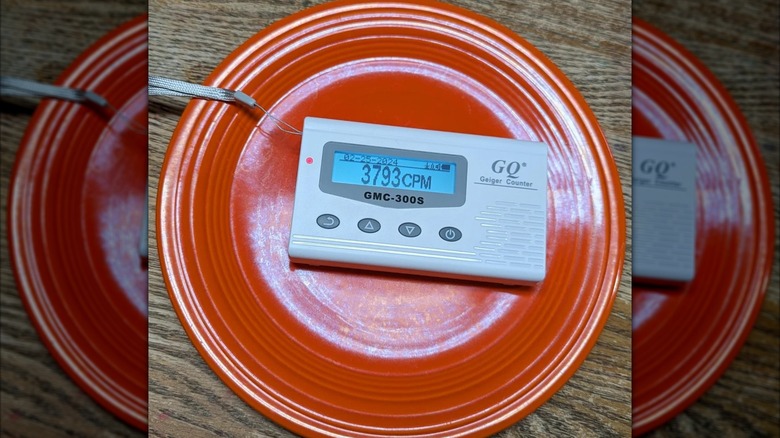
Uranium is long-lasting, so the vintage Fiesta dinnerware made before 1973 remains radioactive. This mostly applies to the orange-red color, nicknamed "radioactive red" by the modern-day Fiestaware collectors. Ivory has shown lower readings on Geiger counters, and some collectors say the other colors in the lineup don't show any readings at all.
It's been estimated that a single piece of vintage red Fiestaware contains around 4 grams of uranium, which can leak into food when the dishes have cracks and scratches, or if the food is acidic (foods like tomatoes can chemically react with ceramic glazes, causing the glaze to break down). Needless to say, ingesting uranium is very harmful and may increase the risk of cancer long-term, so it's definitely not advisable to eat off these plates.
But what if the dishes are kept in a display, only handled on occasion? The radiation is still present, as shown by many online videos that show a Geiger counter placed near the vintage dishes. In one instance, posted on YouTube, a Geiger counter read over 18 microsieverts per hour, which is close to the amount of radiation you'd get from a chest X-ray and therefore higher than what would be considered natural background radiation. But according to the EPA, these radiation levels generally aren't dangerous because you're not constantly standing as close to the plates as the Geiger counter. The only exceptions are cracked or broken dishes — the EPA's advice is to dispose of those.
Many vintage collectors disregard the radiation risk
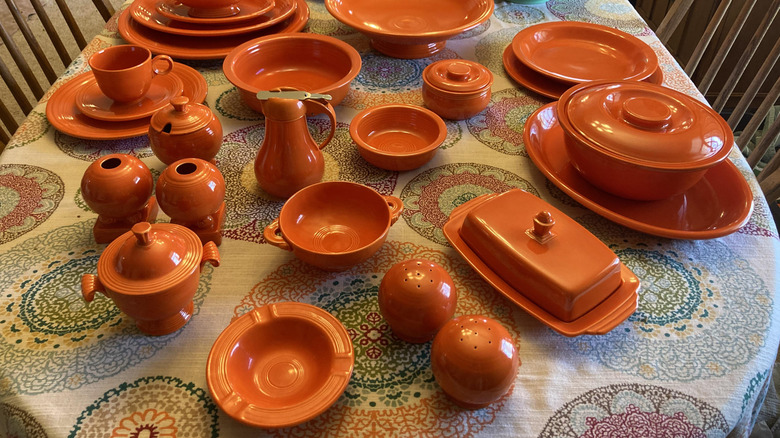
Fiestaware dishes remain popular to this day, both in their vintage and modern (radiation-free) iterations. But funnily enough, it's particularly the "radioactive red" line that seems to have a lot of fans among collectors, despite the radiation risk. Online, people are proudly showcasing their 20+ piece collections and even using the dishes to eat and drink from. They noticeably play down the radiation risk and don't seem at all concerned about the potential health implications of long-term exposure.
Perhaps the reason for that is the varying opinions among experts on the radioactive levels in these vintage dishes. According to a chemistry expert, Dr. Anne Marie Helmenstine (via ThoughtCo), "The exact radioactivity is difficult to measure since so many factors play into your exposure, but you're looking at 3-10 mR/hr. The estimated daily human limit rate is only 2 mR/hr. [...] If you eat off the radioactive dinnerware daily, you would be looking at ingesting around 0.21 grams of uranium per year."
In contrast, a spokesperson for the FDA told the Smithsonian Magazine, "Some old Fiestaware from decades ago has been stated to have contained uranium oxide in its glaze, capable of emitting very low levels of radioactivity that would not pose a health risk." As this vintage dishware continues to be resold online and in many thrift stores, it's up to each individual to determine whether they see the radiation as the deal breaker or something they're simply not fearful of.