

9 Red Wine Substitutes For Cooking That Are Alcohol-Free
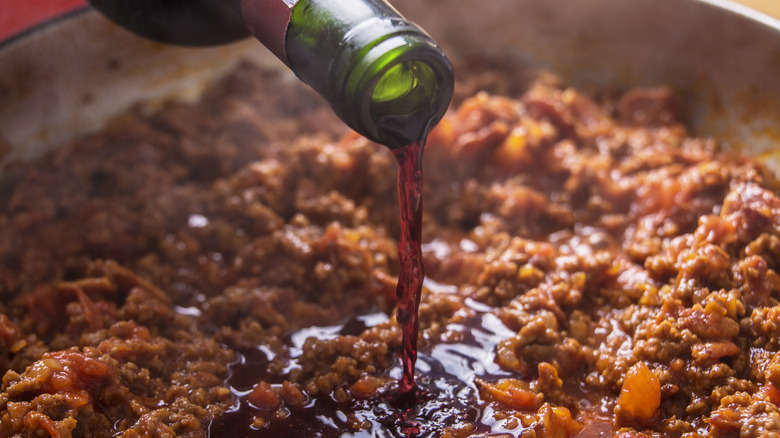
There are more than a few recipes out there that call for red wine, whether it's just a splash or you're pouring the whole bottle in. Red wine can do a lot for a dish, from adding depth to the dish to making meat more tender or even adding a touch of acidity to your meal. But what are you supposed to do if a recipe calls for red wine and you specifically don't want to use alcohol? There are a lot of reasons why home cooks may not want to include actual wine in their food, like religious and health concerns, so identifying some alcohol-free substitutes for red wine can be key to making a dish taste its best.
Let's take a closer look at some of the best alcohol-free replacements for red wine in a recipe. Of course, these ingredients all offer slightly different flavors, so they may not be able to be used interchangeably. You'll have to find the substitute that works best for the specific recipe you're making, perhaps adjusting the flavor as you go. But by knowing such a wide variety of substitutions, you'll be able to make any recipe that calls for red wine alcohol-free from here on out.
Strong black tea

You may not think of tea as a very adequate replacement for wine, considering they're two beverages that seem very different at first glance. But in reality, red wine and black tea actually share a lot of elements that can make the latter an excellent replacement for the former. This is largely because both ingredients contain a lot of tannins, which are the bitter compounds that make your mouth feel dry when you drink either. Those tannins can help temper richness in fattier cuts of meat, creating a nice balance that's powerful in flavor but without any specific element being too overpowering.
If you want to really taste those tannins, be sure to brew your black tea pretty strong. You might even want to consider adding some vinegar to the mix if you're also looking for a degree of acidity in your dish. Just keep in mind that black tea does contain caffeine, so you may want to think twice if you're cooking for someone sensitive to it. Black tea is an unexpected red wine substitute that's hiding in your pantry, and it's one that you should definitely try the next time you're trying to build an interesting depth of flavor in your dish.
Red wine vinegar
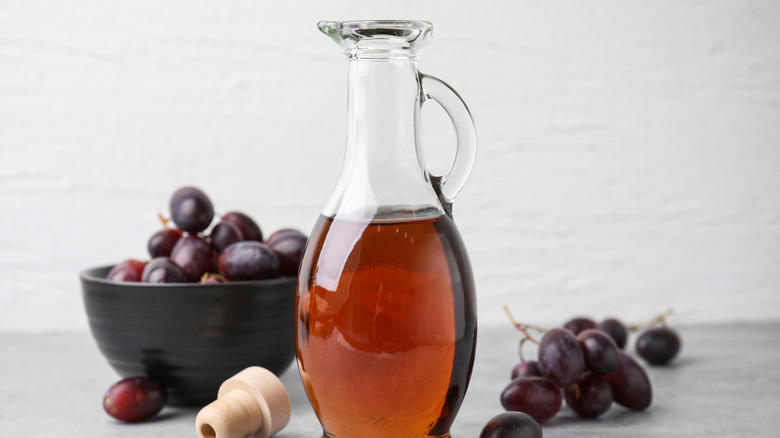
Whether you're comfortable with using red wine vinegar really depends on the reason why you're avoiding alcohol in your dish. Some people might not even want to use a product that begins with wine. That being said, red wine vinegar isn't really considered alcoholic, so we're including it on our list of solid substitutes. Because red wine vinegar is made from red wine to begin with, you get a lot of those same fruity flavors you would expect in a wine, albeit with more acidity. That brightness is what really makes this ingredient stand out, though — it can add a lovely pop of lightness to dishes that fall on the heavier or richer end of the spectrum. Not only can it give your dish an extra dose of flavor, but that acid also makes it perfect for deglazing a pan, a task that's often left up to red wine in recipes.
If you want that red wine vinegar to more closely match the effect that red wine will offer a dish, you may want to consider diluting it a bit. A half-vinegar-half-water mixture ensures the acidity isn't too strong, and the effect more closely mimics that of actual wine.
Tomato juice
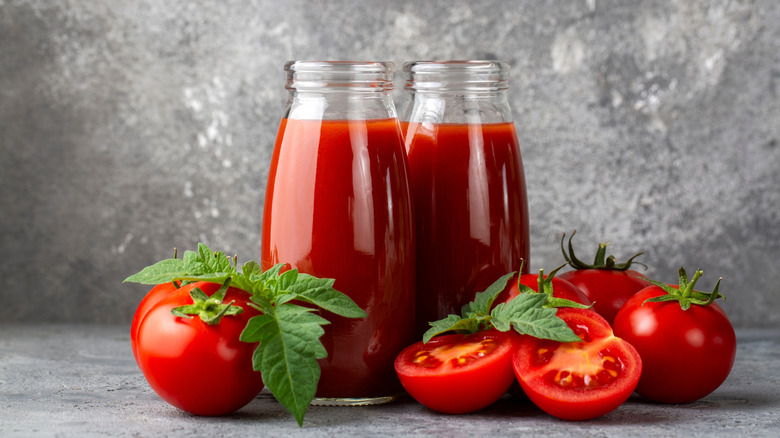
This is a substitution you might not expect, but it's one that can give your dish an interesting, savory twist. This is because, like red wine, tomato juice has a decent amount of acidity to it. This helps make your food taste brighter and more refreshing, counteracting some of the heavier elements it may include. It also has a similar bitterness as wine does, albeit not with the same fruity background flavor. If you want to incorporate more of that fruitiness in whatever you're cooking, you might want to consider combining both tomato juice and some sort of fruit juice for a more balanced flavor that could mimic the taste of red wine a bit more accurately.
If you are going to opt for tomato juice on its own, you can use the same amount of wine that the recipe calls for. However, you should keep in mind that tomato juice has a really specific flavor profile that could potentially clash with some ingredients. After all, although it shares some elements with red wine, they're ultimately much different ingredients. The first time you test out this substitution, make sure you start slow, and keep tasting your dish as you go to ensure that it doesn't come out too tomato-y.
Stock or broth
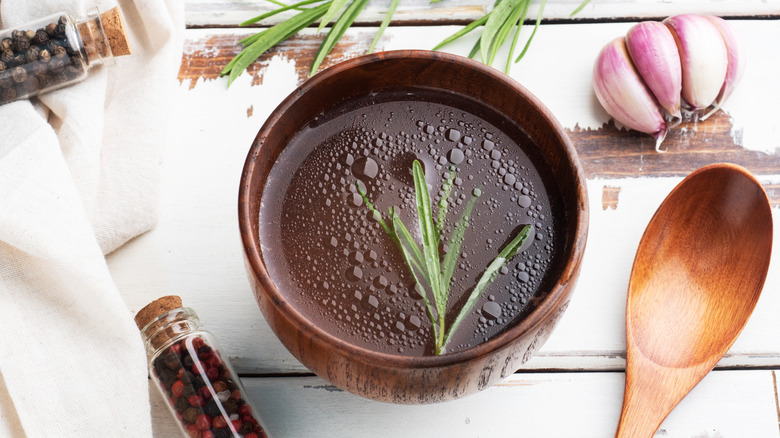
Stock or brothis one of the easiest replacements for red wine in recipes. It's an ingredient that a lot of people tend to have on hand in their kitchens anyway, and it can automatically add a lot of flavor to a dish (while providing the same amount of additional liquid that wine would). It works particularly well in recipes that call for more savory-tasting wines. But the kind of stock or broth you use will be key in determining how it tastes in your dish. While you can use chicken or veggie stock or broth, beef stock or broth is really going to add that depth of flavor you're looking for in a normally red wine-inclusive dish. Plus, it can also provide the rich, intense color that certain dishes may boast when they're made with wine.
Unfortunately, though, you probably won't notice a ton of acidity in your stock or broth, which is one of the key components that red wine contributes to a recipe. But that shouldn't stop you — just make sure you add another source of acidity to the recipe. A splash of vinegar should do the trick, but you can also use some lemon juice if that's all you have on hand.
Canned mushroom liquid
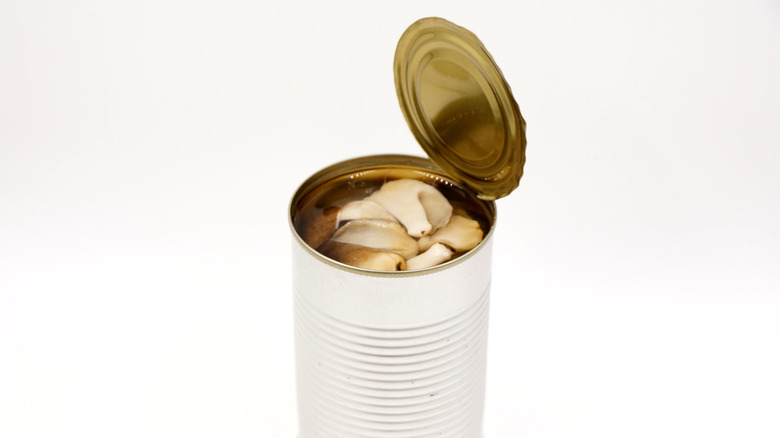
Here's a red wine substitute that may not have occurred to you. While you may have assumed that the liquid that comes in cans of mushrooms is essentially just trash, destined to be poured down the drain, it can actually come in handy in some recipes, especially as a red wine replacement. The liquid in the can absorbs some of the flavors of the mushrooms, which are known for their earthy intensity — not dissimilar to some wines. It only makes sense, then, that the liquid would take on a rich and vegetal flavor of its own, which can work well in many recipes that call for red wine.
A few things to note if you're going to use this substitution: First of all, this liquid can be quite salty. You may want to taste it before you stir it into whatever you're making, and you may even need to adjust the salt content in a different part of the recipe. Additionally, you're getting a lot of savoriness here, so if you're looking for a touch of fruitiness for complexity, you can combine your canned mushroom liquid with some red fruit juice for a replacement that tastes a bit more like actual red wine.
Grape juice
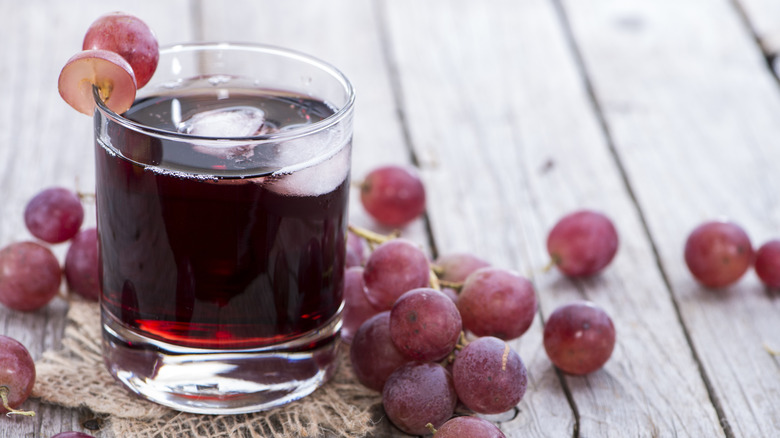
Perhaps the most logical red wine swap of them all is grape juice. After all, wine is essentially fermented grape juice, so you know it's going to bring a lot of the same flavors to whatever it is you're making. Therefore, you can use the same amount of grape juice as you'd use wine, and it'll have a largely similar flavor and color effect on the finished dish. The main difference here is the fact that grape juice tends to be sweeter than a lot of the red wines you'd be cooking with. That's nice if you're trying to add a touch of sweetness to your dish, but it can be a bit overpowering if you're not expecting that much extra sugar.
Want to balance things out a bit, helping to tone down that intense sweetness? This is where a splash of vinegar can come in handy. The acidity can cut the sweetness of the sugar (along with fattier elements in the recipe), all while adding an overall brightness to the dish. You can experiment with different types of vinegar, but red wine vinegar just seems to be a smart choice here.
Pomegranate juice
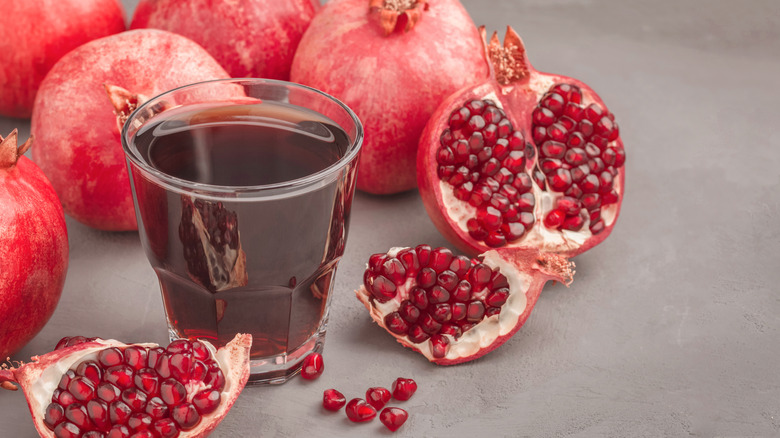
Don't have any fruit juice on hand? No worries — other types of red fruit juice can also do the trick. Pomegranate juice is an especially tasty option. Although it may not be quite as ubiquitous as grape juice, you can still find it at a lot of American grocery stores, albeit in relatively small portions. This is another very acidic juice, with a similar deep red color as you'd expect from red wine. It'll contribute a nice, fruity touch to your recipe, just like red wine will, with a richness that can add that extra pop of flavor you might be looking for. Pomegranate juice is a great option for deglazing, and it should absorb that savory fond nicely.
This is another instance in which it might make sense to combine the pomegranate juice with a bit of vinegar to more closely match the taste of wine in your dish. When that sweetness and acidity come together, you get a flavor effect that pretty closely mimics red wine.
Balsamic vinegar
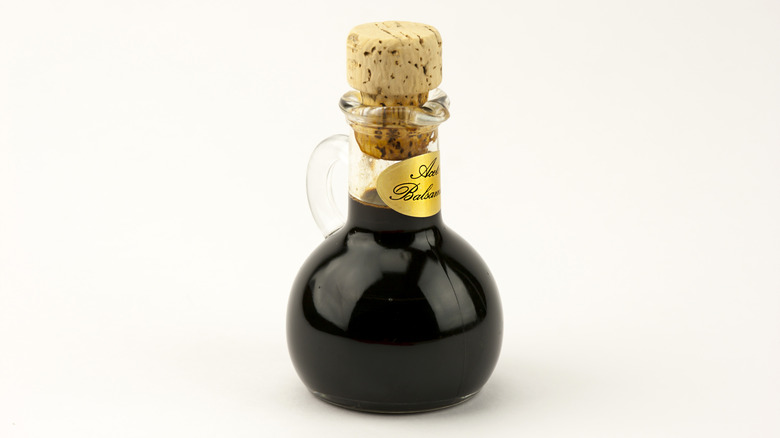
Since balsamic vinegar is made from grape juice, it shouldn't come as a big surprise that it can function as a replacement for red wine in a recipe. Plus, because it's vinegar, it has the acidity that you may be looking for in a recipe that typically calls for red wine. But if you've ever tasted balsamic vinegar all on its own, then you know how strong a flavor it can have. Not only is it acidic, but it has a distinct sweetness to it as well, along with a nice touch of fruitiness. The result is the powerful, concentrated flavor profile the ingredient is known for.
Since it shares some of the same qualities of red wine, it can be used in recipes that call for the alcohol. However, since its flavors can be so powerful, you'll want to dilute it a bit. Only use half the amount of balsamic vinegar as you would wine in a recipe, and use water for the other half of that amount. That way, you won't end up with a dish that's way too sweet or acidic — you'll just get that complexity that red wine is known for.
Cranberry juice
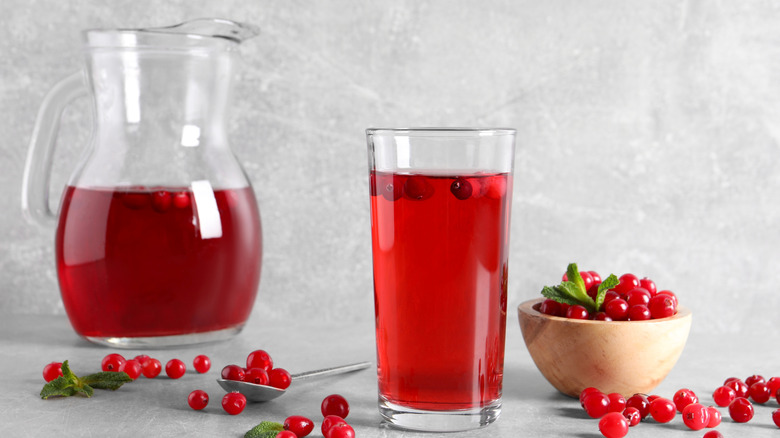
If you really love the brightness and fruitiness that red wine can bring to a dish, you'll want a replacement that offers the same qualities. Cranberry juice is absolutely one of those ingredients. Like grape and pomegranate juices, it has a lot of those red fruit qualities you're looking for, like the bold red color and generally berry-forward flavor profile. However, cranberry juice is sweet, and this makes it different from most red wine you'd think to cook with. That's why your best bet is to try to find a no-sugar-added variety, if you can get your hands on some. It will deliver less of the sugariness a lot of fruit juice is known for while still contributing the fruity notes you do want.
Even when sweetened, keep in mind that cranberry juice also has a really powerful, bracing acidity — more than even other types of red fruit juices — which can add more brightness to a dish in a really lovely way. This can be tempered by sweetness, though, which is why it might make sense to add some vinegar to the mix if you are using a sweetened version of the juice. You can add the same amount of cranberry juice to your recipe as you'd add wine, since they both have a similar consistency.