

10 Common Complaints Customers Have About Ninja CREAMi
We may receive a commission on purchases made from links.
Fads come and go, but since its debut in 2021, the Ninja CREAMi has been returning to our countertops every summer when the temperatures begin to rise. And for many people, it stays there all year long as a way to whip up creamy, refreshing treats that can be fit for all diets or as decadent as your heart desires.
Still, there are a number of common complaints that customers have about the Ninja CREAMi. A few of these boil down to a matter of user error, but others are obviously the manufacturer's responsibility. Depending on how often you use the machine and whether you experience any of these issues yourself, you may or may not agree with us on whether the Ninja CREAMi is worth its high price tag.
Whether you're looking for solutions to problems that you are already experiencing with a Ninja CREAMi or you're considering all the variables before investing in one of your own, this is the place to be. We'll introduce a handful of the most common complaints about the product, evaluate why they arise, and then suggest resolutions as applicable. Finally, more so than when it comes to other, more familiar kitchen appliances, we recommend thoroughly reading the manual that comes with your Ninja CREAMi so that you can avoid some of the most frequently made mistakes.
There's always a hump on top of the pint
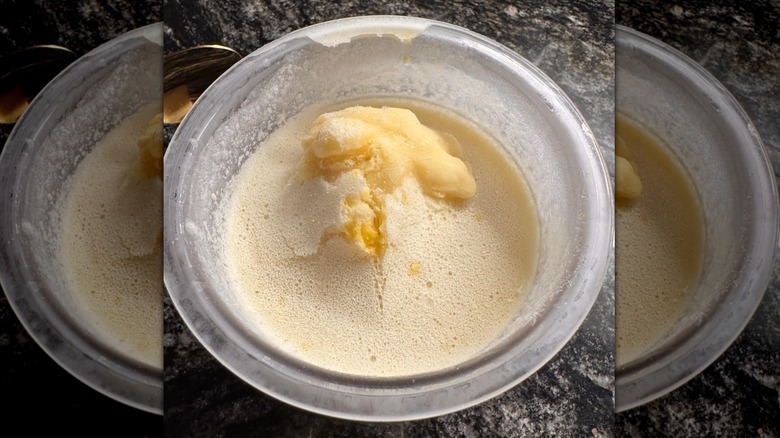
The hump that often forms on frozen Ninja CREAMi pints is infamous, and it's essential to eliminate it before spinning or it can permanently damage the machine. Why this hump forms is unclear; some say that it's because the base mixture hasn't frozen quickly enough, and in a similar vein, others suggest letting your pint sit in the fridge for a while before popping it into the freezer. Sometimes, but not always, freezing your base without the lid on can help prevent doming.
Regardless of the cause, the fact that this hump forms so regularly has led to customers think of an astounding array of solutions to make it flat once again. Scraping the hump down with a spoon is the most basic solution, but some people prefer using a vegetable peeler to access it from a better angle. Meanwhile, other Ninja CREAMi users have discovered that placing a measuring cup or plastic bag filled with warm or boiling water on top of the hump is effective.
Plenty of folks ignore the slight hump and still get great results, but that's almost certainly not a good idea in the long term. Eventually, users say that the blade may hit the base at the wrong angle and then shred plastic into the mixture or even send your CREAMi up in smoke. More on that later.
It traps grime
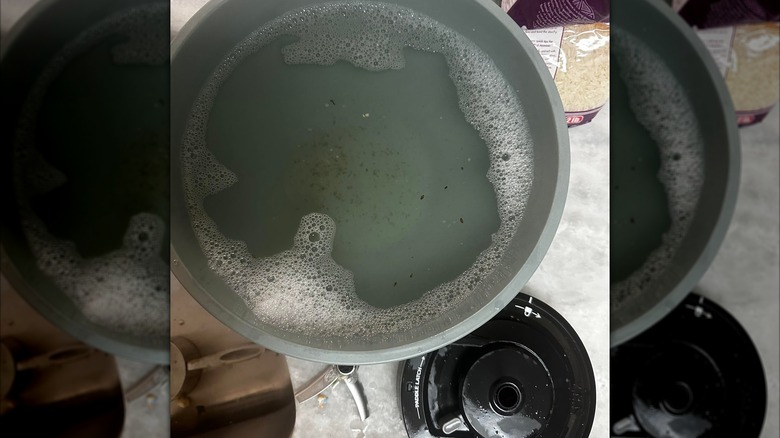
Cleaning the dishes is not a task that most of us enjoy. It's right up there with dusting the cabinets and folding the laundry. Still, it needs to be done, and it needs to be done especially carefully with the Ninja CREAMi. Cleaning this machine is not exactly difficult, but it does require some preliminary understanding of the machine's parts and how they fit together. At the end of the day, thorough cleaning is one of the best ways to make your kitchen appliances last way longer.
Users note that the rubber ring attached to the CREAMi's lid needs to come off before both components are washed separately. If you've ever waited months to clean the rubber ring on the lid of a coffee thermos, you'll understand why. One customer reportedly battled an infestation of fruit fly eggs that had taken up residence on the CREAMi's lid between uses.
Additionally, the CREAMi's paddle needs to be removed and cleaned, and the shaft also needs regular TLC. You might use a toothbrush and toothpick to access the smaller crevices. A wet paper towel or damp cloth can likewise be handy, especially before the mixture dries up and becomes crusty. The paddle, lids, and containers are all dishwasher-safe.
The machine needs to be unplugged and replugged after each use
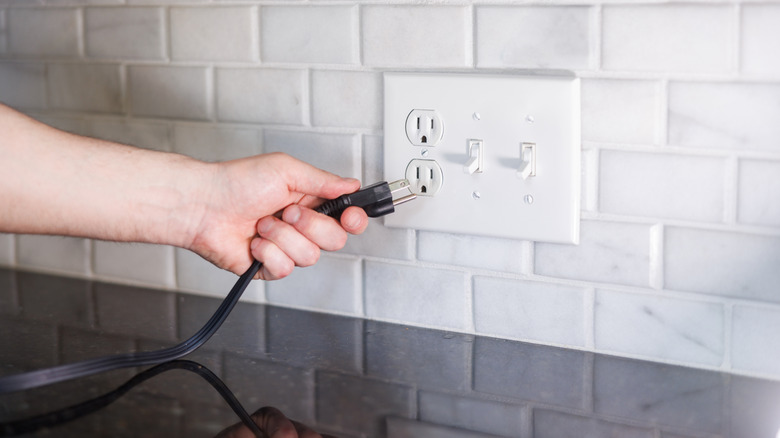
According to customers, it's a roll of the dice regarding whether you'll receive a Ninja CREAMi that needs to be unplugged and replugged after each use. It's unclear why some machines have this annoying personality trait and others don't, but the solution is simple: Just pull the plug and wait at least 10 to 15 seconds before plugging it back in. Better yet, leave the CREAMi unplugged until you use it again; doing so reduces the risk of fire and protects the machine from potential power surges.
A CREAMi that fails to turn on after being plugged in for long periods of time is not considered defective. In fact, it's clearly stated in the manual that the device needs to be unplugged between uses. If you've left your CREAMi plugged in, though, don't fret; it should turn on again after a brief rest. Despite this quirk being widely known and accounted for in the Ninja CREAMi manual, some customers have reported that they were able to get replacements for machines with this issue. Even so, there's no guarantee that your replacement won't have the same problem!
Plastic bits are blitzed into the mixture
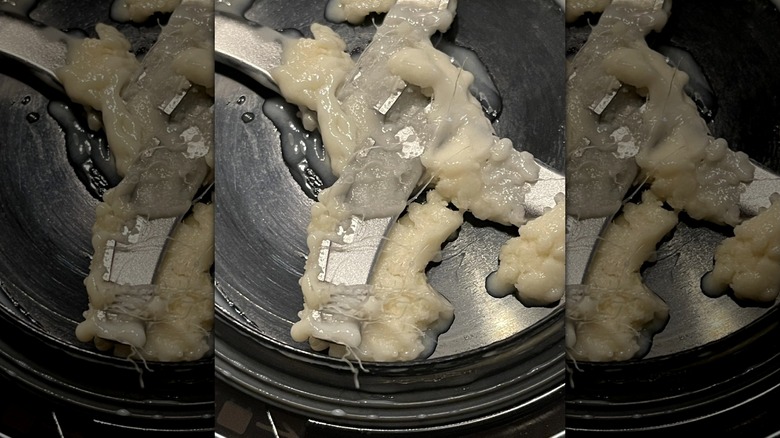
Microplastics, anyone? There are plenty of tasty mix-ins that can level up your Ninja CREAMi creations, but plastic is decidedly not one of them. Remember that infamous hump we discussed earlier? Many users claim that if left unleveled, it can cause the paddle to become unbalanced and then scrape plastic away from the inside of the container. Other potential culprits of plastic shavings include overfilling pints, using off-brand accessories, or failing parts (for instance, the magnet used to secure the paddle to the spindle may weaken over time).
In this case, it's best to replace the whole product, parts and all. Luckily, very few people have reported issues with Ninja CREAMi's customer service, particularly when it comes to getting replacements for machines that infuse creations with plastic — even if this problem is often a result of user error. Indeed, one customer reported getting their machine replaced four times in a single year for wear and tear.
It's also possible that you'll encounter metal shavings in your pint, but they'll be more obvious. This happens when the entire blade comes off during the spin cycle, and you'll likely be alerted to that by a fair amount of smoke. Ensuring that the mixture is perfectly level and not rock-hard before blending should help avoid such a sad demise of both pint and machine.
It's an expensive upfront investment

The price of the Ninja CREAMi varies, but the 7-in-1 version has certainly been sold for well over $200 before. At the time of this article's publishing, the version with one 16-ounce pint container was available for $219.99 on Amazon. Meanwhile, the XL Deluxe Gen 2 11-in-1 model was being sold for $249.99 on Amazon. That's quite a bit more money than, say, the Cuisinart Ice Cream Maker ($99.94 on Amazon).
Is the quality of the Ninja CREAMi worth its high price tag? For one, it's difficult to gauge how often customers need to replace their Ninja CREAMis. We've seen plenty of reports online from dissatisfied customers who have had issues with their machines, but at the same time, we're aware that perfectly satisfied users are less likely to make their views public. Registering your device under warranty and thoroughly reading the instruction manual to avoid misuse can help safeguard you from having to pay unwanted expenses atop the initial upfront investment.
And at the end of the day, it's important to remember that you can make delicious ice cream without any machine at all. Need proof? Just try following our delicious no-churn apple cider ice cream recipe.
Crafting your own recipes is difficult
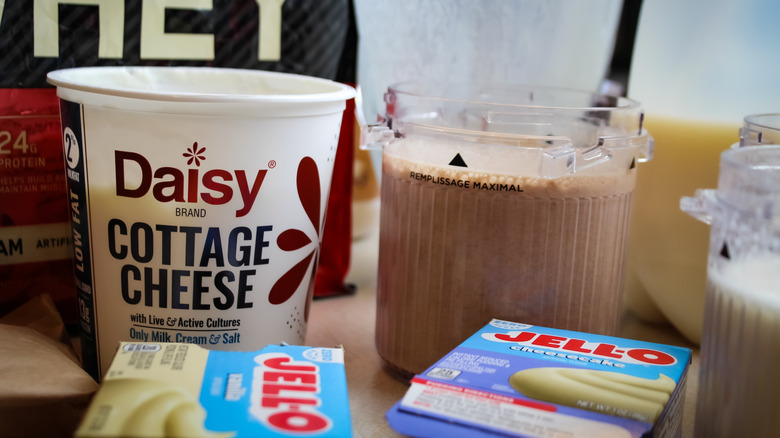
Before getting a Ninja CREAMi, you may have no idea what xanthan gum or Jello powder has to do with ice cream. After getting a Ninja CREAMi, you may keep these two ingredients regularly stocked with a subscription delivery. CREAMi recipes are often anything but intuitive; for example, who would have thought that hard-boiled eggs can be used to make mousse?
When you first start whipping up desserts in your Ninja CREAMi, follow recipes provided with the machine, on the Ninja website, or by other seasoned users who have shared their recipes online. However, it wouldn't be the brightest idea to venture out on your own before getting the hang of the machine. Doing so could not only result in subpar textures and flavors but also potentially damage the CREAMi.
For each new recipe, it may take extensive trial and error to nail the right kind and the right amount of thickeners like xanthan gum and guar gum, fats like heavy whipping cream and half-and-half, and sweeteners like sugar and stevia. Including sufficient fat and sugar is one of the best ways to make the most out of your Ninja CREAMi, but those who have bought the machine to create recipes compliant with certain diets may find that challenging. Furthermore, it's essential to use the right spin setting as per your ingredients; for instance, users recommend against employing the ice cream setting on a low-sugar and low-fat mixture to prevent machine damage.
Instead of getting really cold, it gets really hot
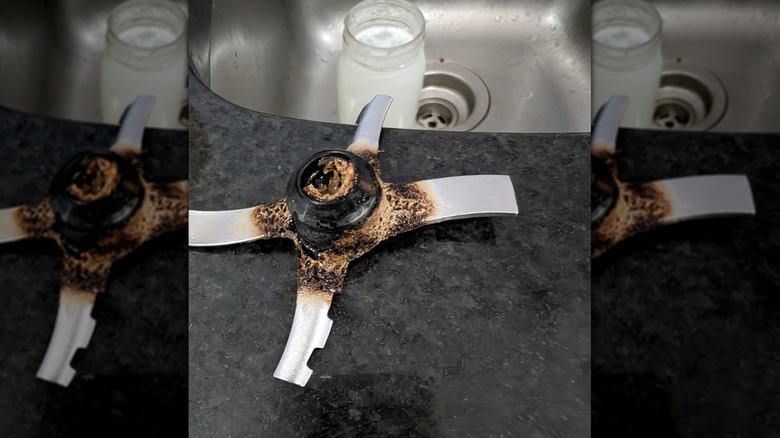
Burn, baby, burn! Nobody likes to see smoke coming out of their Ninja CREAMi when they're in the mood for a bowl of ice cream, but it's happened to more than one user. This issue was particularly prevalent with the Breeze model, which has thankfully been discontinued. Still, it's happened to other models as well, sometimes as a result of user error and sometimes for seemingly no reason at all.
To mitigate the risk of a smoke-filled kitchen, one Redditor recommended running the CREAMi on the lite ice cream mode first to reduce the burden on the machine. Others agreed that, especially with low-fat and low-sugar recipes, it's best to employ a faster spin setting (in other words, not the regular ice cream setting) to reduce the likelihood of machine damage. Otherwise, the CREAMi can lose its control over the blade and shaft, and their frantic spinning can burn right through the lid.
Once your machine goes up in smoke, don't try to fix it; instead, you'll need to get a new one. Ninja CREAMi's warranty policy and customer service are generally well-reviewed, but many users have shared their relief that they bought their machines at Costco, where the return policy is also generous and easy to navigate.
It wakes up the whole house

Imagine this: You've finally put the kids to bed, and there's only one thing on your mind: A bowl of ice cream fresh from your Ninja CREAMi. Then you realize that running the machine would wake your kids right back up again.
Indeed, that's the worry of many CREAMi owners, and even the ones who don't have small children are quick to complain about how noisy this machine is. To be sure, noisiness is one of the most obvious disadvantages of using a Ninja CREAMi, even one that is operating exactly as it should. Redditors report that this product is extremely loud compared to machines like the Cuisinart FastFreeze (despite being superior in other regards like ability to be cleaned, dessert texture, and customer service). You can always leave the room when the Ninja CREAMi is operating, but unless you live in a mansion or your walls are really thick, you're still likely to hear it whirring across the house.
Theoretically, you could follow in the footsteps of one Redditor and 3D print a noise-dampening helmet for your CREAMi. But that would likely require a large upfront investment in another famously expensive machine, so we're holding out hope that future models of the Ninja CREAMi are much quieter.
It takes up a fair amount of real estate
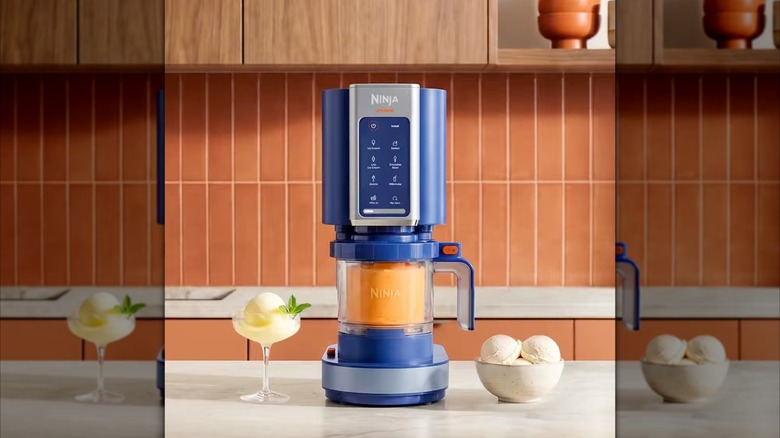
There's no getting around the numbers. Both the 7-in-1 model and the 11-in-1 deluxe model of the Ninja CREAMi have large footprints and weigh over 15 pounds each. But even they pale in comparison to the Scoop & Swirl model, which weighs a hefty 22 pounds and requires additional counter space due to the soft serve feature. Unless you don't mind heaving your CREAMi from cabinet to countertop whenever you want to use it, it's a good idea to grab your tape measure before ordering one of these machines. Don't forget to make sure that the CREAMi will fit under your cabinets, if applicable.
Of course, we've not even touched on freezer space yet. Especially if you're making bulk batches so that you can whip up a cold treat whenever the craving strikes, you'll need enough flat space in your freezer to store those pints. That's why users report that the most basic model with smaller containers (16 ounces compared to 24 ounces) is better suited for smaller families and smaller kitchens.
Oh, and you'll have to think about pantry space, too. Remember all those specialty ingredients we mentioned earlier? You might have to clear extra space on your shelves for everything from xanthan gum to pudding mix.
All recipes require advance planning
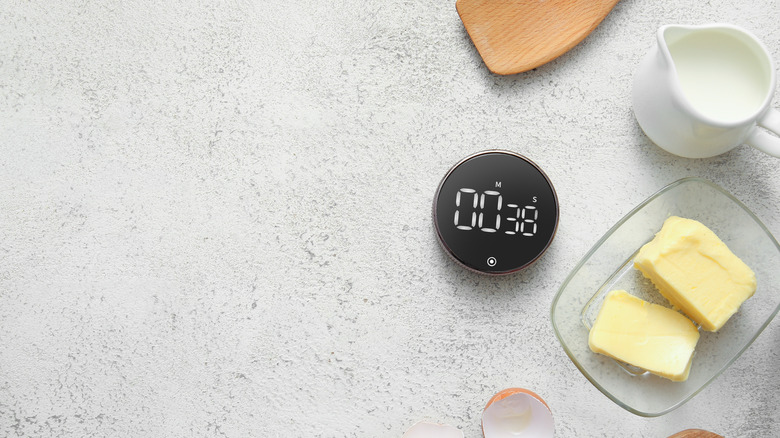
It's easy to impulsively grab a pint of Halo Top from the frozen aisle on your way to the grocery store checkout. It's more challenging to remember to mix up a base for your Ninja CREAMi, then have the patience to wait 24 hours for it to freeze before spinning it into homemade ice cream. You really can't break the 24-hour rule when using a Ninja CREAMi if you want the paddle to shave the base correctly. A well-frozen block translates into a better texture in your ice cream and potentially a longer life for your machine.
There's no way around this rule, except if you're adding mix-ins to store-bought ice cream or using it to make a milkshake. Many users therefore choose to batch prep their bases, storing the extra mixture in additional CREAMi containers, which can be bought separately. Bases can remain in the freezer for up to several weeks and still yield a creamy texture once spun, though the exact timeframe depends on the ingredients used in them.
Not all of us can sit down and eat a pint of ice cream, even if it's a healthy version. That's part of the reason why the Ninja CREAMi has a re-spin feature. Even so, customers report that you can't re-spin a pint more than once without its texture turning icy. As always, you'll have to make sure that the pint is level before re-spinning, which means you'll have to be neat with your leftovers.