

Chick-Fil-A Vs KFC: The 5 Differences Between These Chains' Chicken
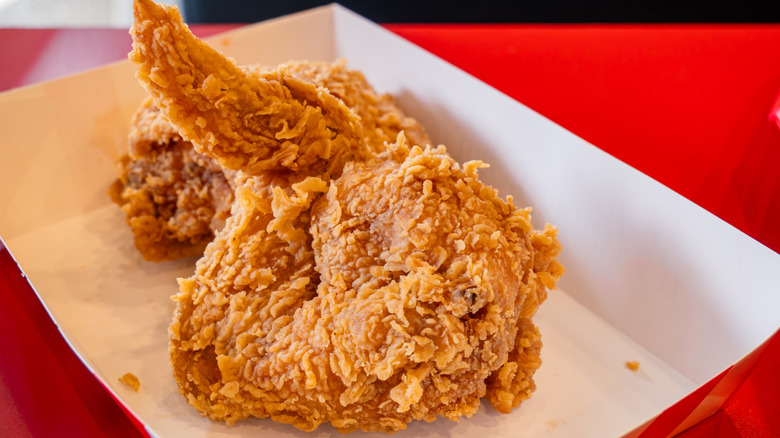
As two of the largest chicken chains in the U.S., Chick-fil-A and KFC show just how different fried chicken can be. Chick-fil-A has become a powerhouse as chicken chains have taken over fast food. It's exploded to almost 3,300 locations nationwide, and is rapidly gaining on the old stalwart KFC, which boasts 3,500 locations, having already overtaken it in sales. While both sell themselves as down-home Southern-style fried chicken chains, KFC's crackly, bone-in chicken is a far cry from the thinly coated, tender chicken sandwiches offered by Chick-fil-A — the flavor profiles are unmistakable.
There is the obvious difference between bone-in versus boneless, but it is so much more than that. Although the basic process for frying any piece of chicken is pretty similar, it's the small decisions and variables along the way that can add up to a big difference in outcome. How is the chicken prepped? Is it brined? Then, you have to consider the seasonings and spices, the type of dredge used, and even the oil it's cooked in. Anyone of these by themselves would make a difference but taken together they create the kind of signature flavor profiles fast food companies strive to create.
Both KFC and Chick-fil-A have mastered that process, creating truly unique products that other chicken chains strive to replicate. But how do these opposing operations compare? Here are the five major differences between these popular fast food chicken chains that you ought to know.
Spices and seasonings
If there is one thing everybody (even folks who don't eat there) knows about KFC, its the 11 herbs and spices. One of the most famous secret recipes in American food, the phrase has been heavily featured in KFC's own advertising for decades, acquiring mythic status. The recipe has never been disclosed, and supposedly is known only by a few, but a leak from a reporter who supposedly saw a handwritten recipe in 2016 is likely correct, if not close.
According to the KFC recipe leak, this blend supposedly includes salt alongside some unique additions like three dried herbs (oregano, basil, and thyme), and both black and white pepper. Dried mustard and paprika, two popular fried chicken spices, are also used, as is garlic salt and celery salt. The last ingredient may be the most interesting: ground ginger. While plenty of those ingredients are common by themselves, it's just peculiar enough of a spice combo to explain how KFC tastes like KFC.
Chick-fil-A's spice and seasoning mix is simple by comparison. The ingredient list contains paprika and the famously generic "spices," which Chick-fil-A has confirmed includes only black pepper, mustard, and paprika (via Food Babe). However, Chick-fil-A does offer one source of flavor that isn't listed under KFC: sugar. No doubt sugar gives Chick-fil-A chicken its little extra something and certainly explains its more balanced flavor compared to the extra-savory KFC mixture.
Brining the chicken
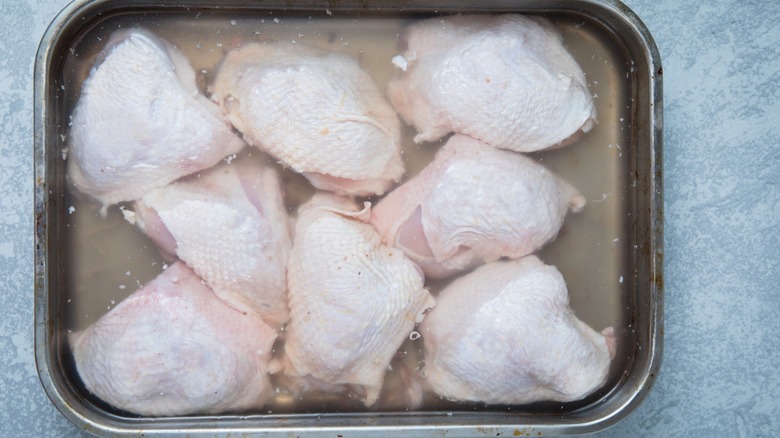
There is another step that may not be as different at KFC and Chick-fil-A as you might think: brining. For years there has been a longstanding myth that Chick-fil-A brines its fried chicken in pickle juice, but this does not appear to be true. The most obvious clue is that nothing resembling pickle brine appears in the chicken's ingredient list. And while it's less certain, employee testimony on Reddit also says there is no pickle brine. Instead, the rumor might come from the grilled chicken sandwich, which Chick-fil-A itself states was originally marinated in pickle juice. That said, the recipe has changed since then, and chicken is, in fact, brined, though in a sugar-salt mixture.
KFC does not appear to brine its chicken at all, as no water is listed among the ingredients like it is for Chick-fil-A. However, the nutritional info does state the chicken is marinated with salt, sodium phosphate, and one ingredient shared with Chick-fil-A's brine: monosodium glutamate (MSG). Despite fears about it in the past, research has shown MSG is quite safe to consume, and it greatly boosts umami flavors. Because it's a shared ingredient at both chains (and the Chick-fil-A pickle juice is bunk), sugar is once again the big difference in this part of the preparation at each chain.
Creating the breading
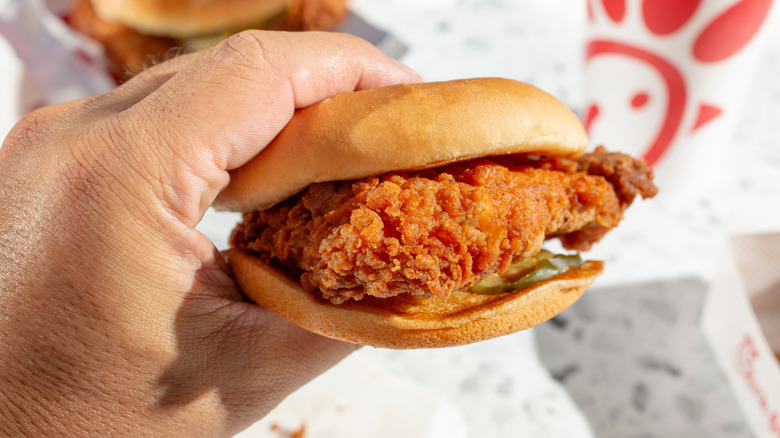
Despite the quite different appearances between a fried piece of Chick-fil-A and KFC chicken, the ingredients aren't that far off. It all comes down more to technique in how the chicken is handled to get the textural results both chains are looking for. Both chains use a flour dredge, not a batter, to coat the outside of the chicken. Both also add the spices and seasonings directly into the flour before coating, which at KFC also includes powdered eggs and milk.
Where things diverge is the liquid and how the flour is applied. KFC helps its breading stick to the chicken by dipping it in water first. The chicken is then dropped into the flour, where it is repeatedly lifted and folded (seven times to be precise) to help build up that thick layer of craggy breading. The excess flour gets shaken off, and then the chicken goes right in the fryer.
Instead of water, Chick-fil-A employees dunk the chicken in an egg and milk mixture before coating with the seasoned flour — and here is where you see the real difference. Rather than tossing to build up a thick layer of flour, Chick-fil-A employees are trained to press the chicken breasts hard into dredge, compacting it much more thinly. Clumps are removed to keep things smooth. It's a small thing, but it really changes the texture of the final fry compared to KFC.
Cooking oil
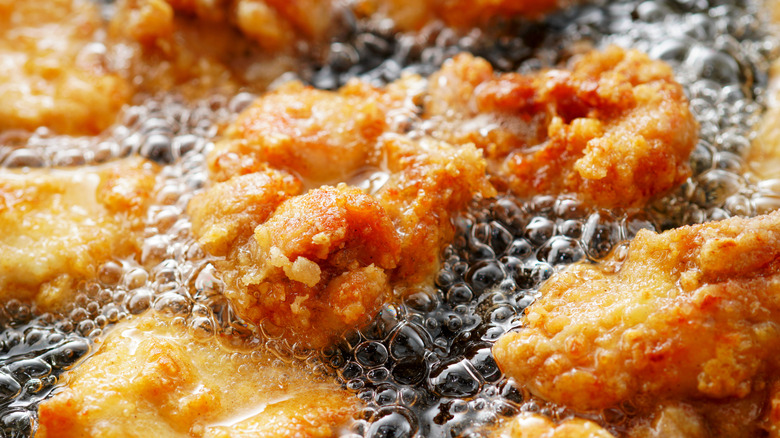
Chick-fil-A is very open about the use of peanut oil for frying its chicken. Its website says that the oil has been used since founder Truett Cathy created the sandwich, and claims that the clean flavor enhances the chicken's flavor. Peanut oil is a popular frying oil because it boasts a high smoke point and doesn't absorb flavors from food, making it more economical. That said, Chick-fil-A does use refined peanut oil, which may be a comfort to some with peanut allergies (though personal discretion is advised).
KFC is a little more coy about its frying oil, and some of the fried chicken menu items don't even list what they are fried in. However, other offerings, like the chicken sandwich, list soybean and canola oil. This is consistent with a change KFC made in 2007, when the chain switched from partially hydrogenated soybean oil to low-linolenic soybean oil as part of a move to eliminate trans fats. The choice was made to keep the flavor profile the same, indicating that KFC thinks of soybean oil as an important part of how its chicken tastes.
This is one area where the differences between KFC and Chick-fil-A don't matter much. While both seem to consider the specific frying oil important to the recipe, soybean oil is a neutral-tasting oil that's considered a type of vegetable oil. Likewise, much of the nutty flavor of normal peanut oil is stripped out of refined peanut oil.
The actual chicken
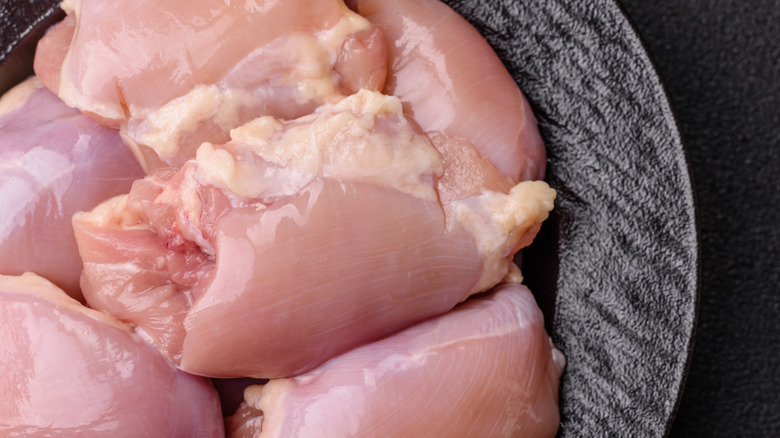
When eating Chick-fil-A, you get one (and only one) type of chicken: all-white breast meat. That's mostly true of KFC's boneless chicken options as well. Chicken tenders are always white meat, and come from part of the breast, but KFC chicken sandwich also says it's made with breast meat. The KFC nuggets are a little vaguer, only saying white meat. Of course, the biggest difference is that KFC gives you the option of dark meat also. With bone-in fried chicken, the thigh and drumstick are both dark meats. While many chains, including KFC, like to tout their use of lean white meat chicken, dark meat is often more rich, flavorful, and juicy.
Unfortunately, some of the biggest scandals in fast food come from chicken, and both Chick-fil-A and KFC have failed in some way here. Both include promises of minimum standards or treatment, and the former claims its meat chickens are cage free, but each chain has backed off on previous animal welfare pledges. A few years ago, Chick-fil-A stopped claiming to use chicken with no antibiotics and has fallen short of its pledge to only use cage-free eggs. KFC has likewise backed out of a pledge to avoid using faster-growing chicken breeds associated with more health and welfare issues. So, if you're looking for ethically sourced chicken, both chains may let you down.