

10 Forgotten Classic Pork Dishes We Rarely See Anymore
We may receive a commission on purchases made from links.
It's always interesting to look into the past and see what kinds of dishes people were making that most of us have forgotten or never even known about in the first place. Forgotten classic pork dishes are a category that probably looks different from what you'd expect, because we've grown accustomed to making pork dishes that mainly revolve around a few familiar cuts like ham, bacon, and chops. However, that's not what a lot of the forgotten ones look like, which largely include pig offal and parts that most of us just don't buy regularly anymore.
Whole-hog dishes used to be more commonplace to reduce waste. Additionally, many of these dishes represented cheaper pork dishes that people could buy. As time has marched on, many have become less appetizing to younger generations or have become regional specialties that stay local or are just cooked at home. So, it's no wonder these are the ones that we've forgotten.
Our list includes meat from the top of a pig's head to the bottom of its feet, and everything in between. There are everyday dishes, ones common to holiday celebrations and themed parties, and some that were simply a product of a specific time and place. If you're ready to see if there are any classic pork dishes missing from your kitchen lineup or just want to do a little culinary time traveling, you're going to want to check out this list.
Pickled pig's feet
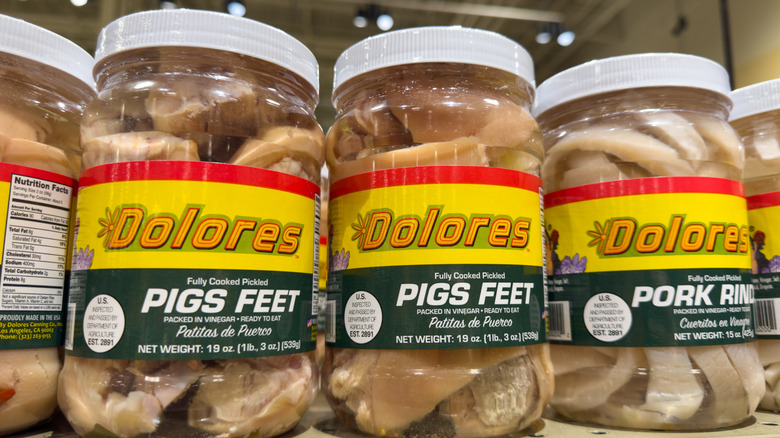
The first time you drove through the U.S. South, stopped at a mom-and-pop convenience store, and saw a large jar full of pickled pig's feet by the cash register, the look of shock and incredulity on your face was probably noticeable. Seeing such a thing is somewhat rare these days, with younger Southerners not taking to this dish as much as past generations did.
It's a dish that has a history tied deeply to the South's past – specifically the past of the poor as well as the enslaved. Pig's feet (sometimes called trotters) were among the cheaper and unwanted parts of the pig that ended up going to the enslaved rather than being consumed by plantation families, or they were sold to the poor.
Besides thinking about where these feet have walked, someone seeing this dish for the first time might imagine it's raw. However, we assure you that this classic Southern dish is scrubbed clean and boiled before being pickled in vinegar and spices, similar to how you'd pickle vegetables like cucumbers. It's common to eat pickled pig's feet alongside classic soul food like collard greens and cornbread. However, for the uninitiated, the texture can be challenging, as it's rich in collagen and sometimes surrounded by natural gelatinous matter. Plus, you have to eat around the foot bone and lots of gristle to get to the meat.
Head cheese
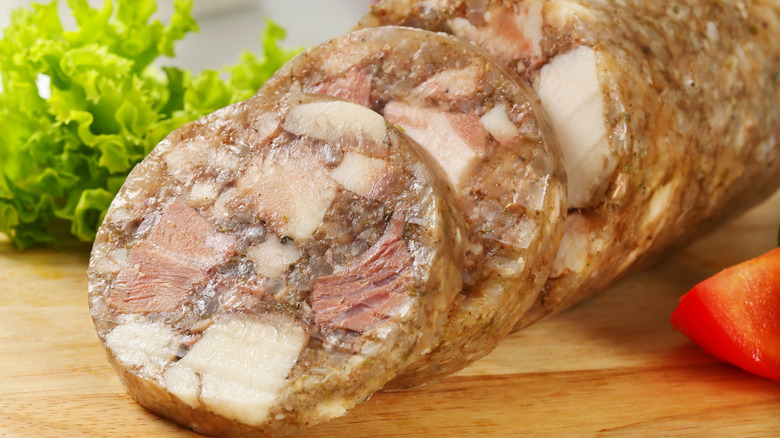
Head cheese is a classic pork dish that dates back to the Middle Ages in Europe. No, it's not a pig's head filled with cheese. Nor does it contain any cheese or dairy at all. However, it does contain pig's head meat. It's an early head-to-tail jellied meatloaf that often includes less-desired parts of the pig, such as its head, feet, and tongue. You might still find it in random deli or butcher shops, but those on social media who say they've sold it say it's mainly older generations who still buy it.
To make this dish, cooks remove the pig's brain and eyes, then boil the head with pig's feet. All the collagen in the head and feet creates a natural gelatin that helps form the gelatinous body of the head cheese loaf. The loaf is filled with meat from the pig's head, such as cheek, jowl, tongue, and ocular meat. It might also contain pig offal, such as hearts. It's often infused with herbs, spices, and other flavorful ingredients, such as garlic and onion, during cooking.
All the natural gelatin and meat come together into a chilled, sliceable loaf. It tastes somewhat like a spiced, gelatinous ham, so you can serve it as you would ham. For example, you could add it to a charcuterie board, eat it in a sandwich, or even add it to a pot of beans.
Cheshire pork pie
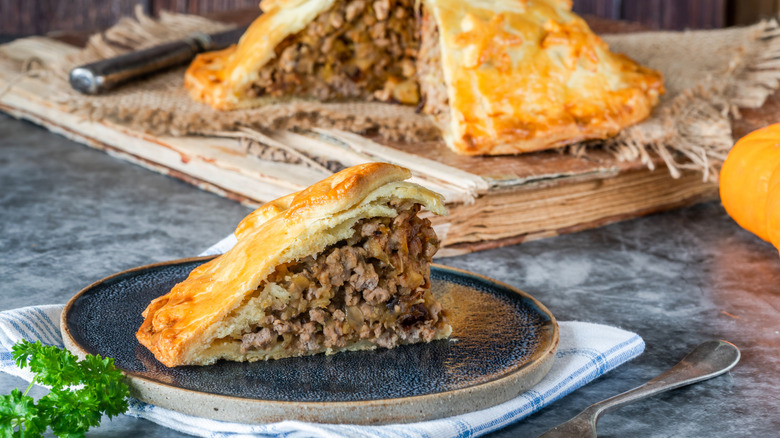
One vintage classic fall dish that might actually deserve a comeback is the Cheshire pork pie, a sweet-and-savory pork pie. The history of pork pies reaches back to at least 1390, when the cooks in King Richard II's kitchens in England were baking them. However, Cheshire pork pies were special in that they contained both apples and pork.
As the name suggests, these apple and pork pies originated in Cheshire, England. We found a recipe for Cheshire pork pies in "The Practical Housewife," published in London in 1860, as well as in "Common Sense in the Household," published in New York in 1883. So they managed to cross over from the Old to the New World. Supposedly, Calvin Coolidge, who was a U.S. president from 1923 to 1929, was a big fan of this pie. His stepmother made it for him, and he was known to visit the Red Lion Inn in Stockbridge, Massachusetts, which also served this pie.
A classic Cheshire pork pie contains layers of pork loin and apples, seasoned with salt, pepper, and spices like nutmeg, mace, sage, or cinnamon. It was sweetened with sugar and also contained butter and wine or cider. Then, all those ingredients are enclosed in a classic pie shell or puff pastry and baked. So, it definitely straddled the line between being like a meat pie and a spiced fruit pie.
Pork brains and scrambled eggs
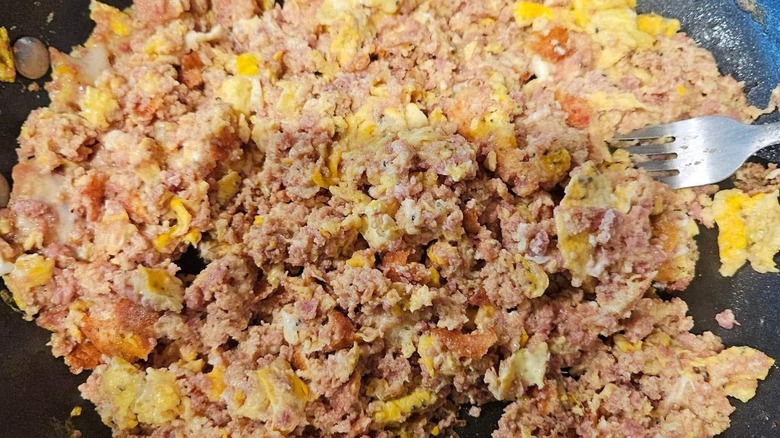
A vintage breakfast nobody seems to eat anymore is pork brains and scrambled eggs. These brains 'n eggs used to be quite popular for breakfast in the South. However, like many offal-laden dishes, it's mainly older generations who still eat it. Granted, you probably won't find it on the breakfast menu at many hometown diners, but there are still a few that serve it in places like North Carolina.
This is a dish that most likely originated on family farms, where families tried to use up the most perishable soft organs from their pigs as quickly as possible after slaughter and mixed them with their eggs, since the textures are similar. It's no surprise that this one showed up in a cookbook from the Great Depression, when it would have been essential not to waste any part of the pig after it was slaughtered.
If you don't have access to pork brains, say, from slaughtering your own pigs or living near a very niche butcher, making this dish requires buying an obscure canned pork product: Rose pork brains with milk gravy. There was a time when it was easier to find on some grocery store shelves, but now many people have to find it online. If you're curious what pork brains taste like, imagine a soft, mushy version of Spam. So, it's not as foreign a flavor as you might think, and it pairs well with scrambled eggs.
Frosted sandwich loaf
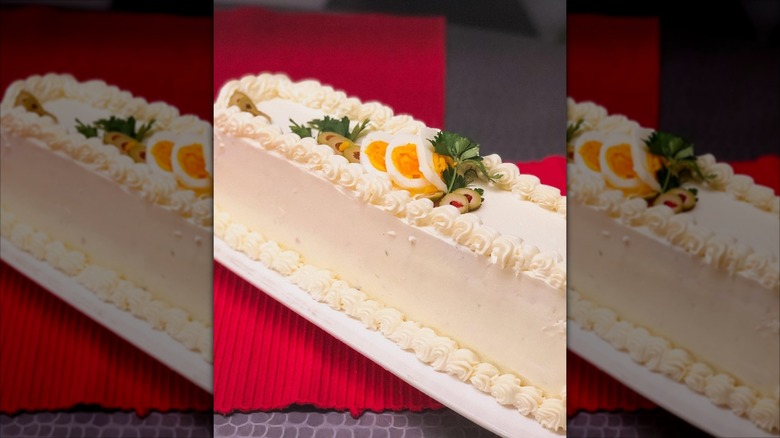
A common pork dish from the 1950s is frosted sandwich loaf. This one actually looks intriguingly edible, unlike some food monstrosities bored housewives created that decade. Frosted sandwich loaves looked like cakes, but all the ingredients were savory rather than sweet, with a surprising cream cheese frosting and a sandwich-style filling. These endured for a couple of decades before being largely forgotten.
Once home cooks spied one of these in their favorite magazine, they were ready to make it for the next potluck or baby shower. These likely got their inspiration from a similar Swedish sandwich cake called Smörgåstårta. Smörgåstårta was popular in Sweden at the same time the frosted sandwich loaf was in the U.S. However, it had a long history, with Danish writer Ludvig Holberg mentioning it in his writings as early as the late 1600s or early 1700s.
While the Swedish version was more seafood-centric, the U.S. version contained a variety of deli-style salads. You start with an unsliced loaf of bread, trim the crusts, then cut it horizontally into four or five layers, like a cake. Between each bread layer, add a different salad, such as ham, tuna, egg, or chicken salad. Some people even include a vegetable layer, such as tomatoes. Then, you frost the whole cake with cream cheese or a flavored cream cheese spread. To serve, you slice the loaf like you would a loaf of bread, creating an inside-out, multi-layered sandwich.
Rumaki
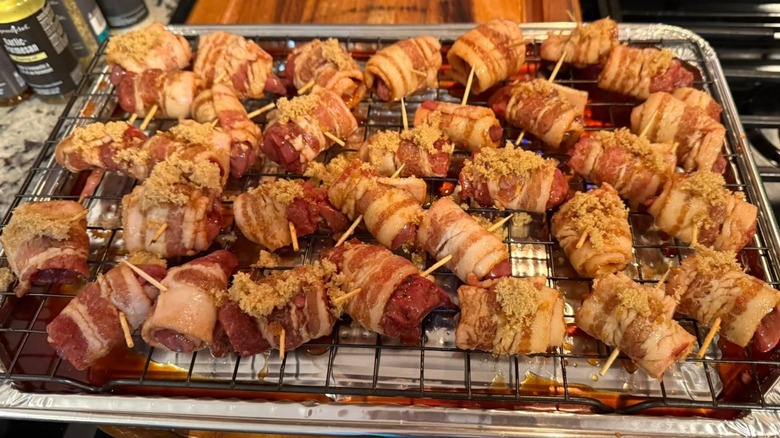
If you ever went to a tiki bar or tiki party in the 1940s through the 1970s, there's a good chance that rumaki was on the menu. We're not sure the original version of this bacon-wrapped water chestnut and chicken liver appetizer would go over so well today since most people don't eat chicken livers regularly (if at all) anymore. However, some non-liver variations sometimes surface.
The story goes that Victor Bergeron popularized this dish when he started serving it at his Trader Vic's tiki bar chain back in the 1940s. Bergeron claimed to have discovered it in Hawaii and said that it originally came from China. Interestingly enough, Trader Vic's competitor in Palm Springs, Don the Beachcomber, had rumaki on the menu by 1941. After the publication of "Trader Vic's Book of Food and Drink" in 1947, visitors to the California chain took the recipe home and shared it with others, which certainly helped popularize it.
Trader Vic's recipe for rumaki called for marinating chicken livers and halved water chestnuts in an Asian-adjacent flavor mixture of ginger, soy sauce, and curry powder, with sugar for added sweetness. You'd then wrap water chestnuts and livers in bacon and skewer them with a water-soaked toothpick before broiling to perfection. Then, it was ready to serve to guests at your tiki party or luau. Modern versions often skip the chicken livers and just wrap up whole water chestnuts. So, it's still a pork dish, but not an offal dish.
Spam fiesta peach cups
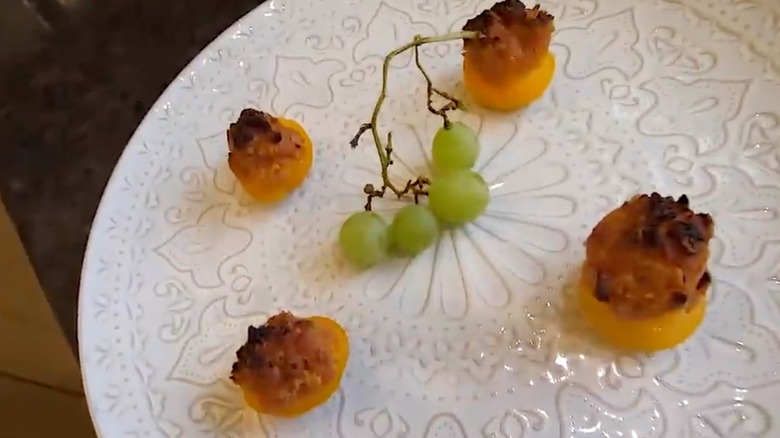
Spam fiesta peach cups might have been a thing in the 1950s, but the only people eating them today seem to be people resurrecting this recipe from the dead to give it a try. The idea was to create a baked Spam-stuffed peach dish to remind you of the warm California sun during the doldrums of winter. Were people really eating this? Well, they were eating a lot of things many of us turn our noses up at in the modern era.
Spam, the tinned, salted pork-and-ham product, became a household name during World War II. The company released many inventive Spam recipes in its 1950s ads for home cooks to try, including at least a couple that paired Spam with peaches. This one circulated in magazines like "Family Circle" around 1956.
The dish involves mixing ground Spam, uncooked oatmeal, milk, ketchup, and mustard in the hollows of canned peach halves, then broiling them for a few minutes. So, it's sort of like a Spammy meatball cooked inside a peach, hitting on the fruity-and-salty vibes some people enjoy in dishes like pineapple pizza. With that in mind, some people on social media say they'd be game to give it a try. However, several people in the modern era who have actually made it and reported the results online haven't really been fans.
Hog maw
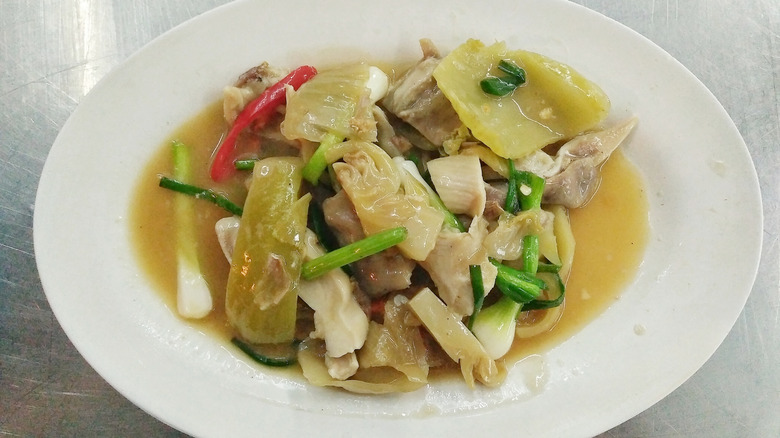
Hog maw is a classic pork dish with an identity crisis. This dish is always made from the thick outer wall of the pig's stomach. However, it's made differently depending on whether it's a classic soul food dish or a Pennsylvania Dutch dish. It's a dish that helps use the whole hog and avoid waste. It still brings back great memories for those who once had a family tradition of making it, especially for special occasions like New Year's.
No matter how it's made, the main ingredient in hog maw is well-cleaned pig's stomach. As a soul food dish, you cut up the stomach and braise it in a pot with aromatics like onions, garlic, celery, and bell peppers, along with seasonings for a little flavor and heat, such as Creole seasoning or red pepper flakes. The Pennsylvania Dutch version actually came from the German dish saumagen, likely originating in the 1800s. You boil or bake Pennsylvania Dutch hog maw after stuffing it with meat like pork sausage; vegetables like potatoes, onions, carrots, cabbage, and celery; and your favorite spices.
While some people still make it, it's not as popular as it once was. Many people's memories of it are connected to their grandparents, who grew up eating frugal dishes like this. These days, it can be more of a challenge finding a butcher who sells pig stomach and cleans it well. As you can imagine, some younger folks don't care for it.
Liver mush
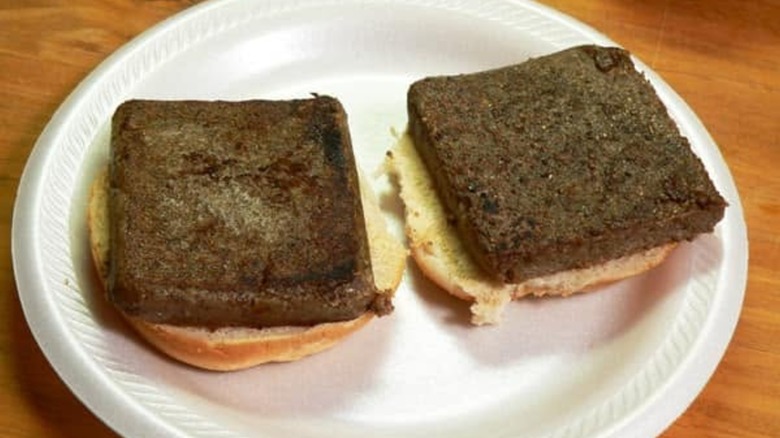
Liver mush is a pork dish that you'll mainly find within about a 100-mile radius of Charlotte, North Carolina. It's a ground pork and liver loaf that's considered a classic of the region. However, it's starting to lose popularity. It was mainly the older generations who ate it, and they didn't always make it for their children and grandchildren. So, many people even in the middle of liver mush country have never even had it.
For those who enjoy offal-infused dishes and don't mind cold loaf meats, liver mush sounds like it should be a winner. Imagine a meatloaf made from a mixture of ground cooked pork shoulder (cooked with onions, garlic, and spices like sage), cooked pork liver, cornmeal or grits, and spices. You can slice off pieces of the chilled loaf to eat like a pâté or to fry. Fried, it makes a great breakfast meat or breakfast sandwich. Some people have it on toast, others on a biscuit. Common condiments to have with it are mustard, grape jelly, or Duke's mayo.
Despite its waning popularity, you sometimes still see it on fancy local restaurant menus. However, there's certainly a large contingent who are too squeamish to try something with "liver" in the name, even if their elders once swore by it.
Liverwurst sandwiches
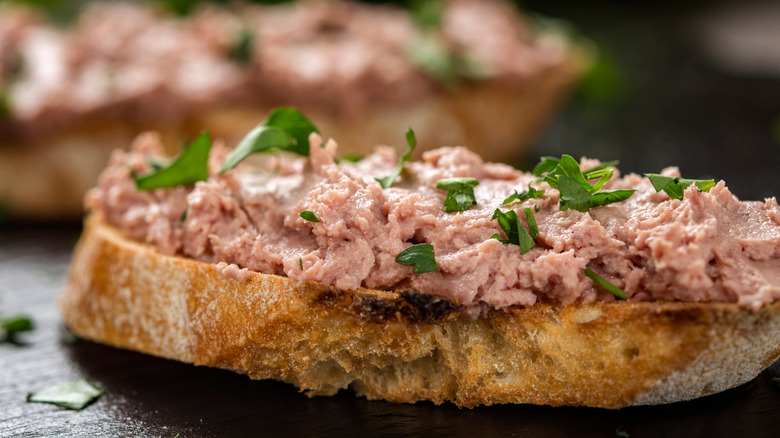
A pork-based sandwich that younger generations in the U.S. tend to associate with older generations is the liverwurst sandwich. Liverwurst is a traditional, highly spiced German and European sausage or soft spread that combines pork liver and ground pork with other meat scraps, such as bacon and offal (sometimes beef). Many European immigrants brought it with them when they migrated to the U.S. However, it's not as easy to find as it once was, as it has decreased in popularity. Your best bet is probably to search for it in a European deli if you'd like to try it.
Liverwurst is far more palatable than its name might suggest, reminding some of a deeper-flavored, salty, and highly umami bologna. The spices vary depending on who is making it. So, there's not just one way that it tastes. However, most agree that it doesn't taste strongly of liver, as its name might suggest.
Liverwurst makes great sandwiches. The spreadable version works fine; just spread it over bread for an open-faced sandwich. Liverwurst sandwiches don't have to be anything fancy. Pumpernickel or rye bread is a solid choice for a liverwurst sandwich. Common ingredients on this sandwich include a smear of mustard, sliced onions, and perhaps pickles (often butter pickles) or relish. Some people might also add cheese to the sandwich as well.