

KFC Mashed Potatoes Vs Coleslaw: The Healthier Side Might Surprise You
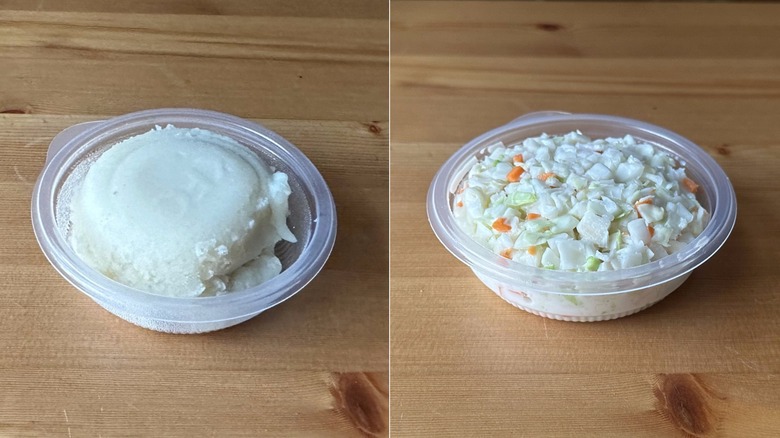
Since 2018, it's been a federal requirement for restaurants with more than 20 outlets to display the calorie count of all standard items on the menu. The idea behind the law is to help customers make more informed selections between different menu items, and understand how their choices fit with their overall dietary needs. While calories don't tell the whole story, checking these numbers might provide you with some surprises. Take, for example, two of KFC's side dishes: mashed potato and coleslaw. Many would consider the vegetable-laden coleslaw to be a healthier choice, but that might not be the case.
KFC's coleslaw clocks in at 170 calories for an individual portion, compared to just 110 calories for the mashed potato. If you take a look at KFC's detailed nutritional information (which by law must be available on request), the potatoes also fare a little better than the slaw. KFC's mashed potato side is significantly lower in total fat compared to the coleslaw (3.5 grams compared to 12 grams) and also in saturated fat (0.5 grams versus 2 grams). It has no sugar, while a single serving of coleslaw contains 10 grams, with sugar being the second ingredient on the list after the chopped vegetables. The mashed potatoes are higher in protein, but as neither of these sides provide a significant amount of protein, this might not make or break your decision.
What you should be aware of, however, is the sodium content between sides. A serving of mashed potatoes contains 330 milligrams (14% of your daily requirement based on a diet of 2,000 calories) compared to 180 milligrams for the coleslaw. KFC's undeniably delicious coleslaw does provide more fiber thanks to its mix of vegetables, with 4 grams of fiber per serving, and is second only to KFC's baked beans in terms of fiber content. The mashed potatoes contain just 1 gram of fiber per serving.
KFC mashed potatoes can be the healthier choice, but watch the gravy
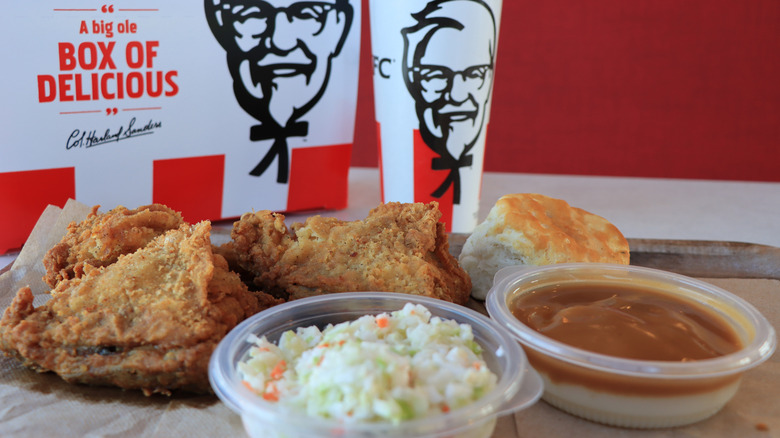
The macros above refer to an individual portion of plain mashed potato, but if you select the more traditional (and arguably more tasty) mashed potatoes and gravy, this is going to change the nutritional value. And it's also bad news if you're trying to reduce your sodium intake. A serving of mashed potatoes and gravy contains 520 milligrams of sodium. You're getting 22% of your daily sodium requirements before you even get to the extra crispy KFC chicken. The gravy will also increase the total fat content to 4.5 grams and the calories to 130.
What's considered healthiest for you will depend on your exact dietary requirements, but you generally want to seek out more of the things that benefit you such as protein, fiber, and vitamins, while limiting ingredients that might be detrimental to health such as sugars, saturated fats, and salt. Then, of course, you need to consider any other dietary limitations. If you're a vegetarian, coleslaw may be the better option — though it's not vegan due to the eggs in the mayonnaise. Even if you skip the gravy, KFC's mashed potatoes aren't vegetarian as they contain emulsifiers than can come from animal sources. Both the coleslaw and the plain mashed potato are also free from gluten, but the gravy is not.