

6 Expert Tips For Making Chicken Tenders Better Than Ever Before
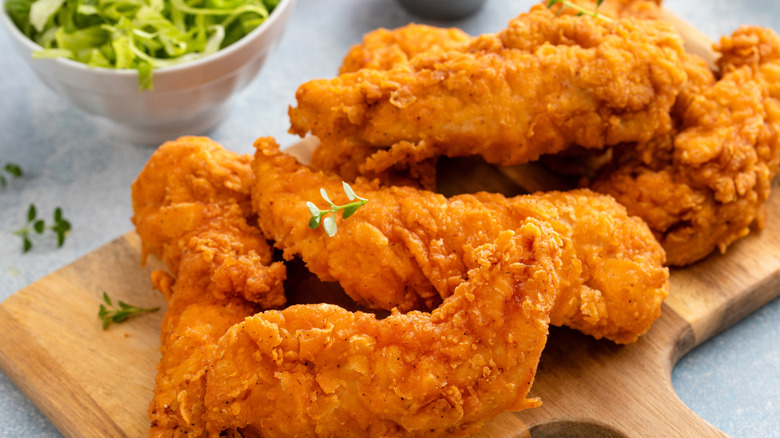
Chicken tenders have long been the afterthought of the chain restaurant kids' menus and fast food restaurants alike. How can a chicken tender, traditionally served in a plastic basket and rarely making it past the appetizer section of the standard restaurant menu, compete with the likes of a burger or sandwich? But no more.
Today, the chicken tender isn't just a respected menu item; it's a sought-after delicacy. It's a celebration of tender meat, crispy breading, and deep seasoning. Since so many restaurants are churning out their own version of this dish, it begs the question: How can the home chef recreate the best possible chicken tender on their own?
We had the opportunity to chat with some true chicken tender experts — Stephen Parker of Tender Crush, Vahe Kallibjian of Dave's Hot Chicken, and Craig Walker of Le Coupé — all of whom are exhibiting their chicken tender talents at Tenderfest 2026, hosted in Los Angeles on September 19 and in Chicago on October 10 — to find out. They gave us tips on the cut of chicken to use, seasoning, cooking technique, the ideal dip companion, and more, sharing (almost) all of their secrets necessary to make homemade chicken tenders better than ever before. Lovers of the chicken tender, rise up — it's not just for the kiddos anymore.
1. Jumbo chicken tenderloins will yield the juiciest results
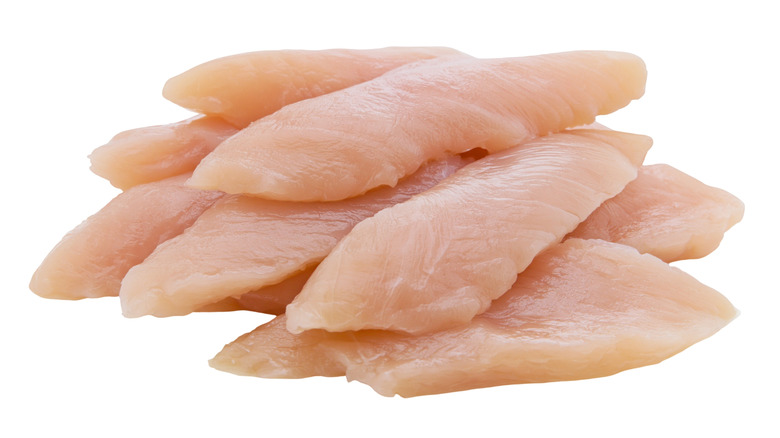
You're perusing the poultry aisle, plagued with perhaps the most important question when it comes to making the best chicken tenders at home: What cut of chicken should I get? It may seem almost too good to be true that the best cut of chicken for a chicken tender is right there in the name: the tenderloin.
It is true, though. According to Stephen Parker, chef at Tender Crush in New York City, the jumbo chicken tenderloin is the only viable option. Located along the breast near the rib bones, the chicken tenderloin is an underworked muscle on the chicken, resulting in a tender piece of meat with a flavor similar to the breast. "Their size allows them to hold moisture extremely well, and they remain the most tender and juicy cut for this application," says Parker.
While the chicken tenderloin is a popular choice, it isn't the only option. At Le Coupé, chef Craig Walker is daring to be different and thinking outside the (chicken) coop, using the chicken thighs — a cut that's nearly impossible to overcook — rather than the tenderloin for its chicken tenders. The thigh has a higher fat content than the breast, resulting in more flavor and an interior that stays juicy even after frying at a high temperature. "The key is trimming and cutting the thighs properly so every piece is relatively uniform," says Walker. "That way they cook at the same rate." Not sure which cut to get for your homemade tenders? Try both, and see which delivers a better result.
2. Don't skip out or skimp on the seasoning
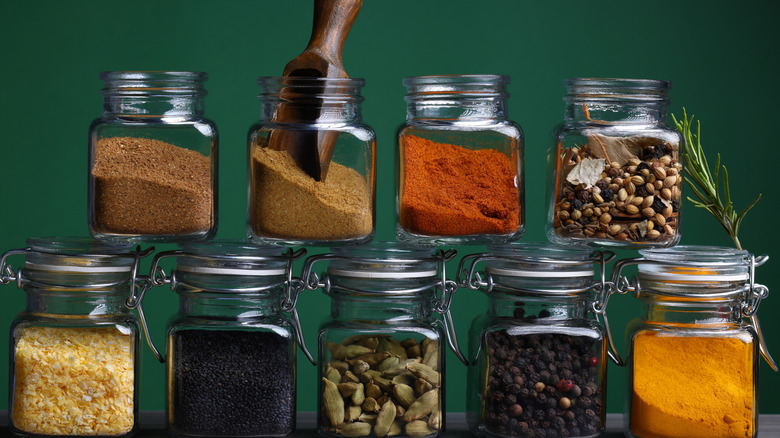
Chicken is a blank slate that needs to be flavored throughout. When it comes to chicken tenders, not properly seasoning or marinating is a mistake that Stephen Parker and Craig Walker see often, the latter of whom shares that chefs will put all their seasoning into the breading, while ignoring the meat itself. At Le Coupé, Walker marinates his chicken tenders for a full 24 hours before giving them a seasoned breading. The marinade provides the moisture and flavor inside, and the breading offers crunch and flavor on the outside.
Similarly, Parker batter-marinates his chicken tenders at Tender Crush before doing a classic dredge. The batter pulls double duty, acting as a flavor agent for the meat while also helping the dredge adhere and keeping an even coating while frying. While Parker wouldn't share his marinade or seasoning recipe with us, a simple marinade that works for any cut of chicken of three parts fat — think avocado or canola oil, or a fatty nut milk like coconut — to one part acid, like mustard or vinegar, is a wise place to start.
When it comes to dry seasoning, Walker notes that it all comes down to balance. "I don't think you need 20 spices to make great fried chicken. Every ingredient should have a purpose," he says. "A well-seasoned breading should complement the marinade and create a flavorful crust without overpowering the chicken." Ultimately, mastering your seasoning technique and avoiding simple mistakes when seasoning your food is key to imbuing your chicken tenders with the deepest possible flavor.
3. You don't need a deep fryer, but you do need a thermometer
For people who love to spend time in the kitchen, having a comprehensive yet fun collection of kitchen tools and gadgets is an absolute treat. However, not every kitchen endeavor requires an over-the-top kitchen gadget, and when it comes to making the best possible chicken tenders, there's no need to be flashy. "At home, you really don't need anything complicated," says Craig Walker.
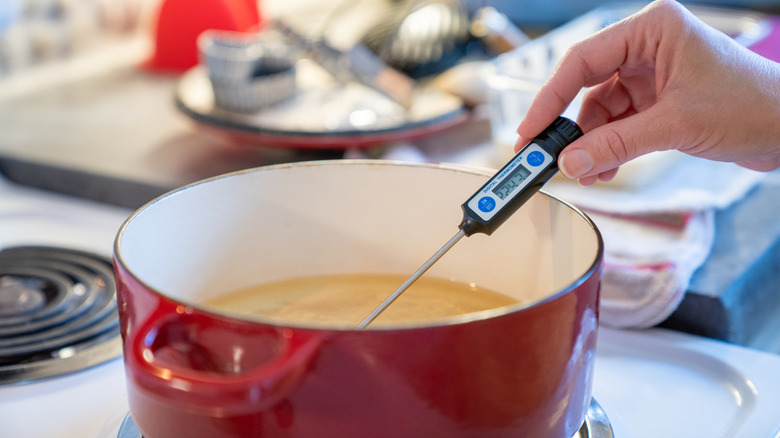
Before you run to your closest kitchen store and buy the industrial deep fryer, take a beat. To achieve chicken tender perfection, our chef experts recommend having just a handful of essential tools on hand: a heavy-bottomed pot (like a Dutch oven), a thermometer, a pair of tongs, and a wire rack.
Chances are, if you're a home chef, you have most, if not all, of these items already. However, our chef experts all agree that it's the thermometer — a candy thermometer like what you may use for frying donuts will get the job done — that's most important. Without a tool to correctly regulate the temperature of the oil, you're frying blind. For Walker, having properly heated oil can be the difference between a crisp, juicy tender and a heavy, greasy mess. When the oil is at the right heat, the exterior will cook quickly for a crisp exterior, while the inside will stay moist and tender. "Temperature control really is the difference between average fried chicken and great fried chicken," he says.
4. Oil with a high smoke point will ensure your tenders don't smoke while frying
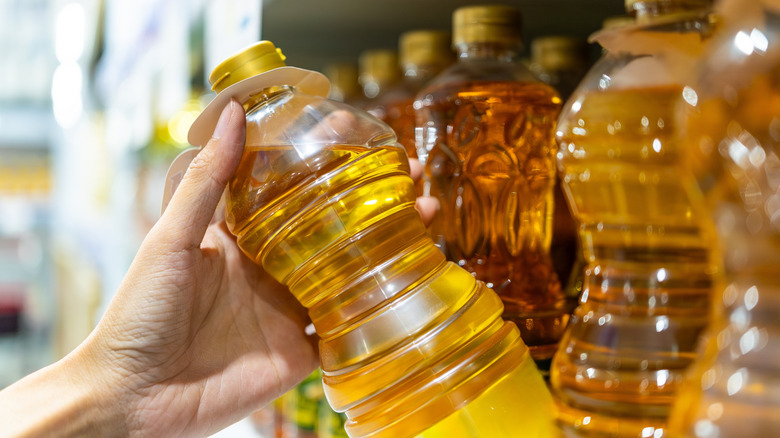
Picture a juicy chicken tender with a crispy, craggly crust, positively bursting with savory flavor. It's a masterclass in textural contrast and is only achievable if you're using the right oil for deep frying. So how do you decide which oil is best? There are two factors to consider: smoke point and flavor.
At Le Coupé, Craig Walker uses rice bran oil, which ticks both boxes right away. Its high smoke point (up to 490 degrees Fahrenheit) means it is tolerant of high-temperature cooking, and the mild flavor won't overpower the flavors of your seasonings. If your grocery store is well-stocked in the oil department or you have access to an Asian grocery store, rice bran oil is great to have on hand for a multitude of uses. Another accessible oil option is canola oil, which has similar properties to the rice bran oil, notably the neutral flavor and the high smoke point (slightly lower, but still high at 400 degrees Fahrenheit). "Some people swear by peanut oil, and it does fry very well, but peanut sensitivities and allergies are something to consider," says Walker.
5. Embrace the deep fry technique for the crispiest exterior
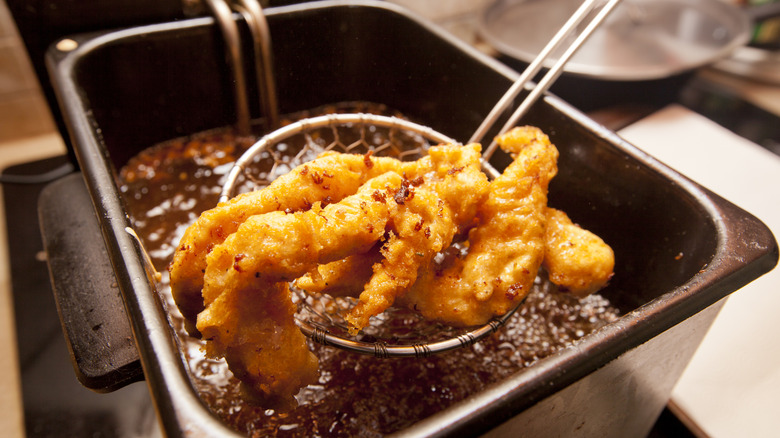
We've spent a lot of time talking about Dutch ovens, thermometers, and the right kind of oil to use for deep frying, but what if you don't want to deep fry? It's a valid question, but for our chef experts, it's not recommended. "Frying is the best method," says Stephen Parker. "It gives you the most consistent result and helps ensure a juicy, tender interior with a crispy exterior." Craig Walker agrees. "You can make a good chicken tender in an air fryer or oven, but if we're talking about the best possible chicken tender, I don't think anything replaces frying," he says.
Deep frying requires keen attention to detail. Once your oil has reached the desired temperature (boy is that thermometer going to come in handy!) and you start dropping the chicken in, as Walker explains, the temperature of that oil will drop. This isn't a bad thing — but it does mean that smaller batches are the way to go, as opposed to overcrowding the pot, which will drop the temperature too quickly and result in an uneven fry.
When you cook in smaller batches, the oil has a chance to come back up to temperature. From there, let those little tenders fry until golden brown until the temperature has reached 165 degrees Fahrenheit: the ideal temperature for perfectly cooked chicken. We recommend removing one tender and checking the temperature before pulling the rest. Using the tongs, carefully remove the tenders from the hot oil, place them on the wire rack, and sprinkle with salt before serving.
6. An accompanying dip should complement the chicken, not rescue it
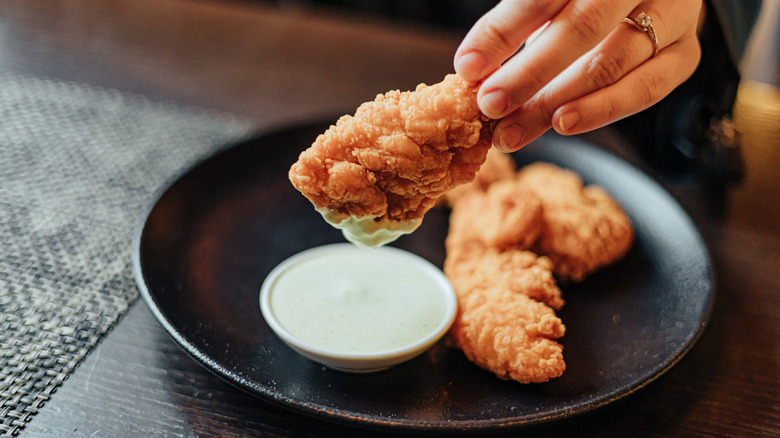
"There's nothing better than dunking a hot, crispy tender into a great sauce," says Craig Walker. At Le Coupé, Walker makes a fresh herb buttermilk ranch as well as a habanero ranch for maximum variety. "The ranch adds creaminess, herbs and acidity, which balance the richness of the fried chicken without overpowering," he says.
Alternatively, Vahe Kallibjian of Dave's Hot Chicken and Stephen Parker are of the mindset that a great chicken tender shouldn't rely on a sauce as a crutch, but rather as something that only enhances it further. "A flavorful sauce with a slight amount of acidity helps balance the richness of the fried chicken and keeps you coming back for another bite," says Parker.
The contrast of a slightly acidic sauce against the crispy, juicy chicken tender is an ideal combination, and it really does leave the door open for some unique sauce options. A copycat version of Chick-fil-A's Polynesian sauce or a Carolina BBQ-style honey mustard sauce are both great examples of how you can lean on the sweetness with ingredients like ketchup, molasses, and honey, as well as the tartness of vinegar. Then again, you could certainly take Walker's idea and mix up a homemade buttermilk ranch, giving your hot, crispy chicken tenders a creamy, herbaceous dip for an almost-too-perfect bite.