

Bushmills Original: The Ultimate Bottle Guide
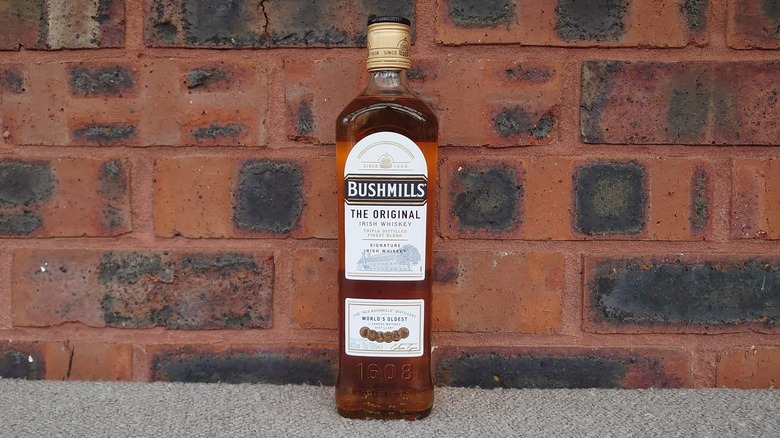
Bushmills Original is an Irish whiskey you'll often find placed on the back of bars and drink's cabinets around the world. Produced at the Old Bushmills Distillery in Northern Ireland, it gives you an excellent insight into the qualities of Irish whiskey with its smooth and approachable character. But how does it actually taste in the glass and is it a bottle worth buying? That's the heart of what I'm going to be looking at today. Yet, along with that, I'll also be taking a journey through this fascinating distillery and how it got to where it is today.
For this closer look at Bushmills Original, we won't be relying on the distillery's tasting notes or user reviews. Instead, this is a review based on personal experience as I got a bottle to double-check that Bushmills is still meeting the same standard it set a long time ago. I'll also be looking at how it compares to the rest of the Bushmills range, along with how it stacks up against another Irish classic. By the end, you'll have a great insight into whether or not you should by Bushmills Original, while learning about its incredible story along the way.
History of Bushmills Original
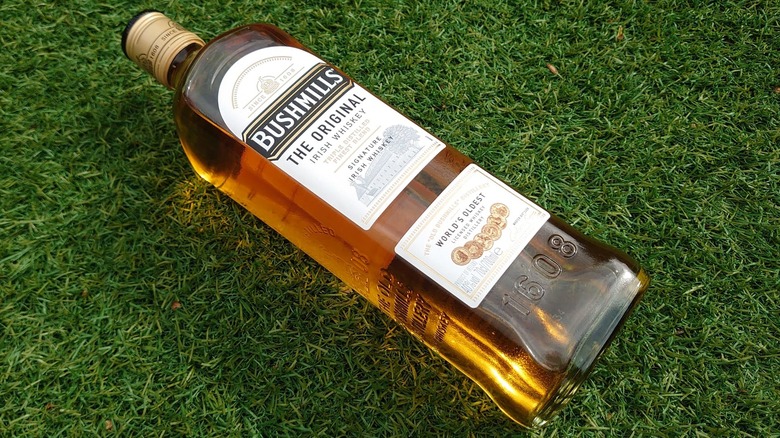
The origin of licensed whiskey in the area goes back to 1608, but the Old Bushmills distillery wasn't established until 1784. However, during this time there wasn't much of an operation on the site, with the business going through various owners and periods of closure. It wasn't until the 1830s the distillery started to receive wider recognition under the stewardship of James McKibbin, as the whiskey started being sold In England and America. Following McKibbin's death in 1847, ownership changed a few times until 1880. This was then Bushmills officially became the Bushmills Old Distillery Company, reflecting its ever-increasing demand. Life for the distillery was far from plain sailing after that, with a destructive fire in 1885 followed by liquidation.
The distillery was quickly rebuilt but as with every distillery at the time, it would encounter the problems caused by two World Wars and in the middle of that, prohibition. After emerging from WWII, the distillery was sold again to Sir Isaac Wolfson in 1946. He would guide the distillery until 1964 when it was sold to Harrington United Breweries. That lasts just eight years until Seagram took part-ownership along with Irish Distillers. If one multinational beverage company wasn't enough, Pernod Ricard would take over in 1988, Diageo in 2005, and Proximo Spirits in 2014. Despite all the changes, the whiskey is still distilled, matured and bottled in the town of Bushmills. This consistency of operations seems to be reflected in the consistency of the spirit itself. Even if the ownership of Bushmills has been anything but consistent.
What does Bushmills Original taste like?
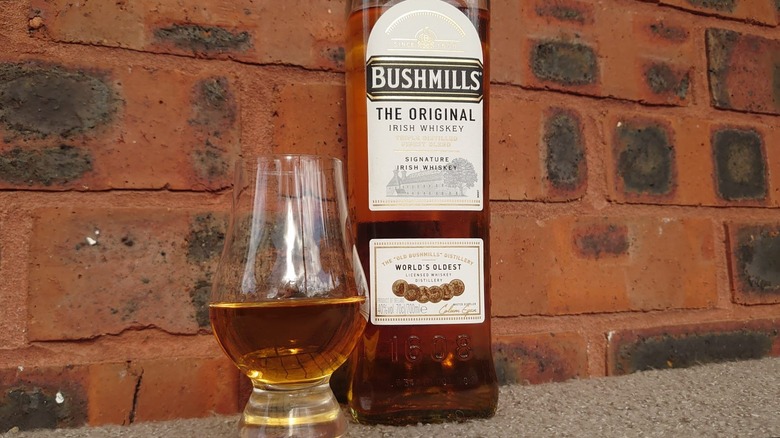
Now for the most important question of them all. Bushmills is an approachable whiskey, and by that, I mean there is nothing about it that could possibly offend your tastebuds. It's a term that can be both a compliment and a criticism. Approachable whiskeys are generally those with quite a straightforward flavor profile, so if you're looking for something bold and robust, this isn't it. What is does deliver is a smooth and easy-drinking character with a more than manageable proof of 80. The nose here is lovely as it's both light and fruity. Green apple is the most obvious note I get along with touches of cinnamon, vanilla, and toasted oak.
The palate is fairly basic but you'll instantly notice the smooth character of the whiskey that allows it to gently flow over your tastebuds. You get plenty of sweet malt with some vanilla and perhaps a touch of caramel. There is a freshness to the whiskey but it's hard to pin that down to a specific tasting note. The finish isn't too long with plenty of warmth without ever straying into an alcoholic burn. A lingering vanilla does stay with you, giving a pleasant end to a clean and soft drinking experience. It's an uncomplicated whiskey but for a basic bottle, you're never going to get layers upon layers of flavor. Ultimately, it's a fantastic gateway to both the best Irish whiskeys in general as well as the mature single malts Bushmills produce.
How is Bushmills Original made?
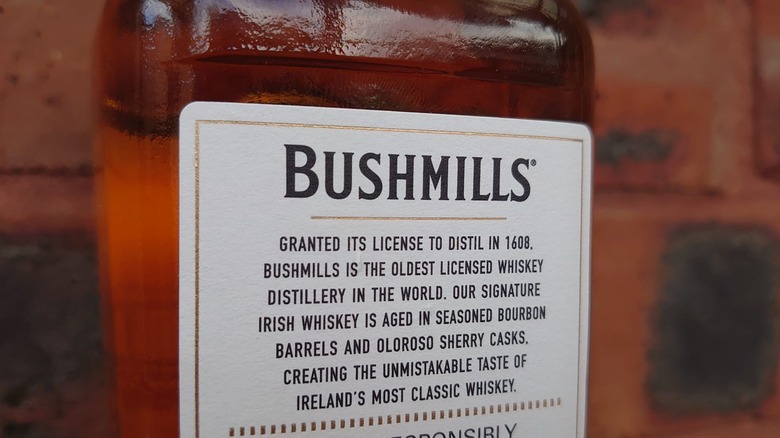
The Bushmills distillery as a whole is known for its focus on single malt whiskey. This is where only malted barley is used as the grain, which is extremely common in Scotch whisky but not so much in Ireland, which has more of an equal spread of whiskey types. However, Bushmills Original is an exception to this single malt focus. Here you get a blend of that single malt whiskey along with lighter grain whiskey, made from corn. The recipe itself dates back to before prohibition and results in both a smooth and warming taste.
One of the hallmarks of the Bushmills Distillery is its triple distillation method. This gives the spirit a higher level of purity as it helps to remove come of the heavier flavor compounds. This contributes to the lighter flavor profile and lack of alcoholic burn you get with Bushmills. The maturation of the whisky also plays an important role in its flavor here as well. Both bourbon and sherry casks are used to give it a lovely mix of sweetness and fruits. Then bottled at an approachable proof of 80, the result is a well-crafted spirit that remains remarkably consistent.
How to drink Bushmills Original
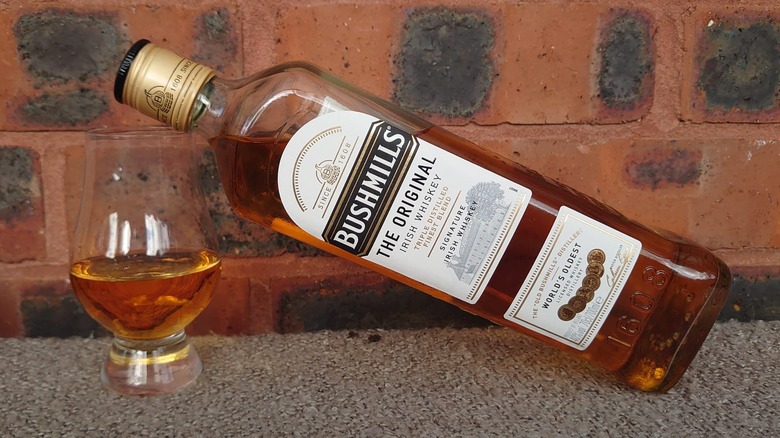
One of the benefits of buying a bottle of Bushmills Original is that you'll be getting a highly versatile drink. Its smooth and light character means there is no single correct way to drink it. Some whiskeys are too harsh to be drunk neat, others are worthy of only being drunk neat, and others can be too light and get lost in cocktails. Bushmills Original fits none of these categories.
Despite being an affordable whiskey, it's more than good enough to be enjoyed on its won. This is the best way to appreciate its tasting notes without anything else getting in the way and it's good to at least sample it this way, even if you're buying it for other reasons. Added to its light nature, that low proof also helps to make it a great example of why Irish whiskey is often seen as the best place for beginners to start.
While it's excellent when drunk neat, it's also a great addition to many cocktails. Its smooth, relatively uncomplicated profile allows it to work with other ingredients without disappearing completely. The distillery even recommends some cocktails to try out, including its own versions of the Negroni, old fashioned, and gold rush. Of course, it also makes a beautifully smooth Irish coffee for those who enjoy the famous drink. These uses make Bushmills one of the best bottles to have in your drink's cabinet; it fits every role.
Is Bushmills Original expensive?
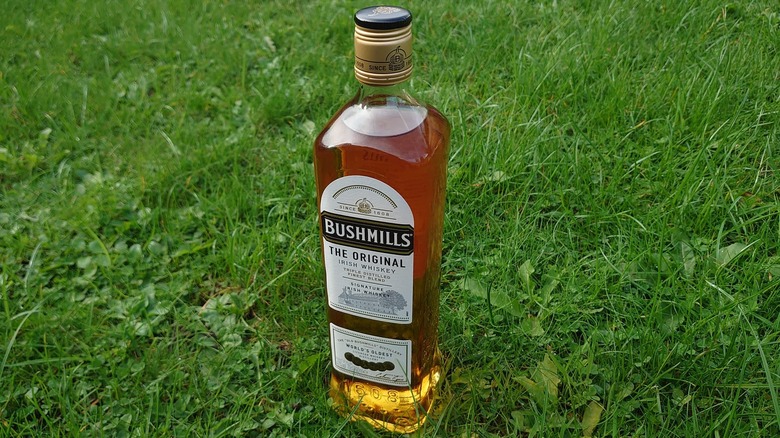
Bushmills sits at the more affordable end of the whiskey market. This is especially when you compare it against the rest of the Bushmills range. A regular-sized bottle will usually set you back in around $25. It's one of those whiskeys that can often be included in promotional deals, so it's worth having a look around to see if there's anywhere selling it at a discount. While it is affordable, that price does set it above many bottom-shelf budget whiskeys you can find, but you are getting a higher level of craftsmanship for that cost.
The next question to ask is whether or not its price represents good value for money? I'd say it represents fair value. If you see it beyond the $30 mark, the value proposition doesn't start to look as appealing. Yet, at $25 or below it's always going to be money well spent. As I've mentioned above, it's never going to be one of those whiskeys that just sits on your shelf gathering dust. For an everyday whiskey, cocktail ingredient or first introduction to Irish whiskey, Bushmills Original is a great choice at a good price.
Bushmills Original vs Jameson
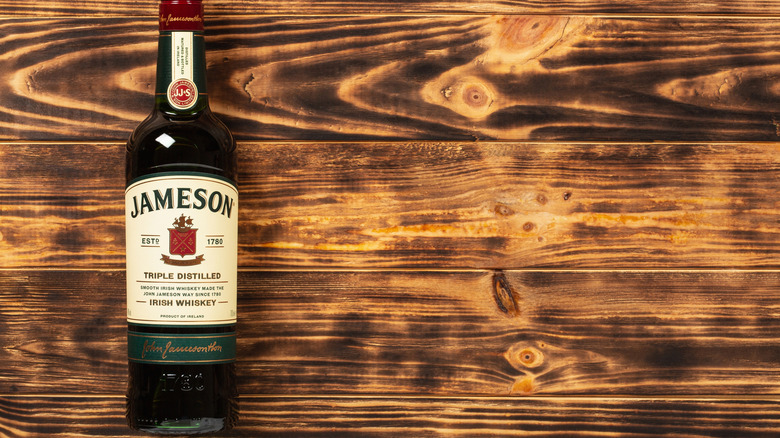
The obvious comparison to Bushmills is Jameson. The latter is the world's best-selling Irish whiskey, but Bushmills retains huge popularity as well. Beyond popularity, the two whiskeys have plenty in common. Both are blended Irish whiskeys, are affordable bottles, triple-distilled, and bottled at 80 proof. So, which one is better? Perhaps unsurprisingly, it's not a clear-cut answer. The tasting notes of Jameson whiskey are formed by a slightly different production method. Jameson combines single pot still whiskey with grain whiskey, giving it a somewhat rounder body and more noticeable spice.
Having tasted both, I find Bushmills Original slightly lighter and sweeter, with its malt and vanilla notes taking center stage along with its fruity freshness. Jameson has a little more weight and spice, making it arguably the more distinctive of the two when drunk neat. Neither is particularly complex, but both are remarkably easy to drink. I'd day Jameson cuts through a little better in more complex cocktails whereas Bushmills Original works better in more lighter and refreshing serves.
My personal preference depends on the context. In a bar, I'd probably opt for Jameson due to its greater complexity. In a liquor store, Bushmills, due to its versatility and having more complex whiskeys at home to enjoy if I want. If you're looking for affordable Irish whiskey, these two are far from your only two options but they both remain excellent choices.
Bushmills Original vs Bushmills 10-year
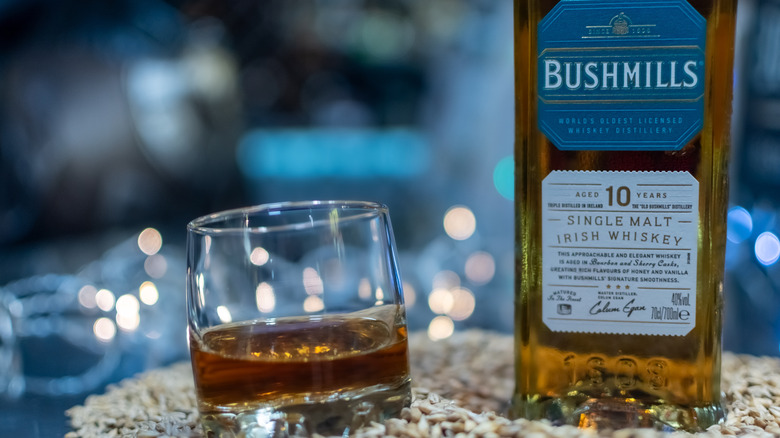
Here the comparison isn't particularly close, Bushmills 10-year is better. But it's important to understand the difference between the two and whether or not the 10-year is worth the jump up in cost. Unlike the Original, the 10-year is purely made from single malt but have similarities in regrard to being triple-distilled and 80 proof. Yet, for the 10-year, you're looking to pay about double the price, around the $50 mark. Bushmills Original is still lighter but much simpler than its older counterpart.
The 10-year has considerably more depth, with unique tasting notes such as ripe fruit, creamy vanilla, milk chocolate and toasted oak. Its minimum decade of maturation in bourbon and sherry casks gives it a richer and more developed character. If you want to sit down and savor a brilliant Irish whiskey, it's a great choice. I still wouldn't call it a overly sophisticated whiskey but the extra years in the barrel introduces some new notes while making those flavors you'll find in the Original more rounded and deeper. If you've never tried either before, I'd suggest you start with the Original to see how you get on with the classic Bushmills profile. If you enjoy that, you can then move on to the 10-year, which is a great single malt for beginners who want to go beyond what Scotland has to offer.
Bushmills is the world's oldest licensed whiskey distillery
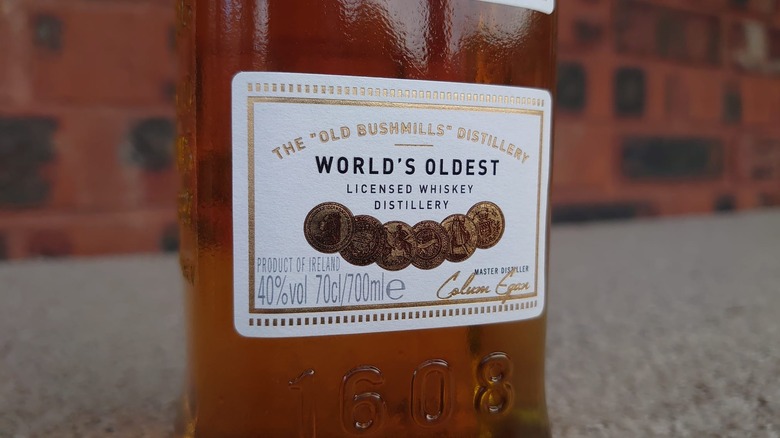
There is a claim that Bushmills make, including on the front of the bottle, that it is the world's oldest licensed whisky distillery. As often with these types of claims, there is a little caveat to them. The story dates back to 1608 when King James I granted a license to produce spirits in the area. This license wasn't granted to the Bushmills distillery, as the company didn't exist yet, instead, it was granted to an entrepreneur by the name of Sir Thomas Philipps. This allowed the Crown greater control over the production and sale of spirits but it also means the area could distill legally.
The part where it gets a little sketchy is the Old Bushmills Distillery wasn't formed until 1784. As I said, the distillery itself wasn't granted a license and there is no record of a distillery operating continuously on the site from then. It would be more apt to claim that the geographic area had the world's oldest whiskey license, but that's not quite as catchy. Yet, the claim has historical weight as Bushmills does have an historical connection to the 1608 license, and I've not been able to find any evidence of a distillery that claims an earlier one. It remains one of the most interesting facts about Irish whiskey and a claim that Bushmills are proud of. Is it true? Kind of.
It's names comes from the river that is the source of its water
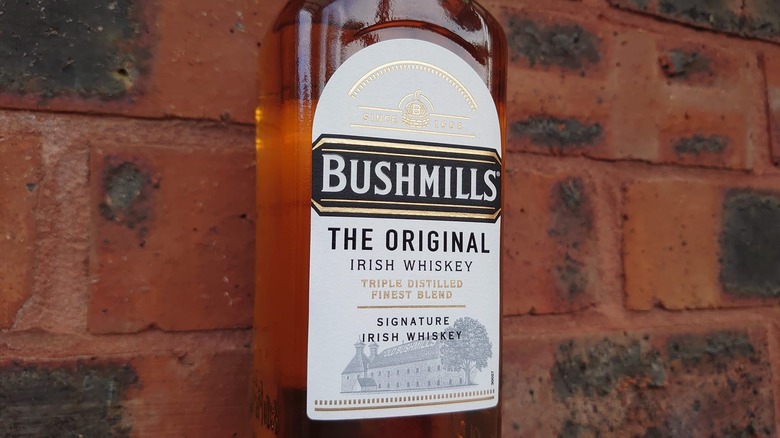
The name Bushmills is a combination of two features in the landscape surrounding the distillery. The village is called Bushmills and a big reason for that is the River Rush that runs from the Antrum Hills out to see on the north coast. This river has played an important role in the area's history, providing not only fresh water but also power for local industry. It's that use of the power source where the second part of the name comes from.
A number of mills were built along the River Bush. These mills were used for a wide range of reasons, including the grain, paper and timber industries. When it came to making a settlement around these mills, the name Bushmills must have seemed quite apt. The need for water-powered mills may have faded way over time, the clean water required for whiskey hasn't. Although, the water for Bushmills technically comes from a tributary of the River Bush called Saint Columb's Rill. Here the water passes over the same basalt landscape that created one of Ireland's most famous features, the nearby Giant's Causeway. So, while the name may be a simple one, it's a lovely piece of history that ties together the areas vital water source and the innovation to turn that water into industry.
It had its own steamship for international deliveries
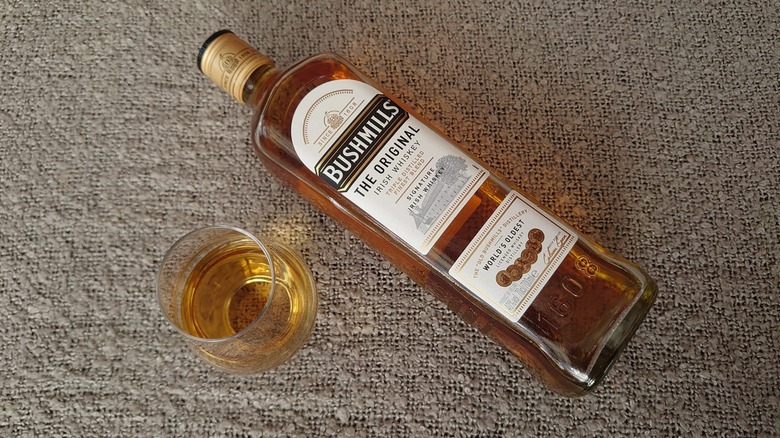
Towards the end of the 19th century, Bushmills has developed a reputation well beyond its Belfast home. With the growing need to export whiskey to America, Bushmills came up with quite a unique solution for a whiskey producer: its own steamship. The ship was first sent on it's journey in 1890 and docked in Philadelphia in October of that year. From there, it headed off to New York to carry on its journey through America. It would then go even further to spread the word of Bushmills, with stops recorded at Singapore and Yokohama.
It was a successful trip with he captain telling reporters how there were enough orders to fill double the ship's capacity. It wasn't until July 1891 that the ship would return to the United Kingdom. It again made another voyage to New York but sadly this quirky piece of company history wouldn't last for too long. Whether it was just a marketing gimmick or a genuine attempt to cut out needing to use a third-party for deliveries is unknown. But by 1894, the ship was sold off. The ship would continue operations until 1911 when it ran aground off the coast of Anglesey in Wales. It was broken up a year later to end one of the most unusual chapters in the history of the distillery.
Bushmills has survived fire, war, liquidation, and prohibition
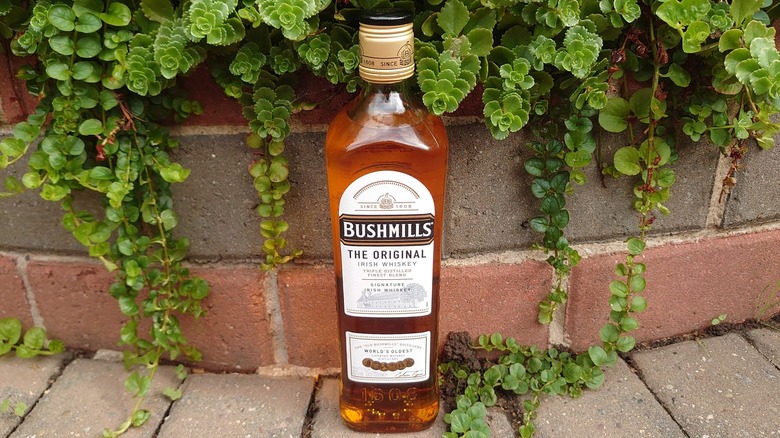
The distillery has repeatedly found itself in trouble, whether that's through disasters or economic crisis. The first of those setbacks came in 1885 when the Old Bushmills Distillery caught fire. Much of the machinery was destroyed but crucially the whiskey stores and stills were untouched. The owners worked quickly to rebuild the distillery on the same site and it wasn't long until production recontinued. The recovery was so quick that the Bushmills would go on to win whiskey's only gold medal at the 1889 Paris Exposition.
Financial shocks have come in the form of two liquidations. The first was in 1895, which was followed by another in 1921. This second liquidation was hastened by prohibition, with Bushmills already being popular in America by this time. Two years later, an optimistic Belfast merchant by the name of Samuel Wilson Boyd bought the company. Instead of scaling back, Boyd continued production in the faith that prohibition would soon come to an end. He had to wait 10 years, but when it ended in 1933, Bushmills was ready to send an enormous shipment of whiskey to America.
Just when it looked in the clear, World War II happened. The Bushmills head office was bombed and much of its whiskey destroyed. After playing its part in the war effort by housing American troops, life for Bushmills became much easier and disaster has since been averted. There are many reasons why Bushmills could have faded out of existence, but it survived and then thrived into the powerhouse it is today.