

5 Disadvantages Of Using A French Press Coffee Maker
We may receive a commission on purchases made from links.
In the era of countless automatic coffee makers, the French press persists as one of the few manual ways to brew our morning java. It comes with a jug and a plunger — a simple enough setup to use in a smaller kitchen or travel with. The initial investment is very low, too, as popular French presses are usually priced between $15 and $25. Even Martha Stewart's favorite French press won't break the bank, so it's easy to see why many coffee enthusiasts reach for this brewing method. But not all that glitters is coffee gold.
The French press may be cheap — but it's also fragile. The setup is easy, but the brewing has many steps, and even though you can take it with you on a camping trip, you'll probably wish you had left it at home as soon as it's time to clean it. The French press definitely has some downsides. Depending on what you need from your daily coffee routine, these cons can be seen as minor inconveniences or absolute deal breakers. Our intention isn't to dissuade you from buying a French press altogether; it's to shine a non-sugarcoated light on what you're in for if you do.
Some of the following downsides can be mitigated, of course, but others have to be accepted as part of the process. If you realize this brewing method isn't a good fit for you after all, you've at least saved yourself a couple of bucks.
It's not great for rushed mornings
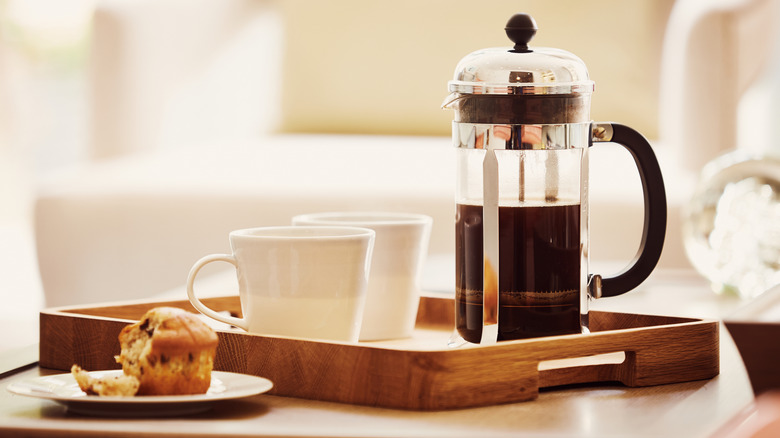
Whether you're trying to get the kids out the door, catch the train, or just make it to work on time, every minute is precious in the morning. That's likely the reason why automatic coffee makers are so popular; all they ask of you is to press a button, and a steaming cup is ready within seconds. Some even come with a handy timer, so the coffee is already brewed as soon as you wake up. This type of convenience is hard to give up and impossible to beat with any manual coffee maker.
Using the French press is a much slower, more mindful experience. There are many steps you need to follow to brew French press coffee: grinding the beans, heating the water, warming the jug, blooming the grounds, waiting for the grounds to steep, and plunging; only then is the cup ready. You'll normally have to wait at least four minutes while the grounds are steeping, although some prefer longer brews, closer to ten minutes.
As such, using the French press can take anywhere from ten to 15 minutes from start to finish, which is quite a long time when you're tired and in a rush. If you're usually running late in the mornings, a French press might not be for you.
You have to be super mindful of the temperature
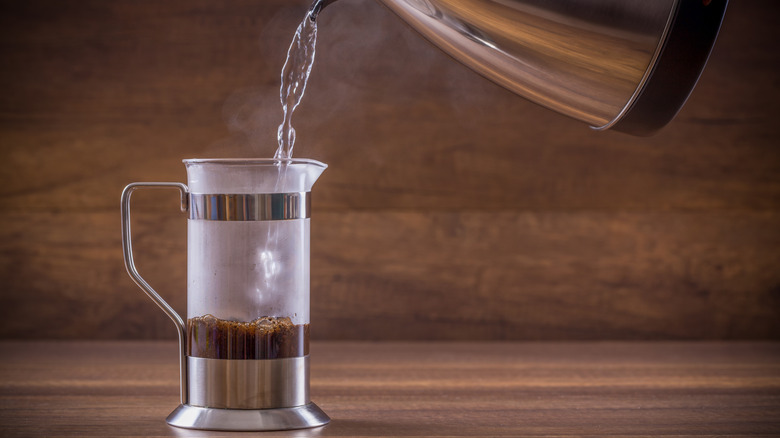
With the French press, you can't just mindlessly heat the water in a kettle and pour it into the glass jug once it's boiling — that will ruin the flavor of your coffee by burning the grounds. The ideal water temperature for the French press is between 190 and 200 degrees Fahrenheit, so you'll need to invest in an electric tea kettle with temperature control. Alternatively, you can remove the water from the heat just as it starts to bubble, let it rest for about a minute, and only then use it to brew. Needless to say, that adds a few more steps and minutes to the whole process.
Boiling water can also break the glass jug. There are a lot of cheap French presses on the market, which is great for accessibility, but they usually have thin glass that isn't compatible with boiling temperatures. You can, however, invest in the pricier French press models made with thicker glass or stainless steel. Additionally, you shouldn't brew with boiling water; the final serving temperature of the coffee can be mild if you love a truly steaming cup. For that reason, the prep step you shouldn't skip for French press coffee is pre-heating not just your jug but also your mug.
The grounds often escape into your cup
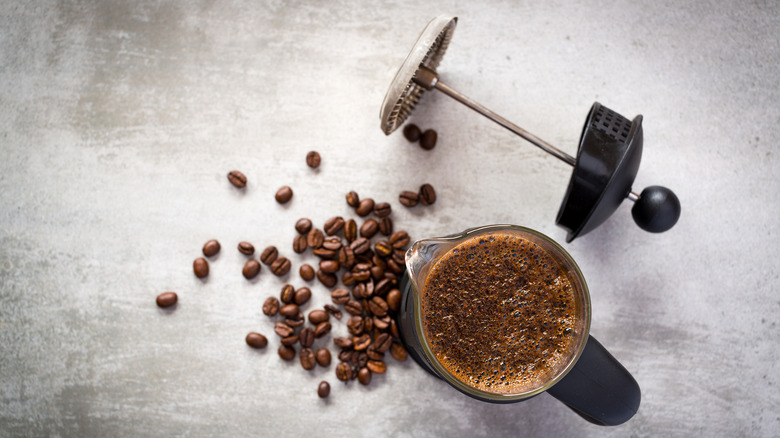
If you're used to drinking smooth, filtered cups of java without any sediment, the French press could feel like a cold, grainy shower. Even though it comes with a plunger that's equipped with a fine mesh filter, some of the coffee grounds will inevitably make it into your cup. The best way to prevent coffee grounds from getting into your French press coffee is to choose the right grind, but even then it's unrealistic to expect a completely clear cup.
The best choice for this brewing method is a coarse grind, because the coffee particles remain large enough not to slip through the mesh filter. You can still make a great cup with a medium grind if you don't mind a bit of sediment, but a fine grind is usually not compatible with the French press. This creates another hurdle to ease of use: You either have to grind your own coffee every morning or find store-bought coffee grounds that are suitable for a French press, which narrows your options.
Some find the coffee too oily
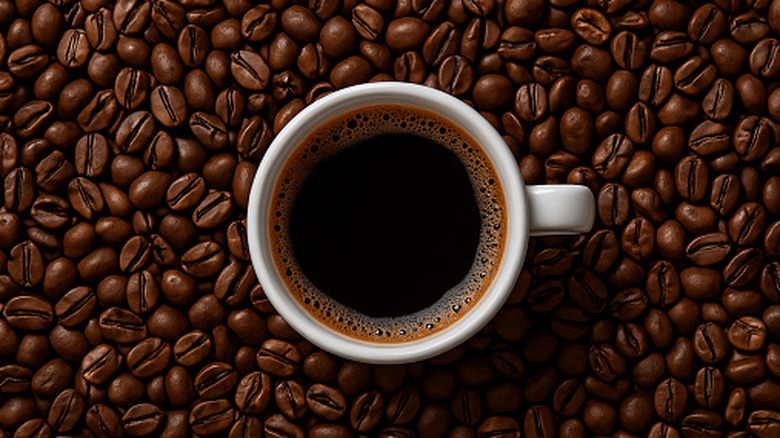
French press coffee is not particularly delicate in flavor or in texture. This brewing method yields a strong, full cup, which frankly isn't for everyone. Because the grounds are fully immersed in hot water for a few minutes, the flavorful oils from the beans actually stay in the coffee. That's why the French press brews a stronger cup than a pour-over. The oils are the most flavorful component, and in the standard pour-over they get filtered out.
Meanwhile, the plunger in the French press isn't nearly fine enough to strip the oils, allowing the coffee to be more robust in flavor. Not only do the oils provide strong flavor, but they also create texture. The coffee tastes thick, full-bodied, and slightly oily — even more so if you're used to filtered java. Although this pronounced flavor is favored by some coffee drinkers, others admit they don't like the oily sensation found in French press coffee.
The cleaning is tedious
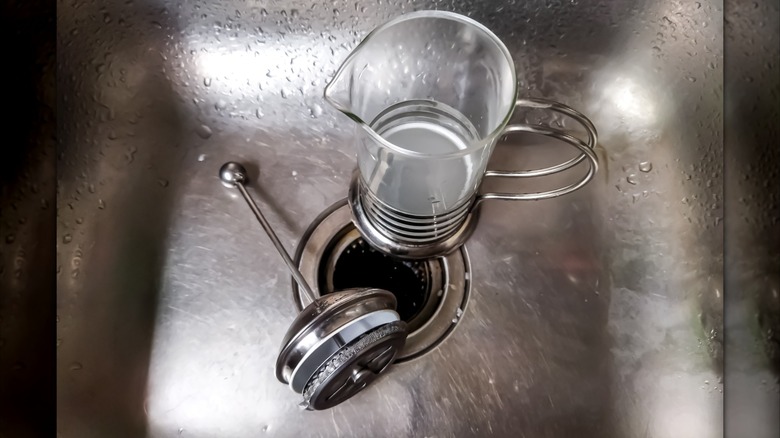
Any coffee maker, whether manual or automatic, comes with a clean-up routine — but given that French press coffee already takes a while to make, it certainly doesn't help that it also takes a while to clean. Most French presses can't go into the dishwasher, as it could damage the delicate glass or ruin the tightness of the plunger. So you're essentially stuck with washing it by hand every single day.
One of the most important parts of your French press coffee maker you shouldn't forget to clean is the filter. Unfortunately, it's not very easy to do, as it requires quite a bit of maneuvering under running water to get all of the grounds out of the mesh. You'll have to clean it every single time, too — if you leave the grounds inside the filter, they will quickly grow mold, and good luck trying to get rid of that. The final cleaning hassle is the delicate nature of the glass jug.
Many people have broken their French press while washing it because the glass is so thin. Since you're washing the jug by hand, the shattered glass could even cause an injury. On the flip side, this is another area where a stainless steel French press is a total winner — they're sturdy, and most of them are dishwasher-safe, like the Secura French Press Coffee Maker from Amazon.