

Pour Over Vs French Press: Which Coffee Maker Brews The Strongest Cup?
We may receive a commission on purchases made from links.
Although there are countless automatic coffee machines, many of us still enjoy the slower routine of a manual coffee brewer. The French press and the pour-over are two popular methods thanks to their simplicity, but each brews a significantly different cup, particularly when it comes to strength.
First, let's define what a strong cup of coffee actually means in this context. We're talking about body and flavor — how the coffee feels in your mouth and how intense its flavor is. If you're wondering about caffeine, some factors affect that more than the brewing style, such as the type of coffee beans or the amount of coffee used. Generally, both the French press and pour-over methods produce coffee with similar caffeine levels. However, because the two brewing methods extract flavor from the grounds in very different ways, the French press creates a richer, fuller-bodied cup with a more intense flavor.
In the French press, the coffee grounds are fully immersed in hot water for at least four minutes, preserving the natural oils that carry the most flavor. In contrast, the pour-over uses percolation extraction through a paper filter, which means the coffee grounds are never fully immersed — only in contact with the water for a short time. The flavorful oils also don't make it into the cup, as they get strained through the filter. Consequently, the coffee made in a pour-over is less intense in flavor but feels smoother in your mouth.
How to make stronger pour over coffee, if you don't want to get a French press
If you're yearning for a properly intense cup, the French press is a better choice. It's a very affordable gadget, too; the Utopia Kitchen Borosilicate Glass French Press costs just $14 on Amazon. That said, you might genuinely prefer the smoother, cleaner texture of a pour-over brew while still wanting a cup with a stronger flavor.
First, try tweaking your coffee-to-water ratio by either adding more coffee or pouring less water. (You can do the same with the French press if your cups are coming out too strong, only in reverse — add less coffee or more water). The only downside to this change is that coffee, especially high-quality, can be very pricey. If you want to save money, there's also a way to brew a stronger cup of pour over coffee using fewer beans.
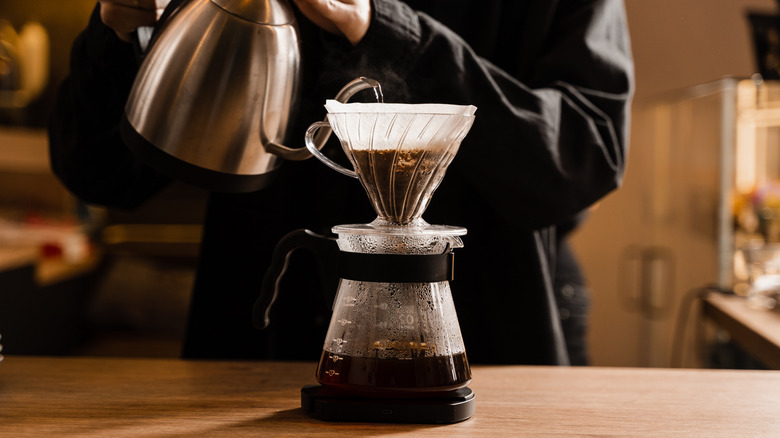
It does require a bit more finesse and trial and error. You'll need a gooseneck kettle for the hot water, then pour it slowly from an increased height. This allows the coffee grounds to stay in contact with the water slightly longer and ensures they are more evenly saturated, which ultimately extracts more flavor. While it's an easy adjustment to try at home without spending any extra money, you'll need to experiment with the pouring height and speed to find your personal sweet spot.