

The Classic Hamburger Chain That Struggles To Catch Up With McDonald's, But Keeps Falling Short
If asked to pick one symbol that universally represents the fast food industry, there is little doubt what the majority of respondents would answer. The Golden Arches — the emblem of McDonald's since they were added to the corporate logo in the early '60s — are that symbol. Despite McDonald's practically owning the concept of fast food in the collective mind, the company has always had competitors biting at its heels. Perhaps the most dogged pursuer is none other than the home of the Whopper itself: Burger King.
Taking things to the very beginning, McDonald's started as a single store in San Bernardino, California, back in 1940. The hamburger joint was opened by the McDonald brothers, as you might expect. The duo developed their "Speedee Service System" using novel production techniques to significantly improve the rate at which the restaurant could sling its burgers fries, and shakes. Franchising began in no time, and soon Ray Kroc, originally a franchising agent, bought the McDonald brothers out and took control of the chain in 1961, leading it into an era of massive growth.
Around the same time, another quick-service restaurant was born down in Florida. Initially known as Insta-Burger King, the restaurant first opened its doors in the early '50s after a visit to the original McDonald's location inspired Keith J. Kramer and Matthew Burns to explore the concept. Franchising didn't take long for BK either. began franchising. One commonly touted rule of business does seem to apply here, however: It is often better to be first than it is to be better.
The battle for fast food burger dominance has never been close
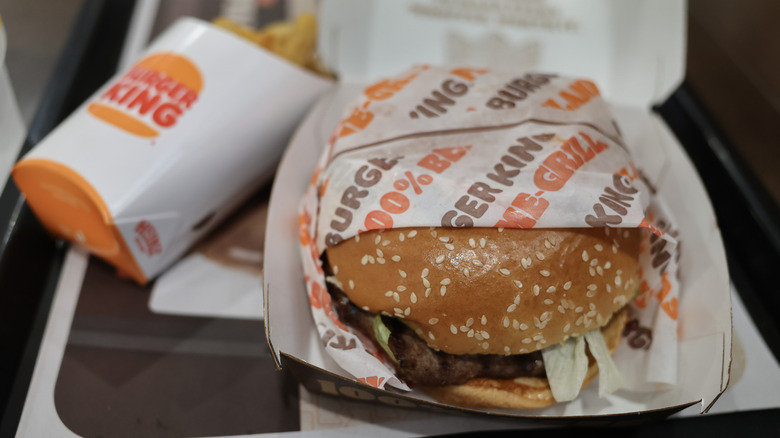
Despite holding second place among fast food burger chains over the decades, Burger King has never actually managed to come close to McDonald's market share. Even as America's second largest burger chain, its numbers pale across the board when compared to the leader. McDonald's, for example, held a whopping 48% of the market share in 2024, according to a Barclay report (via CNBC). By comparison, BK captured just about 10% at the time. Looking at raw numbers, there are over 44,000 McDonald's restaurants across 100 different countries. Burger King also boasts locations in more than 100 countries, but the overall number is less than half as large at around 19,000.
The dominance of Mickey D's over the years has been impossible for BK to break down, despite the company's best efforts. In 1982, Burger King launched the first attack-ad campaign in the fast food industry, claiming that McDonald's burgers were 20% smaller than its own. This led to a lawsuit that was eventually settled, though BK saw measurable same-store growth from the pointed attacks.
This sort of promotional jousting is now the name of the game for marketing across the fast food world, though while some jabs do land, none have ever struck with enough force to so much as knock McDonald's off balance. That paragon of fast food has a firm hold over the nostalgic concept itself, and it may be the case that neither Burger King nor any other rival will ever be able to unseat it. Though recent times have seen some small shifts.
The future of the burger wars
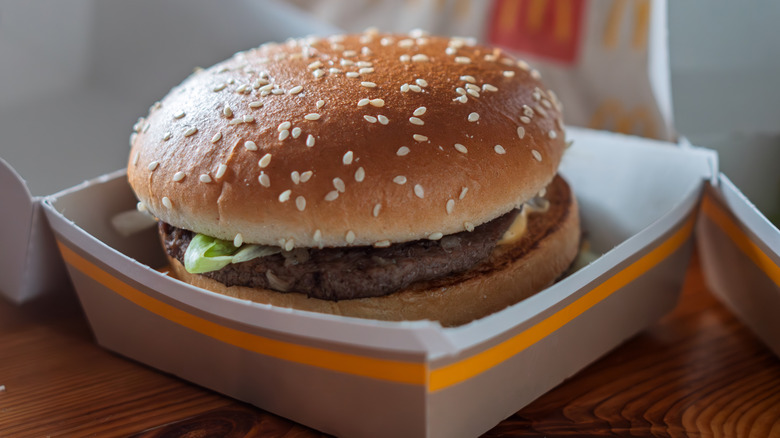
Burger King is in the midst of a multi-year revamp, renovating restaurants, marketing strategies, and hamburgers alike. At the core of this campaign is what might be the best new burger of 2026, the New Whopper. A simple reworking of the chain's flagship product — among other marketing strategies — has certainly been part of the drive that pushed BK back into second position after ceding that place to Wendy's for the previous six years.
During this same window, McDonald's has had trouble with its own high prices, social media mishaps, and burger flops. The Big Arch Burger arrived in the U.S. with considerable fanfare, but those voices quickly died down. Between the differing Big Arch Burger prices from state to state — it costs as much as $13 in some stores — and the CEO's comically small bite of the burger taken on social media (which quickly went viral), the press has not been good. Customers have seen the changes in these burger chains, and consumer opinions appear to be shifting.
"I can't for the life of me understand why [McDonald's] it's so much more popular than Burger King," writes one Redditor. "I much prefer Burger King burgers over McD burgers." This individual is not alone. Across the internet there are plenty of posts made by those who have made the switch and regret not doing it sooner. With a market share as large as McDonald's, however, it'll take more than a bad burger or CEO's public faux pas for Burger King to noticeably close the gap.