

6 Things You Might Not Know About 'Chocolate King' Milton Hershey
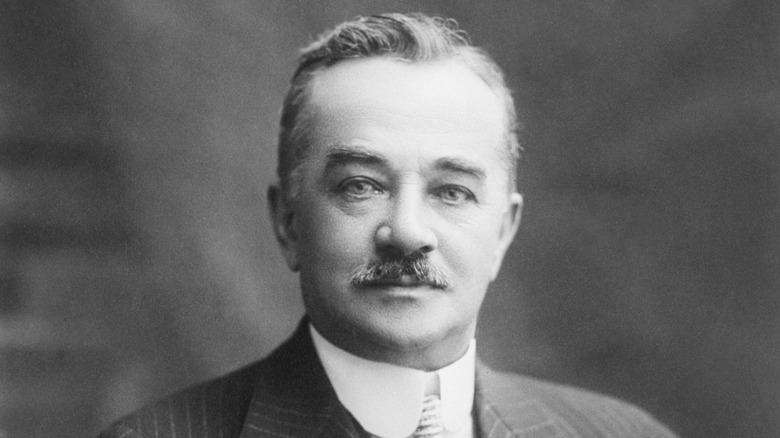
Even if you don't have a sweet tooth, you've undoubtedly heard of the famed Hershey brand and its iconic brown-wrapped chocolates. Even if you're not a fan of the chocolate itself, chances are you've come into contact with Hershey in one way or another — after all, the conglomerate owns a staggering number of brands, and they're not all chocolate-centric.
As well-known as the brand is, few people take the time to learn tidbits about the man himself: Milton Hershey. Born on September 13, 1857, his love of crafting candy came about at the ripe young age of 14, and it never relented. What ensued was a life well-lived, with many stumbles and lessons learned along the way. Hershey wasn't an overnight success — rather, a winding road led him to eventual Willy Wonka status, and the legacy he left upon his death in 1945 will certainly never be forgotten; in fact, Hershey is about to get his own movie.
While in Hershey, Pennsylvania, we spoke with Allison Rohrbaugh, senior director of communications and content strategy at Visit Hershey & Harrisburg, about the life of Milton Hershey and his enduring impact on the town. Here's what we discovered.
Hershey was very philanthropic
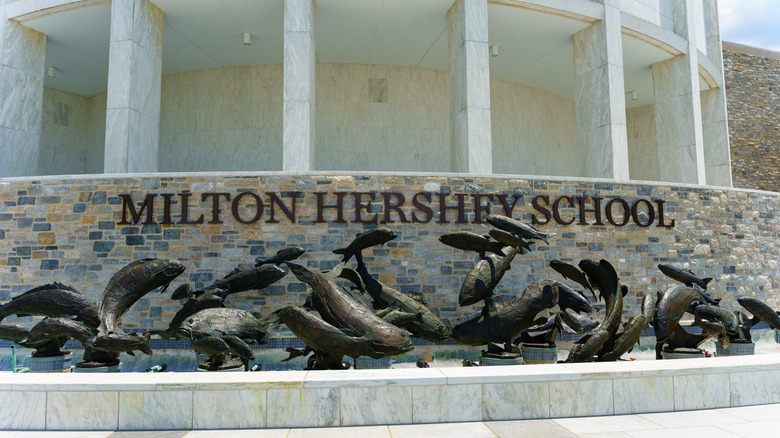
Milton Hershey (who, by the way, only had a grade-school education) is most well-known for his chocolate creations, but not everybody is as well-versed in his philanthropic ventures. "Before his death, he made sure that a trust was formed to fund a school for orphan boys at the time ... because he and his wife, Kitty, could not have children," Allison Rohrbaugh, senior director of communications and content strategy at Visit Hershey & Harrisburg, tells us. Now, the Milton Hershey School enrolls both boys and girls and, according to its website, "provides a private, residential educational experience for children from low-income families."
Hershey's philanthropic efforts didn't stop there, though. He also took it upon himself to employ those hit hardest by the Great Depression, by starting a "Great Building Campaign." During this time, he hired workers to build a number of still-existing buildings, including the Hershey Community Theatre, Hotel Hershey, and the Hershey Sports Arena, to name a few.
Chocolate wasn't Hershey's first candy venture
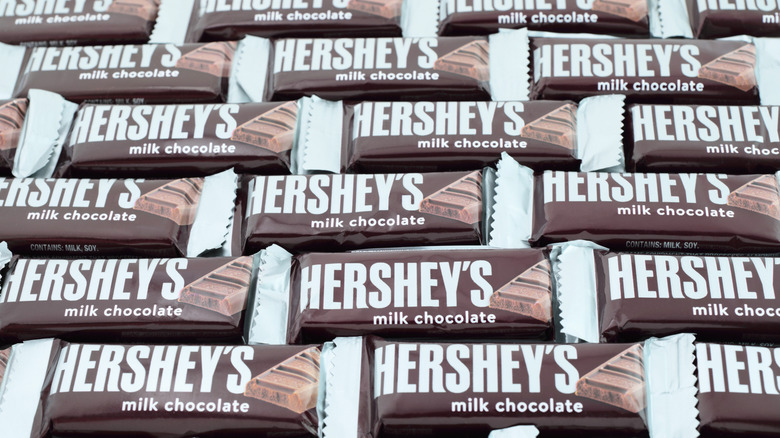
Though the company's iconic chocolate bars are (and likely will always be) the icon most associated with Hershey, chocolate wasn't Milton Hershey's first candy of choice — in fact, the company wasn't even the first to ever produce a chocolate bar. Believe it or not, Hershey's passion for candy-making was first expressed by creating a slightly more niche product: caramels. In fact, the Lancaster Caramel Company was one of Hershey's first business ventures.
So, how did chocolate come into the picture? According to Allison Rohrbaugh, the world can thank Hershey's global travels for that particular inspiration. "Things evolved as he traveled the world, and he wanted to bring milk chocolate to the masses because chocolate was a delicacy ... he came here, and he did everything at Hershey." Can Hershey be credited with popularizing what's now considered one of the most accessible sweet-tooth satisfiers? Maybe not solely, but there's no question that he played a large role in making the candy easier to get your hands on. Had he stuck with caramel, that may not have been the case.
Hershey went bankrupt — twice
If at first you don't succeed, try, try again! This was a tenet Milton Hershey certainly held close to his heart, and personally, we're thankful he did. After all, Hershey's first venture wasn't an immediate success. Neither was his second. He finally found massive success with the Lancaster Caramel Company, but what preceded it were two bankruptcies that would have left most of us walking home with our tails between our legs.
Hershey's first candy shop in Philadelphia was a six-year-long venture. That's a long time to invest in a business, especially in your 20s, and to have it end in bankruptcy must have been a huge blow to Hershey's ego. His second venture — this time in New York — ended similarly. Fortunately for us, Hershey picked himself up, dusted himself off, and went on to found the Lancaster Caramel Company, which was his gateway into the world of chocolate-making. The rest, as they say, is history.
Hershey's Pennsylvania location is largely due to the dairy industry
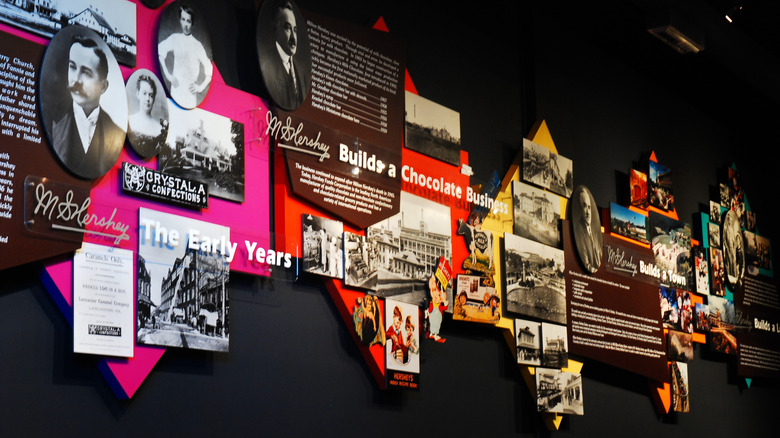
As far as choosing the location for his chocolate factory, there's one simple reason Milton Hershey placed it where he did. Allison Rohrbaugh tells us, "He did everything in Hershey because this is where the cows are ... he needed a fresh run of fresh milk to the factory." Obviously, the town wasn't called Hershey at the time; its eventual moniker would be adopted because of the legacy Hershey imparted upon it. Nowadays, Pennsylvania is known as the Chocolate Capital of the U.S.
The town's dairy farming history and Hershey's eventual factory placement there have had such a lasting role on the area's identity that, despite being widely known as Hershey, the "town" of Hershey isn't actually a town at all. It's governed by the Township Board of Supervisors, named for Derry Township, the original (and current legal) name of the geographical area. Still, you'll find the small town named "Hershey" on maps and mailing addresses.
Hershey built the chocolate factory before perfecting his chocolate recipe
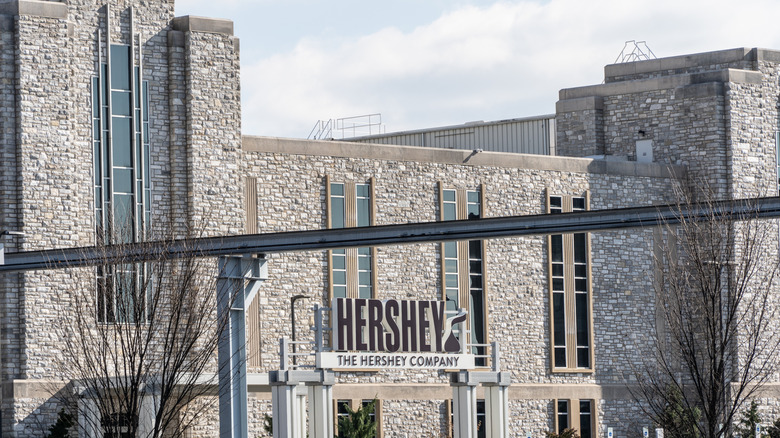
Milton Hershey exemplifies the idea that you don't have to have it all figured out before you go all-in on your next venture. Perhaps his previous experiences with failed businesses and bankruptcy gave him a no-holds-barred attitude toward the business and silenced any inhibitions. As Allison Rohrbaugh says, "He invested in and built this chocolate factory really before the recipe was perfected."
Hershey started by investing in chocolate-making equipment and didn't sell his first milk chocolate bar until 1900. The experimentation process was a lesson in trial and error. There wasn't a very good precedent set for making chocolate with fresh milk; however, Hershey had enough knowledge from making caramel with milk that he was able to eventually nail down the iconic recipe for Hershey's milk chocolate.
Hershey originally created Hersheypark for his employees
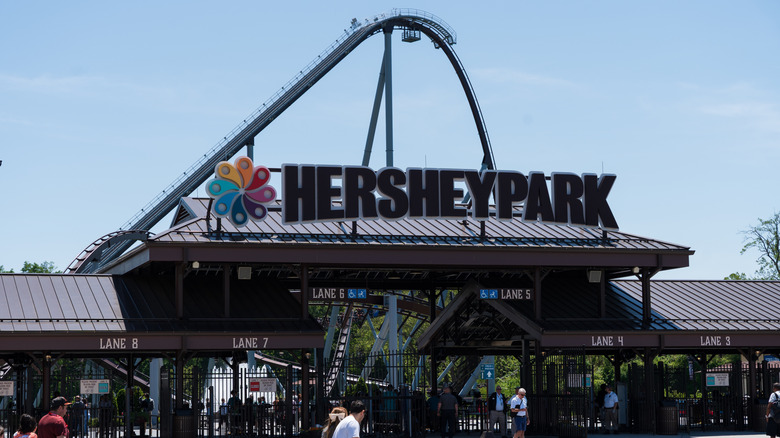
One of Hershey's most popular modern-day attractions is Hersheypark, an amusement park full of fun and thrills for any type of adventure-seeker. However, it wasn't always the fast-paced, roller-coaster-loaded park that it is today. According to Allison Rohrbaugh, the park's earliest expression was yet another expression of Milton Hershey's philanthropy. "He was dedicated to making sure that the people who worked for this factory had a wonderful place to live, work, and play," she says.
So, at its inception, Hersheypark wasn't for thrill-seekers — it was actually just a small pavilion for his workers to gather in their off time. Or, as Rohrbaugh puts it, "He built a community center." In a sense, Hersheypark is still a community center, albeit a much busier one than Hershey probably had in mind originally. His original purpose for the park is still in full effect as it (and the town as a whole) remains a place of fun and whimsy, where chocolate-lovers of all ages can go to satisfy their sweet tooths.