

How Seafood Restaurants Ensure The Safety Of The Fish And Shellfish You're Eating
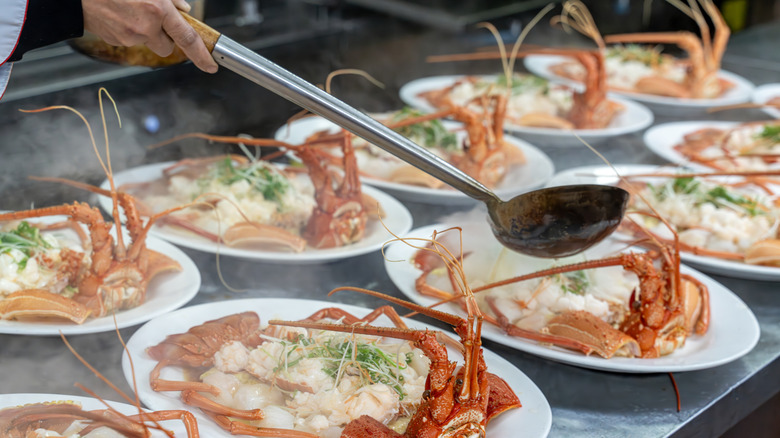
When a tray of oysters or a tender piece of salmon is set down in front of you at a seafood restaurant, hopefully all you're thinking about is how excited you are to take the first bite. Before landing on your plate, that seafood has passed through many links in the supply chain, and many rigorous food safety procedures. Throughout this network of watchful eyes, calibrated thermometers, sanitation protocols, and regulatory standards, each person who handled your dinner held some responsibility for getting it to you safely.
Dora Swan, founder of the upstate New York shop, fin – your fishmonger, says the two most important steps a restaurant takes to ensure their diners' safety are "sourcing from reputable vendors that follow sustainable sourcing standards and practices, and storage/handling of the product once it's been delivered." Fish start changing the moment they're pulled from the water — natural enzymes start breaking down the flesh, moisture leaves the muscle, fats oxidize, and bacteria will seize the opportunity to reproduce wherever conditions allow.
Because a seafood dinner has such a shallow margin of error, the system has to hold water. It works because of the collaboration of workers all pulling in the same direction — the fishers, dockworkers, distributors, line cooks and expediters, servers and dishwashers must all take their jobs seriously. The restaurants that serve seafood safely rely on their team's training, judgment, record keeping, and an attention to detail. Swan says, "you might see folks take gloves off and put new gloves on when they move from task to task," but most of that work is invisible, which is exactly how restaurants want it. Food safety succeeds when diners never have to think about it.
Accounting for the day's catch
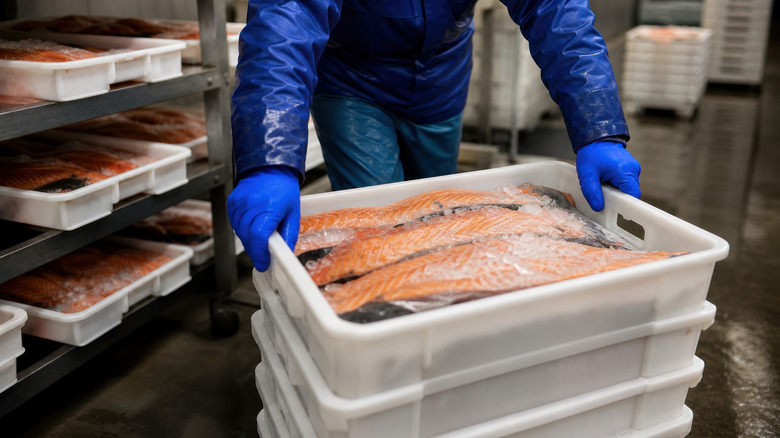
Once the seafood reaches the kitchen, responsibility changes hands. Workers check the condition and temperature, then it goes straight into proper cold storage. "Fresh seafood should be stored in a walk-in cooler situation between 34 and 38 degrees Fahrenheit," Swan says "Frozen seafood should be kept at 0 degrees Fahrenheit or colder." Those numbers give professionals a measurable standard; refrigerator and probe-style meat thermometers combine with recorded temperature logs to replace guesswork, and every degree counts. "The legal max temp is 41 degrees Fahrenheit," Swan says, but some kitchens may prefer to keep their product comfortably below that threshold, maintaining a margin of safety.
Temperature isn't the only record that needs to be logged. "Restaurants and fishmongers are required to keep the tags (for 90 days) from their shellfish stock, which indicates not just what variety it is, but where and when it was sourced," Swan explains. "This is in case of recall due to a foodborne illness outbreak." The tags establish a paper trail; if there is an issue, it can be traced by health officials to identify where the shellfish were harvested and what shipping channels it passed through.
Documentation alone doesn't keep everyone safe. Every time food is touched, protocol comes into play. "If the seafood will be served raw," Swan says, "kitchen staff must wear gloves or use utensils. Hands must be washed after handling seafood to prevent cross-contamination." Cross contamination is when pathogens hitch a ride from fish to knife, knife to hand, hand to refrigerator handle. By following procedure, kitchen workers interrupt those journeys. Adherence to the routine becomes second nature.
Reading between the shells
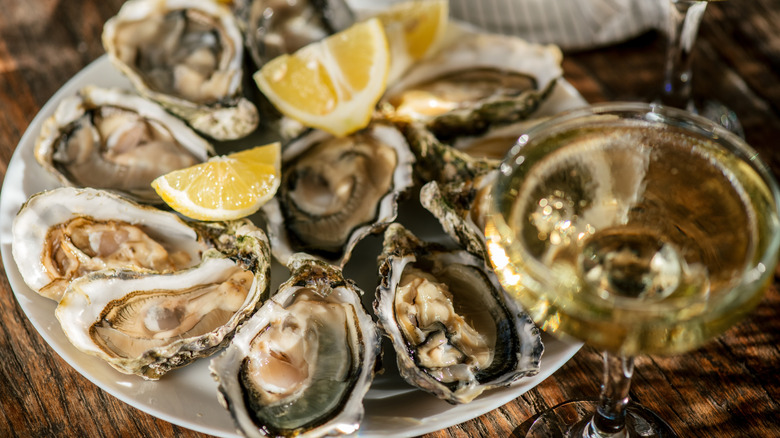
Most of these safety rituals happen behind the swinging kitchen doors, but attentive diners can learn to read the codes, and red flags, of seafood hospitality. If there's a display of un-shucked oysters and other raw fish visible, look carefully. "[Displayed seafood] should be nestled in clean ice that's draining and should never be sitting in water, which can breed bacteria," Swan says. "Shucked raw oysters should be presented in their shells with their own clear liquid present, and shouldn't look dried out or shriveled." That natural brine tastes good, but it also helps protect the oyster and is one more sign it's been handled with care.
Your nose can also tell you a lot about what's going on, and if something gives you the ick, trust that. "Seafood restaurants and fish shops shouldn't smell 'fishy,'" she notes. "It's not going to smell like roses but, should smell like the sea or like cucumbers — weird, right?" That healthy aroma indicates careful maintenance of protocol and quality, while, "A heavy 'fishy' smell often means that temps are not being maintained properly, cleaning isn't thorough, and/or that the fish isn't quite as fresh as you'd like it to be."
Even the smallest details reveal a restaurant's food safety culture. Swan notes that restaurants "should have a label on the menu that addresses the risks of eating raw or undercooked foods." And, "Basics? The menu should be clean with no debris or sticky areas. That [indicates] that management pays attention to cleanliness." No single green flag guarantees perfection, but together they reveal professionalism. Behind every beautifully plated seafood dinner is an entire crew of people making careful decisions you never have to think about, which is exactly the point.