

11 Classic Sandwiches That Defined Lunchtime In The '60s
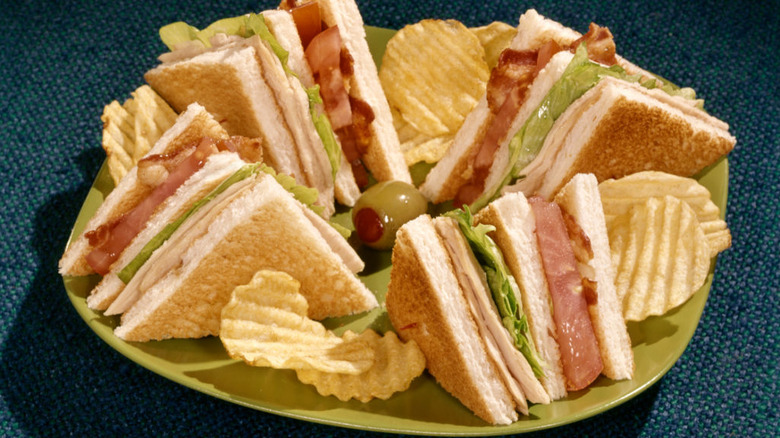
Back in 2019, YouGov decided to find out, once and for all, which sandwiches Americans liked best. Drum roll, please. The top five were: grilled cheese, grilled chicken, turkey, roast beef, and ham. In 2026, that list might be different. We're living in the TikTok age now, and food trends are changing all the time. At the time of writing, for example, the breadless chip bag sandwich is having a moment, but in 2025, people were eating pickle concoctions and chopped sandwiches (which basically involves dicing all of the ingredients before loading up the bread).
If TikTok were around in the 1960s, though, the lunchtime sandwiches would look a little different. They would be slathered with organ meats, processed luncheon meat, and pure sugar. Not all together, of course. Although, that said, people did enjoy some slightly unusual combinations by today's standards. Here, we take a look back at some of the classic sandwiches that defined lunchtime in the '60s. Along the way, we also head to The Masters, the New York City school system, and even outer space. Yes, for real.
Liverwurst
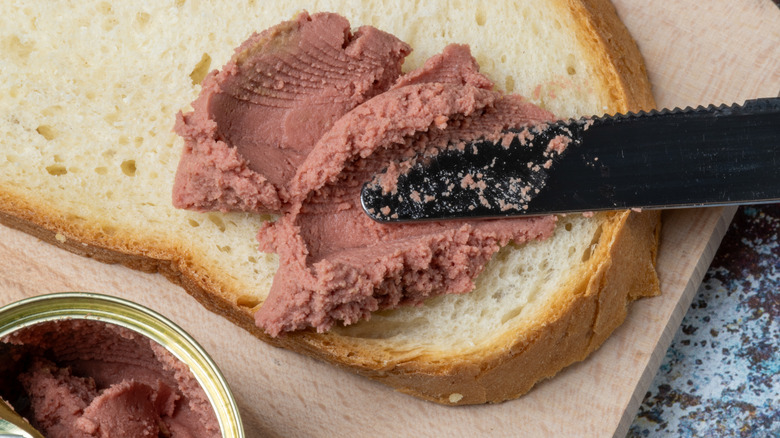
These days, many people might find the idea of eating liver pretty unappetizing. In fact, raw carnivore social media communities aside, organ meats in general are no longer considered fashionable. But back in the 1960s, eating foods like liverwurst (spreadable liver sausage) was actually pretty common, and many people who grew up during this decade remember eating liverwurst sandwiches for lunch.
Some had just plain liverwurst on bread (usually rye), maybe with some sliced cucumber, while others remember pairing the sausage with ingredients like sweet onions, hot mustard, and Limburger cheese. For the uninitiated, the latter is a particularly pungent cheese. It was popular in the U.S. in the early 20th century, but by the time the '60s rolled around, most Americans wanted milder flavors and were no longer that keen (aside from those who liked it with liver sausages, of course). Liverwurst sandwiches could be made at home or picked up from your local deli or grocery store. In fact, some reports even suggest that Trader Joe's used to sell liverwurst sandwiches for $1 back in the 1960s.
Sugar
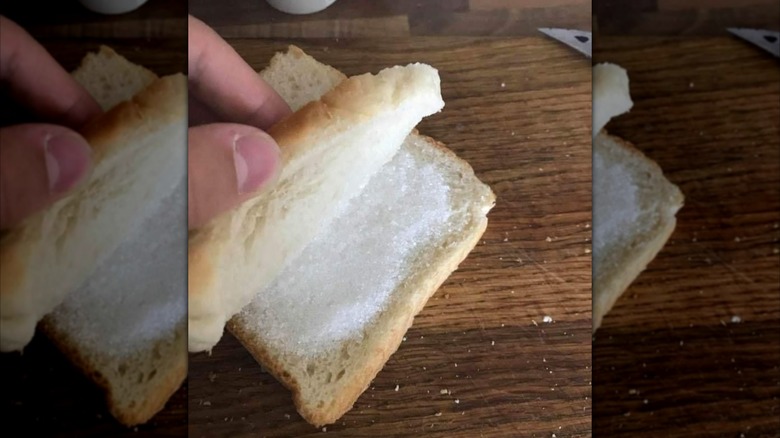
Back in the 1960s, sugar sandwiches were a popular treat for kids and adults alike. Yes, literally just bread with butter and sugar. These sickly-sweet sandwiches were especially popular in low-income homes, because they were filling and a treat, but inexpensive to throw together. "My Italian Grandpa used to make this for me every time I asked for cake as a child," said one Facebook user in a group dedicated to food memories. "He would slice the Italian Bread, Spread Butter and Sprinkled sugar on top and say, 'There's your cake, Go outside and play.'"
Usually, sugar sandwiches were very basic, but some people liked to jazz them up a little. Some swapped the butter for mayonnaise, to make things even more, um, unique, while others opted for Miracle Whip or even mustard. Other folks remember their parents or grandparents adding cinnamon to their sugar sandwiches for extra flavor, while some used to add sliced bananas and drizzle the whole thing with milk.
Pimento cheese
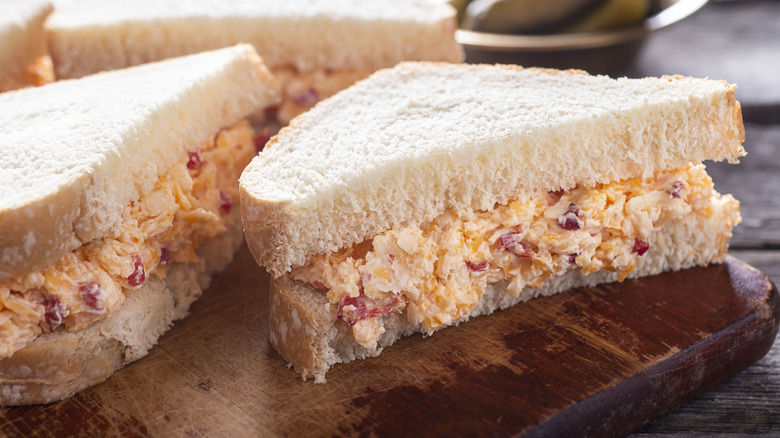
Limburger cheese might have been a little much for many people in the 1960s, but pimento cheese was arguably perfect. The cheesy spread, usually made with American cheese or cheddar, is a little sweet thanks to the pimento peppers, but otherwise, it's pretty mild. Pimento cheese is still widely loved today, of course, but it was particularly popular as a sandwich ingredient in the '60s. That's probably because the pimento industry was booming in the U.S. at this time, especially in Georgia and across the South.
While pimento cheese was sold by brands like Kraft and Borden in the 1960s and even a few decades prior, some people made their own, combining cream cheese with mayonnaise, diced pimentos, dried mustard powder, cheddar cheese, and herbs and spices. And just as they do today, golf fans probably yearned to eat pimento cheese sandwiches at The Masters. Yep, the iconic golfing tournament, held every year in Georgia at the Augusta National Golf Club, was offering its iconic pimento cheese sandwiches as far back as the '60s.
In fact, The Masters actually started selling another version of the sandwich in the late 1940s, but it was in the '60s that the organizers chose to start working with Nick Rangos. The South Carolina storeowner was renowned for his signature pimento cheese recipes, and The Masters wanted in. For more than four decades, the sandwiches sold at the famous golf tournament featured pimento cheese made by Rangos and his children.
Peanut butter and mayonnaise
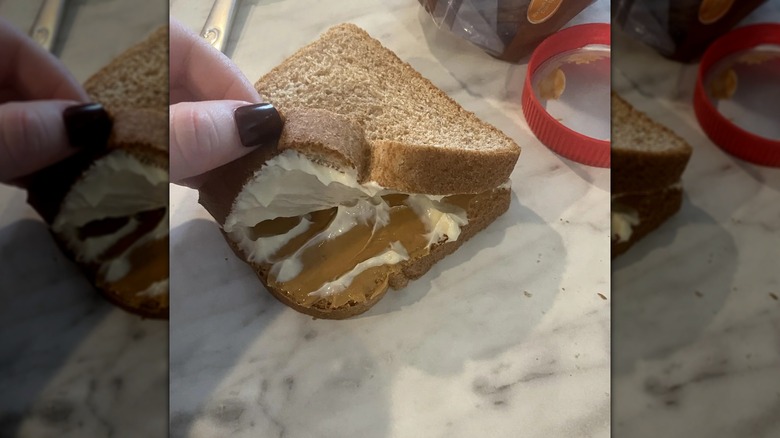
Peanut butter is one of those foods that people like to mix with all sorts of random ingredients, especially in sandwiches. While jelly is the most famous choice, other options include onions (a favorite of Ernest Hemingway), bacon (a favorite of Elizabeth Taylor), and mayonnaise (a favorite of many kids in the 1960s).
Peanut butter and mayonnaise sandwiches weren't a '60s invention (people actually started eating them during the Great Depression), but they were particularly popular during this decade. Hellmann's and Skippy even used the combination to advertise their products in one print ad in the mid-1960s. The ad features several peanut butter and mayonnaise-based creations, including the Double Crunch with bacon (Taylor would be proud), the Pineapple Topper — which, as you've probably guessed, features a slice of pineapple — and the Crazy Combo with eggs, salami, and onions (maybe one for Hemingway?).
"I hated jam and jelly when I was a kid in the early 60s and my mom wasn't interested in fixing something I might like," said one Redditor in the r/Old_Recipes subreddit, who went on to explain that their go-to lunch became a peanut butter and mayo sandwich, complete with a navel orange and some grape Kool-Aid. Another person added that their neighbor's mother would make this type of sandwich with some lettuce added on top, writing, "They are honestly pretty damned good."
Banana and mayonnaise
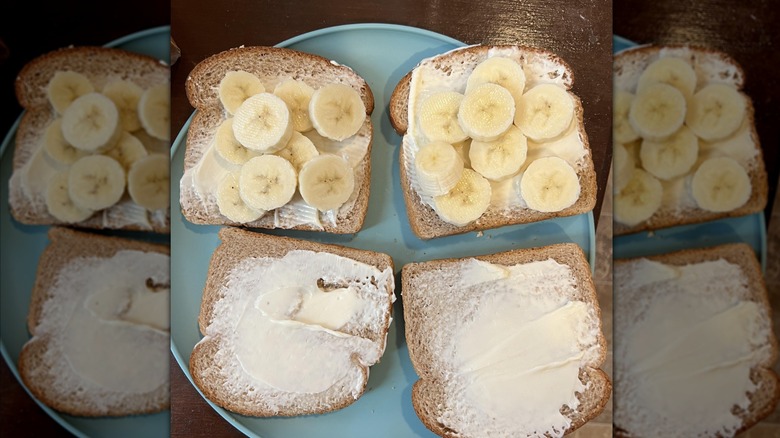
If the idea of combining peanut butter with mayonnaise makes you feel a little unwell, then we have another 1960s suggestion for you: banana and mayonnaise. Yep, this was an actual combination that many people used to eat in their sandwiches in the '60s — though some preferred Miracle Whip to mayonnaise. "My elementary sold them as a lunch choice," said one Facebook user in a group dedicated to 1960s memories. "Liked them and still do."
Some preferred to jazz things up a little by adding in some peanut butter, too, while others were purists who preferred their bananas and mayonnaise on fresh bread, with no other ingredients. Some went off-piste and put bananas and mayonnaise in hot dog buns — which arguably makes sense shape-wise (although, taste-wise, some might still find it questionable). While it's admittedly a rare snack nowadays, some people still eat banana and mayonnaise sandwiches. In 2016, race car driver Dale Earnhardt Jr. shared a photo of the concoction on X, claiming that it was his "favorite sandwich." He added: "I swear it's delicious."
Spam
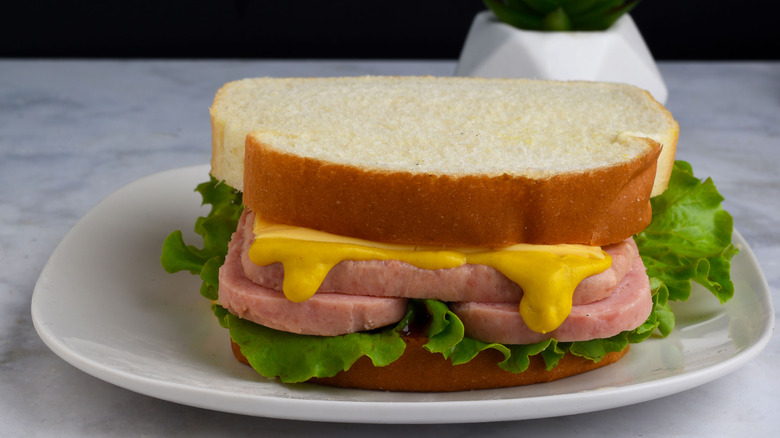
In 1937, Hormel gave the world Spam. The processed lunch meat, which back then was made with pork, water, salt, sugar, and sodium nitrate (potato starch was added in 2009), was an instant hit. Its popularity didn't stem from just taste, which some would argue is average at best, but because it was practical. Unlike most other meat products available at the time, Spam was shelf-stable and inexpensive. Over the decades, people would incorporate Spam into various recipes. They'd serve it with eggs in the morning, with macaroni in the evening, and — you guessed it — in sandwiches at lunchtime.
In fact, many remember indulging in Spam sandwiches (or Spamwiches) during the '60s, often pairing the processed canned meat with ingredients like mayonnaise (of course), as well as tomatoes, onions, lettuce, and pickles. Many of Hormel's print ads from the 1950s and 1960s promoted using Spam as a sandwich ingredient. One ad even advertised the Barbecue-supper Sandwich and encouraged people to pair Spam with Kraft products like mayo and barbecue sauce, as well as shredded cabbage, dill pickles, and rye bread, for dinner.
Corned beef
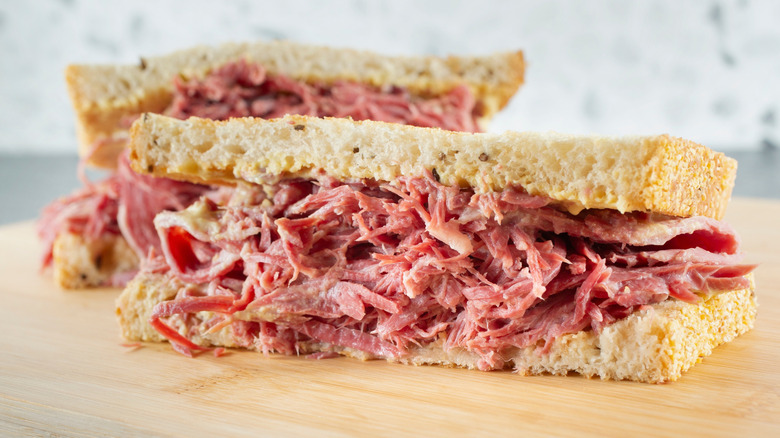
Corned beef has been a staple in the U.S. for a very long time. In fact, as far back as the 17th century, Irish traders were shipping salt-cured beef to American shores. Yep, corned beef predates Spam by several hundred years. Just like its canned cousin, corned beef has long been a popular sandwich ingredient. In the 1960s, many people enjoyed eating it in hot open sandwiches made with hamburger buns and paired with ingredients like cheese slices, cream of mushroom soup, and barbecue sauce. Corned beef sandwiches (though not the hot, messy kind) even made it into space in 1965. Yep, true story.
Astronaut John Young wasn't happy with NASA's food offerings on Gemini III, so he snuck in a couple of corned beef sandwiches from a roadside hotel in Orlando. We're not making this up: He literally put them in his breast pocket. It all went wrong, though, as when Young attempted to actually eat the sandwich while in orbit, crumbs flew everywhere. When he landed, Young was reprimanded by Congress for risking millions of dollars' worth of damage for a sandwich. Yikes.
Sandwich Spread
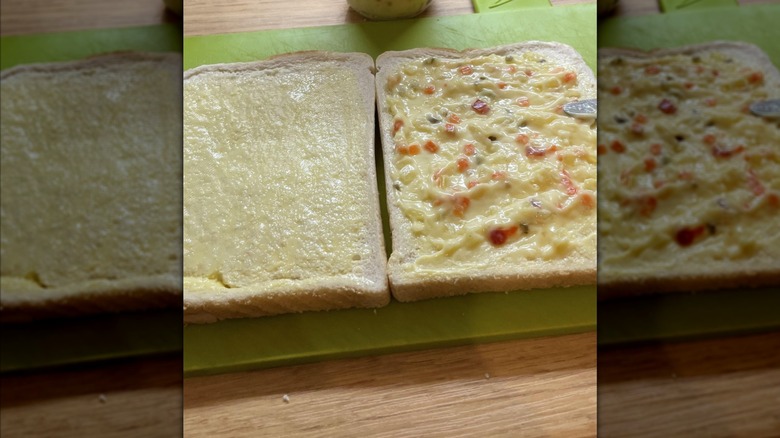
When you think of a sandwich spread, you might think of ingredients like cream cheese, peanut butter, mayonnaise, or Miracle Whip. You know, things you spread in a sandwich — sandwich spreads. But here, we're not talking about general spreadable products; we're talking about literal Sandwich Spread, made by brands like Cains and Heinz. The spread, which is still sold today, has a similar mouthfeel and texture to mayonnaise, only it also contains crunchy bits of vegetables, too, like diced peppers, onions, and pickled cucumbers.
Many people who grew up in the 1960s remember eating this spread in sandwiches in place of mayonnaise, either on its own or with sliced processed meats like bologna. Some hated Sandwich Spread, but others loved it so much that they still eat it today. "... my father made it and we sold it in my Grandmothers dairy store," said one Facebook user in a group dedicated to 1960s memories. "Still eat it and make it myself." Another added: "Sandwich Spread sandwiches were a cheap, tasty school lunch."
Syrup

Syrup complements many foods beautifully. Ice cream? Yes. Fruit? Yes. Pancakes? Absolutely yes. But bread? That's a less obvious pairing, we have to admit. At least, it is today. Back in the 1960s, syrup sandwiches were a cheap, sweet treat, much like the above-mentioned sugar sandwiches were. They were often made with Karo Syrup, a type of affordable, light corn syrup. It was a pantry staple in the '60s, and as well as on sandwiches, it would find its way into casseroles and baked beans, too.
Some would eat Karo Syrup alone on bread, while others would mix it with peanut butter. Many remember enjoying, let's call them deconstructed, sandwiches. A bowl of syrup would be placed in the middle of the table, and the bread would be on the side for dipping. Kind of like a cheap, sticky, sweet fondue. "Mama would mix peanut butter and syrup in a bowl and serve it with white bread for a fast breakfast," said one Facebook user in a 1960s memories group. "I'm not a peanut butter eater so I didn't care for it but the other kiddos in the family did."
Tomatoes
Tomatoes are, of course, a key part of one of the most beloved sandwiches of all time: the BLT. As you likely already know, that stands for bacon, lettuce, and tomato — a dream combination. But in the '60s, many people remember skipping the B and the L completely, and instead, they were snacking on tomato sandwiches. "We'd wait all year for the good tomatoes," one Facebook user reminisced in a 1960s memories group, "Just add mayo, salt n pepper on bread."
Tomato sandwiches are simple, sure, but they make sense. When tomatoes are fresh off the vine, they are the perfect combination of sweet, juicy, fruity, and a little acidic. Arguably, they can hold their own without the need for anything else. Sorry, bacon, but it's true. "Still love tomato sandwiches after ALL THESE YEARS," shared another Facebook user. Another added: "My dad grew tomatoes every year. Love me a sandwich with a just picked tomato and a little [Miracle Whip] on fresh white bread."
Bologna
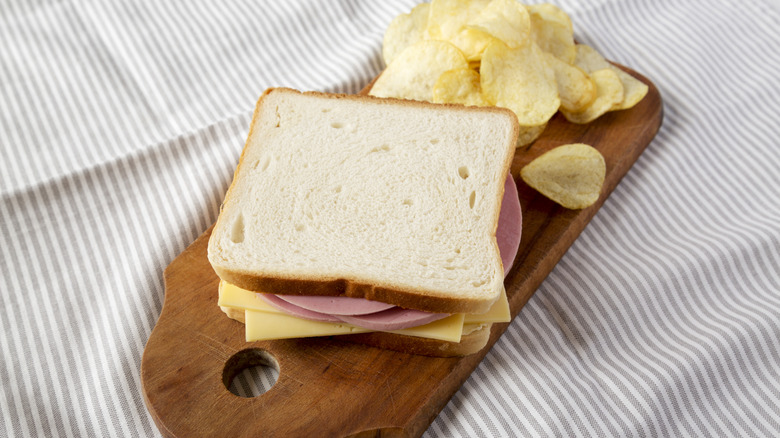
Bologna sandwiches aren't unique to the 1960s. People ate them during the Great Depression, during WWII, and they kept eating them all throughout the 20th century and into the 21st. In 2024, Oscar Mayer sold 45,000 tons of the stuff. But it was during the '60s that bologna sandwiches really came to define lunchtime, especially for children. Bologna sandwiches were a school staple during this era. For some, their parents or siblings would make them at home in the morning beforehand, while others would eat them from the canteen. In 1963, New York City's Board of Education started offering bologna, together with luncheon meat and frankfurters, to schools across the city.
For most, a bologna sandwich was simple: Just one slice of bologna with bread and mayonnaise or Miracle Whip, but others liked to take things to the next level by putting potato chips inside or adding a dash of ketchup or mustard. According to one Facebook user, "When I was very young a bologna sandwich was the thing [that made] it a great day."