

6 Tequila Myths You Need To Stop Believing
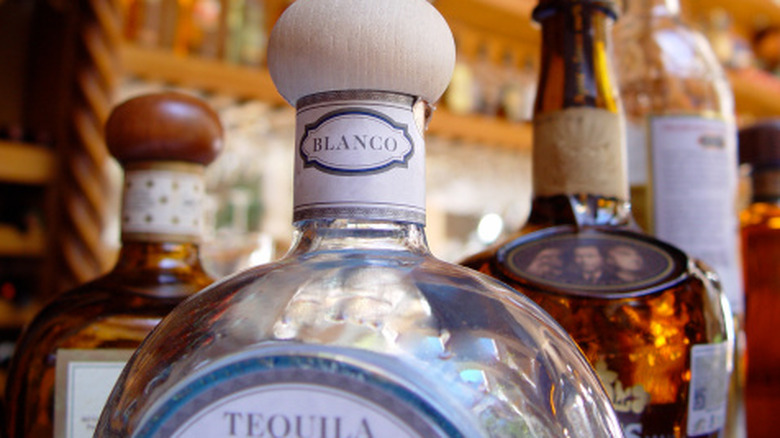
Tequila has consistently been a popular spirit, with its prominence growing as more celebrities create tequila brands and more brands strive to make additive-free, higher-quality bottles. For example, brands like LALO Tequila and Tequila Ocho dominate charts due to their additive-free platforms, and celebrities like Kendall Jenner and Dwayne Johnson have curated tequilas (818 and Teremana) that have gained traction with drinkers of the spirit.
Though tequila sales were expected to be higher than vodka sales in 2024, as of 2026, the tequila renaissance has been expected to slow significantly. This could be attributed to market oversaturation, or to more and more people shifting toward sobriety. Whatever the reason, one thing has always been true — tequila has eminence in the alcohol industry, and some of its reputation is rooted in the lack of education people have about the spirit.
We spoke to a few experts to help debunk some common tequila myths and give us a broader understanding of the spirit: Greg Perez, owner of Concrete Rose in Houston; Chessie Keebaugh, Tropa Tequila's general manager; and Sofía Paloma Juárez, CEO & Founder of CASA J Tequila. Here's what they had to say about tequila's most common misconceptions.
Tequila gives you the worst hangovers
According to Greg Perez, owner of Concrete Rose, a craft cocktail bar in Houston, Texas, low-quality tequila is what actually causes a bad hangover. "Cheaply made, adulterated tequila gives you hangovers, especially when those tequilas are cheap mixtos with sugar and other additives," said Perez. Tequilas without additives are less likely to contain a lot of congeners, which are a derivative of the distillation process. Congeners are thought to be a contributing factor to the severity of a hangover.
Further, the quantity of tequila consumed is just as important as the quality when considering hangovers. As we will discuss later, tequila is often thought of as a spirit to shoot, and as such, it is consumed in large quantities, which tends to result in hangovers. That has less to do with the quality of the beverage and more to do with how much of it is being tossed back. According to Perez, this misconception happens because drinkers are used to having tequila only in a shot or a mixed cocktail.
"I hear [the hangover myth] all the time. . . . I hear it from people that got drunk in a frat house after downing cheap, additive-filled mixto tequilas," said Perez. "My hangovers are almost non-existent when I drink unadulterated agave spirits." One additive that is suspected to cause the worst type of hangovers is jarabe, also known as sugar syrup.
Tequila is made from a cactus plant
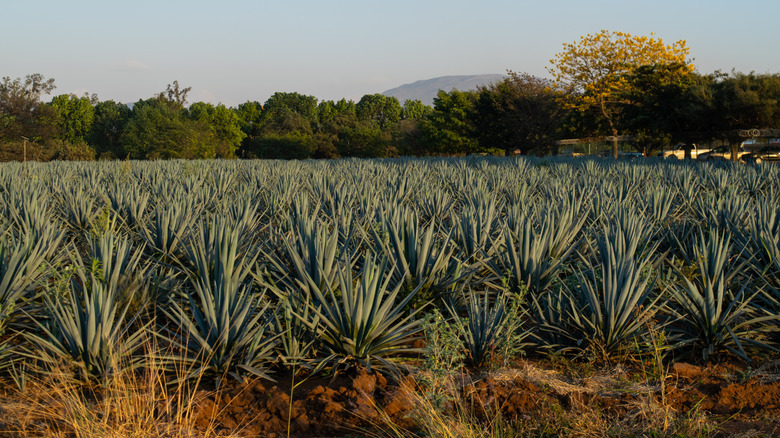
As of 1949, Blue Weber agave is the only plant allowed in the production of tequila. Many people mistake Blue Weber agave for a cactus plant, but it is actually a succulent. According to Chessie Keebaugh, this is an easy and common misunderstanding, since the agave looks very similar to a cactus plant. Keebaugh provides a fun trivia fact about the Blue Weber agave plant family: "I think people see spiky leaves and naturally assume it's a cactus, but agave actually belongs to the asparagus family," said Keebaugh.
According to Greg Perez, "cacti store [water] in the flesh, while the agave stores it in leaves." This is an important distinction, as the agave's ability to store water in its leaves means that it can retain water more easily than cacti, specifically in situations like a drought or in environments with limited water supply. According to Keebaugh, Blue Weber agave must mature for five to eight years prior to being used in tequila, which makes its ability to store water and survive its climate crucial.
There are worms in tequila
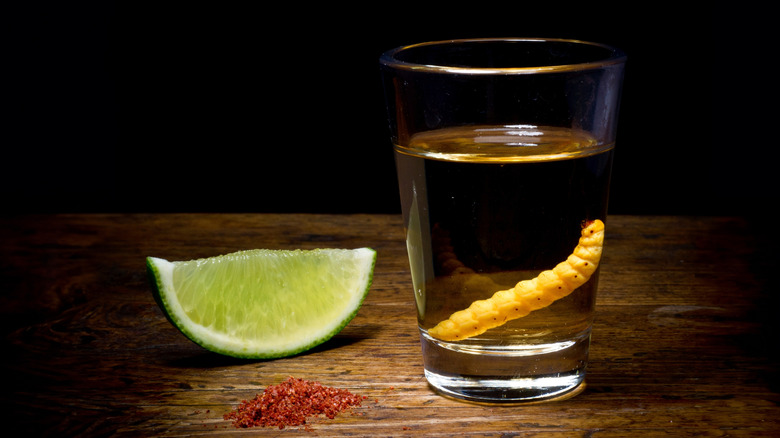
Sofía Paloma Juárez believes that the myth of the tequila worm began as a marketing maneuver — as does Chessie Keebaugh. "It's my belief that this was done to draw eyes and come across as absolutely badass," said Juárez. Greg Perez, however, believes that this myth might actually just be a misunderstanding.
"It's not a worm; it's a moth larva," said Perez. "The confusion is in the translation of the name 'gusano de maguey,' which means 'worm of the agave plant.'" Since agave is used to create tequila, the worm became heavily associated with the spirit, though Perez notes he has only ever seen them in mezcal bottles. The moth larva capitalizes on maguey plants, which are used in the creation of mezcal.
As far as the marketing strategy goes, multiple stories attempt to explain how exactly the worm helped the tequila industry. Some tequila enthusiasts say it started during World War II, when overwhelmed tequila manufacturers turned to producers in Oaxaca to help create more of the spirit faster. The Oaxacan experts were said to have put a worm in their bottles to make sure everyone knew where the bottles came from. Keebaugh confirms that marketers utilizing the tequila myth likely wanted their product to stand out. "[But] tequila is one of the world's most tightly regulated spirits, and you won't find a worm in quality tequila," Keebaugh reassures.
Tequila is only meant to be a shot
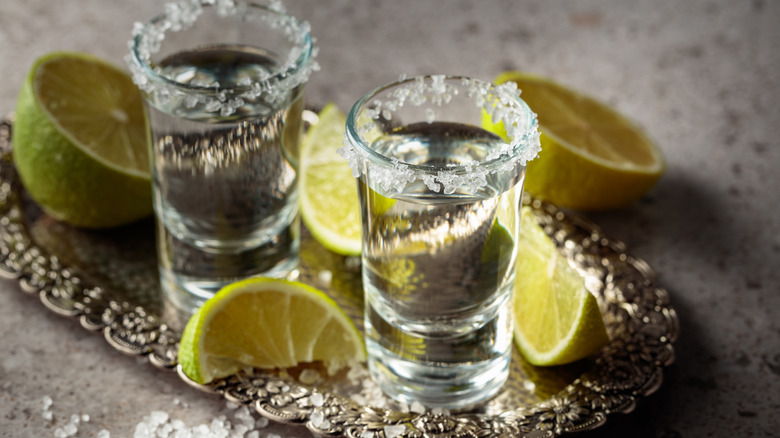
Tequila shots are often passed out as a way to make a night more fun, but this doesn't have to be the only way to drink tequila. According to Chessie Keebaugh, many people drink tequila shots as one of their first introductions to the spirit, and when that ends up being a poor experience, they swear it off. But there is more to tequila than shots.
"We [at Tropa] prefer to think about tequila the way you might think about food or wine pairings," Keebaugh said. "Those combinations elevate the flavors already present in tequila instead of covering them up." Sofía Paloma Juárez seconds this, adding that the salt and the lime paired with shots are usually tools to cover up the taste of bad-quality alcohol.
Greg Perez takes a more neutral approach, acknowledging that "sometimes you don't have the luxury of drinking [a tequila] that is well-made due to where you are." In situations like that, Perez does not frown on the use of lime and salt to cut the taste; however, he believes that if you can choose a better tequila, you'll have more options for drinking it, like sipping neat, mixing it in a margarita, or even splurging on a top-shelf spirit. Juárez seconds this, adding that The Tequila Report has a list of high-quality tequilas worth dropping the salt and lime for.
All tequila is 100% blue agave
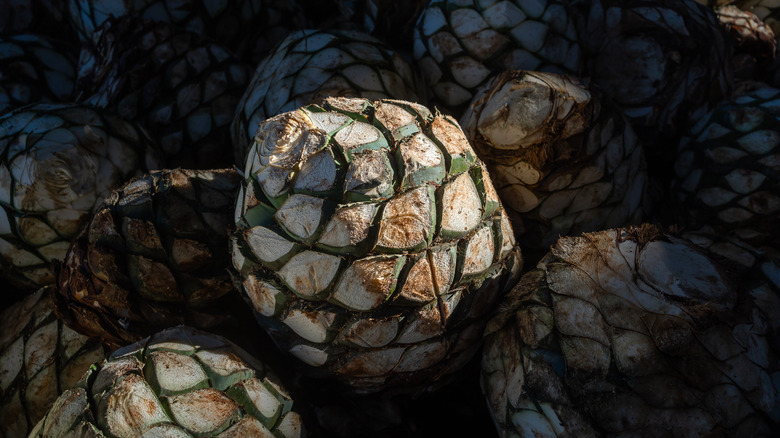
While all tequilas are required to use Blue Weber agave in production, not all tequilas are made of the same amount of it. Some tequilas qualify as "mixtos," meaning the brand has used other types of sugar in the production of its tequila besides agave. Mixto tequilas can contain up to 49% of non-agave sugars, including cane sugar, for example.
According to Greg Perez, whether tequila is a mixto depends on the brand — some well-known examples are Jose Cuervo Especial Gold and Silver, as well as Sauza Gold and Silver tequilas. There are many 100% agave tequilas on the market, though Chessie Keebaugh notes: "Even within the 100% agave category, producers are legally permitted to use small amounts of certain additives, including caramel color, oak extract, glycerin, or sugar-based syrups, to help achieve consistency in color, texture, and flavor." Perez explained the truth about tequila additives: glycerin adds a smooth mouthfeel, syrups sweeten the tequila, and caramel gives color to aged tequilas.
It is up to the producer to decide whether they include these additives, but Keebaugh is confident that as consumers become more educated on tequila, these types of decisions will be divulged to the general public more and more. Sofía Paloma Juárez agrees, noting that as consumers continue their education, the deep cultural background of tequila will be able to shine more as it becomes an even more prominent spirit on the market.
All tequila is the same, besides the price tag
Our experts argue that price should not determine which tequilas are premium. "While premium tequila often commands a higher price," Chessie Keebaugh said, "that value should come from the quality of the agave, the time invested in cultivation, the production methods, and the craftsmanship behind every bottle, not simply the label."
Tequilas can have different levels of Blue Weber agave, as long as they have a minimum of 51%. Typically, what makes a tequila premium is that it has 100% Blue Weber agave. Beyond its ingredients, though, premium tequilas focus heavily on the method of tequila production. The most traditional method is to slow-roast the agave in order to brown the plant and expose its sweetness. This process takes about 24 to 48 hours. Even more traditional is using an horno, though in modern-day, autoclaves are sometimes used, which are essentially large pressure cookers.
Sofía Paloma Juárez agrees that quality tequila production is key in making premium tequila. Still, Juárez has her own addition to the list of what differentiates tequilas. "A key component behind each and every sip of tequila is not only the skilled artisanal expertise involved in producing each and every batch, but also time — the ultimate luxury," Juárez says. Keebaugh seconds this. "Great tequila starts with exceptional agave, experienced producers, and a genuine respect for the craft," Keebaugh says. "Those are the things that create a spirit worth coming back to."