

How To Pick Out The Best Oysters, According To Alaskan Oyster Farmers
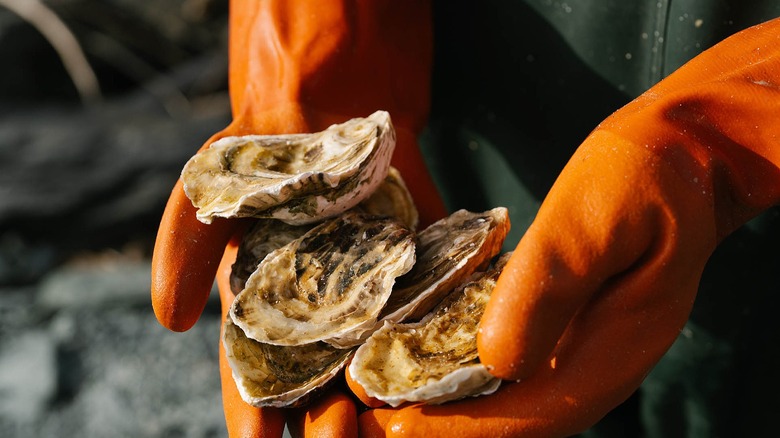
How do you satisfy an oyster craving? Many of us on either coast have an easy answer: the ever-present oyster bar, which is prolific throughout the country. It's an easy solution, as long as it's a reputable spot — you definitely don't want to risk chowing down on subpar oysters.
If you're planning on having an oyster fest at home, though, the first step is getting your hands on some quality shells. Sussing out your supplier could be its own article; once you've found a good one, if you get to hand-pick your selection of oysters, don't be fooled into thinking they're all the same.
We went to Alaska to learn about everything oysters, and we talked at length with a couple of oyster farmers about how to shop for oysters. Anthony Lindoff of Kaawu Oyster Co. and Meta Mesdag of Salty Lady Seafood Co. were full of great tips to help consumers get the most out of their oyster-eating experience.
Look for oysters with a deep cup
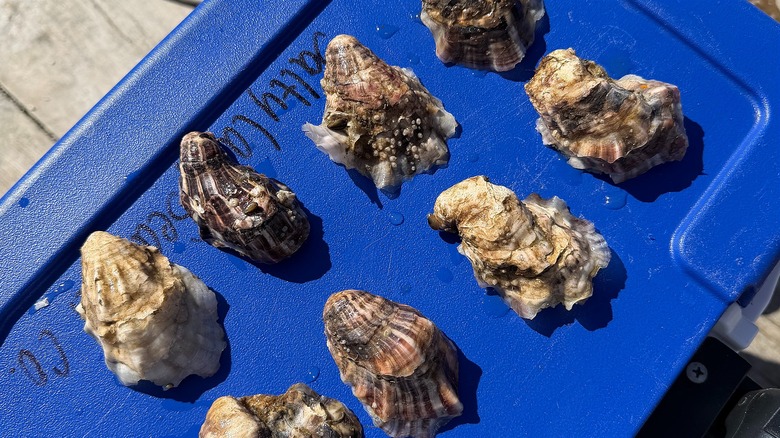
If you want to find oysters with a lot of meat (and, honestly, who wouldn't?), be on the lookout for oysters with deeper cups. This is perhaps the most telling feature of a hearty oyster, and it makes sense — a deeper cup means there's likely to be more meat inside.
Anthony Lindoff spoke to this point during our visit, saying, "You might see a really impressive-looking oyster, but it's flat ... it's all shell. Your meat-to-shell ratio is much worse than, say, a heavily-tumbled oyster that's round."
We asked if there are any flavor advantages to choosing non-domed oysters; in his opinion, there aren't. So, if you want to get the most bang for your buck, find some meaty oysters by choosing those with a prominent cup. Want to repurpose your oyster shells? Those with deep cups would make great candles.
Choose heavier oysters
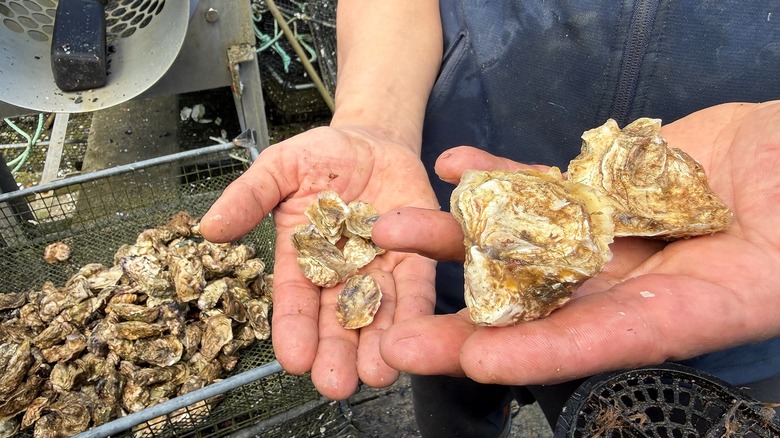
Though a domed shell is a good clue as to whether an oyster will be meaty, don't be afraid to also pick up your oysters (if possible) to feel their weight. Heavier oysters are a good indicator of two qualities you want in the seafood: lots of meat and lots of liquor.
We'll talk about sussing out already opened oysters next, but if you're opening them yourself, use their weight as a way to tell whether they're worth your hard-earned buck. It's much like one would knock on a watermelon, listening for a hollow sound to know whether it's ripe. Not all oysters are equal, but you don't necessarily need to see the interior to know whether you've found a good one. Domed, heavy oysters are likely to give your oyster soirée (or solo seafood fest) all the pizzazz it deserves.
Pick oysters with a lot of liquor
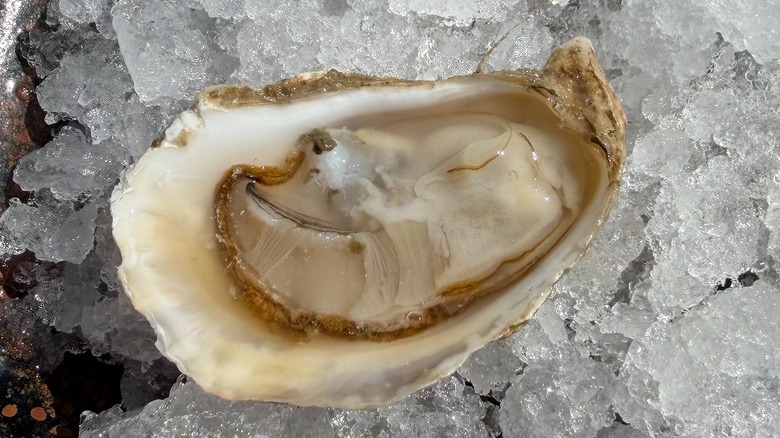
Perhaps you're digging into oysters at an oyster bar or a friend's house — yum! You'll still want to suss out pre-opened oysters, rather than assuming that you're getting the best quality out there. One indicator of a quality oyster is an abundance of liquor. Seeing opened oysters without liquor is a pretty big red flag.
And no, we're not talking about the kind of liquor that you indulge in during a Friday happy hour. Oyster liquor is the name for the briny liquid that sits inside the cup, and it's the prime reason that you want to make sure to hold the oyster upright when you shuck it. Meta Mesdag told us how the liquor enhances the oyster, saying, "More liquor means a cleaner, brinier, more flavorful bite, and is what gives each oyster its 'merroir.'" Here, "merroir" refers to the particular flavors that different oysters take on depending on where they're grown. Without the liquor, you lose a lot of that nuance.
Choose oysters that smell like the sea
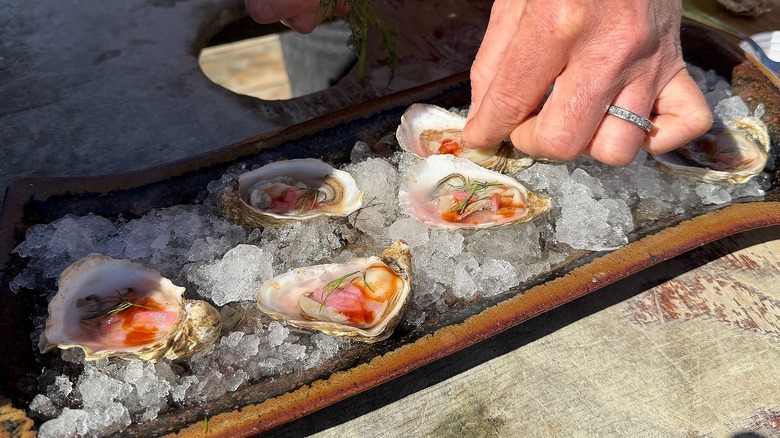
Unless you saw a boat bring them in from the oyster farm, your oysters have probably gone on a bit of a journey to get to where they are. When handled properly, that doesn't pose many problems — however, you'll still want to do your due diligence to make sure none of your oysters are, well, "fishy."
At least, that's what Meta Mesdag recommends, and she suggests that smelling your oysters gives good insight as to whether they're ready to eat or past their prime. "Fresh oysters should smell clean, crisp, and like the ocean — never fishy or off," she told us. As with many meat, vegetable, and dairy products, trust your nose. If something smells a little odd to you, there's a decent chance it is. And with oysters in particular, that's not a risk you want to take.
Look for tightly closed shells
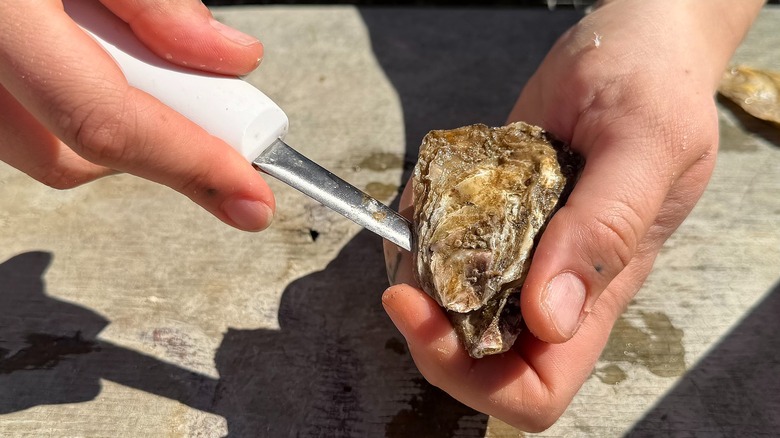
If you want to guarantee that your oyster is as fresh as can be, you'll always want to buy them in a closed shell; never buy them pre-shucked (unless you're at an oyster bar where you know they shuck oysters on-site).
More than just buying closed oysters, though, you want to make sure that lid is on very tight — you shouldn't be able to easily lift it. Meta Mesdag told us that, because oysters are meant to be eaten live, you should be looking for a tight lid. Then, when you shuck it, the oyster should recoil a bit if you touch it. A pre-opened oyster is no longer alive, and therefore, no longer fresh. To keep yours fresh for as long as possible, look for that tight closure, and shuck them just before eating them.
Seek out Alaskan oysters
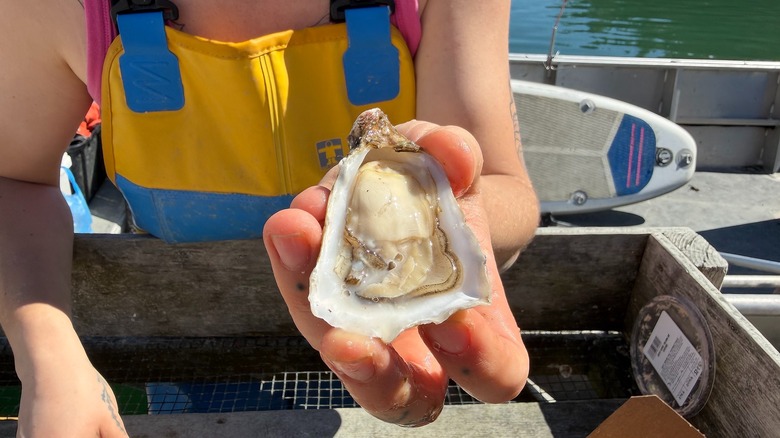
Lastly, if you want to get some of the highest-quality oysters around, seek out Alaskan oysters in particular. The state's frigid marine landscape provides a unique habitat for oysters to grow in; in fact, it's so unique to the seafood that no oysters are native to Alaska, as the water is too cold for them to reproduce.
This leads to uniquely plump oysters and a different merroir than you'd find with other oysters. Or, in Meta Mesdag's words, "Oysters from Alaska grow slowly in icy waters, developing clean brine, deep cups, and naturally plump meat." The particular climate grows some truly superb oysters that are well worth seeking out wherever you're located, or ordering online straight from the source!