

Review: The Ultra-Limited 2026 Prohibition Collection Is A Rare Buffalo Trace Whiskey Misfire
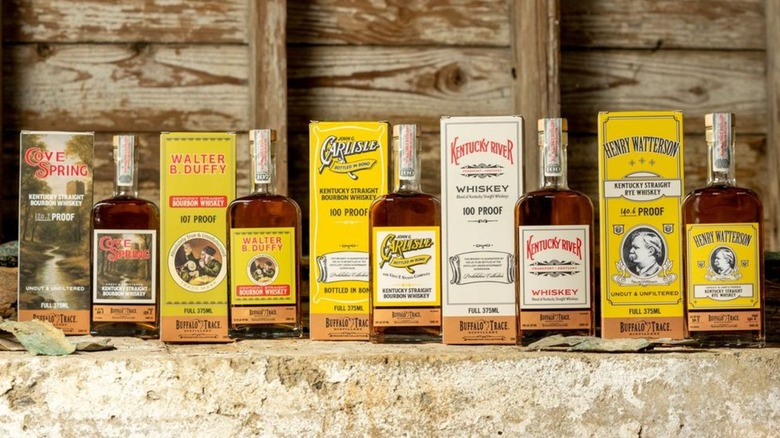
Kentucky's historic Buffalo Trace Distillery recently announced the release of its third annual limited edition of its rare Buffalo Trace Prohibition Collection of five whiskies. The collection honors the history, innovation, and acumen of the distillery during one of the darkest periods of American history for whiskey lovers: Prohibition. In 1920, Congress enacted the 18th Amendment to the Constitution, banning the production, sale, and transportation of alcoholic beverages in the United States. From 1920 to 1933, when the 21st Amendment repealed the 18th.
Although it was a dark time for many producers, six distilleries would come away unscathed. The U.S. government granted them permission to continue producing whiskey for medicinal purposes. George T. Stagg Distillery, the predecessor to Buffalo Trace Distillery, was one of those producers granted leniency during Prohibition, selling whiskey to cure ailments such as the common cold to consumers as long as they had a prescription from a doctor.
Each year, Buffalo Trace Distillery's Prohibition Collection includes whiskies honoring people or places that held a connection with George T. Stagg's Distillery during Prohibition. The goal is to bring those whiskies to life in the modern era. This year's collection is inspired by five archival whiskey brands produced during President Albert B. Blanton's time as head of the George T. Stagg Distillery. To see if the new collection is worth your investment, we acquired a set of sample bottles from the Buffalo Trace Distillery to taste test and review. Here are our thoughts.
Some recommendations are based on firsthand impressions of promotional materials and products provided by the manufacturer.
Methdology
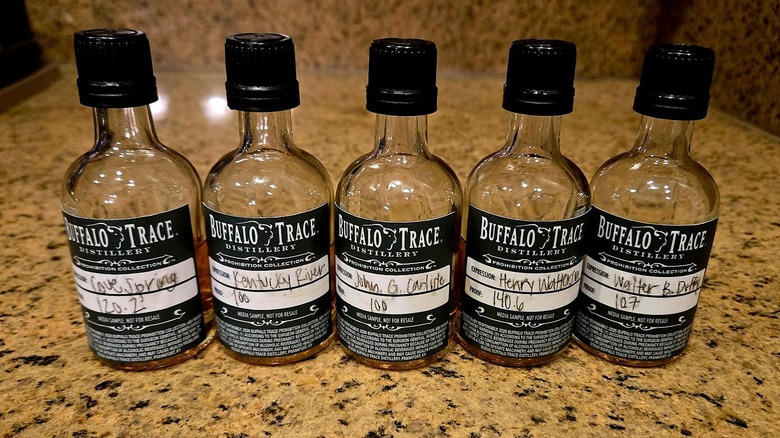
In reviewing the new whiskey collection, I drew upon my training, knowledge, and experience as a Certified Sommelier with 20 plus-years in the industry as a spirits writer, reviewer, and drinker. While tasting the collection, I sampled each whiskey on its own, using a Glencairn glass to assess the color, aromas, texture, viscosity, and taste. It is the best type of glass for drinking bourbon due to its wide bowl that narrows at the top, allowing the whiskey to breathe, while concentrating its aromas towards the top.
I then added a bit of water to each to see whether and how the whiskey changed or whether subtle nuances were revealed by the addition. After analyzing each expression, I poured my favorite whiskey cocktail to see if the whiskey showed better on its own without a mixer, or in a cocktail. These results were mixed, yet the whiskies were intriguing.
Henry Watterson Kentucky Straight Rye Whiskey
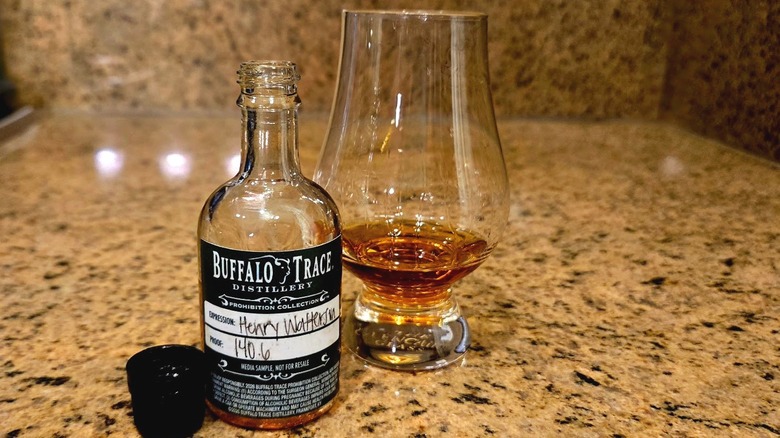
Observing the Henry Watterson high-proof straight rye whiskey, I knew I was in for a treat. The selection is named in honor of Henry Watterson, a U.S. Congressman and strong supporter of the whiskey industry during the Noble Experiment. His support earned him a name placement on several distillery's bottles during the time, including at George T. Stagg.
Bottled uncut and unfiltered, the 140.6-proof whiskey had a deep mahogany-amber color, indicating it was well-aged. Although Buffalo Trace does not provide an age statement, by law we know the whiskey is at least 4 years old. The color, aroma, and rich caramel flavor indicate it is likely much longer. The difference between rye and bourbon whiskey lies in the mashbill. Where bourbon has at least 51% corn as its base, rye whiskey includes at least 51% rye, lending spicy, peppery qualities with subtle earthy, herbaceous notes. These characteristics meld with buttered toffee and cedar, dressed in a creamy, unctuous caramel that coats the palate, lingering captivatingly. The richness of the whiskey, with its sweet caramel flavors wrapped around the spicy rye core, drew me in immediately.
While the rye has the highest proof of all in the collection, and the highest-proof rye whiskey ever released by Buffalo Trace Distillery, the alcohol was balanced and well-integrated. There was only the slightest burn on the back palate, which I tamed with a few drops of filtered water. Beyond a trickle of water, nothing else is necessary to enjoy this complex, structured whiskey. This star shines on its own.
Taste Test - John G. Carlisle Bottled-in-Bond Bourbon
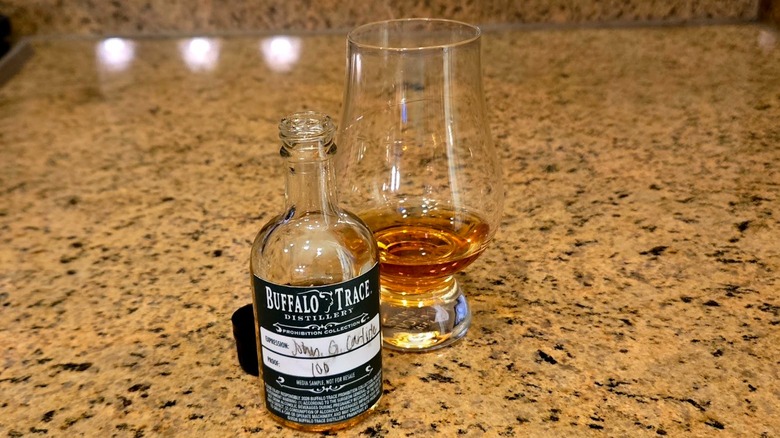
At the end of the 19th century, some deceitful distillers would try to add flavorings to moonshine or other potentially poisonous liquids and try to sell them as whiskey, leading the federal government to pass the Bottled-in-Bond Act.The Act outlined strict regulations that producers were to follow to receive a green stamp indicating its authenticity. These regulations ensured transparency and safety standards for American whiskey, with the Bottled-in-Bond label guaranteeing unquestionable quality.
Today, Bottled-in-Bond bourbons are considered some of the best. The man who helped with the passage and implementation of the act was former Secretary of the Treasury and Kentucky Congressman John G. Carlisle. In the late 1800's pioneering whiskey producer E. H. Taylor built the Carlisle Distillery on what is now the Buffalo Trace campus in his honor, a nod to Carlisle's importance to American whiskey and friendship with the producer.
Sadly, while Carlisle played such a significant role in the history of American whiskey, this bourbon was my least favorite of the bunch. Bottled at 100 proof, the honey-colored Kentucky straight bourbon's alcohol did not seem as well integrated as in others, even though Carlisle's alcohol content was lower than some. Malted grains, poached pears, waffle cone, and caramel corn flavors were present throughout. However, a bite on the back palate detracted from the overall character, leaving a product that lacked the refinement others showed. The bite softened with the addition of water, while still remaining present.
Taste Test - Kentucky River Whiskey
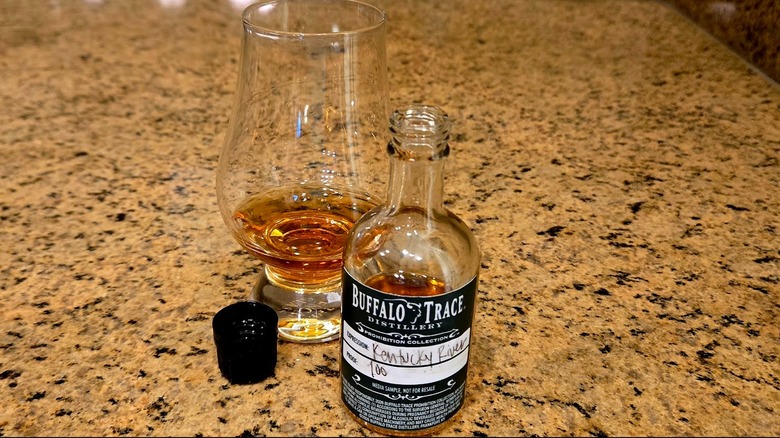
Kentucky River whiskey is a smooth, velvety blend of Kentucky straight whiskeys. Bottled at 100 proof, one of the lower alcohols in the collection, it displayed caramelized brown sugar, ripe orchard fruits, baked apple crisp, honey-roasted nuts, and raisin notes, with toasted vanilla and oak lingering throughout. Although it was one of the most enjoyable whiskeys in the collection, it was not the most complex. Its approachability was one reason I favored it. It worked equally well on its own, with only a simple splash of water, bringing out some of the softer spice notes, as it did in an old fashioned or whiskey sour cocktail.
However, it did not strike me as something unique that I had never had before. While completely enjoyable, it was not unlike other whiskies I have had. Buffalo Trace does not designate the whiskey's mashbill, only that it is Kentucky straight whiskey, which can contain any mix of grains. The only regulations are that it does not contain any additives or flavorings and that it ages for a minimum of two years.
The whiskey is named for the Kentucky River Distillery, formerly known as the Carlisle Distillery. Albert Blanton renamed the distillery after he ascended into the leadership role at George T. Stagg Distillery. Renaming the distillery was a way to honor the Kentucky River, which played such a vital role in the transportation of goods and people during the early 1900s.
Walter B. Duffy Kentucky Straight Bourbon Whiskey
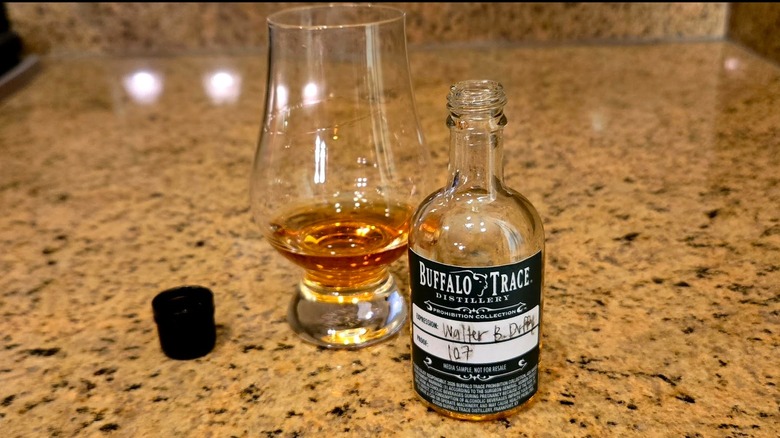
George T. Stagg acquired the distillery that now houses Buffalo Trace in 1878. Known at the time as the O.F.C. Distillery, or Old Fire Copper Distillery due to the distillery's inclusion of all copper piping, stills, and fermenters in its production, crafting the purest, finest spirits for the time. In 1904, Stagg renamed the distillery after himself. After Stagg's death, Walter B. Duffy took over the O.F.C. Distillery and is responsible for bringing in Albert B. Blanton as its president. Blanton became one of the most influential distillers of American whiskey during the turn of the 20th century.
The Walter B. Duffy whiskey is a blend of 10-year and 14-year-old Kentucky straight bourbon. Although the expression is the oldest in the bunch, the whiskey's palate comes across slightly less concentrated than others. It was not weak by any means. However, it did not have the depth or concentration I was expecting from a blend of this age. Still, the deep amber-colored whiskey was multi-layered, with oak-forward notes of toasted vanilla, clove, nutmeg, roasted corn, maple syrup, and caramel dominating the flavor profile, mingling with dried fruits, leather, and spice. Bottled at 107 proof, the whiskey will work well in cocktails, particularly those with strong flavor profiles that enhance the classic bourbon notes in the spirit, such as a Boulevardier or Manhattan.
Taste Test - Cove Spring Kentucky Straight Bourbon Whiskey
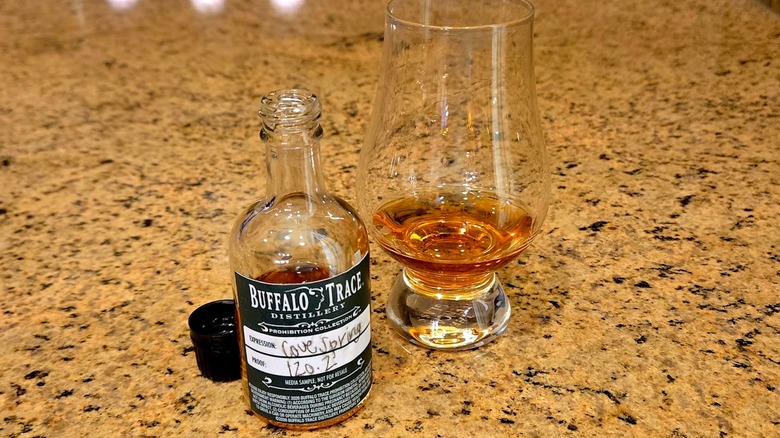
Cove Spring is a 120.2-proof, wheated bourbon named in honor of the water source for the O.F. C. Distillery. In 1804, the spring was transformed into a reservoir to supply the growing distillery. The whiskey's mashbill is a similar recipe to Buffalo Trace's W.L. Weller and Pappy Van Winkle bourbons, delivering creamy butterscotch, maple, fresh pastry, brioche, and sweet corn flavors. These characteristics mix with dried red and black fruits, such as red cherries, plums, and figs, warm baking spice, and toasted oak, delivering rich, well-rounded flavors.
The palate was rich and viscous, coating the mouth with a warm blanket of creamy richness. While the alcohol's taste is present and powerful, it does not dominate the palate. The nuances of the whiskey shone through with balance, highlighting the bourbon's complexity. A touch of water tamed the bite and brought those nuances to light more clearly, allowing subtleties in the whiskey to come through. Of the new releases, this is the best option I found for cocktails, including my favorite whiskey cocktail, a smooth Old Fashioned. When mixing the perfect Old Fashioned cocktail, you will want a high-proof bourbon to stand out in the drink, while the sweeter, softer, wheated bourbon lends a smooth, desirable palate.
Is Buffalo Trace's new Prohibition Collection #3 worth the investment?
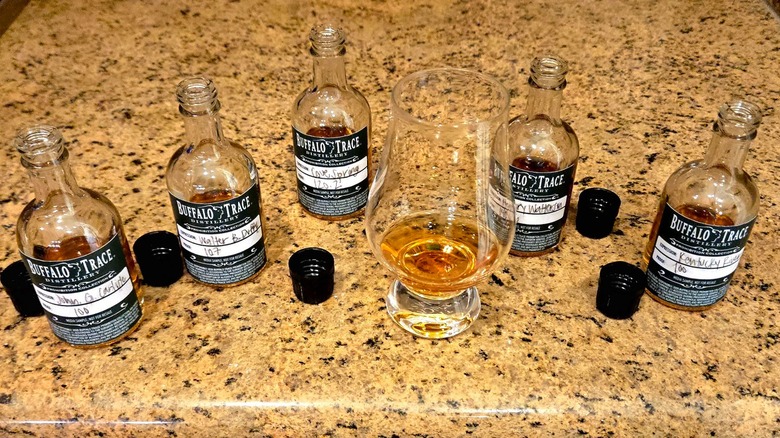
If nostalgia and history are important to you, the new Prohibition Collection should be on your wish list. It displays the ingenuity and craftsmanship of Buffalo Trace Distillery while recognizing and honoring its place in history. It is impressive to see Buffalo Trace reach into its stocks to deliver something completely new with each Prohibition Collection release, instead of simply updating a previous year's release.
Each year, the Prohibition Collection aims to share another element of Buffalo Trace's multi-layered past, honoring those that set the distillery on a path to become the powerhouse it is today, meriting the collection high praise and consideration. Still, this year's collection includes options that ranged from slightly above average to utterly delicious. It is inevitable that when given five options to try, one or two will stand out from the others. Everyone will have a favorite based on their preferences. Still, this reality makes it difficult to drop a significant amount of money for bottles that you otherwise might not buy.
If you are investing for future resale, seeking out the set is worth it, as you will likely do very well on the secondary market. If purchasing for pleasure, I would try to find one of the few bars that will carry the collection to taste for yourself before investing. Additionally, I would personally have a hard time opening any of the bottles individually, even my favorite ones, as the complete set makes the statement.
Price and availability
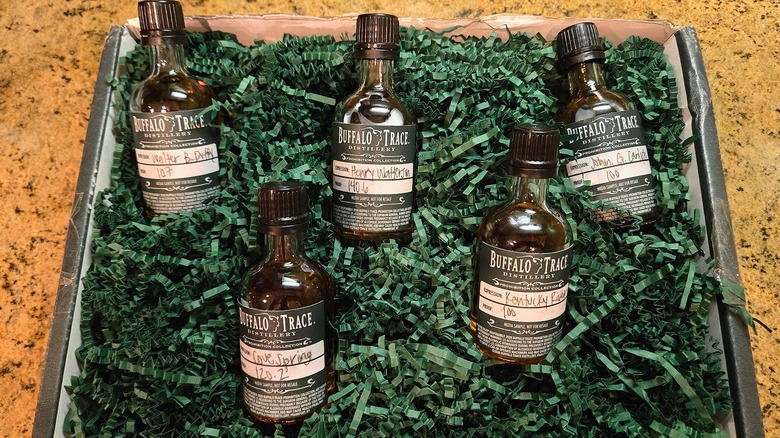
Buffalo Trace Distillery began releasing the limited edition Prohibition Collection #3 at the end of June 2026.The new Prohibition Collection #3 is available as a complete five-bottle set, of which Buffalo Trace offers each expression in 375-milliliter bottles. The collection is housed inside a commemorative wooden box with each label displaying archival imagery. Each bottle rests inside a cardboard box with a prescription cutout, similar to what doctors used at the time for prescribing medical whiskey. The packaging is similar to the previous collection's releases, while each bottle inside is completely unique.
Each five-bottle collection is available for the suggested retail price of $999.99. While the distillery does not release the number of bottles or complete sets available, we do know that the collection will have limited distribution through Buffalo Trace Distillery's owner, Sazerac's, distribution network to select retailers, restaurants, and bars. As the collection is highly limited, expect a significant price increase once it reaches the secondary market. If you can find the 2025 Prohibition Collection #2, it could cost you up to $4,000 for the set. Still, out of the gate, the price is the same for the third Prohibition Collection as Buffalo Trace released the inaugural Prohibition Collection #1 and #2.