

2 Genius Painter's Tape Hacks Make Kitchen Paint Projects 10X Easier
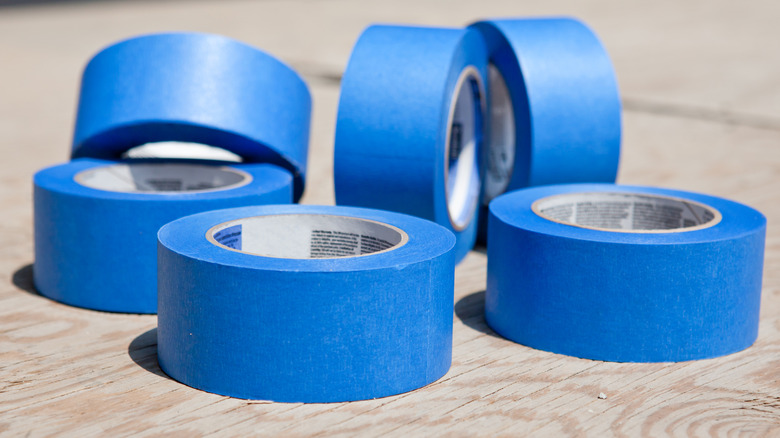
Painter's tape is one of those humble technologies that's easy to overlook, but in some households it might dethrone duct tape as the king of multipurpose adhesive strips, keeping it on hand for more than just painting projects. If you're painting your kitchen, you'll be interested to learn about some clever secondary uses that will make the whole job easier.
Unlike masking tape, painter's tape is engineered for a delicate balancing act. The adhesive on the back has to form a tight enough seal so that liquid paint can't seep underneath, but release gently without sticking so it won't tear up the underlying drywall, or pull off yesterday's carefully chosen cabinet color. The texture of the paper backing allows it to stretch just enough to hug trim, kitchen cabinet doors, and other irregular surfaces.
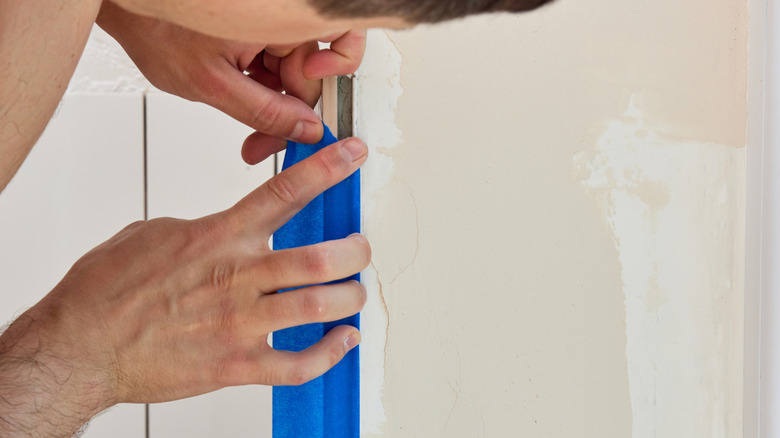
One of the smartest painter's tape hacks borrows another familiar tool already sitting in the paint tray: the roller. Instead of smoothing painter's tape down with your fingertips a few inches at a time, position the tape first, then run a clean, dry paint roller across the entire length. The roller will distribute pressure evenly, pressing every section onto the surface with the same force. That's helpful, because paint is a liquid first, and a coating second. Before it dries, it naturally wants to flow into tiny gaps left by wrinkles or poorly sealed edges through capillary action. The roller application trick gives you a uniformly sealed strip of tape, meaning there are fewer opportunities for that creeping.
Watching paint dry?
Painter's tape can also solve one of the oldest annoyances in painting — the messy paint can. If you aren't going full kitchen remodel or doing a big roller job, you probably just want to dip your brush in and get to it, but the gooey paint makes it tricky. Stretch a strip of tape tightly across the middle of the open top, pinch the sticky sides together, then wipe your loaded brush against the edge of the tape instead of the can.
Paint for walls and cabinets is viscous and generally thicker than water so that it will stay on the walls as it dries. Even so, because it has weight to it, gravity is always pulling it downward. If you try to wipe excess paint along the edge of the can, the circular groove around the top of the can will get gunked up quickly and make the lid hard to close cleanly. Wipe it too many times, and that groove will fill up, and overflow down the sides and onto the drop cloth, or onto the floor if you didn't place one out. The strip of tape redirects the excess paint back into the can, which also minimizes waste.
The beautiful thing about these strategies is that they make use of an inexpensive tool that you already have on hand. Whether you're refreshing kitchen cabinet doors, giving your backsplash a fresh coat, or painting kitchen tiles, making the job a little easier makes it more appealing, and easier to clean up.