

10 Clear Signs KFC's Struggles Aren't Over
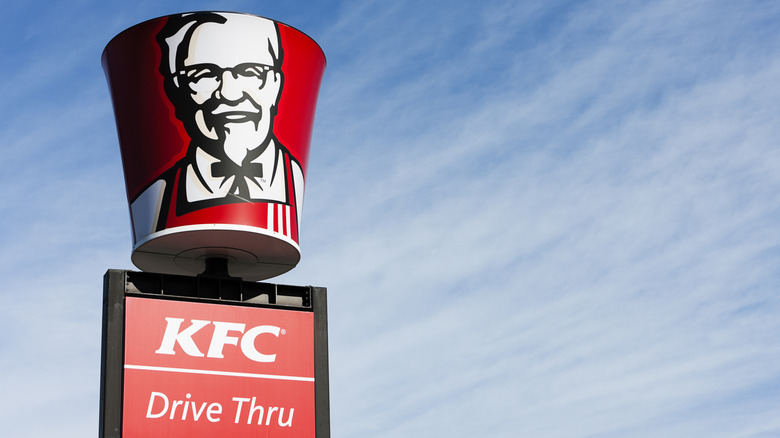
KFC is considered to be one of the most iconic American fast food brands, with its distinctive red and white buckets of chicken and familiar "It's finger lickin' good" slogan. The company has been around in one way or another since Colonel Harland Sanders opened Sanders Court and Café in Corbin, Kentucky in 1930. After more than two decades of trials and travails – including perfecting his now-famous recipe — Sanders turned to franchising. The first Kentucky Fried Chicken franchise opened in 1952, and rapidly grew into a titan of the then-new fast food industry.
In the decades since the Colonel sold the company in 1964, KFC has grown to become one of the most influential restaurant chains of all time. A generation of Americans grew up thinking of those striped buckets of chicken as comfort food, and internationally, KFC continues to be a juggernaut – with thousands of locations, and plans to open more.
Yet KFC has been struggling in the country of its birth, with years of lackluster domestic sales. However, things seem to be trending upward in 2026, due to numerous campaigns, such as the "Kentucky Fried Comeback," initiated in 2025. Still, there are some signs that the chain might not be out of the woods, quite yet.
The company is downplaying its domestic numbers
When someone asks you how work is going, how do you respond? If things are great, you'll probably take the opportunity to brag a little. If the going has been rough, you're more likely to brush off the question, and not go into details.
The same goes for big companies when reporting earnings. If a company posts an unusually good quarter, or the first positive cash flow after a downturn, you can expect to hear about it. But sharp-eyed observers of Yum! Brands, KFC's parent company, have noticed that same-store sales for its U.S. locations are no longer broken out in the company's earnings reports. Instead, they've been quietly omitted, with the company choosing to focus instead on the brand's triumphant march in overseas markets.
Its silence on the subject of domestic sales is loud, because year over year same-store sales figures (how much it earns per established location, relative to the previous year) is a key factor in assessing how well a company is faring. The news there isn't great — in 2021, KFC boasted 16% market share in the chicken sector, good for second overall. By 2024, those figures had dropped to 9.4% and fourth, respectively. Under these circumstances, it's not surprising it would rather not address domestic numbers.
KFC's online reviews have ranged from 'meh' to brutal
Straight-up dollars and cents aren't always the most useful measure of how a company is doing. Sometimes rapid growth or a major revamp will leave costs and revenues out of balance for a while. That's not a bad thing, as long as customers stay loyal to the brand. And, companies may even gain new customers.
But are folks choosing KFC? Frankly, feedback has given Yum! Brands' leadership plenty to think about. Commenters on Reddit have grumbled about "shrinkflation" and suspected recipe changes, griped about under-cooked chicken and bad service, and called out local franchises for being dirty. Shaky reviews on sites like Yelp and Consumer Affairs don't help, either. Overall, the chain's online reviews are bad enough to make a case for it being the famous fried chicken chain that's 'school cafeteria' quality, according to customers.
The issues may be partially due to KFC's focus on a franchise-first model, going all the way back to the Colonel himself. There's a lot to like about the franchise model, including more invested managers and faster growth — but the company itself has less control. And that can present a challenge when you're trying to turn the ship around.
The pressure from new competitors is only growing
The world of fast food can be a cutthroat place, even during the best of times. When the era isn't as golden, the industry can suffer even more. As of 2026, inflation has steadily eroded restaurants' already razor-thin margins, and, many high-profile chains haven't really recovered from the impact of the COVID-19 pandemic.
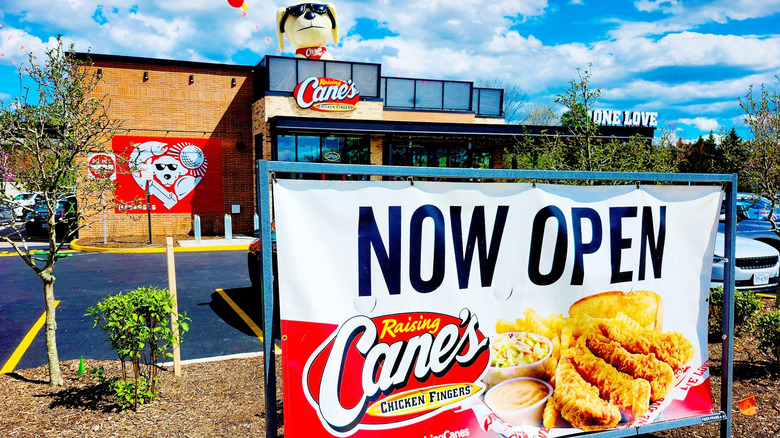
But the chicken segment has been one of the rare bright spots in fast food. Industry observers point to the current obsession with protein as one positive factor, especially when paired with chicken's reputation as a healthier alternative to red meats. This has actually created a real issue for KFC, as it is not only competing with established players like Chick-fil-A and Popeye's, or upstarts like Raising Cane's and Dave's Hot Chicken — but also, even a burger-centric rival like McDonald's, which has targeted chicken as a potential growth area.
But with non-chicken chains also getting in the game, and rivals such as Raising Cane's outselling KFC despite having thousands of fewer locations — KFC's management team has some serious work to do. If you're falling while the sector as a whole is rising, that's hard to sugarcoat.
KFC's side dishes often lack pizazz
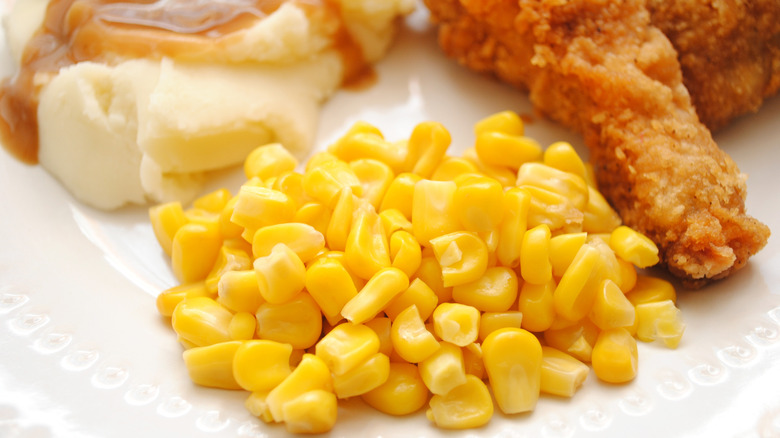
For fast food chains, the main focus is typically on the primary product — whether that's burgers, chicken, tacos, or pizza. Still, it's often the side dishes that can make or break a meal, and sometimes can even act as a tiebreaker to settle arguments over where to dine.
So how do KFC's sides stack up? Well, it's complicated. Everybody has their favorites, of course, and we've got our own list of KFC side dishes, ranked worst to best – which, you might notice, is distinctly short on ringing endorsements. But we're not the only ones to find KFC's side dishes middling at best, and often, not nearly as good as we remember them. KFC's gravy, which still has its fans, had its most outspoken critic in Colonel Sanders himself. Years after selling the chain, he famously likened the gravy to wallpaper paste, triggering a lawsuit from one aggrieved franchisee.
In Canada, where KFC's fries were rated the worst among fast food offerings, the company responded with an imaginative launch in 2023 for its improved, seasoned fries. It held a livestreamed mock funeral for the old fries that was largely promoted via commercials and a social media campaign. Perhaps the U.S. operation might consider this kind of creativity, and the benefits it could reap.
The brand fares poorly with younger diners
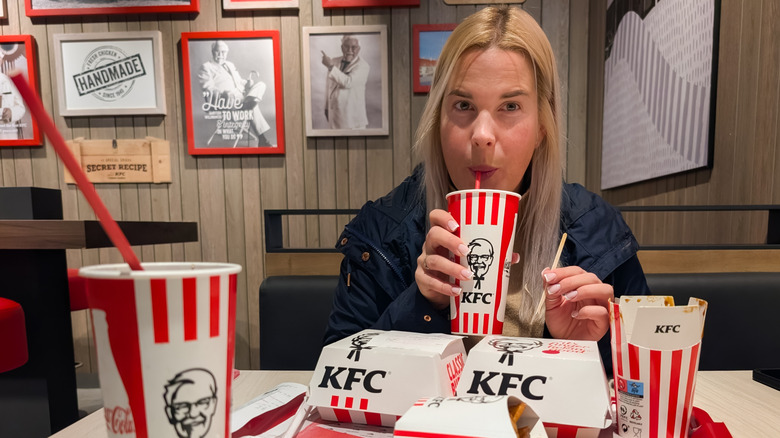
For a restaurant chain, one of the paths to long-term growth is to bring in younger diners and convince them into thinking of your brand as nostalgic comfort food — while at the same time, offering innovative trends that appeal to those generations. McDonald's, for example, was quick to realize that the tot demanding a Happy Meal today could become tomorrow's parent, bringing in their own children.
You might think this could work in KFC's favor, as it is an iconic brand packing plenty of nostalgic punch. But in practice that's not the case. Industry analysts show the chain's brand failing to resonate with younger diners, who find it dated. That may be attributed partially to the core menu's emphasis on whole, bone-in chicken pieces, while a generation raised on McNuggets and chicken tenders more than likely prefers boneless finger food.
The company itself recognizes this, and has put a lot of emphasis on attracting younger diners. Adding chicken sandwiches and chicken tenders to compete with Chick-fil-A and Popeye's was an obvious starting point. KFC even made the top five in our taste test, fast food chicken tenders, ranked worst to best. The next steps include putting an increased emphasis on boneless items, sauces, branded beverages, and social media advertising. Yet KFC's global chief concept officer, Christophe Poirier, told Business Insider that brands are too focused on Gen Z, which could imply that not everyone is on board.
Getting your chicken hot and fresh isn't straightforward
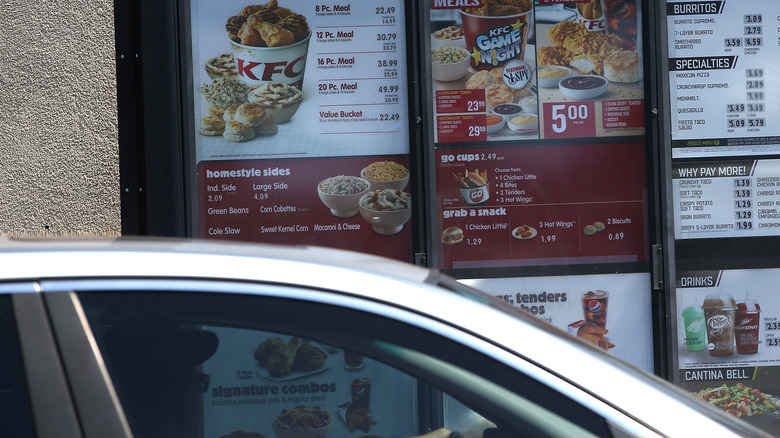
If you poke around the internet for advice on how you should be reheating fried chicken, you'll find plenty of suggestions. Some methods definitely work better than others (spoiler: don't microwave it), but nothing really compares to chicken that's hot and fresh from the fryer.
That's a problem for KFC. Its process for cooking on-the-bone chicken pieces takes around 12 minutes, as is the method for this easy copycat KFC chicken recipe. This doesn't exactly lend itself to the fast tempo of a quick-service scenario. Therefore, chicken pieces are held in a warmer, which lets staff make up orders as quickly as they come in. So can you request fresh chicken at KFC? Yes, but here's what to know before you ask. Also, go in knowing you're bucking a loaded deck. Not only is the cooking method slow, staff are unlikely to start a whole new batch just to fill one order.
KFC workers responded to a Reddit user's question about getting hot, fresh chicken with several tips, as well as explanations about why things work the way they do. They suggested ordering ahead, or asking when the next batch comes out and just waiting until then. If you're less of a stickler, you can simply ask for chicken from the back of the warmer, where the newest pieces should be.
Pizza Hut selloff piles pressure on new leadership team
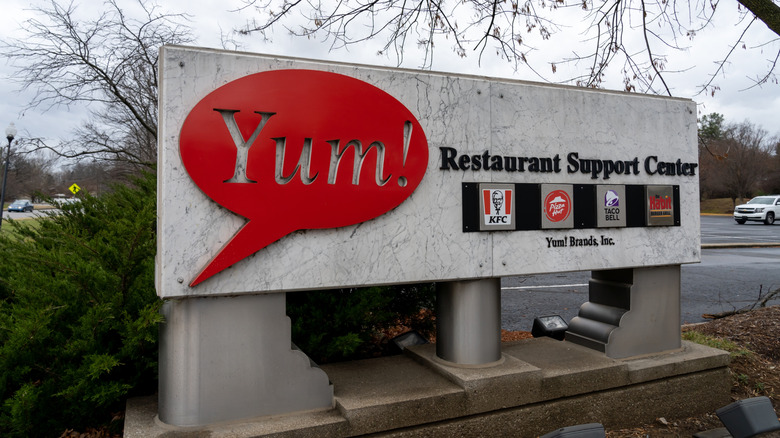
In 2025, KFC announced the creation of a new executive team, as part of the chain's "Kentucky Fried Comeback Plan." The team faces the challenges we previously mentioned, such as the brand's long-term slide in the domestic market, as well as the rise of intense competition. But to add to already existing pressures, parent company Yum! Brands sold off its Pizza Hut brand in the summer of 2026 – and with that off the books, the corporation has shifted its main focus on KFC and Taco Bell.
The change matters — despite the brand's powerhouse positioning in other markets — because it can impact investor confidence. Most of KFC's capital investment comes from the U.S., so its noticeable struggle in the domestic market isn't the best look. If KFC can't find a winning formula in mature markets, what happens when its non-U.S. markets become mature?
Brand recognition is an asset, but nostalgia can be a trap
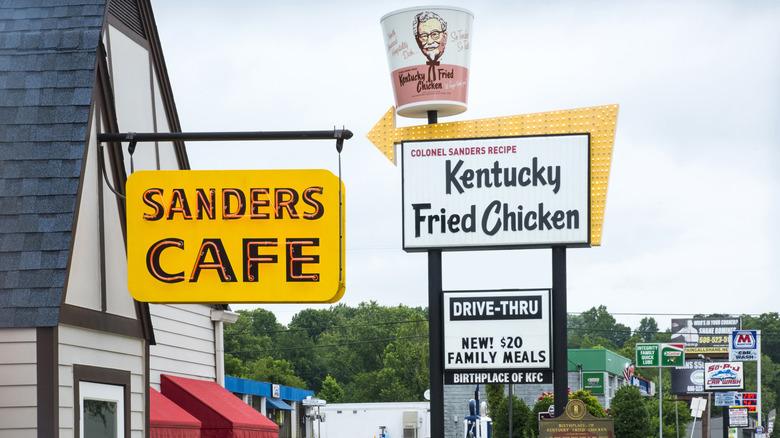
Some brands reach a point of such dominance that it's the first name you think of when you picture its product. You could probably name a dozen without any effort — Coca-Cola, Heinz ketchup, and Campbell's soup are all good examples.
But brand recognition doesn't always make for success stories. So, while KFC's brand remains iconic, the company is trying to find a balance, using the draw of its historic strength and familiarity like the time restaurant chains bet on nostalgia to lure customers, while not leaning into the past so strongly that it can't find its way to the future. It's not that nostalgia isn't a powerful marketing tool — how many bands are still touring on their hits from the 80's? — but it can be innately limiting. As one industry analyst points out, if you're perceived as a dated brand, the last thing you need is to prove it by repeatedly doling out your greatest hits.
Viewed from that perspective, the company's renewed emphasis on Colonel Sanders a decade ago, along with the "Kentucky Fried Comeback" launch in late summer of 2025, don't necessarily bode well. While some of the updates, like a physical refresh of locations and new menu items, are welcome and necessary — others, like an emphasis on value meals and discounts, might erode margins without building any long-term loyalty among younger diners.
Number of KFC outlets is still shrinking domestically
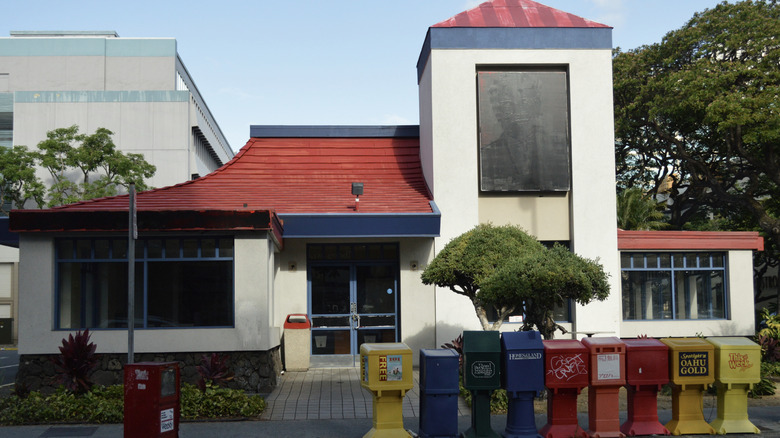
Have you ever lived in a one-employer town, when that employer folded? Or, have you worked in a region built on one industry, when that industry faded, or moved overseas? If you owned a restaurant in one of those areas, you could have experienced real trouble, as well.
But even in these landscapes, large chains can often remain resilient — if one city or region experiences a downturn, profits from healthier areas can make up the difference. Accordingly, a chain's number of restaurants (multiplied by unit sales per outlet) is regarded as an important measure of its health. To be clear, it's not that underperforming locations shouldn't be closed, as they can be a drain on profits. But overall, a robust chain should have enough new locations opening to offset poor performances, and then some. That's not happening with KFC, which has shed hundreds of locations over the past few years. Once it was the largest restaurant chain in the country, but as of 2025 it had fallen to 20th in industry rankings.
So, while KFC's new initiatives to raise its gross sales and profits per restaurant are important — and early feedback from some big franchisees sounds promising — the chain might need to stop closing so many locations, especially if it wants to regain the position it enjoyed as one of the biggest fast-food chains in the 1970s.
Too soon to know if menu changes will land with customers
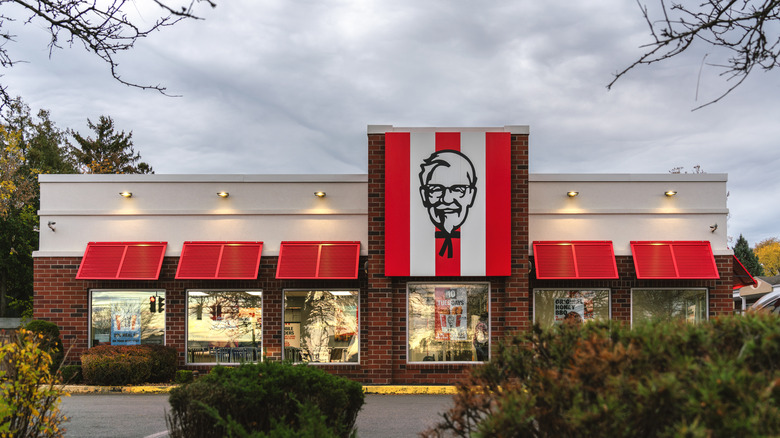
Arguably, the biggest question mark around KFC is how well its turnaround efforts will land with American consumers. The chain is taking a lot of big swings, under the direction of the executive team instated in 2025, and it's too early to know how the big changes you'll see at KFC in 2026 will impact its bottom line.
You can't fault the management team's ambition. Attempting to replicate your competitors' success with similar products is a standard play in the business. Some of the bold experiments it's launching this year were proven successes for the chain, and could potentially leapfrog KFC back into a leadership position domestically. Its new Saucy brand, for example — which focuses on boneless chicken, with an eclectic range of sauces and beverages — is generating twice the sales per outlet of mainstream KFC restaurants in its Florida test markets.
But taking a big swing doesn't necessarily mean getting a big hit, and the early reviews on some of these new product lines are mixed. The "Dunked" menu items — which are coated in sauce, rather than sauce being served on the side – have gotten some pretty sharp pushback on Reddit. The next year or two will tell us whether these efforts ultimately land with their target market, or come across like a dad trying, and failing, to keep up with the latest TikTok slang.