

Andrew Zimmern's 7 Best Burger Grilling Tips Are Sure To Impress Your Guests

Few American food experiences are as quintessential as biting into a fresh-off-the-grill burger on a hot day. Even if grease and ketchup splatter all over you, you don't care. You may want to ensure you have years of memorable cookouts ahead of you, so to discover the tools you need to blow guests away with your grilling skills, we spoke with Andrew Zimmern.
An Emmy and James Beard Award-winning chef, television star, and writer, Zimmern is an expert on barbecues, steaks, and really anything relating to meat. In fact, he'll be commanding some grueling grill operations as host and judge on Food Network's new show "Pitmasters," which premieres on Monday, July 13, 2026. For a little more unconventional cookout action, tap into "Wild Game Kitchen" on Tastemade, where Zimmern explores the art of cooking wild food over a live fire.
Everyone has their own die-hard rules when it comes time to spark up the grill. Should you press your patty? Season with a light or heavy hand? Flip the patty once or 18 times? These are the decisions that make or break your cookout cuisine. With that in mind, here's how Zimmern — a barbecue king and grilling extraordinaire — whips up a legendary burger.
Choose excellent beef
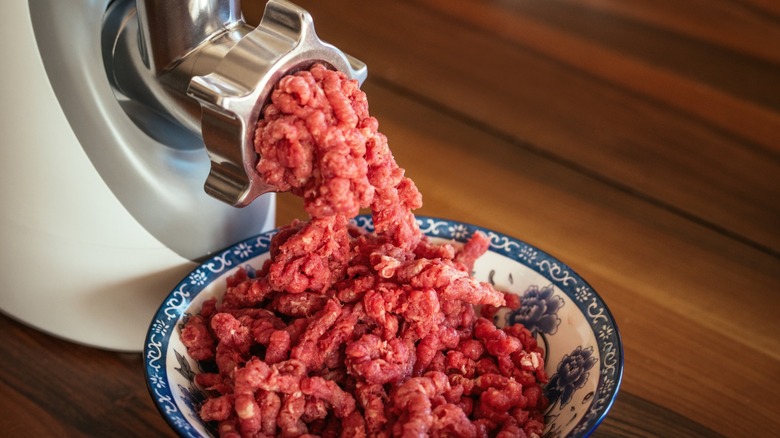
Before you spark up the barbecue, there's one grilling decision to make that has nothing to do with the grill itself, but everything to do with how your burgers will turn out. One of Andrew Zimmern's best tips for home chefs looking to build a burger from the ground up is to avoid grabbing the first package of ground beef spotted at the store. In fact — if you can swing it — you should avoid buying ground beef altogether.
"Ideally, you are grinding your own to your flavor specifications," Zimmern explained. "I prefer chuck as the base because it has excellent beef flavor and enough fat to hold together without becoming greasy." He told us that 80/20 beef (as in 80% lean meat and 20% fat content) is the sweet spot for a perfect homemade burger — though for an iconic lacey-edged effect, opt for a slightly fattier 75/25 blend if possible. Since fat from the meat drips off the grill grates, rather than sitting in a pan, a higher-fat beef ratio is ideal for burgers on the grill.
If you don't have the means to grind your own meat, Zimmern insists you choose freshly ground beef from a trusted local butcher for the best possible flavor. The concept is simple: "Great burgers begin with great beef."
Form patties the right way
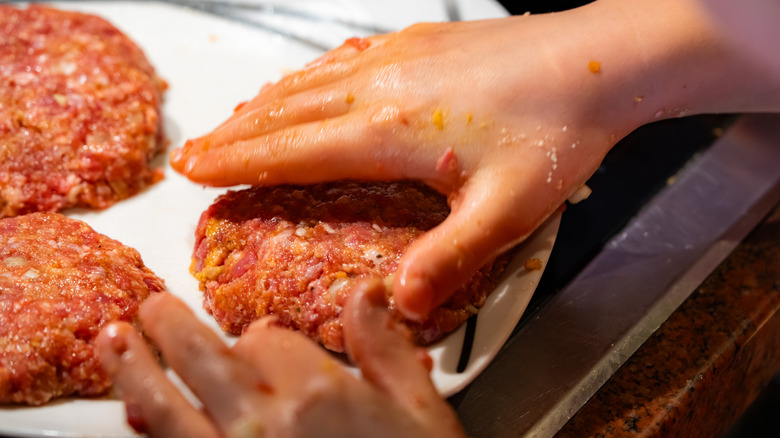
Choosing the right fat content and cut for your beef is imperative if you're trying to max your burger-grilling skill points. Still, one crucial step that often gets tossed on the back burner, so to speak, when making homemade burgers is patty-forming. Achieving the right size and shape affects both the taste and texture of burgers. Too small and thin, and they fall apart on the grill; too thick and plump, and the burgers are a nightmare to eat and excessively juicy. But you also want to avoid overworking meat, according to Andrew Zimmern.
Zimmern said one of the biggest mistakes everyone makes when grilling burgers is overworking the meat. He claims that forming the patties gently and handling them as little as possible is key to a great burger. "Packing patties tightly creates dense, dry burgers," he noted. "Don't play with your food!"
Additionally, Zimmern recommended making a slight dent in the center of your raw burger patty before you toss it on the grill, as he explained this ensures they "cook evenly and stay flat." As it cooks, the middle of the patty becomes puffy as the proteins contract from the heat. Adding a small dimple with your thumb or a tool helps to prevent a swollen patty and keeps the meat evenly cooked.
Set up your grill so your patties don't stick
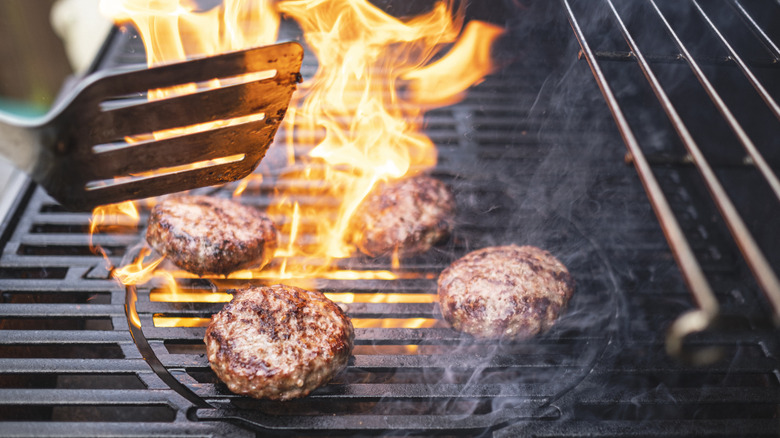
Preventing a sticky mess is probably the most heavily discussed grilling hack out there — home cooks have gone as far as rubbing their grates with onions and potatoes to keep food from sticking to grill grates. But Andrew Zimmern recommends an easier method to keep your burgers unstuck and intact that doesn't involve any weird vegetable tricks.
"Start with clean, very hot grates," Zimmern said, "then oil the grates, not the burger." While there's been a debate among grillers over whether oil on the food or the grates is best to prevent sticking, Zimmern says that greased-up grates are ideal when it comes to burgers.
More than that, he advises remaining patient while cooking, and not to flip the patty too early. "Once a proper crust forms, the burger will release naturally," he told us. Flipping too often will prevent that crust from forming, making your burgers more prone to sticking. So as fun as it may be to repeatedly flip your patties and listen to that satisfying sizzle, Zimmern falls in the flip-less camp (meaning you should savor the sizzle when it does occur).
Cook at the best temperature
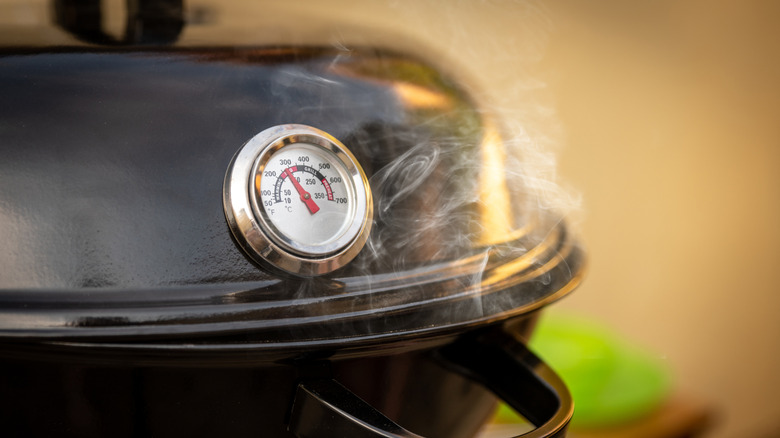
Grill temperature is a fairly underdiscussed factor when it comes to burger-grilling season. But like with any type of cooking, the temperature of your cooking surface matters — a lot. For burgers, a hot, hot grill is ideal for a variety of reasons. Preheating the grill and getting the grates nice and hot helps prevent patties from sticking. Plus, a too-low temperature can lead to gray burgers that haven't achieved all the depth of flavor they deserve. With that in mind, Andrew Zimmern says the ideal grill temperature for the perfect burger is between 450 and 500 degrees Fahrenheit (which is pretty dang hot).
Now, to be clear, this is the temp you want your grill surface to be, not the coals. "You want enough heat to develop a flavorful crust before the center overcooks," Zimmern noted. After all, a hot grill is how you achieve crispiness while still maintaining a soft, melt-in-your-mouth center. To check your grill surface's temperature, try an infrared laser thermometer, or clip a digital oven thermometer on the surface of your grill.
Quit letting smashburgers melt between your grill grates
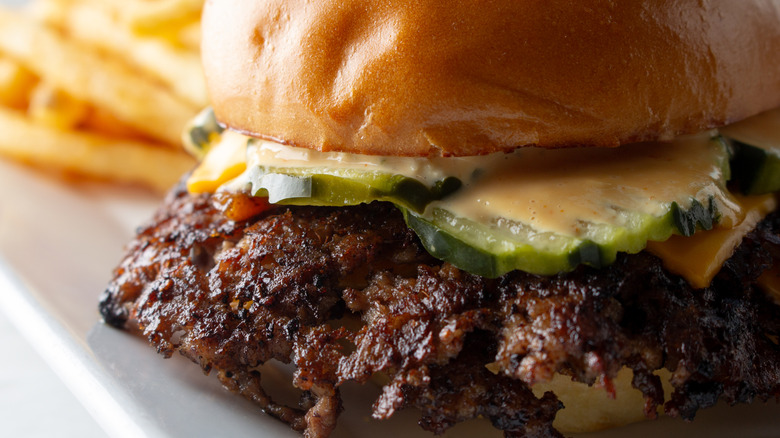
Believe it or not, you can, and should, make smashburgers on the grill. But there's a catch: You're going to want to break out the cast iron pan — a viewpoint endorsed by Andrew Zimmern. Keeping your smashburger patties off the grill grates doesn't just prevent the meat from slipping between the cracks between the grates. It also helps achieve the delightful crust on the edges of smashburgers, and the soft, melty texture that makes them such a hit at barbecues.
Zimmern's tips for smashburgers on the grill are simple. "Place a cast iron griddle or plancha over the grill grates and let it get screaming hot," he explained. You can use an infrared thermometer to test whether or not your hot pan is ready, or add a few water droplets to the hot pan. If they bead up and dance across the surface of the skillet, it's likely hot enough to start grilling.
"Smash the beef once immediately after it hits the surface," Zimmern instructed, "and never press it again." He added that "for smash burgers, a ripping hot cast iron or flat top is unbeatable because it maximizes crust." Even with a skillet or plancha to keep it contained, over-smashing a burger can still cause it to fall apart or get dried out, so stick with one quick and satisfying press when grilling smashburgers.
Resist the urge to press
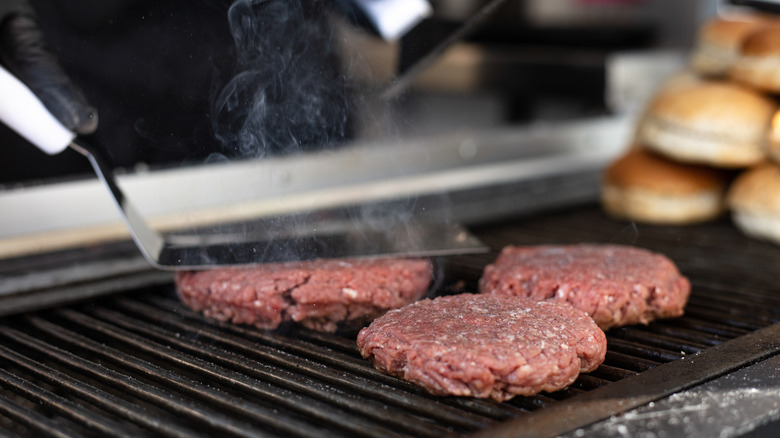
We know we're pressing smashburgers, but what about regular burgers? To press or not to press has been a contentious topic since the birth of grilling. As the country falls deeper in love with the all-American cookout, we're starting to wise up to our old bad burger habits. Grill dads everywhere once insisted that pressing burgers was the path to a perfect patty. But Andrew Zimmern feels otherwise — and he suggests not pressing your grilled burgers at all.
"Never press a traditional burger," Zimmern told us, adding, "You're squeezing out juices and flavor." Heat and meat are a match made in heaven, and the two will combine to form the perfect burger if you let them. Handling the patties too frequently, whether by pressing or over-flipping, leads to a dry, bland final result.
When it comes to grilling, sometimes it's best to let nature do its thing. Few know that better than Zimmern, who prioritizes natural cooking methods and limited intervention in the process. He said the only time a burger should ever be pressed is when it's a smashburger. Even then, as mentioned, it should only be pressed one time, at the beginning of the grilling process.
Keep things simple
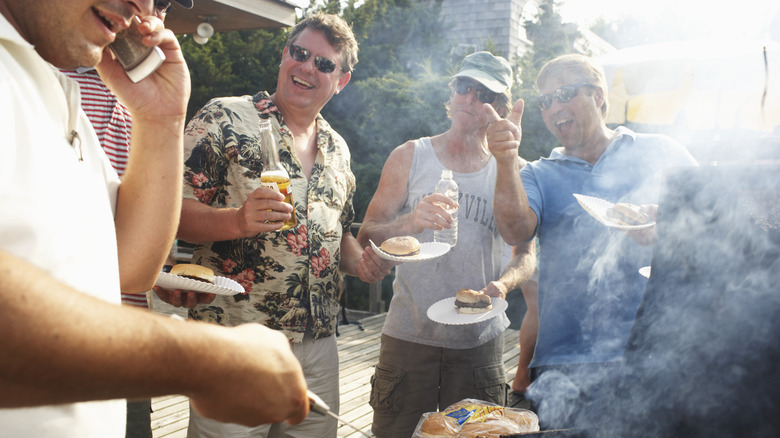
Those who know meat inside and out often iterate that starting with quality ingredients is the most important step in creating a great meal. Andrew Zimmern echoes this sentiment when it comes to burgers. To create a burger that wows your guests, Zimmern suggested keeping things simple. More than that, he insists "the meat should always be the star."
Start with excellent beef, then season with nothing but salt and pepper to let the flavor of the meat shine. He also recommends seasoning only the outside of the patty right before you toss it on the grill. When asked what kind of grill he prefers to work with, Zimmern explained that a charcoal grill with wood lump charcoal delivers the best performance and flavor for a classic burger. The charcoal gives the burgers a smokey finish that isn't too overpowering — just enough to accentuate the taste of great beef.
When it comes to burger accoutrements, the "simple" sentiment stands. Zimmern recommends building your burger on a toasted bun, and if you like a cheesy patty, opt for whatever you like — as long as it's a variety that melts well. Additionally, he said home grill masters should remember to let burgers rest for just a couple minutes before constructing and serving. Finally, he left us with a universal cooking tip that certainly applies to grilling, too: "Remember that a great burger is about balance."