

The Right Grill Temperature For Perfect Burgers Every Time
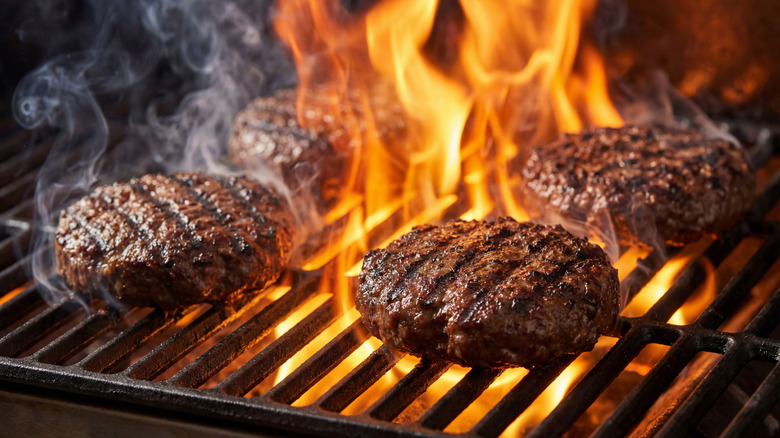
No cookout is complete without a good old-fashioned burger. No matter what you serve, chances are someone will end up asking for one, so you may as well get ahead of the game and load up the grill. Everyone has their way of doing things, but if you're trying to make the perfect, chef-approved burgers, temperature matters. That's why we spoke with an expert who shared his grilling wisdom.
According to Christopher Prieto, the James Beard Foundation-nominated chef and champion pitmaster behind the Michelin Bib Gourmand-awarded Prime Barbecue in Knightdale, North Carolina, ensuring the grill is at the right heat is an important first step. "A great grill surface temperature for most hamburgers to get that perfect crust should be around 450 to 500 degrees Fahrenheit for ⅓ to ½-pound patties," Prieto explains. "This temperature is hot enough to create a great Maillard reaction and grill marks."
The Maillard reaction is a chemical process that occurs when the proteins and sugars inside a food start to react with each other after being exposed to high heat. It creates caramelization, which infuses burgers with a delicious, seared edge and enhanced flavor. But there's a fine line to tow between caramelized and burned. If you crank the grill up too high, the exterior of the meat will cook far faster than the interior, leaving you with a blackened crust and raw middle.
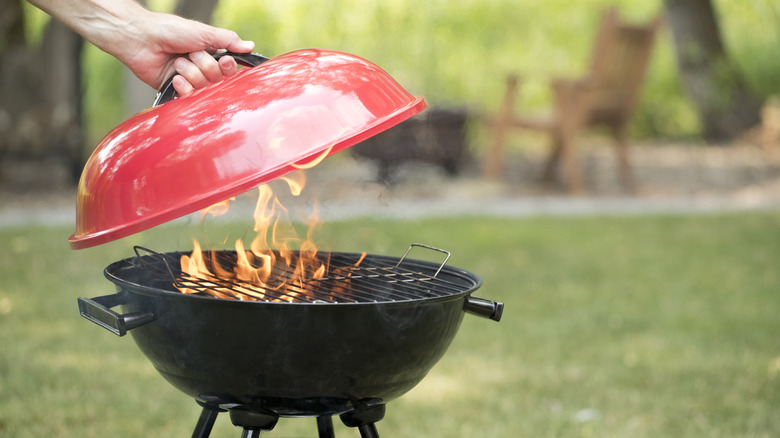
Checking the temperature of a charcoal grill
The moisture inside burger meat evaporates as it cooks, so if you keep grilling the burgers after the outsides start to burn, they'll end up dry and flavorless. Prieto says that 450 to 500 degrees is the sweet spot for making perfect burgers. "This temperature gives the right amount of time (depending on thickness) to develop flavor before the inside is fully cooked," he adds. "Lower temperatures (350 to 400 degrees Fahrenheit) will not get as much crust or grilled flavor, and hotter temperatures (600 plus degrees) will scorch the outside of the meat."
It can be difficult to configure the temperature of your grill if it's not powered by gas, but Prieto has a trick for such an occasion. "With charcoal, I focus entirely on grate temperature rather than visible flames," the chef reveals. "I use an infrared gun to ensure my surface temp is around 450 to 500 degrees. If it is too hot, I distribute the coals better."
If you don't own an infrared gun, Prieto suggests holding your hand above the grate to feel how hot it is. Be careful not to burn yourself; the chef adds that "around five inches" above the flame is where your hand should be. If you can do that for two to three seconds, Prieto says "you are ready to grill." Alternatively, if your hand isn't too warm after eight seconds, the grill is too low. If you don't even last a second, it's too high.
Temperature matters when it comes to perfectly cooked burgers
There are also some visual cues you should note regarding temperature. "You want your coals to be glowing hot with most of the outside grey," the chef adds. "Flames should be minimal." If the flames start to go wild, it probably means there's too much meat on the grill. Pietro likes to operate a two-zone grilling system, meaning he only puts coals on one side of the grill. When flare ups occur, simply move the meat away from the direct heat source (the coals), allowing the flames to die down.
Temperature matters for the burgers themselves, too. Ground beef should be cooked to an internal temperature of 160 degrees to ensure it's safe to eat, killing any lingering surface bacteria. Of course, when you cook a steak or a chunk of beef, it's okay to simply sear the exterior and leave the inside slightly pink. Beef, on the other hand, gets ground up, allowing bacteria to be distributed throughout the meat. This is why it's important to ensure that every part is cooked through.
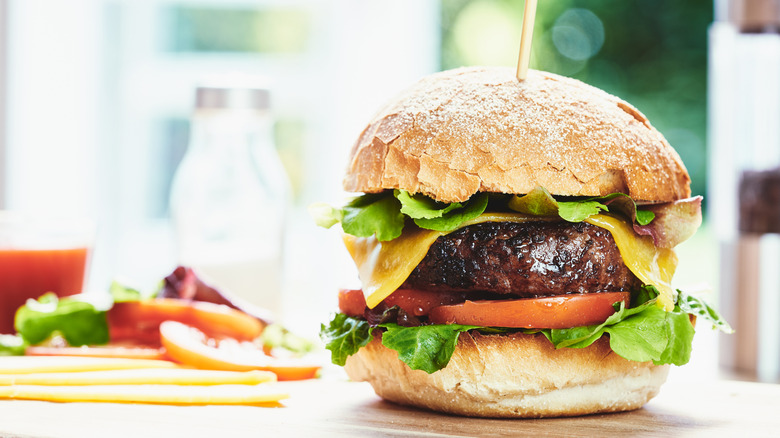
What burgers and steaks do have in common, however, is that you should let burgers rest after cooking. This allows the protein to relax and the juices to be reabsorbed throughout the meat. However, you don't need to wait too long. Naturally, Pietro agrees. "I like to rest my burgers for five minutes so that juices redistribute," he reveals. After that, your home-grilled burger is ready to enjoy.