

Why Chocolate Can Taste Different Depending On Temperature
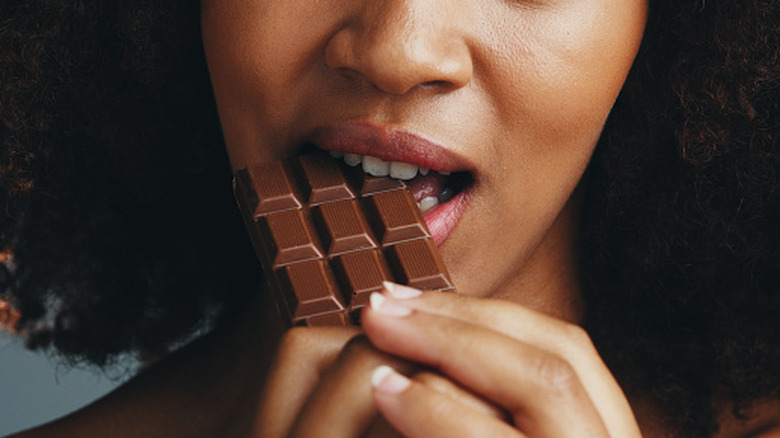
The taste of chocolate has long evoked awe and romance in the hearts of all who nibble at a square. The complex combination of hundreds of flavor and aroma compounds has inspired not just chefs, but also poets, novelists, painters, and artists of all stripes. Cultivating such a memorable chocolate experience, however, requires not just excellent product, but also control of the environment — with temperature in particular playing a significant role in the sensory experience. To help explain exactly how to best enjoy fine chocolate, we talked to Nicole Patel, the founder of Delysia Chocolatier, who was honored by the International Chocolate Salon as one of the Best Chocolatiers and Confectioners in America and received its highest accolade, Six-Star Grand Master.
"Temperature changes how quickly chocolate releases both aroma and flavor," Patel explains. "Our sense of taste is closely tied to our sense of smell, so when chocolate is room temperature, more of those aromatic compounds are released, and you experience greater depth and complexity." If you've ever had a bite of chocolate that tasted particularly divine — or particularly dull — you might not have noticed at the time, but the temperature of the chocolate likely played a role. This is just one of the reasons that you should never store chocolate in the fridge, as both flavor and texture worsen in the cold. "A smooth melt across your palate creates a completely different experience than biting into chocolate straight from the refrigerator," Patel says, "where the flavors tend to stay muted until it begins to warm in your mouth."
The ideal serving temperature for chocolate
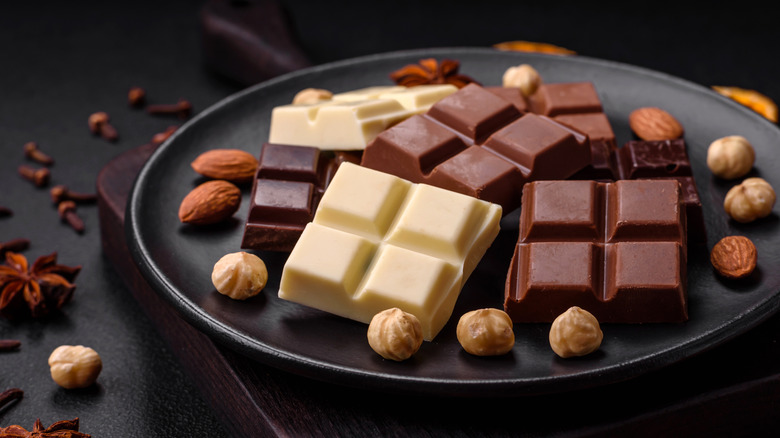
Following this trend, it might seem like warming chocolate to its melting point would be the best method to unlock all of its aromatic potential. And Patel does admit that "melted chocolate coats your palate more evenly and releases more aroma, which makes the flavor seem richer and more intense." But while whipping up a pot of raspberry chocolate fondue will increase the perception of flavor and aroma, it is not considered the best method for tasting chocolate. "A perfectly tempered chocolate with a clean snap followed by a slow melt creates an experience that fully melted chocolate can't replicate," Patel says. And creating that ideal tasting experience is actually much simpler than making fondue.
The perfect storage temperature for chocolate is around 60-70 degrees Fahrenheit, likely a touch cooler than the ambient temperature in your home — at least at certain times of year. For serving, though, Patel suggests that you want fine chocolate right at room temperature. "That's cool enough to preserve the snap but warm enough that it begins melting almost immediately once it's in your mouth," she says, allowing it to deliver the desired textural experience as well as the full complement of flavors and aromas.
For filled chocolates and truffles, Patel suggests a similar treatment. "I often let them sit out for 15 to 20 minutes before serving," she says. "The fillings become more expressive, and the flavors are easier to appreciate when enjoyed at room temperature." A truly transcendent chocolate experience might begin with a trip to the best chocolate shop in your state, but how you serve those squares and truffles is nearly as important as where they came from.