

What Is The Average Lifespan Of A Garbage Disposal?
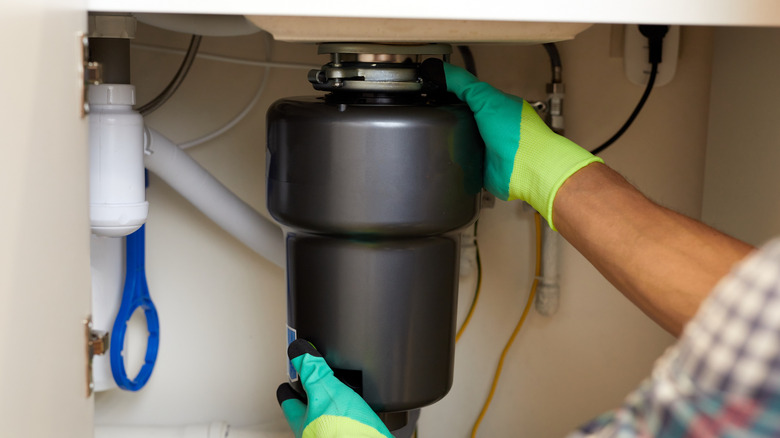
It's no surprise that garbage disposals aren't designed to last a lifetime, but when used properly, they can survive as long as eight to 15 years. That's a big range, to be sure, but it depends on just how much you use your disposal, and what exactly you're putting down it daily. A disposal that gets light daily use and is properly maintained may last way beyond a decade. However, if you're routinely cramming in coffee grinds and eggshells – food scraps you should never put down a garbage disposal – it may give out much sooner.
On the other hand, if the unit isn't used regularly, the lifespan of your garbage disposal may be on the shorter side as well. Impeller blades can rust, or the seals can dry out if you're not using your disposal at least every few days.
There are usually some signs indicating repairs are needed, or worse, your garbage disposal is at the end of its life. One obvious signal that you'll need a new disposal is persistent clogging. If you're continually experiencing backups or pulling out the plunger, the grinder components are probably dull, or the motor is losing strength. Older units on their last leg will struggle to pulverize your vegetable peelings as effectively as they once did.
Unusual noises are also a warning sign. A loud grinding sound is normal, but rattling or squealing is not. There might be loose internal components, or metallic scraping can mean you've got damaged impellers. Leaks and stinky smells are also a red flag. Leaks can indicate cracks or corrosion in the unit, which calls for an entire replacement, not repair. If you're cleaning your garbage disposal weekly but still have foul odors, it might be a sign that food is trapped in damaged or worn-out components.
Simple maintenance can keep a disposal running for years
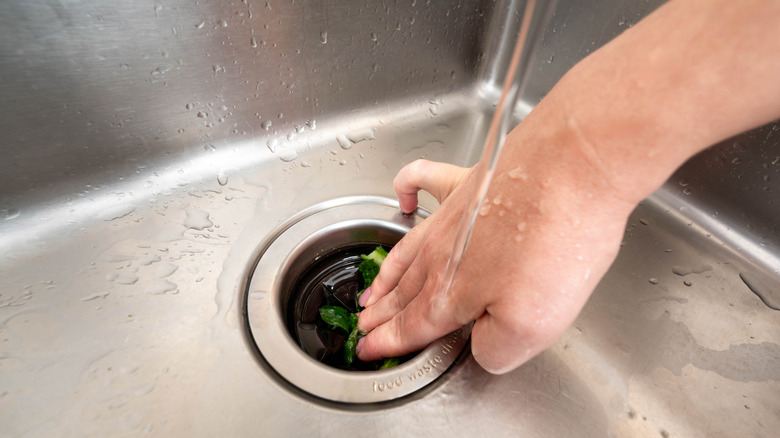
Fortunately, there are plenty of do's and don'ts you can follow to make sure your garbage disposal lives a long and healthy life. There's all kinds of everyday kitchen habits that can damage your pipes, but you can avoid those if you practice what plumbers preach. It sounds counterintuitive, but running cold water before, during, and after using your disposal will flush food out while solidifying and grinding up any greasy particles. It's a long-standing rule that any grease down the drain is bad, but hot water allows the grease to linger and coat pipes. While you already know never to put raw meat down the disposal, fibrous items like artichokes and corn husks can also clog your system.
Keep your disposal clean with a few household items — no dangerous chemicals necessary. Grinding ice cubes helps remove food residue; make a cleaning cocktail by adding bleach, baking soda, and a few lemon slices, and run the disposal until it clears.
When it comes time to eventually say goodbye to your old disposal, consider whether you really need another one. Although garbage disposals are an everyday appliance here in the United States, they're a rarity in other parts of the world, including Europe and Canada. Some environmentalists dislike them because they discourage composting at home with food scraps, as well as putting the hurt on your local wastewater infrastructure. There's all kinds of ways to repurpose kitchen scraps instead of throwing them down the drain, so consider your options before running to the home improvement store.