

15 Essential Fruits, Vegetables, And Herbs A Complete Survival Garden Needs
We may receive a commission on purchases made from links.
If you're active on social media, you've probably seen posts about "survival gardens." The idea's not new, and the definition varies, but they generally refer to gardens that can grow enough food to help you get by for a while, whether you're laid off and can't afford produce or something like a pandemic causes major supply chain disruptions.
You might want your garden to support you for a few weeks or indefinitely, depending on how pessimistic you are and how much land you have. Still, survival gardens share a few common characteristics: They prioritize productivity, calories per square foot, and balanced nutrition, and can be customized based on the foods your family likes to eat.
I grew up with this kind of gardening. My father had a lifelong dream of self-sufficiency, and his gardening magazines were literally some of my earliest reading. He did eventually achieve his dream, and I'm constantly expanding the garden on my rural acreage. Drawing on that lifetime of experience and reading, here are some of the crops I'd recommend for your own survival garden.
1. Potatoes
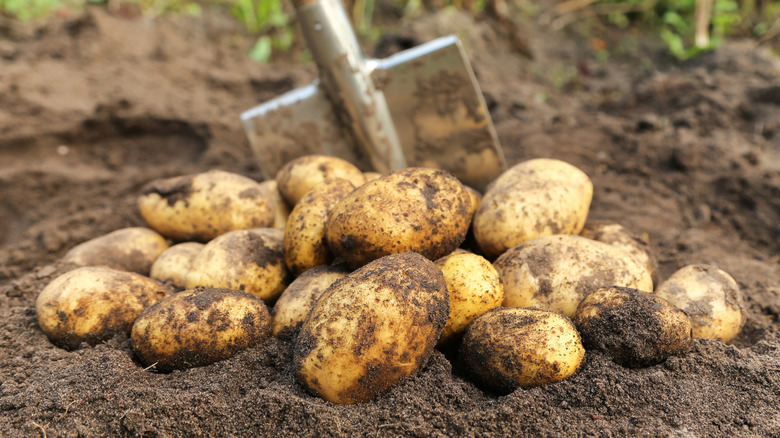
If you've seen the movie "The Martian," you'll remember Matt Damon's character surviving for months on a diet of mostly potatoes. That part of the story isn't science fiction, because potatoes are more nutritious than you might think. For example, a 300-gram baked russet potato packs almost 8 grams of protein — almost as much as a cup of 1% milk! — before toppings, along with lots of carbs, vitamins, and minerals.
Potatoes are the gardener's pragmatic choice as a staple starch, as they're productive and easy to grow. You can selectively harvest new potatoes from the plants by mid-summer if needed, or leave them in the ground until fall. In compact gardens you can make a potato tower, which gives you a big harvest from just a few square feet (a laundry basket on your patio will do in a pinch).
The biggest problem may be storing your harvest (they won't last through the winter in your kitchen). For long-term storage you'll need to "cure" your potatoes first for a couple of weeks at 50 to 60 degrees Fahrenheit, then find them a cool, humid, dark place to stay. Your best bet is a cool, damp corner of your basement, if you have one — ideally an old-fashioned root cellar.
2. Cabbage
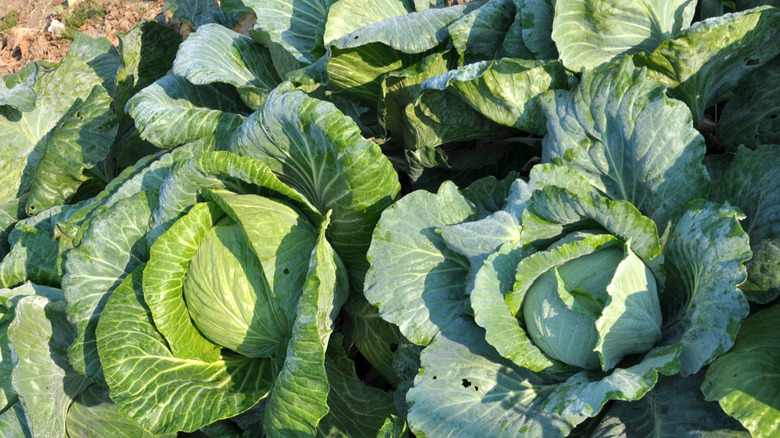
Cabbage is another staple crop that families around the world have leaned on for centuries. It's highly productive, keeps well, and packs a lot of vitamins, minerals, and fiber to complement starchy potatoes or sweet potatoes.
There are many types of cabbage available for gardeners to grow, and I've raised a pretty broad cross-section of them over the years. I'd suggest choosing partly on the basis of what you like to cook and partly on when they're harvested. Planting a mix of early, mid- and late-season cabbages will give you an extended harvest, and late-season varieties also tend to be the ones that hold up best in long storage.
As a rule, early crop cabbages will only keep for a few weeks, as do Napa cabbage and cabbage-adjacent plants like bok choy (it's a very close relative). Tight-packed heads, like the aptly named "Stonehead," are great keepers. They'll last a long time in a cool, dark, well-ventilated place, and you can also pickle them as sauerkraut or homemade kimchi. These recipes don't just extend cabbage's storage life; they'll also enliven your plate.
3. Rutabagas and turnips
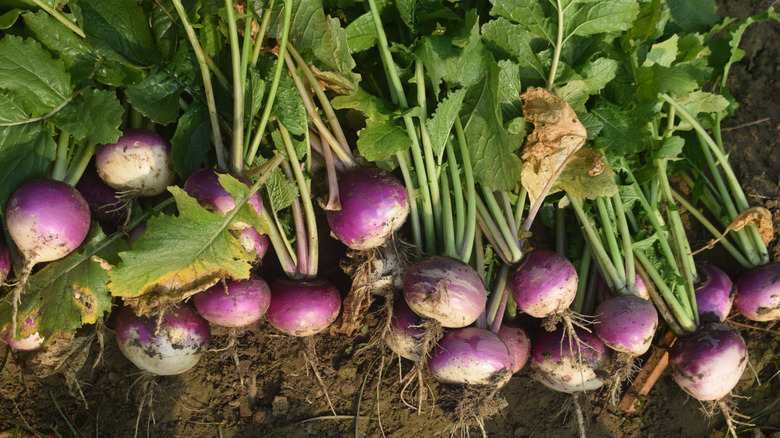
In Atlantic Canada, where I grew up, "turnip" meant rutabaga. If you meant actual turnips, you had to specify "white turnip." They're similar and closely related, but real turnips are a short-season vegetable and rutabagas are a long-season vegetable. So, if you have room to plant both, they'll help keep you fed all year.
Turnips' white flesh has a peppery, radish-y bite, and it produces tasty, edible greens as well as a fleshy root. This makes them a high-value crop in a survival garden, since you'll benefit from both the starchy root and the nutrient-packed greens. Rutabagas are also a high-value crop, and their sweeter, longer-storing roots will keep well into the winter (up to four months) if they're stored in a cool, dark place. If you aren't familiar with rutabagas, I'd suggest buying one and trying it as oven-roasted cubes or simply boiled and mashed. They have a sweet and slightly buttery flavor that complements other cold-weather vegetables quite well.
If you're not a fan of turnips, radishes are a good, fast-growing early-season substitute. Ordinary red radishes can be harvested in less than a month, for example. Bigger daikon take longer, but they're also a good substitute for turnips (they're all cousins, anyway). You can eat radish or daikon greens, too.
4. Beans and peas
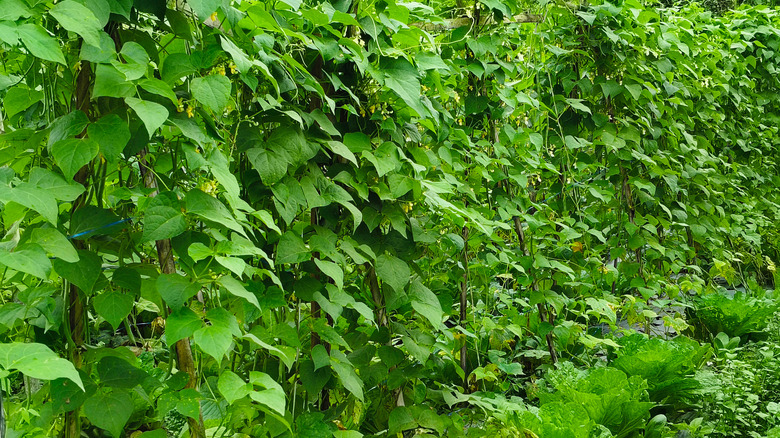
Protein is a priority in survival gardens, especially for those on small or non-rural properties. Most of us don't have room for livestock (even backyard chickens are problematic in many places), and not everyone's interested in hunting for meat.
Peas, beans, and other legumes are the answer. Peas are a spring crop, so you can harvest early, and then plant something else in the same bed. By the time peas are finished, beans will be ready to pick. Beans are a long-producing crop. You can enjoy them as fresh "string beans" while they're young, then shuck them for shell beans as they mature, and finally let the rest dry on the vine. Well-dried beans (and peas, if you like pea soup) will keep for years, making them a great survival staple. Plus, you can use them as next year's seed, or even sprout them for a fresh vegetable in mid-winter.
I grow both bush beans and pole beans because I have the space and because bush beans start producing earlier than pole beans. Either of them can be appropriate, depending on the size of your garden. Bush beans don't need staking, and just a couple of beds can fill your freezer for the winter; but pole beans' vertical growth makes them a better option for tight spaces. As a bonus, both peas and beans are nitrogen fixers, so they'll help keep your soil productive.
5. Summer squash
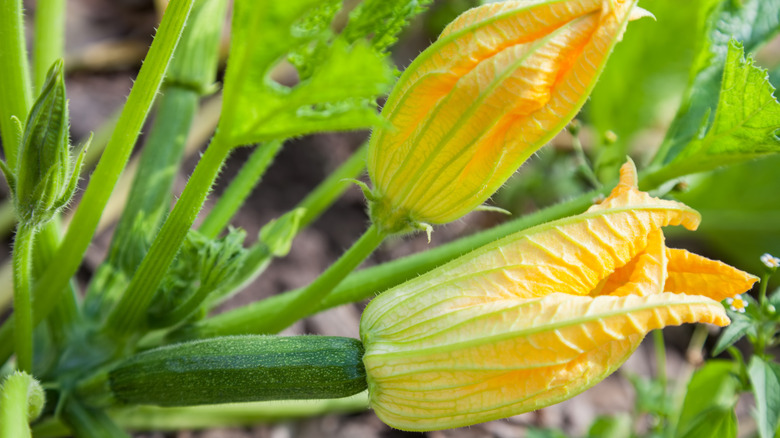
This is another selection some might argue against in a survival garden, partly because of the space they require and partly because they aren't a serious source of calories. I personally argue for having at least a couple of vines of summer squash — here's why.
First, zucchini and other summer squashes are highly productive, to the point of being a cliche. They're a seriously low-maintenance crop, and their tendency to sprawl can be countered by growing them vertically, like with winter squash. For a small family, two or three plants will give you all the squash you can eat and then some. Summer squash is super-versatile in the kitchen (grill it, bake it, saute it, make casseroles, etc.). You can also shred it for the freezer, and if you pick them at the fingerling stage, you can pickle them just as you would with cukes (so if you only have room for one or the other, zucchini beats cucumbers).
One thing about squashes that's worth knowing for survival-gardening purposes is that you can eat more than the fruit. Harvest the blossoms for an early-season vegetable (here's how to prep them for cooking); I like mine stuffed with crab and ricotta. If you harvest only male blossoms (no infant fruit visible on the stem), it won't impact your harvest. Also, the leaves themselves are edible as cooked greens. Cooking tames the prickly hairs on the leaves, and they're big enough to stuff with grains or other vegetables.
6. Corn
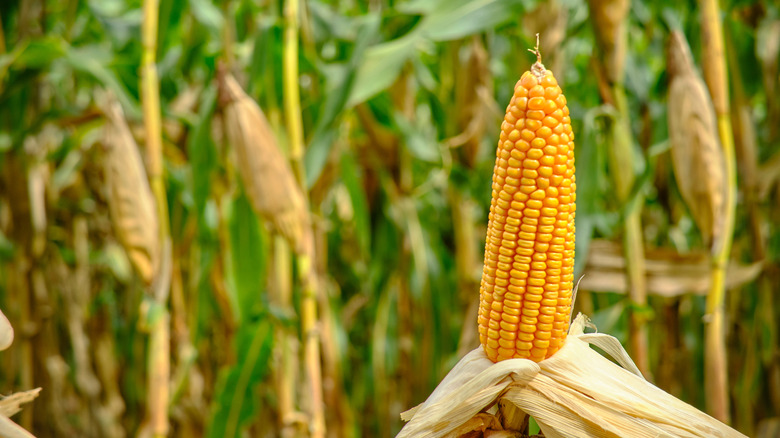
I have a hard time recommending corn in a survival garden because you need to plant a relatively large block to make it work. That's space you could allocate to far more productive plants.
Yet, I have two reasons for suggesting it, if you have the space. First, there's a case to be made for planting dent corn, aka field corn. This is the stuff that's ground to make everything from cornmeal to Cheetos, and, in my opinion, it's the most practical grain for a small-scale gardener or homesteader to grow. You don't need to labouriously cut, stack, and thresh the grain, it doesn't require special equipment, and you can plant, harvest, and grind it entirely by hand if you need to (though a powered grain mill, or the grain jar and blades for your Vitamix, are certainly handy to have). You can even nixtamalize it with wood ashes to make masa or hominy grits.
Don't get me wrong, if you have the space, and if corn on the cob is your very favorite thing, by all means grow some. You can eat it fresh, freeze it, or even use it in relishes. Alternatively, you might allocate a spot for popcorn. If hard times come in earnest, having a homegrown treat to snack on can help you keep a positive attitude, and that helps a lot.
7. Tomatoes
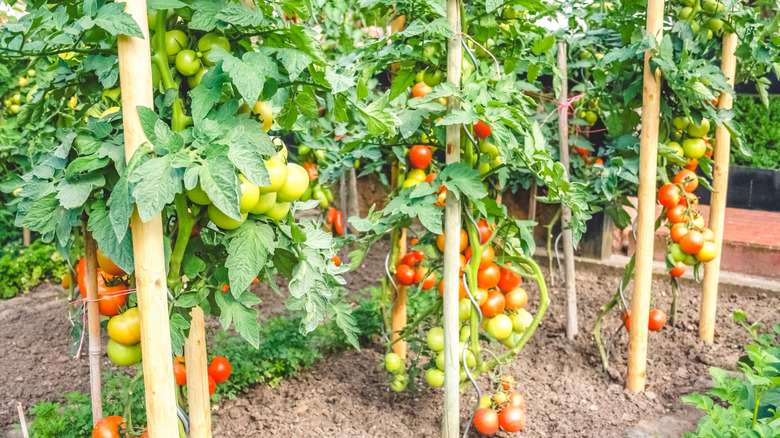
Tomatoes are hugely popular with gardeners, so you won't be surprised to find them in survival gardens as well. They earn their place on the basis of sheer productivity, because they turn out a large volume of fruit in a compact space.
There are many types of tomatoes you can grow depending on your goals. Short-season gardeners rely on determinate types, which set fruit once and then die. You really have to hustle to get them all canned, dried, or frozen, but they'll be your go-to for reliable early ripening. For other gardeners, indeterminate types keep fruiting until the frost kills them. That means they'll give you more tomatoes overall, if your season is long enough.
Even survival gardeners can grow several types — large slicing tomatoes, smaller "cocktail" tomatoes, and snack-sized cherry tomatoes — because of that productivity. You'll get the most mileage from paste-type tomatoes, which you can freeze or can as puree or finished tomato sauce or dry for snacking. I like heirloom varieties for flavor and seed-saving, but hybrids often give higher yields and better disease resistance.
8. Onions and Garlic
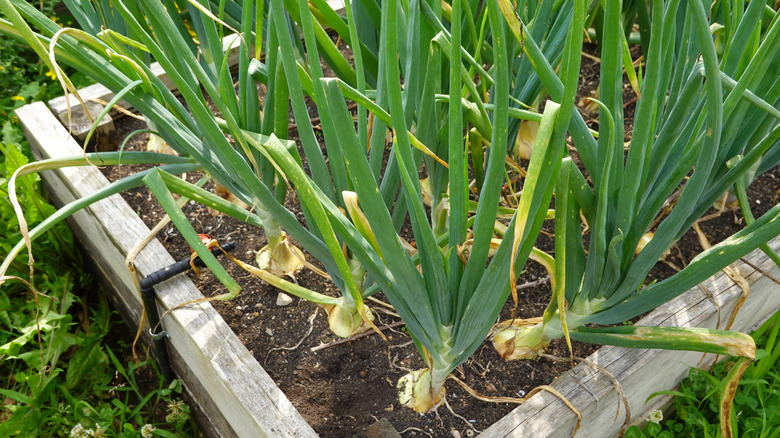
Do you think of onions and garlic as vegetables or herbs? It's something of a gray area, but whatever you call them, I think they demand a place in your survival garden.
Why? For one, plants in the onion family deter a lot of pests, which makes them excellent companion plants. Two, they're packed with vitamins, minerals, and fiber. Three — and most important — your meals will be dreary without them. Alliums don't take up a lot of space, either. I plant a single bed of garlic each fall for an early-summer harvest, which keeps my garlic-loving household supplied for the year. I also use a perennial bunching onion as a border around my cabbages and other brassicas as a pest deterrent.
Long-storage onions can stay in the ground until late in the autumn and should be harvested when their tops yellow and fall over. They'll keep for months in a cool, well-ventilated place. You can also freeze or dry them for winter use. Garlic also lasts months, and it can be dried or pureed with a bit of oil and frozen for day-to-day use.
9. Fruit and berries
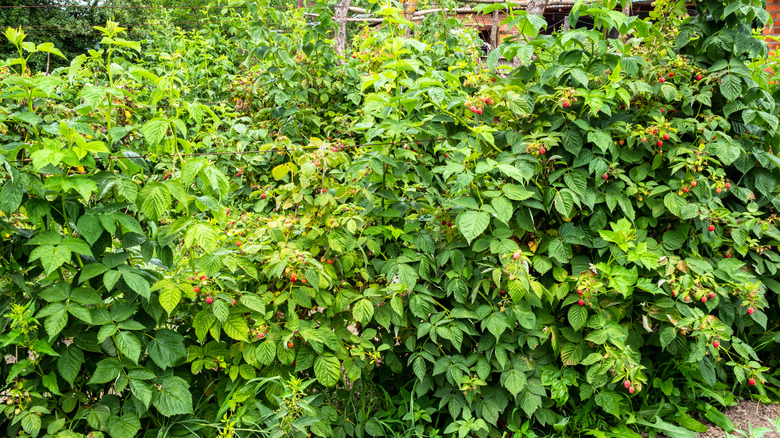
Long-lived fruits and berries bring welcome variety and flavor to a survival garden, if you have the space. Once they're planted and established, they'll reward you with bumper crops year after year with minimal upkeep required.
In a rural or semi-rural setting, you may have room for tree fruit, but even a small backyard might have room for a few berry bushes. Raspberries and blackberries are highly productive and will turn into a serviceable hedge over time. Strawberries produce "daughter" plants for next year's berries; choose a day-neutral or everbearing type for an extended harvest. Blueberries thrive in acidic soil, so they're an easy choice if your soil skews that way. All of these fruits are great fresh, frozen, in baked goods, or in jam.
One other option that's worth mentioning is rhubarb. Rhubarb is technically a vegetable, not a fruit, but it's about the earliest fruit-like thing cold-weather gardens will produce in spring. Like berries, it's a long-term investment, because one patch of rhubarb will feed your family for decades. My grandmother's post-war rhubarb was still yielding heavily 60 years later!
10. Carrots
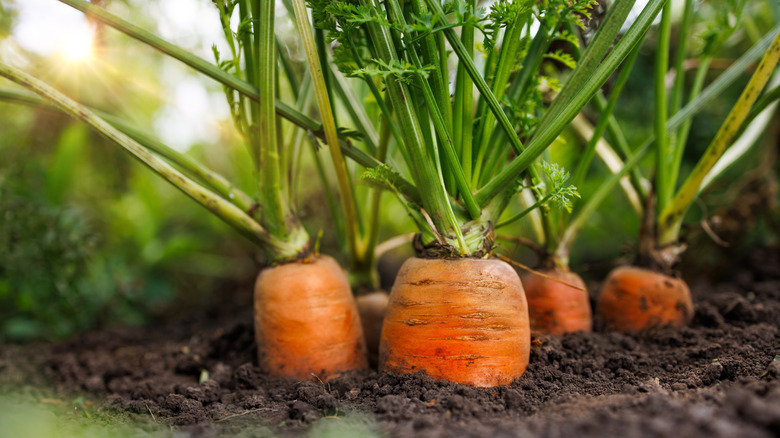
Durable staples like potatoes, onions, and carrots are controversial picks for survival gardens because they're cheap, plentiful year-round, and are often locally grown. Why not focus on costlier things?
From a strict survival perspective, carrots have a lot going for them. First, their narrow shape means that you can plant a lot of them in a small space. Also, if you plant a mixture of early-, mid- and late-season varieties, you can eat them all summer and still have lots to freeze or store in a root cellar for over-winter eating. In my climate I find long-maturing varieties the best for long storage, and they get sweeter after a touch of frost. In fact, depending on how hard your winters are, you can mulch the bed (for insulation) and keep picking them out of the ground to eat fresh.
Carrots pack a good balance of carbs, fiber and nutrients, so they're filling as well as nourishing. They can be frozen, pickled, or dehydrated for long-term storage, once the growing season is over. Also, carrot tops are perfectly edible. They have a concentrated carrot-y flavor that's great in soups or salads, and can be dried for use in herb mixtures. In a real survival scenario, you wouldn't want to waste them.
11. Salad vegetables
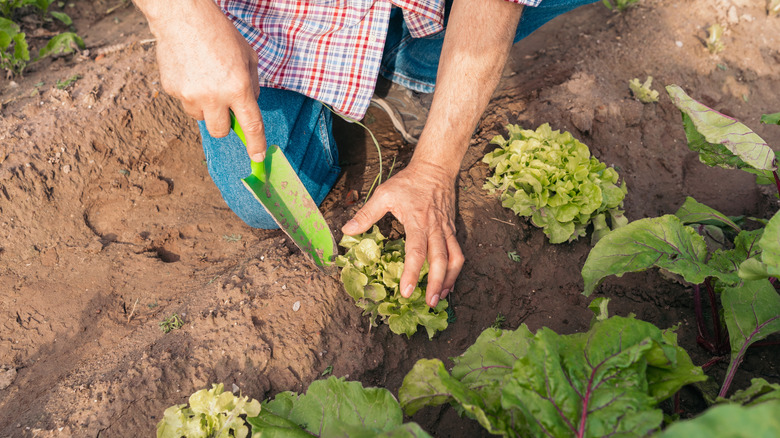
The role of salad greens in a survival garden is debatable. Some gardeners feel they don't deliver enough calories to justify the space, and would rather focus on belly-filling crops like potatoes and root vegetables.
Still, lettuces and other salad greens can fit into compact spaces around other crops and may even benefit from some shade. I seed salad greens every two to three weeks, tucking them into places like the unused spots between tomatoes. A mix of greens won't keep your belly full for a long day of work, but they provide useful fiber and nutrients to complement heftier belly-fillers like potatoes. Also, I just like them.
One benefit of salad vegetables (I include radishes and green onions in this category) is that you can grow them even on apartment windowsills and balconies. Homeowners can try "edible landscaping" by incorporating decorative lettuces, herbs, and other greens into flower beds and borders. It's a handy work-around if bylaws or HOA rules forbid using your front yard for vegetable gardening.
12. Greens for cooking
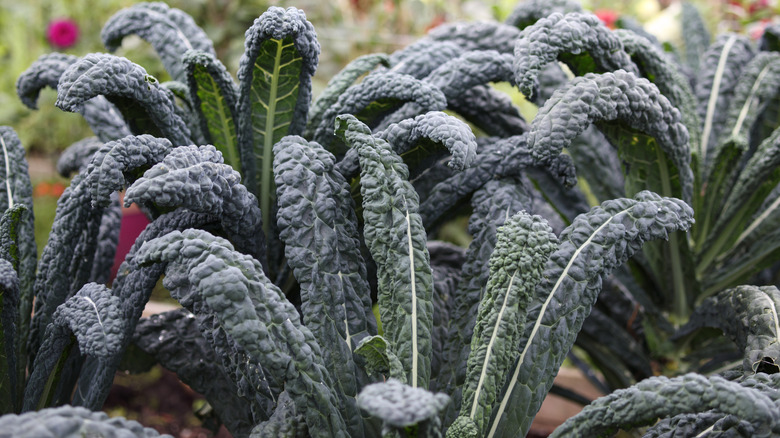
The arguments around cooking greens are much the same as those for salad greens, so I won't repeat them. My feeling is that if you like greens (and I do), then you should make room for them in your garden.
Kale, chard, spinach, New Zealand spinach, and collards are all productive options depending on your climate zone. Some stand up to summer heat and others shrug off the cold. I plant greens densely throughout my garden wherever there's space and also frequently use them to fill the gaps where a spring crop like peas or garlic used to be. You'll quickly learn which ones grow best in your location. There are multiple types of kale alone, and I usually plant a few different kinds each of kale and chard.
I harvest these on a "cut and come again" basis, taking the big outside leaves from each plant once they're about half-grown (baby kale and chard can double as salad greens, too). That seems to stimulate growth, so I get a continuous harvest all summer long. In a good year I'll put upwards of 40 pounds away after eating them all summer.
13. Tasty, reliable perennial vegetables
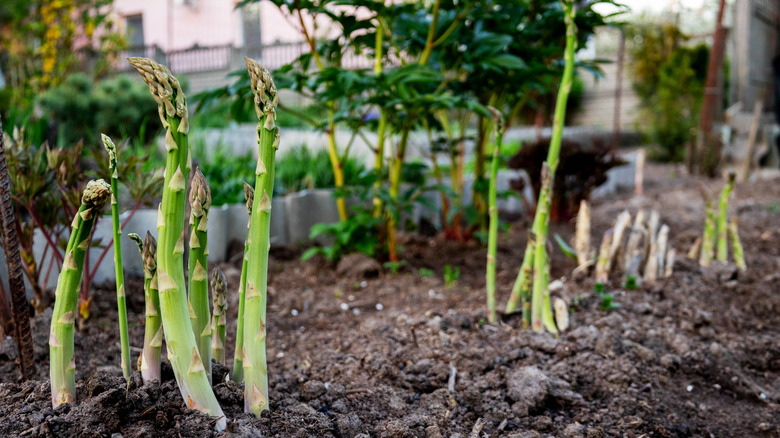
Like rhubarb, perennial vegetables are the gift that keeps giving. It's something survival gardeners can learn from the "permaculture" community, which believes in planting perennials (or encouraging the growth of native plants for foraging) for ongoing harvests.
A lot of these are common weeds, like dandelions and burdock, but there are some perennial vegetables worth considering in your survival garden. One is asparagus, which is loved as a spring vegetable. Once your bed is established, it'll yield heavily for decades to come. Asparagus has a short season, so you'll need to preserve most of your harvest by freezing, pickling, or pressure canning, if you want to enjoy it year-round.
Another is sunchokes, aka Jerusalem artichokes. They're in the sunflower family, with cheerful yellow blossoms and with edible roots that look like ginger but are potato-ish on your plate. They can be mashed, roasted, boiled, or even sliced thinly for homemade "potato" chips. They're high in carbs, so they're a good survival food. They can be prolific — it's best to plant them where they can't spread — but the combination of pretty blossoms and a high-value root crop is compelling.
14. Herbs
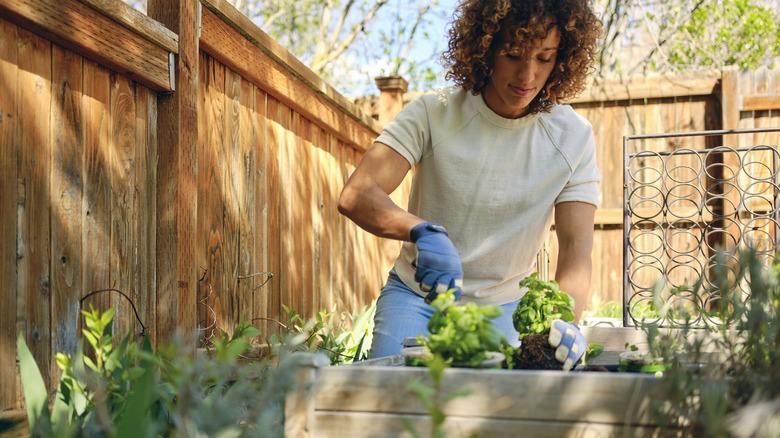
I'll finish with herbs, which — again — some gardeners won't make space for in a survival garden. That's fair if you anticipate seriously hard times and want to be prepared.
But I still feel that herbs should be part of your planning, because they don't take much space but still add flavor and variety to your meals. Admittedly, I'm a trained chef as well as a gardener, so I'm biased. But I've seen genuinely hard times, over the years and I can tell you that they're easier to bear when you can still scratch together a tasty meal.
Perennial herbs like thyme, chives, and oregano can have their own corner of your garden where they'll come back year after year. Others are annual (cilantro, dill, basil), so you'll need to plant them each year, but you can save your own seeds instead of buying them. In fact, some seeds have a place in your spice cupboard (dill seeds and coriander from the cilantro). You can even do an indoor herb garden if you don't have space for one outdoors.