

14 Kitchen Upgrades That Waste Your Money, According To Mike Holmes

HGTV star Mike Holmes comes across as a plain-spoken, blue-collar guy on his TV shows, and it's not a persona he adopted for the camera. He's the real deal: He had his own contracting company at the age of 19, with 13 employees, and now draws on over 40 years of hands-on experience in the field. He's also a longtime TV personality, with a series of shows — beginning with "Holmes on Homes," back in 2001 — that have made him a high-profile veteran of the popular renovation-show genre.
That means he knows the renovation business better than most, from the nuts and bolts of construction to factors like resale value or health risks that might not occur to a builder who doesn't look at the big picture. So when Holmes weighs in on the subject of which renovations are worthwhile and which aren't, he's worth listening to. Here are 14 kitchen upgrades he doesn't recommend, based on interviews he's given and material on his own website.
Doing cabinets and countertops only

One truth you'll quickly learn is that kitchen renovations are among the most expensive you can take on, and often take the longest to complete. That's bad, because most of us work with a tight budget and can't go without our kitchens for very long.
So a lot of homeowners decide that replacing just the cabinetry and countertop provides the best bang for the buck. That certainly will refresh the look of your kitchen and give you some nice photos to post on Instagram. But Holmes isn't a fan of this approach because of what it leaves undone and unseen.
If you've seen his shows, you know that Holmes always prioritizes the fundamentals, which is why he doesn't like this quick-and-dirty solution. On his website, Mike Holmes argues that this approach doesn't consider the underlying systems or structure. It means you could easily overlook electrical or plumbing issues, or building code violations, that could cost you big bucks in the future.
Choosing high-maintenance countertops
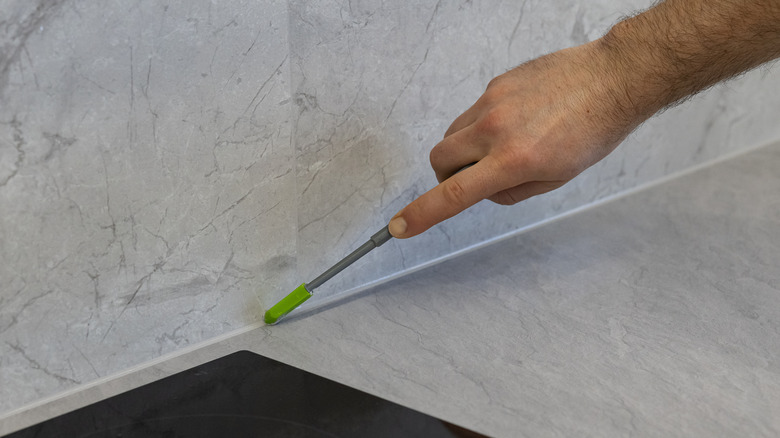
Kitchen countertops are your main workspace; they usually house a few of your most-used appliances, and they're also the biggest surface in your kitchen apart from the floor. So it's only natural that choosing a countertop is one of the biggest priorities for kitchen upgrades.
That said, it's important not to settle on a specific countertop material until you've thought long and hard about the usage it'll get and the maintenance it'll need. As you might expect, Mike Holmes has strong opinions on the subject. For example, he's not a fan of marble, despite its beauty, explaining on his website that it's a soft material that's easily scratched and stained (don't spill that glass of red wine!) and that it needs to be sealed frequently because it's so porous. That's a lot of upkeep, especially for a pricey, premium material.
He's also not keen on wooden countertops for durability reasons. Granite is better because of its beauty and durability, though like marble and wood, it requires regular sealing to keep it in good condition. Holmes himself favors quartz for kitchen countertops, because it's just as beautiful as granite or marble but requires much less maintenance. So let your heart lead the way, but give your head the final say.
Laying new flooring over old
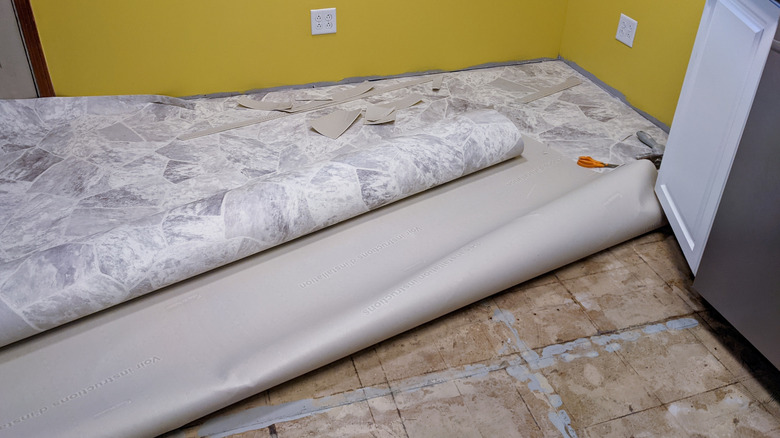
Flooring is a big cost in home renovations because there's so much of it. Your choice of flooring in the kitchen is especially important: It's a high-traffic area, pointy and heavy things frequently get dropped there, and of course, water is a concern from both plumbing and spills.
One way that homeowners might look to save some money is by cutting back on demolition. Floors are an obvious candidate for this, especially if the existing material is some form of vinyl or linoleum. It's very tempting to think of the existing floor as a sort of extra-thick underlay and put down new vinyl, laminate, or other flooring on top of it.
On his shows and in interviews, Mike Holmes frequently talks about how homeowners get into trouble by cutting corners, rushing the reno, and skipping the necessary preparations. This is a prime example of all three, so it's not surprising that Holmes calls it out specifically. Holmes recommends pulling out the old flooring instead to verify that the real underlay is adequate. Also, in older homes, there's a strong chance that your existing floor contains asbestos, and you really don't want that stuff around.
Choosing a flooring material that can't handle the traffic

There's seldom a single "best" material for any given surface in your home or kitchen. Each option has its own strengths and weaknesses, which you'll need to take into consideration. Also, there's usually a gap between what we want and what we can afford.
That kind of give-and-take looms large when you're picking a floor, because floors are large, and the cost per square foot adds up. That's why Mike Holmes encourages a focus on durability. Wood floors are susceptible to moisture, staining, and wear, for example, and kitchen spills will quickly ruin most laminate flooring. Vinyl is durable and waterproof, and inexpensive, but it's soft and susceptible to physical damage. Concrete and natural stone both give your kitchen a definite "look," but they're porous and need to be sealed regularly if they're going to maintain their appearance.
Holmes personally considers porcelain or ceramic tiles to be the best kitchen floor material, given their durability and versatility, but they aren't perfect either. They can crack and chip if objects are dropped on them, or if the floor beneath flexes. So choose something that fits your needs, your budget, and your aesthetic sense. One useful tip is to order slightly more than you need, so you'll have perfectly-matched flooring on hand for any future repairs or replacements.
Replacing the flooring without removing the cabinets

Budget constraints often dictate which parts of your "dream kitchen" actually happen and which you need to compromise on. Any opportunity to shave a few unnoticeable dollars tips the scales slightly in your favor, so those are always worth looking into.
One flooring-related compromise you might consider is running your new flooring up to the cabinets but not underneath them. Leaving your cabinets in place saves time and labor, reduces the quantity of flooring you'll need to order, and frankly, nobody's going to see it anyway.
But it's a cost-saving measure that Mike Holmes discourages, because of his focus on practicality. If there's ever a leak from your kitchen plumbing or dishwasher, the water will flow through the floor to your downstairs, where it can cause a lot of problems before you notice it. You'll also miss any existing water damage, mold, or structural issues that you'd have seen had you pulled out the existing cabinetry.
Replacing the flooring without addressing the subfloor

We've talked a lot about flooring already, but it's worth circling back yet again. Not only is it a complicated question and a costly part of your kitchen upgrade, but it's something that Mike Holmes talks about frequently.
This may be one of his biggest issues with flooring, because unless your home is new construction (and sometimes even then), your floor probably isn't quite level. Also, the older your home, the more likely it is to have problems with the subfloor, which in turn can undermine the longevity of the flooring as well as the floor itself.
Put simply, Mike Holmes notes that you can't have a good floor without a good subfloor. Yours may have structural damage or might need leveling so rigid materials like tile or stone can lie flat. Also, some popular flooring materials, including stone, thick tiles, or poured concrete, are heavy and may require a reinforced subfloor. The time to know about these things is before you spend your money; otherwise, you might soon need costly repairs.
Any non-permitted renovation
It's easy to think of construction permits as irritating "red tape" that drives up the cost of your renovation and slows it down. Not all upgrades require them, but kitchen work often involves gas, plumbing, and electrical systems. Any upgrade involving one or more of those will almost certainly require permits.
As the homeowner, it's ultimately on you to make sure any necessary permits are pulled before you start. Mike Holmes has flagged skipping permits to save time as one of the most common issues he sees on job sites. Applying for permits and then waiting for them to be issued is no fun, he acknowledges, but those regulations exist to protect you.
That brings us to another thing about permits: They're a test of your contractor's integrity. Holmes says bluntly that if a contractor tells you you don't need permits for your renovation, it's a sign you should choose someone else. It's a word of warning that he's shared repeatedly over the years. Shoddy work is potentially dangerous, in a worst-case scenario, and Holmes says there's also a risk you might be compelled to pull everything out and start over. Ouch.
A stove or vent hood upgrade that doesn't address ventilation
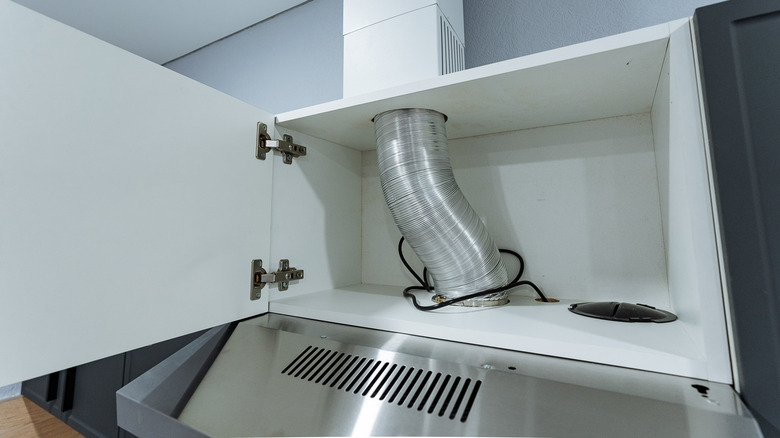
Kitchen upgrades are often driven by something specific we want, like an island or a pretty countertop. Often it's a showpiece appliance, like a bigger, more powerful range or a designer-pretty range hood.
If those last two are on your wish list, you need to think seriously about your ventilation needs. A big, high-temperature range requires adequate venting, especially if it's gas-fired: Gas stoves have come under scrutiny in recent years as a potential health hazard, and a vent hood that evacuates gas and combustion residue (as well as the fumes and spatters from cooking) plays an important role in keeping you safe. As you'd expect from a man who's known for putting safety first, Mike Holmes has a lot to say about this.
Inadequate venting is something he's ranked among his top kitchen problems, which is why he suggests getting an HVAC professional involved in your reno. The double impact of COVID and recent years' wildfires prompted a lot of us to really think about indoor air quality, so this may already be on your radar.
Cosmetic-only upgrades
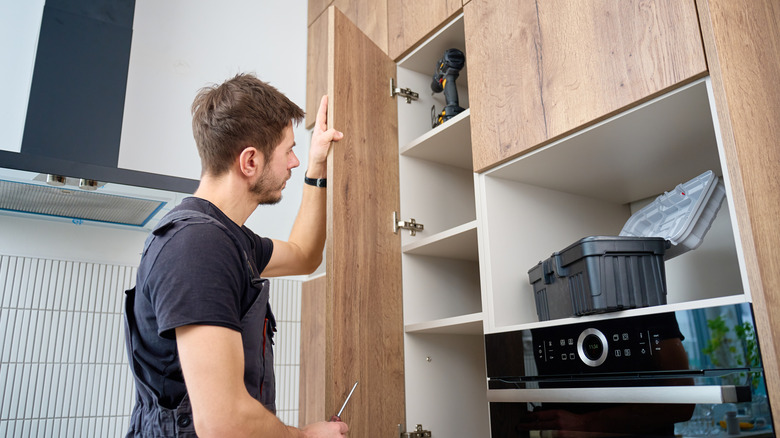
When you're overwhelmed by accumulated housework, it can be helpful to pick one high-impact spot to focus on. Making that look great gives you an immediate emotional lift, and ideally, the momentum to tackle the rest of your to-do list.
Applying that principle to a kitchen reno is understandable (they can be overwhelming!), but it can lead you badly astray, and a focus on cosmetics is the exact opposite of how Mike Holmes rolls (the slogan is "Make it right," not "Make it look good"). Putting esthetics before basic structure and functionality is one of Mike Holmes' biggest pet peeves.
Why? Above all, your house has to work. Holmes recommends having a home inspection before you start, so the inspector can call your attention to any fundamental issues like water leaks, mold, structural or electrical problems, or code violations in general. Discovering those issues after you've spent your savings, or maxed your credit line, on countertops or a new range could be disastrous. That said, Holmes encourages picking at least one tweak that's just for you. He's keen on touchless faucets, for example, which are great for both sanitation and accessibility.
Renovations that are outside your contractor's skill set

Among healthcare professionals, there's a concept called "scope of practice." In simple terms, it means you're obligated to "stay in your lane," and only do things you're trained and licensed for.
Contractors don't face the same kind of constraints, unfortunately, so only personal integrity keeps them from taking on jobs they aren't really qualified to do. Mike Holmes' career was literally built on fixing other contractors' mistakes, and this is often how they start. Sketchy or overconfident contractors will take on jobs they aren't qualified for, like electrical wiring, and ultimately, the homeowner is left holding the bag.
This can genuinely put your home at risk, especially if you let someone take out a load-bearing wall without consulting a structural engineer or architect. That's why Holmes stresses researching your contractor and making sure that any subcontractors or tradesmen your contractor uses are actually licensed or certified to do the work you're paying them for.
Changing the layout without changing the lighting
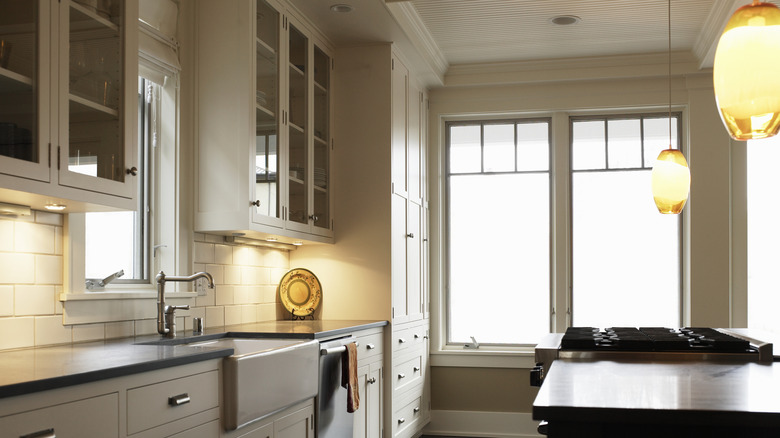
Some upgrades are relatively straightforward. Changing your kitchen's layout, on the other hand, is a major operation. You'll often need to replace the cabinetry and run new plumbing and electrical to accommodate your rearranged workspaces.
It's a really big project, in short, and with so many other details demanding your attention and money, you might not think of your kitchen lighting. When you change work areas and workflow, it's likely your existing lighting won't illuminate the new layout very well. It's the kind of oversight that can impact your enjoyment of your new kitchen, so getting it done as part of the overall renovation just makes sense.
That's why Mike Holmes considers upgraded lighting one of the top tips for upgrading your kitchen and increasing its value. His suggestions for kitchen lighting include things like pendant lights over island counters and under-cabinet lighting to illuminate your countertop work areas. Pot lights, chandeliers, and flush-mount lighting should illuminate the whole room, without dark spots. And hey, if you want an additional light or two to show off the best features of your new kitchen, Holmes absolutely approves.
Upgrades that ignore the opportunity to trim your costs
Savvy car buyers look beyond a vehicle's color and trim level and consider its total cost of ownership as well. That same principle applies to kitchen upgrades because you'll probably have your house longer than any car.
If you're contemplating a kitchen upgrade and not considering how you can use it to bring down the operating costs of your home, Holmes believes you're missing something important. So what kind of upgrades does he suggest? Well, if your reno requires opening up walls, improving your insulation is a no-brainer (and if you're buying new windows, make sure those are energy-efficient as well).
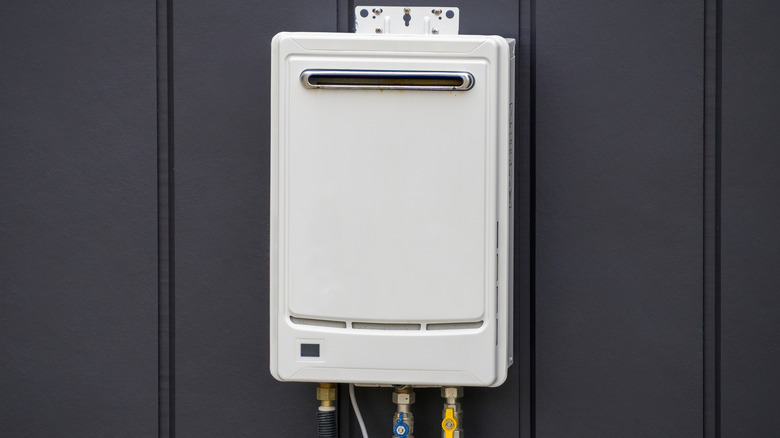
Tankless hot water heaters are another big one, and so are upgraded kitchen windows and efficient new appliances (compare Energy Star ratings and consider an energy-efficient induction cooktop). Finally, Holmes is a big fan of LED lighting because of its energy efficiency and high quality. Its upfront cost is easily outweighed by the long-term energy savings.
Going cheap on materials
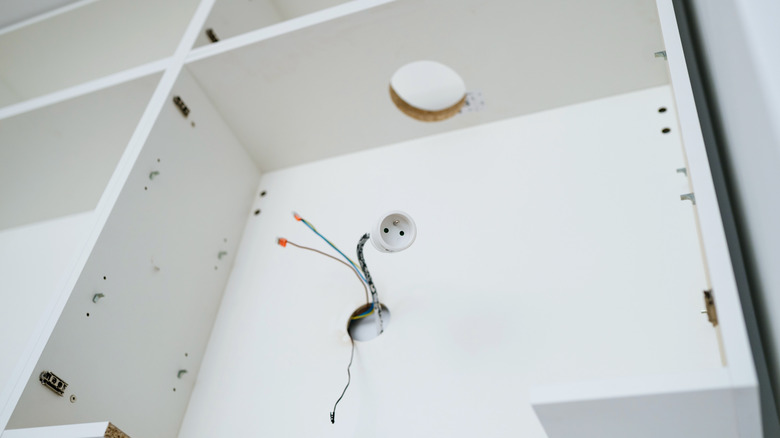
As you'd expect from a guy whose slogan is "Make it right," Mike Holmes isn't a fan of cutting corners. But most of us don't have the budget to get everything we want, so meaningful upgrades usually require some cost-cutting compromises on materials.
Holmes argues that you should prioritize using higher-quality materials where they have the most impact. In kitchens and baths, for example, where leaks and moisture are always a concern, you'll want to use lumber and drywall that resist mold and mildew. You should also give thought to factors like durability and maintenance, which will impact your quality of life for as long as you use that kitchen. Then there's the impact of the upgrade on your home's resale value, even if you aren't planning to sell. Costly materials can prove the better option, long-term, if you make back your investment on home equity.
With all of that in mind, you can make an informed decision about where you can reasonably compromise on your choices. You may find, for example, that in your case it's more cost-effective to use premade cabinetry rather than custom cabinets. There aren't any truly right or wrong answers in this process; the important part is thinking seriously about where you invest your money.
DIY projects
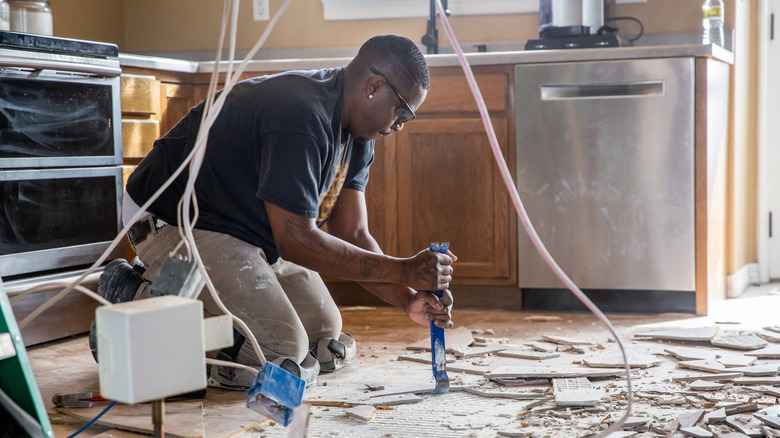
One part of Mike Holmes' "origin story" that comes up a lot in interviews is how he'd completely refinished a basement for his uncle at the age of 12. That's a pretty impressive DIY project at any age, and it definitely set the tone for his adult career.
The thing is, most of us aren't Holmes, and to be blunt, nothing about home renovations is as easy as those YouTube videos and HGTV shows make it seem. And Holmes, of course, is nothing if not blunt, saying outright that he's against DIY. It's fine if you have the time and money to learn from your mistakes, but how many of us are willing to do that? It doesn't help that kitchen renovations are so complex and include so many projects that DIYers should probably avoid.
As a contractor, clearly, Holmes is not entirely impartial in saying this. But he's probably not wrong, either. As he told an interviewer for BC Living, you should "...do what you do best, and hire someone [to do] what they do best."