

Why Mike Holmes Advises Against Marble Countertops And What He Recommends Instead

When designing your dream kitchen, countertops are one of the biggest, most impactful elements. The sheer surface area of them means they play an immense role in setting the aesthetic tone of your kitchen, from style to color. But counters are, of course, just as much about function as they are form, if not more so. How do you design your kitchen to look timeless year after year, and also last a long time, too, without noticeable wear and tear? The key is understanding your different countertop material options. Helpfully, veteran contractor and HGTV host Mike Holmes has guidance to offer here. Namely, he recommends avoiding a material that tends to be an aspirational go-to for many: marble.
It's no wonder many people initially lean toward marble when thinking about that timeless, dream kitchen design — as Holmes notes, marble counters are undeniably elegant. The problem is that marble likely won't hold up as long as its aesthetic value lasts. It's softer than comparable materials like granite and quartz. This means it's even more prone to damage, like stains and scratches. It's more expensive to begin with, and then requires regular sealing to try to stave off this wear and tear. So, you're looking at higher and more frequent costs and more maintenance if you pick marble, and those countertops may still not look as gorgeous years down the line. Assuming a material is the best pick just because it's pricey is one of the biggest kitchen design mistakes you can make.
Instead of marble, opt for quartz or granite
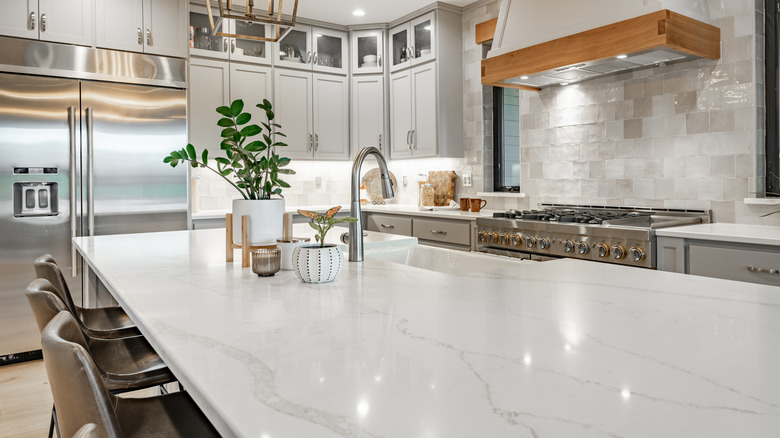
So, how do you pick the perfect kitchen countertop material? Think about the trifecta of form, function, and price, and identify the materials that hit those notes while matching your desired look.
Quartz and granite achieve a similar aesthetic to marble. Their natural grain patterns and sleek textures create a balance between modern and earthy, and you can take that in different design directions with your decor. But both quartz and granite are more affordable than marble, and they're hardier and longer-lasting. That's why Holmes suggests opting for one of these materials over marble.
Quartz is engineered stone including natural quartz crystals, and it's purposefully produced to stand up against spots, stains, residue, heat damage, scratching, and chipping. Its smooth surface even makes it hard for bacteria to hang around. Holmes says he uses quartz in most of his renovations, including in his own home. Granite, meanwhile, is a natural stone. This means it does demand sealing. But even with that factored in, it's usually cheaper than marble and will hold up much longer.
There are other great countertop material options, too, but all of them have their pros and cons. For example, Holmes likes porcelain for its winning combo of sophisticated aesthetics and durability, but he cautions that it's quite expensive and also difficult to install. If you want that gorgeous natural stone look like marble, though, granite and quartz are really your best bets.