

The Bourbon Pouring Technique Pro Bartenders Use To Unlock More Flavor
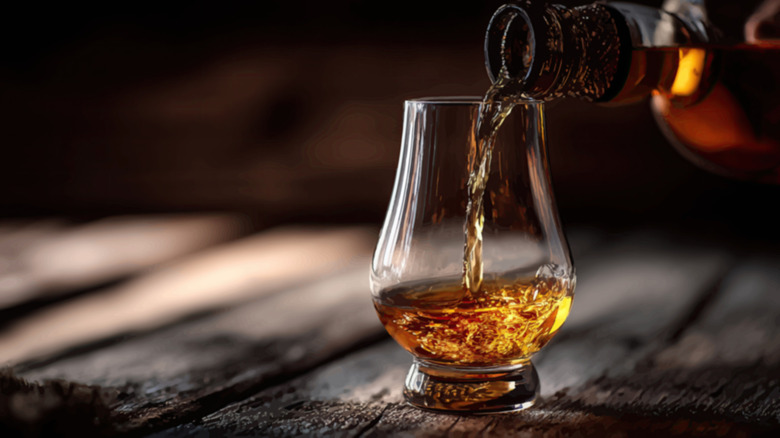
Getting the absolute best from a bottle of bourbon is not as simple as just pulling the cork and pouring away. For true aficionados, there are many factors affecting bourbon flavor and aroma that need to be taken into consideration. Everyone who has visited a distillery or been to a whiskey tasting knows the importance of choosing the right glass, but pro bartenders realize that the way the bourbon leaves the bottle can have a significant effect as well.
You may have witnessed this with someone who knows their whiskey, pouring a dram from an old or unfiltered bottle. They pour a tiny bit into the glass and then right the bottle before pouring a little bit more, possibly repeating this action as many as three or four times. What this technique does is gently agitate the contents of the bottle each time it is tilted and then righted, stirring up things like tiny particulates from the inside of the whiskey barrel as well as oils, proteins, and esters, ensuring that every glass gets a portion of these components.
Some whiskey experts believe that these particulates and compounds are integral to a complete tasting of a bourbon, but that is not the case for every expert, or, really, every whiskey. Other bourbon connoisseurs believe that any potential change in flavor or aroma from this sort of agitation is negligible at best. And this is doubly true when it comes to the type of bourbon. The other important factor in how much effect this technique can really have is whether or not the whiskey in question has been chill-filtered.
What chill filtration does to whiskey
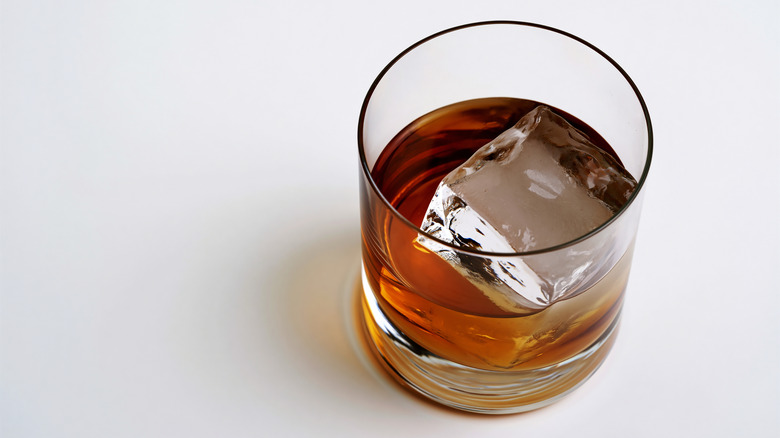
Chill filtration is a common whiskey-making process across not just bourbon, but many different varieties. Straight from the barrel, the proteins, oils, and esters we've been talking about are dissolved in the whiskey. When that whiskey is cooled or diluted, such as by dropping in an ice cube to cut the bourbon's burn, these compounds coagulate and become suspended rather than dissolved. Primarily for cosmetic reasons, most whiskeys are chill filtered by cooling the spirit and then running it through a series of filters, ensuring customers don't end up looking at their glass and wondering why their bourbon has gone cloudy.
Increased interest from consumers in the potentially more complex experience of unfiltered bourbon, however, has led to an uptick in bottles making it to market with these compounds intact. These bottles, in particular, are where you might want to try pouring in stages. Especially for bottles that have been sitting at the back of your liquor cabinet for a while — or the top shelf of the liquor store or bourbon bar — those compounds can settle out over time. A simple multi-stage pour can gently bring these compounds back into the mix and ensure that you get every possible flavor and aroma from your whiskey.
The effects of this pouring technique will vary based on who you ask. Some will tell you that with an unfiltered bourbon, it is paramount, while others think it's a waste of time. Either way, it's a good trick to have up your sleeve, and one worth exploring for yourself. Next time you pick up a bottle of high-proof unfiltered bourbon, try both pours and see what you think.