

How To Stretch Costco's $4.99 Rotisserie Chicken Into A Week's Worth Of Meals
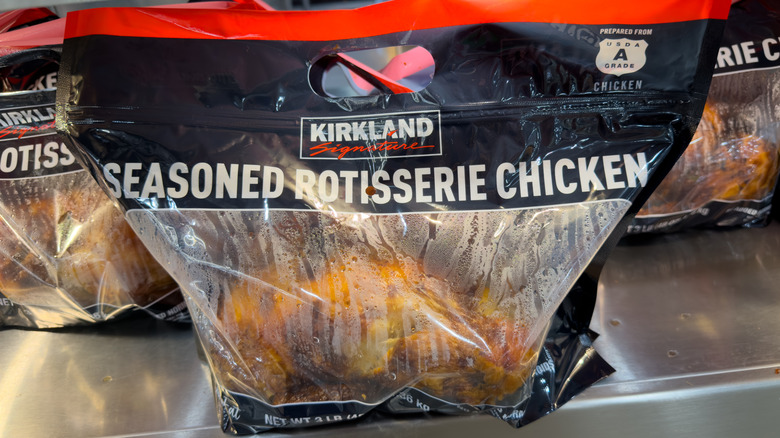
Costco's famous rotisserie chicken is one of the chain's most economical, convenient, and versatile offerings. Costing just $4.99, this thrifty buy serves as a flavor-packed and hassle-free way to add protein to your meals, with its salty, savory taste and perfectly juicy, tender texture fitting right in alongside a whole host of other foods. The appeal is seemingly endless, and it's no wonder Costco sold over 157 million rotisserie chickens in 2025 alone.
When you've unloaded your shopping, it's tempting to dig into the succulent meat right away, but it's well worth doing a little planning first. A single rotisserie chicken can easily be stretched into a variety of creative meals over the course of a week, helping you cut down on grocery costs and save time in the kitchen. By portioning the meat strategically, you can turn this trusty staple into everything from quick lunches to hearty dinners and satisfying soups. With so many delicious ways to use rotisserie chicken, it can be tricky to know where to start, but this handy guide highlights some of our absolute favorite techniques. Here's how we'd make the most of this budget-friendly bird.
Prep the meat first
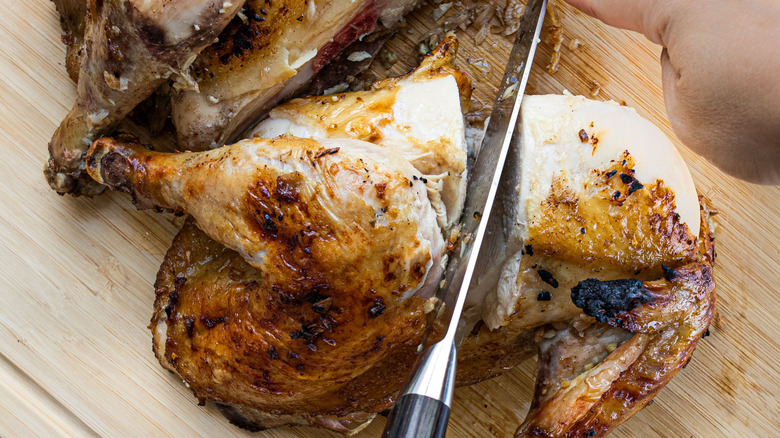
Portioning up your rotisserie chicken on the day you bring it home is the best way to set yourself up for a week of delicious meals. Once you've let the meat cool for around 30 minutes (this helps to prevent dryness), you can get to work. Start by slicing off the breasts, thighs, wings, and back section. Then, remove the remaining meat from the carcass by using a knife or simply pulling it off with your hands. You can leave the breasts and wings intact, ready to enjoy that same day. For the rest of the chicken, a good approach is to cut half of the meat into bite-sized chunks and shred the other half to give you plenty of options for repurposing later.
According to the USDA, cooked and refrigerated chicken should be consumed within four days. So, while the majority of your portioned meat can be stored in the fridge, you'll need to pop some of it into the freezer if you want it to last for the full week. Separate the prepared chicken into seven airtight containers or sealable freezer bags, placing four of them in the fridge and three in the freezer. You'll defrost the frozen chicken towards the end of the week. And, don't throw away the carcass. This will come in handy for making a rich, savory homemade broth.
Day 1: Serve the sliced breast and wings with potatoes and veggies
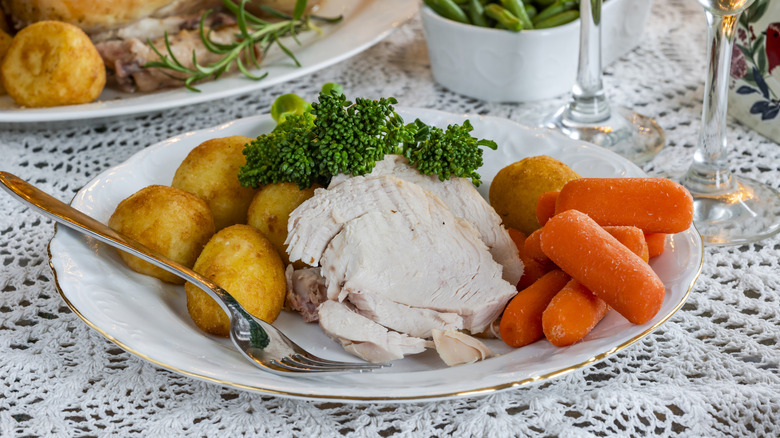
On day one, we like to make the most of that freshly-roasted succulence by serving the whole, skin-on breasts and wings with some complementary sides. By pairing the meat with potatoes and veggies, you can build a well-rounded, complete meal that's equally ideal for a quick weeknight dinner or cozy weekend feast. Standout accompaniments to the chicken include scalloped potatoes, honey-glazed carrots, and buttery steamed greens. Mashed or roasted potatoes also make for a delightfully satisfying side, and a generous pouring of chicken gravy won't go amiss, either.
When it comes to reheating the chicken, there are plenty of different options to consider. You can place the breasts and wings into a baking dish with a glug of water or broth, before covering everything with foil and oven-baking the meat until it reaches an internal temperature of 165 degrees Fahrenheit. This should take about 10 minutes. If you're air-frying, brush the meat lightly with oil beforehand to lock in moisture, then cook everything for around five to eight minutes, flipping halfway through. Alternatively, opt for the stovetop method. This involves heating the chicken in a covered skillet, again with a splash of liquid. Microwaving works well too, though this does tend to leave the skin a little less crispy, but it's nothing a quick blast under the broiler can't fix!
Day 2: Add shredded meat to tacos or enchiladas
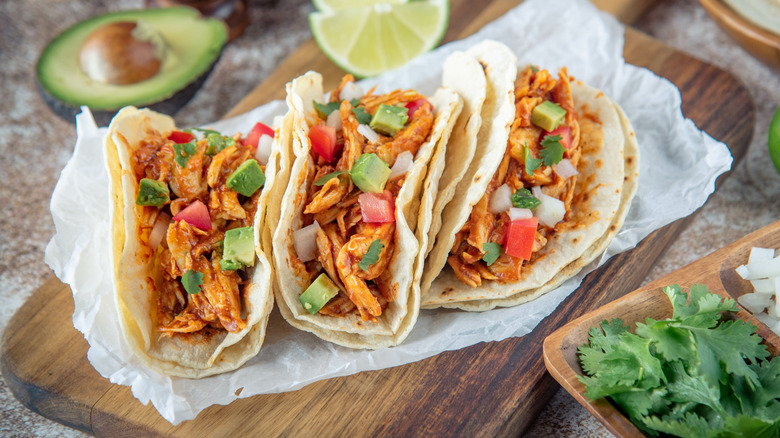
For our second rotisserie creation, we're whipping up a Mexican-inspired feast. Shredded chicken makes a fantastic addition to tacos or enchiladas, with the tender meaty morsels soaking up the flavors of bold spices and sauces beautifully. Stuffed into soft tortilla wraps with all of your favorite toppings, the chicken is transformed into a satisfying, easily customizable meal that the whole family will love.
There's plenty of room for creativity here. To give the shredded meat a spicy boost, try tossing it into a skillet with a pinch each of cumin, paprika, chili powder, and garlic powder. Adding a splash of broth or water will also help to create a slightly saucier consistency. For enchiladas, you could prep a sauce from scratch, or reach for a convenient jarred version. This can be mixed with the chicken itself, perhaps along with a scattering of shredded cheddar, and poured over the filled tortillas once they've been assembled in the dish. Toppings-wise, you can go for classic Mexican-style staples like diced avocado, tomatoes, cilantro, or a dollop of sour cream. Or, try switching things up with a fruity mango salsa, spicy aioli, or a handful of crisp, zesty pickled radishes.
Day 3: Make a hearty sandwich
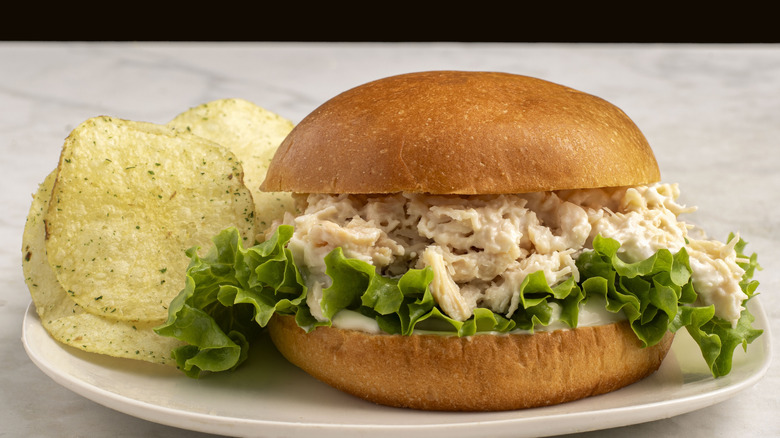
On day three, we like to keep things super simple by tossing the shredded or sliced chicken into a hearty sandwich at lunchtime. This is an incredibly popular way to use the pre-cooked meat, and for good reason. The salty, juicy chicken makes for a deeply flavorful filling, adding protein and sustenance while contrasting other fresh, crisp, and creamy ingredients brilliantly.
To build a quick, wholesome stack, pile the meat into a fluffy bun with a generous swipe of mayo and some fresh lettuce. Or, build on the savory profile by throwing in some crispy bacon. Avocado, pickles, and thinly sliced red onion will also fit right in. Rotisserie chicken tastes exceptional in a Mediterranean-inspired sandwich, too. Try combining it with pesto, mozzarella, and sliced tomatoes to create a herby, Caprese-style stack, or layering the meat with roasted eggplant and red peppers, and a dollop of hummus.
The meat can also be used as the base of a more traditional chicken salad sandwich filling. We love combining shredded rotisserie chicken with mayo, mustard, dried cranberries, and pecans and spooning the creamy, crunchy blend between slices of crusty bread. A herb-forward approach is equally delicious, with fresh dill, parsley, and garlic enhancing the chicken-mayo base to no end.
Day 4: Transform the meat into chicken nuggets

Store-bought chicken nuggets often come loaded with additives and fillers, but with the help of rotisserie chicken, you can make a far more wholesome, from-scratch batch with minimal effort. And, these homemade crispy bites taste just as great as any fast food chain version.
You'll need just two extra ingredients to prepare this dish. There's no need to dice the chicken into nugget shapes here. Instead, you'll simply mix the shredded chicken you portioned earlier with beaten egg and shredded cheddar cheese. Handfuls of the mixture can then be squashed into that signature flattened disk shape between the palms of your hands, arranged on a baking sheet, and popped in the oven. Despite forgoing the usual breaded coating, the nuggets come out gloriously golden and crisp, thanks to the inclusion of cheese in the mixture, and the flavor certainly rivals that of traditional versions.
These nuggets will go down a treat with a side of fries and a crisp, leafy salad. They're perfect for dunking, too. Keep things classic with ketchup or mayo, inject some spice with a sweet chili dip, or go for a creamy honey mustard if you prefer a sweet and tangy finish.
Day 5: Whip up some chicken and dumplings
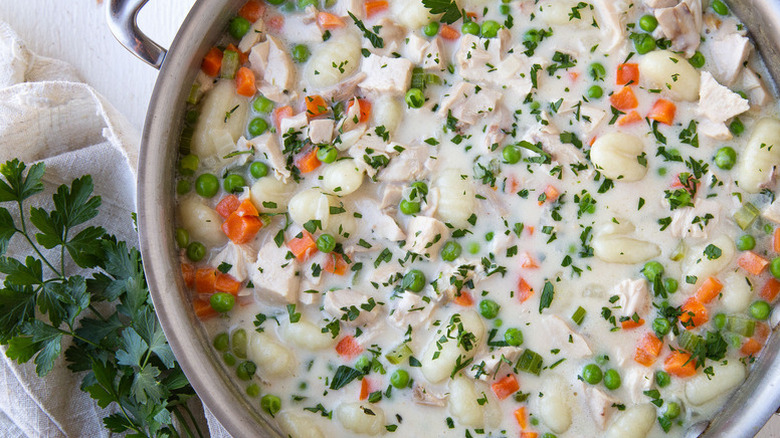
Now you've reached day five, which means it's time to start defrosting the chicken you put in the freezer at the start of the week. The easiest way to do this is to transfer the bag or container into the fridge the night before you intend to use the meat, so it can thaw slowly and safely without getting tough or dry. Then, it's ready to toss into your next meaty creation — a delightfully hearty, ultra-comforting pot of chicken and dumplings.
Using pre-cooked and diced rotisserie chicken allows you to take a shortcut approach to this cozy classic. We like to build an aromatic base with sauteed onion and celery, and add color and nutrients to the creamy broth with frozen carrots and peas. To continue the convenient theme, we use store-bought gnocchi as the carb element, rather than making a from-scratch dumpling batter. The chicken gets added towards the end of cooking, with a quick simmer in the broth reviving its juiciness.
You can absolutely pair the rotisserie chicken with the more traditional homemade dumpling dough if preferred, and feel free to experiment with other vegetables like broccoli, leeks, or green beans. Alternative cooking methods can also be just as effective, such as slow-cooking, oven-baking, or preparing the dish in a skillet.
Day 6: Craft a cozy casserole
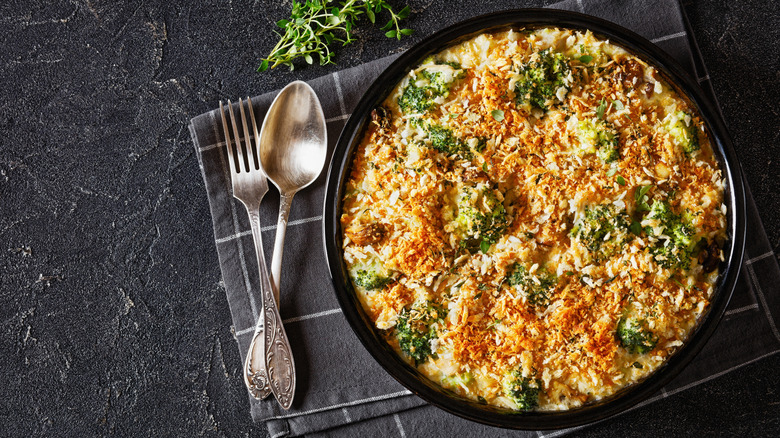
With your next batch of diced or shredded chicken defrosted, it's time to get creative with another satisfying meal, and an excellent way to use the meat is in a chicken casserole. This is a fuss-free, crowd-pleasing option, making it wonderfully easy to bulk the chicken out into a well-rounded dinner that's warming, nutritious, and guaranteed to deliver the comfort factor.
There are no set rules when it comes to crafting a casserole. You could go for a hearty Southern-style poppy seed chicken casserole, a rich, cheesy version with a crispy panko breadcrumb topping, or even a Mexican-inspired taco casserole with black beans, corn, and plenty of spice. Aiming for a creamy consistency will keep the chicken from drying out during its second round of cooking, with ingredients like canned soup, sour cream, and shredded cheddar all being ideal add-ins. Often, it's a simple case of combining the chicken and other ingredients in a baking dish and letting the oven work its magic, leaving you free to prep side dishes or get a head start on the washing up.
Day 7: Toss thawed chicken into a refreshing salad
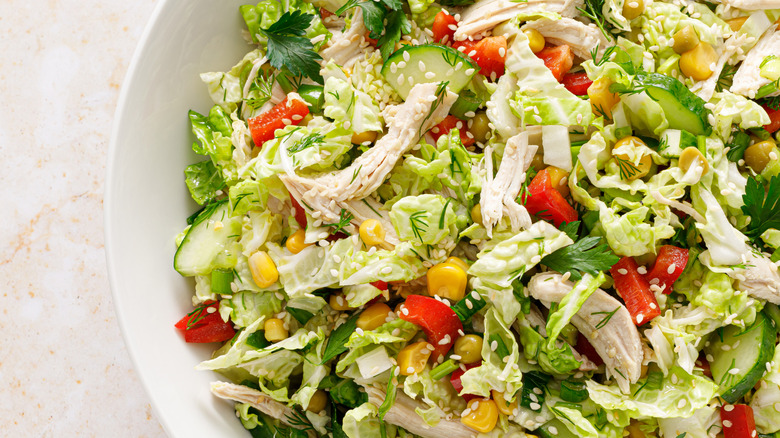
By day seven, you might be in the mood for something a little lighter, and a refreshing chicken salad is the perfect solution. Once again, this is an incredibly versatile option, so you can make things as simple or sophisticated as you wish. Either way, the chicken will bring a welcome boost of savory flavor, texture, and protein to your plate.
A base of shredded lettuce or leafy greens is always a good place to start, and this can be built upon with a whole host of crunchy, tangy, and creamy extras. Consider tossing in diced bell peppers, tomatoes, cucumber, or corn for a pop of color, or adding richness with crumbled feta or mozzarella pearls. Toasted nuts or seeds (think pecans, walnuts, or pumpkin seeds) will also work beautifully with the chicken, while fruits like dried cranberries or fresh pomegranate seeds bring a sweet-tart brightness that balances the saltiness of the meat especially well.
When it comes to the dressing, choose something that complements your chosen medley of ingredients, whether that's a zesty balsamic vinaigrette or a creamy mayo-based blend. An Asian-inspired dressing made with soy sauce, sesame oil, and vinegar will give your chicken salad an umami-rich twist, while a Greek-style mixture with olive oil, lemon juice, and oregano is great for keeping things light and herb-forward.
Don't discard the bones
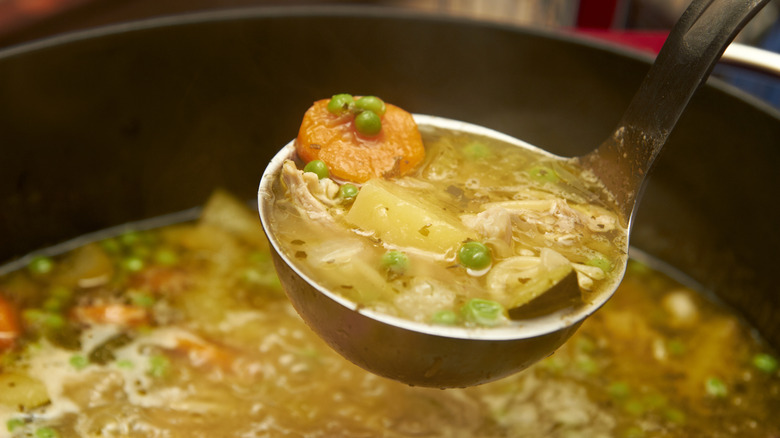
While the meat is the main event, the rotisserie chicken carcass is just as valuable in the kitchen, so don't let the leftover bones and cartilage go to waste. Instead, use them to create a deeply flavorful, homemade stock. You can either do this within the first few days after purchasing the chicken, or freeze the carcass if you'd rather save it for later. It can be frozen for up to three months, and there's no need to defrost it prior to use.
To make the stock, add the whole carcass, complete with any excess skin or gristle, to a large pot. Throw in some diced onion, carrot, and celery, along with garlic cloves and a few sprigs of fresh herbs, then cover everything with water. Adding a splash of apple cider vinegar also helps to break down collagen and draw out essential minerals as the bones simmer. After three to four hours of gentle simmering, you should have a rich, golden broth that's packed with savory depth. After a quick strain, the chicken broth can be stored in the fridge for use throughout the week, or frozen for up to three months. It makes a fantastic base for soups and stews, or you can use a splash here and there to boost homemade risottos, pasta sauces, or casseroles.