

10 Chicken Chains Boomers Miss
While these 10 chicken chains may be gone from American culture, or nearly so, boomers are still not ready to let go of the "old times." If you ask anyone who's lived through the 1960s and '70s, they'll claim those years were the golden age of American fried chicken. It's a tall claim, yet there is evidence to back it. Colonel Sanders opened the door to the fried chicken phenomenon in the '30s, starting at a service station, and as soon as it hit success, everybody with a celebrity name and a "secret" recipe decided to join in.
The sensation grew so large throughout the late 1960s and 1970s, and even through the '80s and '90s, the American fast food landscape exploded with a range of ventures that felt regional and unique in their own way. Some of these chains expanded to hundreds of locations across multiple countries and became mainstays in the lives of those who grew up during that era. Some were backed by country music legends, by comedic icons, by NFL players, and some started for a good cause.
What they all had in common was that they fed a generation, the boomers who moved through school and first jobs, and dates, and family dinners, and summer vacations at these chains. Pages like Facebook, Instagram, and Reddit are full of comments from people who experienced these chains. Most of them are gone now, but the memories remain. Here are 10 such chicken chains boomers still talk about.
Kenny Rogers Roasters
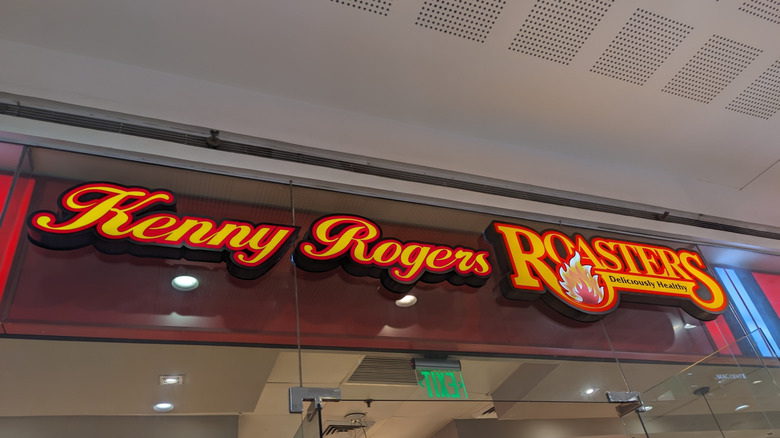
Beyond being a country music legend, Kenny Rogers also became one of the most recognizable faces in the fast food industry in the '90s. Along with partner John Y. Brown Jr., the former Kentucky governor who also helped build the KFC empire, Rogers founded Kenny Rogers Roasters in 1991. The mission was simple: compete with fried chicken by offering a healthy alternative, like wood-fired rotisserie chicken. Soon, the chain grew to 350 locations across the country, as well as Canada, the Middle East, and Asia. At its peak, even "Seinfeld" featured an episode on the popular chain, immortalizing the giant neon sign as a pop culture icon.
The success didn't last long, though. Several disputes and lawsuits followed, with one even claiming that the chain had stolen the concept from this competitor. Kenny Rogers Roasters eventually filed for Chapter 11 bankruptcy in 1998 and was bought out by Nathan's Famous Inc., which further sold it to Asian franchisee, Roasters Asia Pacific (Cayman) Limited in 2008, a subsidiary of the Berjaya Group. Despite shutting its doors in the U.S. in 2011, the chain continues to thrive in Asia and the Middle East.
In an article in theLAnd magazine, writer Kaleb Horton opens with the fact that his cousin wanted to book flights to Malaysia with one primary goal in mind: to eat Kenny Rogers Roasters chicken. Reddit threads remembering the chain are still active with comments on how juicy, smoky, and citrusy the roast chicken used to be. Comments from people from Singapore and the Philippines have confirmed that the chain is still thriving overseas.
Minnie Pearl's Chicken
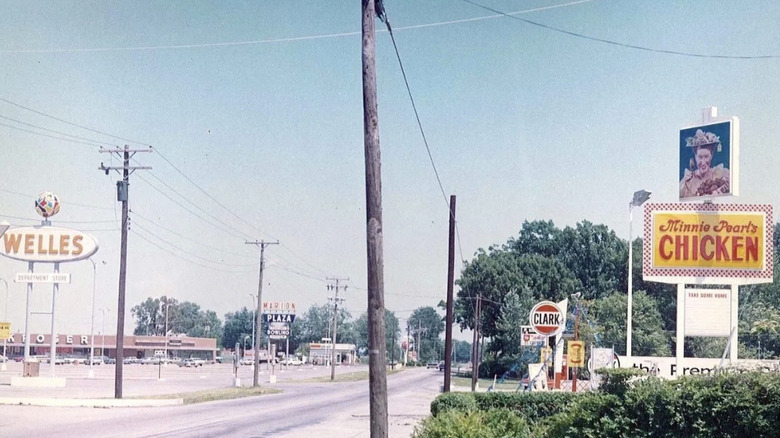
The story of Minnie Pearl's Chicken is as chaotic as the era it lived in. In 1967, Nashville attorney John Jay Hooker Jr. approached Grand Ole Opry comedian Minnie Pearl to become the name and face of a fried chicken chain. Her slogan "How-dee-licious!" became an icon in itself, countering the likes of KFC. The menu featured go-to Southern foods of fried chicken, rolls, mashed potatoes, gravy, chicken livers, gizzards, beans, coleslaw, and more. Soon, the business picked up, and the venture was projected to have over 500 stores across the country. But the house of cards didn't stand tall for long.
The SEC launched an investigation into the franchise for default accounting practices and found that it had falsely forged its 1968 annual report, claiming profit instead of losses. By the early 1970s, the company that owned the chain had disappeared, and Minnie Pearl's Chicken was off the map completely. But the people of the South and the Midwest still remember the taste of that chicken like it was yesterday. A comment from a Midwestern Facebook page stated how the user still recalls the peppery flavor of the chicken. Another user remembered going there for dinner once a week, commenting on how good the dessert specials were. The people engaging so enthusiastically with the post depict how warm and specific the memory of eating at Minnie Pearl's was.
Pioneer Chicken
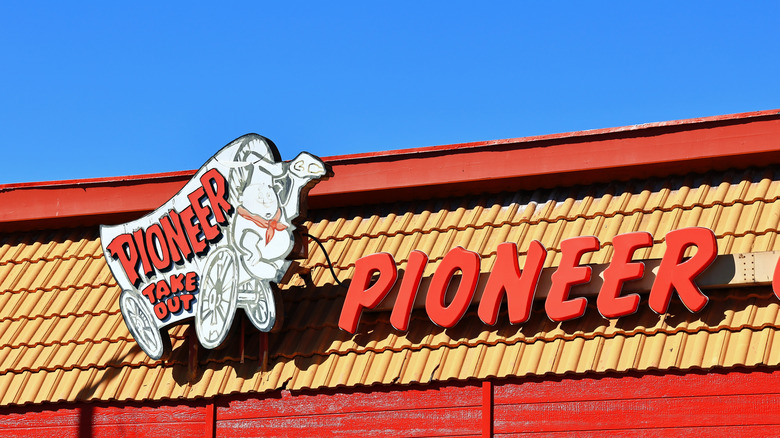
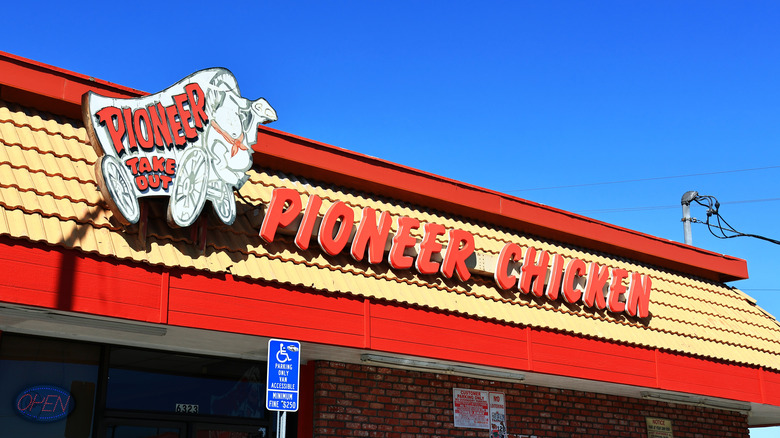
A West Coast institution of its time, Pioneer Chicken, then Pioneer Takeout, was launched in Los Angeles in 1961 by Rick Kauffman. By the '70s, the fried chicken venture had almost 100 outlets spread across Southern and Northern California. Its fried chicken got so popular that ads featuring Muhammad Ali and Kareem Abdul-Jabbar started doing the rounds. "Full House" had Pioneer boxes in its opening credits. The DeBarge "Rhythm of the Night" video was shot outside the Los Angeles outlet. Yet, despite all of the clout and celebrity backing, Pioneer Chicken continued to remain the reliable neighborhood chicken spot.
By 1993, the parent company of Popeye's acquired the brand, and by 1996, had converted most of the locations. Only two locations remain today: Boyle Heights and Bell Gardens. In his piece for theLAnd magazine, Kaleb Horton writes about wanting to fly to Indonesia with his cousin for a taste of fried chicken nostalgia. He further goes down an internet rabbit hole and finds that the iconic wagon logo is unmistakably recognizable in Indonesia despite being called California Fried Chicken there. In the U.S., the Boyle Heights location in Los Angeles has almost become a pilgrimage site for those who grew up eating Pioneer Chicken. The comments of this Instagram post are flooded with people recollecting days of visiting the original location, after school, after a tough week, after work, or simply for a taste of their delicious batter-fried chicken.
Mahalia Jackson's Glori-Fried Chicken
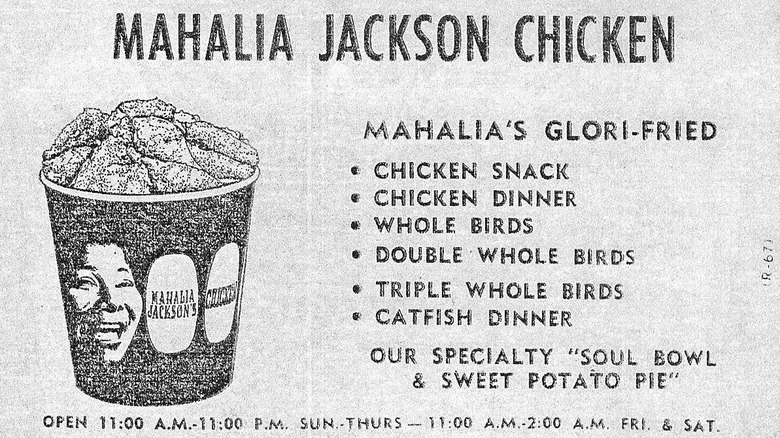
For Mahalia Jackson, a true Southern woman and the "Queen of Gospel" of the 20th century, lending her name to a fried chicken chain made complete sense. And while it was a trend to do so at that time, it was her deeply political views that made the mission of the chain resonate. A franchise system designed to empower Black communities by generating wealth. The chain, which opened in 1968, partnered with Gulf Oil to create a takeout concept at company-owned gas stations, turning them into franchise outlets. They also continued hiring people from the Black community, creating multiple job opportunities.
True to its ethos and Jackson's public identity, the restaurant's buildings resembled modern churches. Designed by architect DeBerry McKissack, it had white brick outdoors and a peaked roof. During its most successful years, the fried chicken enterprise had outlets in Chicago, Memphis, Cleveland, Detroit, Jacksonville, and Dallas. The downfall began when it got tangled in an SEC investigation looking into John Jay Hooker, who also backed Minnie Pearl's Fried Chicken. However, the years that it sustained, it stood as a roaring success. An old menu shows that the franchise had fried chicken, catfish, and something called a specialty "soul bowl and sweet potato pie." Writer Alice Randall, who grew up in Detroit in the '50s, spoke to several people who had eaten at one of these joints. She noted that none of them found the taste extraordinary, but it was the idea of Mahalia and chicken that excited most customers.
Sisters Chicken and Biscuits
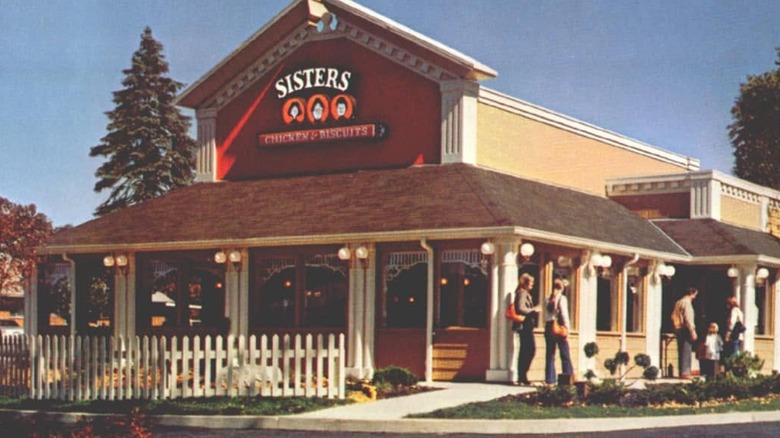
A lot of people may not know this, but Wendy's founder Dave Thomas learned the tricks of the trade from Colonel Sanders himself, naming Sanders one of his strongest mentors. So, it made sense when Thomas ventured into the fried chicken business with Sisters Chicken and Biscuits. First conceptualized in 1978, the lore goes, after opening Wendy's named after his daughter, Melinda, Thomas decided to name the new chain "sisters" for his other daughters. James W. Near and Robert L. Barney, the then president of Wendy's, created the concept behind the chain, opening its first location in Columbus, Ohio, in 1980. By 1985, the chain had spread to 79 locations, with 16 more scheduled to open.
The aesthetic was Southern-style rather than fast food chain, with white picket fences, flowers, a beautiful yard, and gas-light-style fixtures. The menu featured the classics: fried chicken, biscuits and gravy, potatoes, and even a breakfast menu. The response whenever someone brings up Sisters Chicken and Biscuits on Ohio-based Facebook groups is extremely enthusiastic, with the comments flooding with praise for the biscuits and gravy. Other noteworthy items on the menu included the strawberry shortcake, dirty rice, chicken and biscuits, green beans, and spicy chicken. A lot of users even reminisce about working their first job at the chain, with one of them claiming that the chicken-fried steak was top-notch. Some flavors have traveled through the times; you can still get biscuits as one of the breakfast menu items at Wendy's.
Chicken George
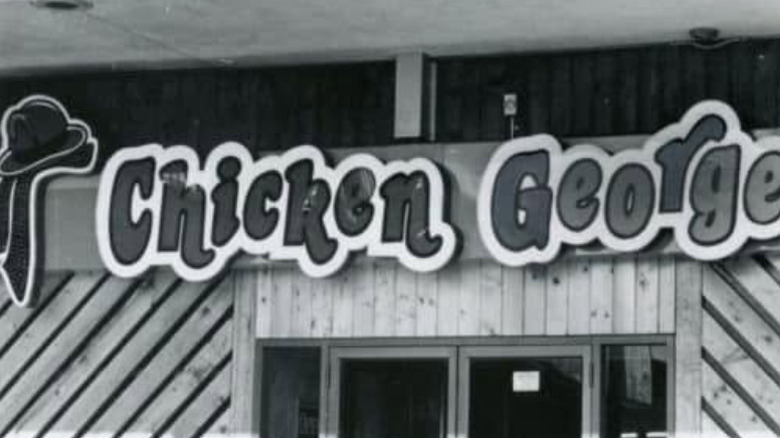
Named after the character from Alex Haley's "Roots," Chicken George was first opened in November 1979 by Ted Holmes. The character was equivalent to a viral sensation of those times, and Holmes decided to cash in. The goal was simple: Create a Black-owned chicken chain that served Black communities, employed Black workers, and opened a path to franchise ownership. The chain rose to become a Baltimore icon of those times, with the menu featuring signature fried chicken, potato wedges, fresh lemonade, cakes, as well as spicy rice, collard greens, buttermilk biscuits, and more, reflecting a deliberate, culturally-rich culinary choice.
It became one of the most popular mall food court restaurants of its time. The chain attained $14 million in sales in 1982 and expanded to Washington D.C., Los Angeles, and Atlanta before filing for bankruptcy only four years later in 1986. By 1991, the chain had completely faded out. Posts as recent as December 2025 have users taking a trip down memory lane, talking about the buttery taste of the biscuits, some good fried chicken, and the dirty rice. The Mondawmin Mall location in Baltimore, the original, is praised as one of the most frequented.
All Pro Chicken
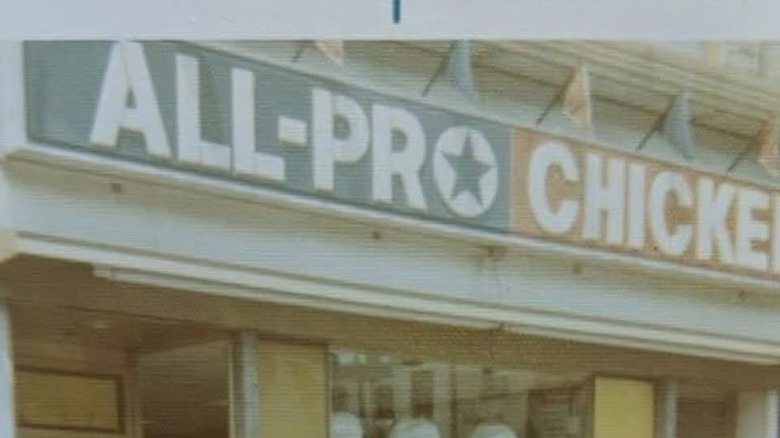
In 1967, NFL defensive back Brady Keys Jr. founded Brady Keys' All-Pro Chicken in San Diego, California. Within less than two years, the company had seven outlets and a business worth $2 million, making Keys one of the first African Americans to have a successful country-wide fast-food chain. True to its owner's identity, the chain maintained the sports theme. Keys, in an interview with the New York Times in 1969, even proclaimed his wish to be a model for Black people who wanted to start their own business.
The chain went ahead and opened over 50 franchise locations across the East and West coasts, and even entered a joint venture with KFC in 1970. Keys went on to build a successful franchising career with multiple locations of KFC, Burger King, and All-Pro before retiring the latter. People on Facebook still remember the quality of the chicken, with some commenting on behalf of their parents, reliving the old times. A former customer even commented, saying she still has her old All-Pro card. Photos of old menus and original storefronts dial up the nostalgia further, with users not only praising Keys for his enterprise but also how good the actual fried chicken was.
Holly Farms Fried Chicken
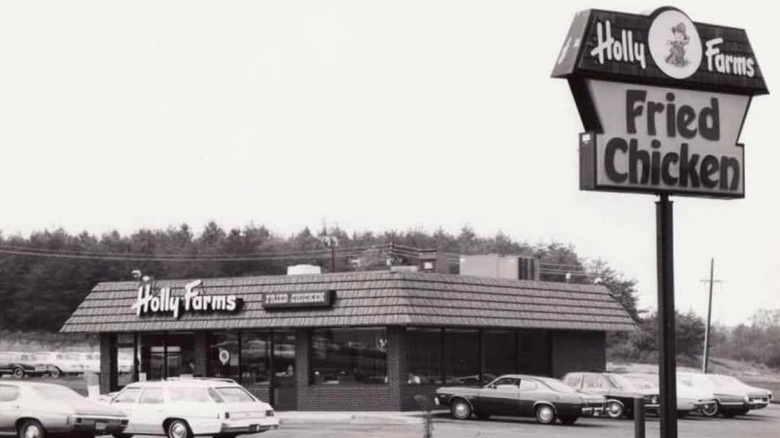
As one of the biggest names in fresh poultry back in the '60s, it made sense when Holly Farms decided to venture into the restaurant business. After all, it had the in-house farm-fresh credibility that competitors couldn't counter. At some point, it even became the official chicken sponsor at NASCAR. Alongside the traditional Southern fried chicken, served in smaller chunks or big-size buckets, the menu featured chicken livers, Holly Taters, potato wedges, gizzards, rolls, and more.
By 1984, the company already had 120 locations across the Southeast and mid-Atlantic. However, the same year, the parent company decided to shut down shop when it came to the restaurant division, and sold most of its outlets to a Texan chain called Golden Fried Chicken. Holly Farms was then acquired by Tyson Foods in 1989. In a Facebook post, users flood the comments at the mention of Holly Farms Chicken, calling its chicken livers unmatched. The potato wedges and the Holly Taters were crowd favorites. Several other Facebook posts still recall the deliciousness of the fried chicken, with a lot of old workers also indulging in a walk down memory lane, talking about working at a chain like that.
Yogi Bear's Honey Fried Chicken
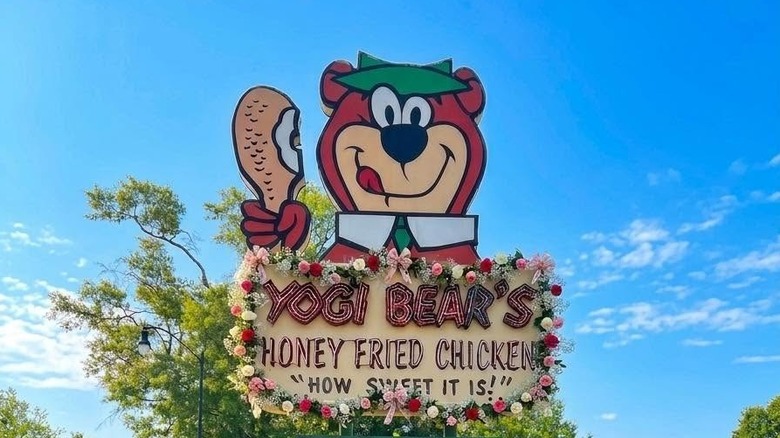
Gene Broome, a South Carolina restaurateur, was trying to build a restaurant concept based on a honey-flavored chicken tenderizer in the late 1960s. A phenomenon that immediately impressed the locals in the area. Banking on celebrity endorsement, Broome first approached comedian Jackie Gleason, the star of "The Honeymooners," to become the face of the restaurant. Gleason ended up declining. So Broome, then, created an interesting concept around the recipe, licensing the Hanna-Barbera cartoon character Yogi Bear and naming the restaurant after it. The newly themed restaurant grew to about 20 locations across the country and was designed to resemble Jellystone Park ranger cabins. Even the items on the menu were aptly named Boo Boo, Cindy Bear, Picnic Basket, and more.
Then, in 1968, Hardee's decided to join the venture, paying $1 million to buy the rights to the recipe. But it never really showed any real interest in the chain. About only 10 years later, by 1971, the chain started fading. By the late 1970s, every location had shut, except one. The original Hartsville, South Carolina, location still operates today, proudly featuring the grinning Yogi Bear out front. It's like a trip down memory lane, a food pilgrimage of sorts, for those who have fond memories of frequenting the chain while growing up. Facebook groups are brimming with nostalgic dedications written for this Southern fried chicken chain, with users praising the genius of the honey fried chicken flavor, something that still cannot be replicated, especially at home.
Chicken in the Rough
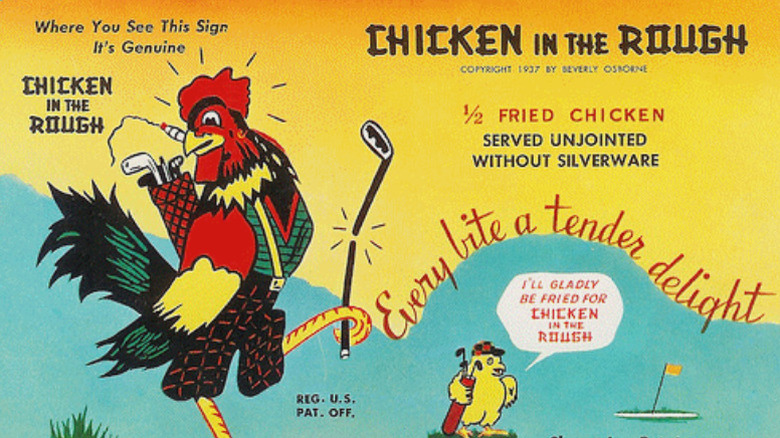
Long before KFC elevated fried chicken to cult fast food status, there was Chicken in the Rough. Beverly and Rubyne Osborne founded what would become a franchise in Oklahoma City in 1936. The idea behind the business was simple: half a chicken, shoestring potatoes, a hot biscuit, and a small jug of honey, a meal that would require no silverware. The phrase "in the rough" came during a road trip, where a bump in the road jostled the chicken basket the couple had in the backseat of the car. Beverly capitalized on the idea, turning it into the concept of the restaurant.
The logo, an angry cigar-smoking chicken in golf pants breaking a club over its knee, became an icon during those times. Franchisees were handed a strict set of rules: the chicken had to be a freshly killed, 2-pound, Grade A bird, cooked in vegetable oil that wasn't used for frying anything else. Despite everything, the Osbornes ended up selling the business in 1969, and by the late '70s, the chain had almost completely faded out. The recipe for the chicken still lives on the menu of the Palms Krystal Bar & Grill in Port Huron, Michigan. One particular blog featured a commenter reminiscing about the little pitcher of honey served along with the meal, calling it a childhood memory that has imprinted itself. That's as good a description for a nostalgic chain restaurant as any.