

9 Oldest Irish Whiskey Brands Still Available In 2026
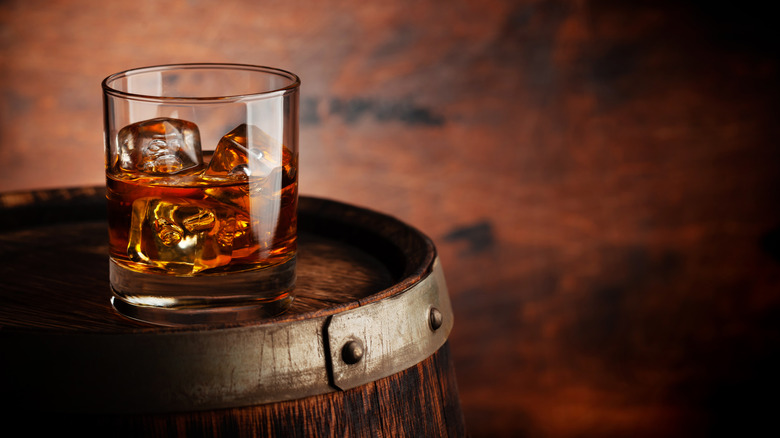
Along with rolling green hills, cheery pubs, and lilting brogues, whiskey is often one of the first things that comes to mind when we think of Ireland. The spirit is deeply entwined with the nation's history, culture, and even its language. Even the word whiskey stems from the phrase "uisce beatha," a Gaelic term meaning "water of life."
There are several different types of Irish whiskey, too, with the most common being single malt, single pot still, grain, and blended. In order to be legally labeled as Irish whiskey, the spirit must be produced, distilled, and matured in Ireland. It also has to be made from a mash of cereal grains, and aged in wooden casks for a minimum of three years.
From amateur distillers to monks producing it for medicinal purposes, Irish whiskey has a long, complicated history that stretches back many centuries. The earliest written record dates back to 1405, though many believe the Irish were making whiskey much earlier. While countless producers have come and gone since that first record of Irish whiskey, several of the country's earliest distilleries are still in operation. Unclear and unreliable record-keeping can make it tough to determine the precise dates the oldest distillers were established — those responsible for recording this history were making whiskey after all — but the following Irish whiskey brands have been churning out the water of life for at least a century.
Bushmills
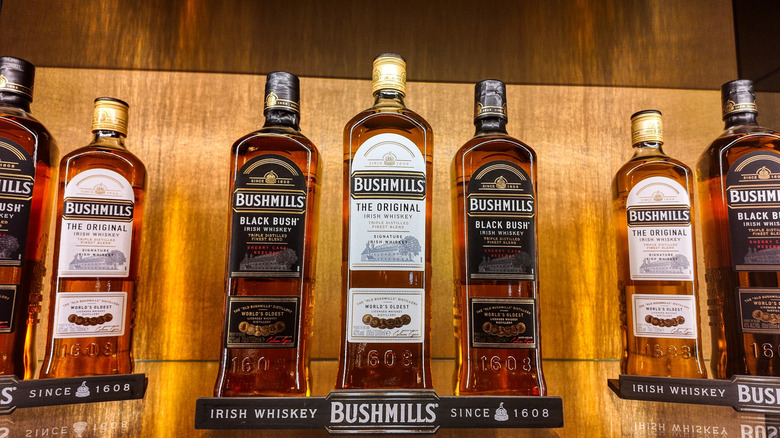
With pure waters pulsing through the River Bush, an abundance of quality grain, and numerous mills in close proximity, 16th-century bootleggers couldn't have wished for a better location than the village of Bushmills in County Antrim. Today, Bushmills bottles proudly display the date 1608, in reference to the year King James I issued the first whiskey distilling license to Sir Thomas Phillips. The company claims that Bushmills is the world's oldest working distillery, although it wasn't officially registered under that name until 1784. Regardless, Bushmills is undoubtedly one of the oldest Irish whiskey brands.
Bushmills continues to use copper pot stills, a malted barley mash bill, and water from the River Bush to create some of the best Irish whiskeys around. Its tried-and-true methodology has earned the brand countless awards, including six gold awards at the 2026 International Spirits Challenge. Bushmills offers a variety of expressions, including the classic, sweet-and-smooth Bushmills Original; the 16 Year Old Single Malt, aged in Oloroso sherry and bourbon casks to amplify the notes of vanilla, fruit, and walnuts; and the 26 Year Old Crystal Malt, made using crystal malt that lends toasty caramel and deep chocolate flavors. Trailblazers since the beginning, Bushmills continues to innovate, appointing Alex Thomas as Master Blender in 2021, and opening its entirely renewable-energy-powered Causeway Distillery in 2023.
Kilbeggan
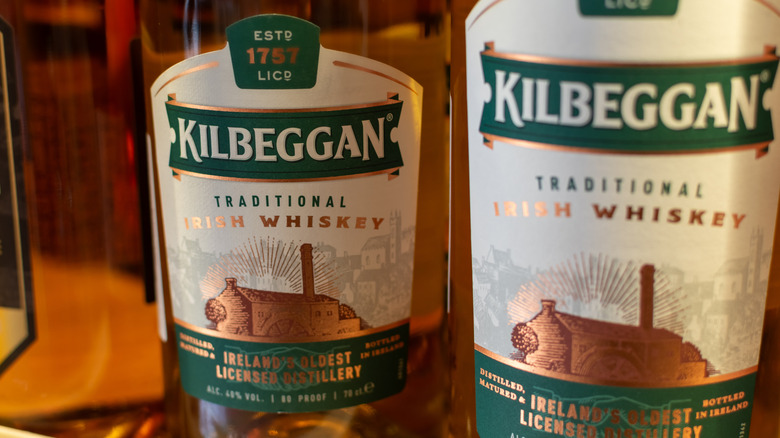
While Bushmills claims to be the oldest working Irish whiskey distillery, Kilbeggan is indisputably Ireland's oldest continuously licensed distillery. Kilbeggan was established by Matthew McManus in 1757 and has survived against all odds. It weathered the Temperance Movement in 1830, a disastrous fire in 1878, the loss of the critical U.S. market during Prohibition, various legal, political, and financial pitfalls, and multiple changes of ownership. Kilbeggan was bought by the Cooley Distillery in 1988, established a new distilling site in 2007, and was acquired by Suntory in 2012.
Kilbeggan relies on traditional distilling methods and antique machinery. The company claims that one of its stills, manufactured in the early 1800s, is the oldest working pot still in the world today. And while most Irish whiskeys are triple-distilled, Kilbeggan whiskey is double-distilled to preserve flavor and add unique character before it's aged in bourbon casks. The signature blended whiskey is clean and fresh, with strong honey flavors and hints of spicy malt and bright citrus. Kilbeggan produces several other expressions, including an outstanding single pot still whiskey, a brilliantly complex triple cask whiskey, and a unique small batch rye whiskey.
Jameson
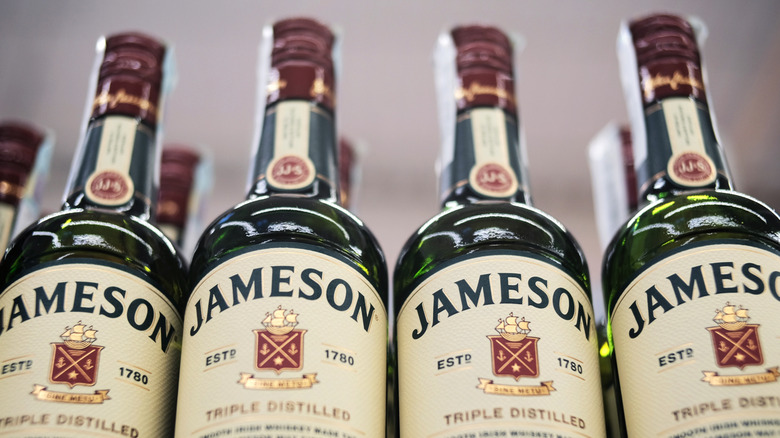
The affordability and straightforward profile of Jameson Irish Whiskey have made it a longtime favorite of casual whiskey drinkers, and the brand dates back almost two and a half centuries. Jameson was established by Scotsman John Jameson on Bow Street in Dublin in 1780. In 1785, malt taxes made distilling an expensive affair, so John began toying with mash bills that included unmalted barley. The resulting style helped shape Irish whiskey as we know it.
Ruddered by multiple generations of Jamesons, the Bow Street distillery grew and grew, at times employing hundreds of Dubliners at once. However, by the 1970s, the Irish whiskey industry was in danger. To survive, Jameson merged with John Power & Son and Cork Distillers to form the Irish Distillers group. Production of all three brands was moved to a larger, modernized distillery in Midleton, County Cork, in 1975, and Jameson is still produced there today.
Jameson uses water from the Dungourney River along with barley and non-GMO maize to produce its signature oak-aged, triple-distilled whiskey. The spirit is silky smooth, balancing floral, vanilla, woody, and nutty flavors in every drop. The company has released many expressions over the years, including the triple-distilled, triple-casked Triple Triple; its Caskmates series, featuring classic Jameson finished in beer-seasoned barrels; and Jameson Black Barrel, aged in double-charred casks to intensify flavors.
Powers
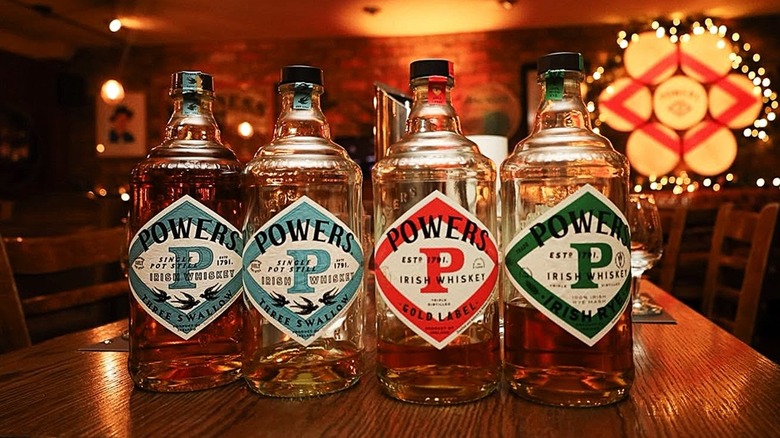
When James Power started distilling as a side business in 1791, he probably didn't expect his whiskey venture to be more lucrative than his pub, let alone for it to still be popular 200 years later. What started as a hobby spiraled into a full-blown distillery on John's Lane in the heart of Dublin. The brand has a long tradition of modernization. In 1886, Powers Gold Label is claimed to be the first whiskey in Dublin to be bottled on-site, while miniature "Baby Power" bottles were an early iteration of modern-day shooters. The company was also renowned for its fair and progressive labor practices.
John Power & Son moved to Midleton, Cork, with the rest of the Irish Distillers group in 1975, but portions of the original site remain. Powers Gold Label is made using the heart of the distillate, and Powers claims to remove more undesirable components than competing Irish pot still whiskeys. The result is a clean-tasting spirit with distinct flavors of baking spice and smooth vanilla, and a slight nuttiness. Meanwhile, Powers 12-year-old John's Lane Cask Strength bottle is said to be the truest representation of the brand's first whiskey. Powers Irish Rye Whiskey is a more complex spirit with a playfully sweet, peppery character, while Powers Three Swallow is a single pot still expression that offers a pleasant balance of fruit, citrus, and marzipan.
Tullamore D.E.W.
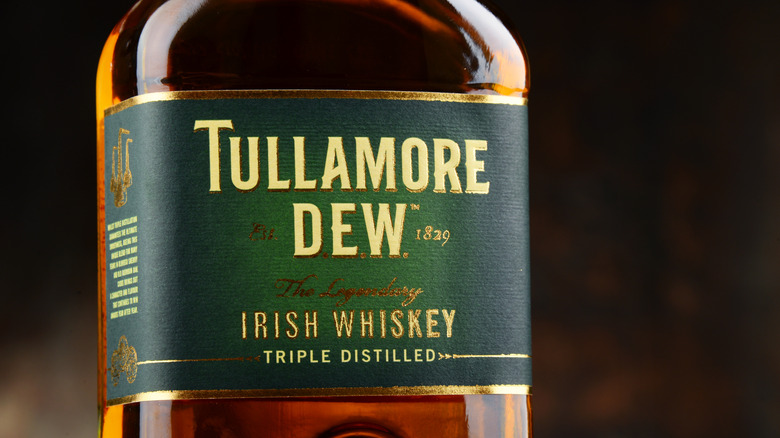
The Molloy brothers began producing Tullamore D.E.W. under license in 1829, but the D.E.W. initials belong to Daniel Edward Williams, a stable boy who joined the distillery in 1862. Ten years later, aged just 25, Williams became the distillery manager and revolutionized the operation by introducing electricity, telephones, and delivery trucks.
The business was passed down through the Williams family for several generations until 1954, when the original distillery shuttered and the brand was sold to Powers and production was moved to Dublin. In the 1970s, the brand moved with Powers to the Irish Distillers plant in Cork. It wasn't until the turn of the 21st century that Tullamore D.E.W. began to thrive again, and a new production facility was constructed in Tullamore in 2014.
Sweet, fruity, and spicy, the brand's flagship expression is a triple-distilled blend of malt, grain, and pot still whiskeys, matured and bottled on-site. Tullamore produces several additional expressions, including the 12-Year-Old Special Reserve, a 14- and an 18-Year-Old Single Malt, and a Caribbean Rum cask-finished whiskey.
Tyrconnell
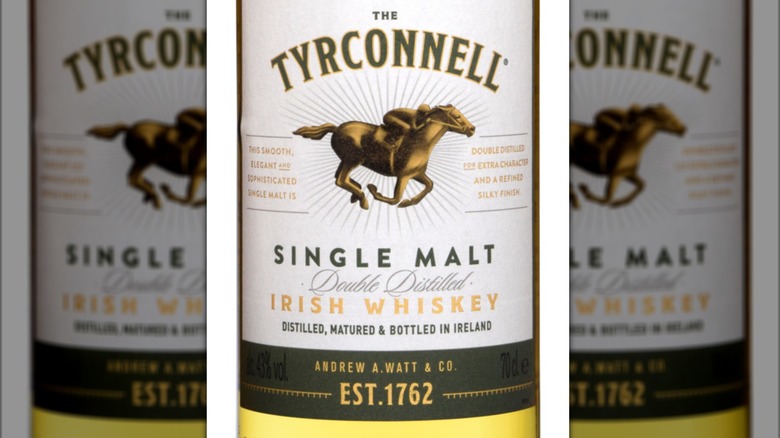
In 1876, R.M. Delamere entered his horse, Tyrconnell, into a prestigious race. Despite 100-to-1 odds, the colt won. Among the crowd was whiskey distiller A.A. Watt, who was inspired to create a limited-release small-batch whiskey in honor of the horse's shock victory. However, the spirit quickly became a top seller, and a legacy was born.
Tyrconnell became extremely popular in the United States before Prohibition, but hard times forced Watt to shutter his business in 1925. The brand was later purchased by Cooley Distillery in 1988, and slowly but surely, Tyrconnell has regained its standing in the whiskey world.
Made with Irish barley and pure spring water, Tyrconnell is a double-distilled single malt, something of a rarity among Irish whiskeys. The company's signature whiskey is a deliciously robust, oaky, and honeyed spirit, while its 10-Year-Old Madeira Cask Finish is a more complex variation with a spicier, fruit-forward profile, and the 15-Year-Old Single Cask is creamy and sweet with a bourbon-like character.
Redbreast
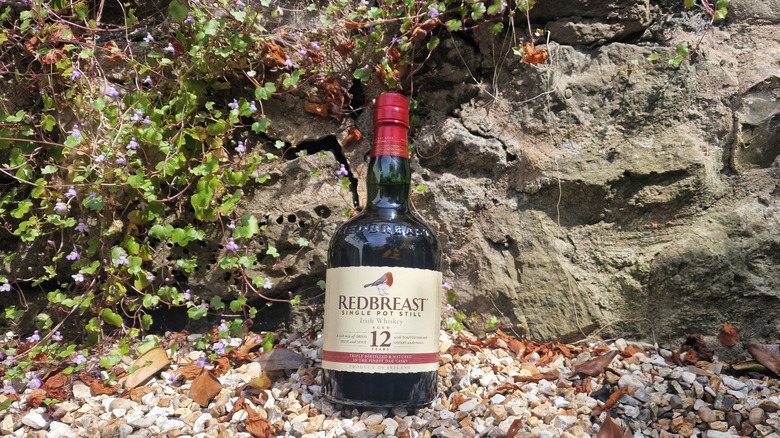
Although they've long been independent brands, there's an important historical relationship between Jameson and Redbreast Irish Whiskey. It started with Gilbey's, a wine importer established in 1857. Gilbey's partnered with Jameson in 1887 and began selling the distiller's whiskey under its Castle brand in 1903. In 1912, Gilbey's began selling "Redbreast" J.J. Liqueur Whiskey 12 Years Old in bottles that are remarkably similar to those used today. Gilbey's sold the Redbreast brand to Irish Distillers in 1986, and although production ceased for several years, the spirit made a splash upon its reintroduction in 1991.
Redbreast's flagship 12 Year whiskey is aged in bourbon and sherry casks, resulting in bold flavors of caramel, stone fruit, nuts, and baking spice. The brand's more premium offerings include expressions aged from 15 to 27 years, and Redbreast 21 Year Old is one of the most awarded whiskeys on the planet. The range also features regular limited releases, such as special cask editions that finish the whiskey in unique barrels, such as ex-Pedro Ximénez sherry butts.
Spot Whiskeys
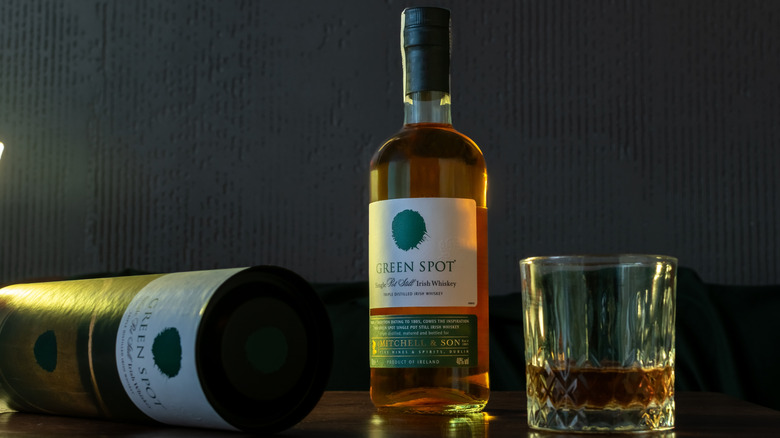
It was once common for Irish distillers to sell their whiskey to bonders for maturation and bottling. In 1887, a family-run wine import business called Mitchell & Son entered the bonding business and quickly earned a reputation for producing some of the best single pot still whiskeys on the Emerald Isle. Barrels were filled at the nearby Jameson Distillery, and marked with dots of paint to indicate maturation times. These paint spots led to the creation of Spot Whiskey, which is now produced at the Midleton Distillery.
Green paint originally indicated a ten-year maturation, but modern Green Spot is aged in bourbon and sherry casks for between seven and ten years. The award-winning liquor is ripe with notes of aromatic baking spices, green apple, and toasted oak. Though they can be harder to find, the business also produces Yellow, Gold, and Blue expressions, as well as the notoriously rare Red Spot Irish Whiskey. Red Spot is made using a family recipe dating back to the early 1900s, then matured for 15 years in sherry, bourbon, and Marsala fortified wine casks, resulting in a silky smooth spirit layered with notes of baked and ripe fruit, peppers, hazelnut, and spices. Spot Whiskeys are elusive, but if you can spot them, they're some of the best Irish whiskeys that money can buy.
Paddy
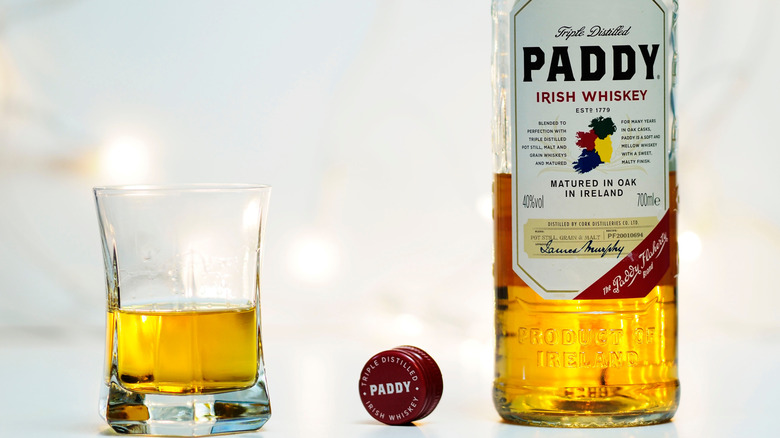
The whiskey known as Paddy's can be traced back to a Cork distillery established in 1779, where it was originally produced as "Cork Distilling Company Map of Ireland Old Irish Whiskey." The lengthy moniker lasted over 130 years, until charismatic salesman Patrick "Paddy" O'Flaherty joined the Cork Distilleries Company in 1882.
Ever the life of the party, Paddy spent more than four decades traveling Ireland, charming pub owners with his trademark wit and buying rounds of his product to win over customers. Landlords began referring to the spirit as "Paddy's whiskey," so in 1913, the name was officially changed to Paddy's.
Paddy's Irish Whiskey is triple-distilled using Irish barley and water from the County Cork countryside, and contains a blend of malt, grain, and pot still whiskeys aged in oak barrels for up to seven years. The resulting spirit is a crisp, high-malt blend with notes of cereal grains, honey, and butterscotch. Paddy's was sold to Sazerac in 2016 and it continues to see steady sales in Europe and the United States. While it's not a top-shelf liquor, Paddy's mild profile and relatively low price tag make it an economical Irish whiskey for a night of "Paddying" — embodying the congenial, generous, and fun-loving spirit of its namesake.