

Repurpose Old Cans To Start A Rustic Indoor Herb Garden
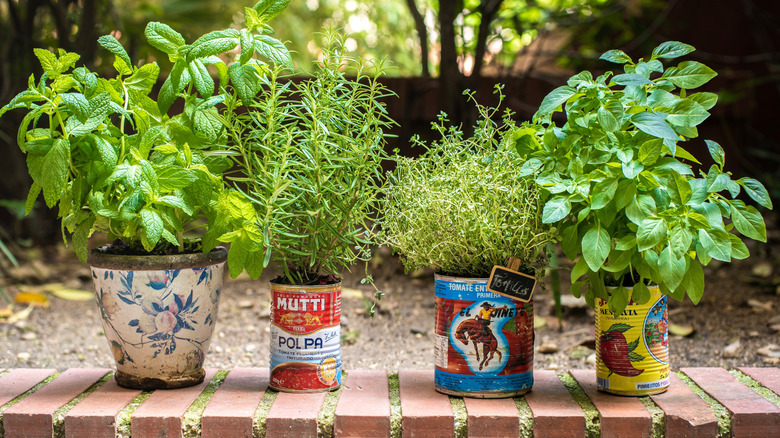
Having fresh herbs available in the kitchen is a surefire way to enhance your recipes, and the best way to ensure a constant supply all year is to start your own indoor herb garden. You don't need a lot of space or money, either. A sunny windowsill will do for most herb plants, and you can always repurpose containers you would otherwise discard as planters. While extra glass jars make great vessels for growing herbs in water or soil, old cans can be another sustainable option for creating a unique herb garden with rustic charm.
First, make sure the can is food safe. That means you probably shouldn't use cans that previously contained harmful chemicals. Wash them well to remove any residue and remove the labels, scrubbing off any leftover glue. Carefully punch a few drainage holes in the bottom using a hammer and large nail. Fill the cans with good-quality, well-draining potting mix. This is especially important since herbs don't like damp soil, and when growing in a non-porous small container like a can, good drainage is essential.
Before you plant the herbs, you can decorate the cans in myriad ways. Some cans have printed designs directly on the tin, especially those used to hold imported products like Spanish olive oil or Italian tomatoes, which would look adorable in the kitchen just as they are. Otherwise, you can paint them (be sure to keep the paint on the outside of the cans) or decoupage them — using empty seed packets would be so cool! You can also wrap them in natural twine with help from a glue gun for a rustic countryside look. If the cans are rusty, use that to your advantage! Lightly sand any loose rust and proceed to decorate as you like.
Tips for choosing, harvesting, and caring for your can garden herbs
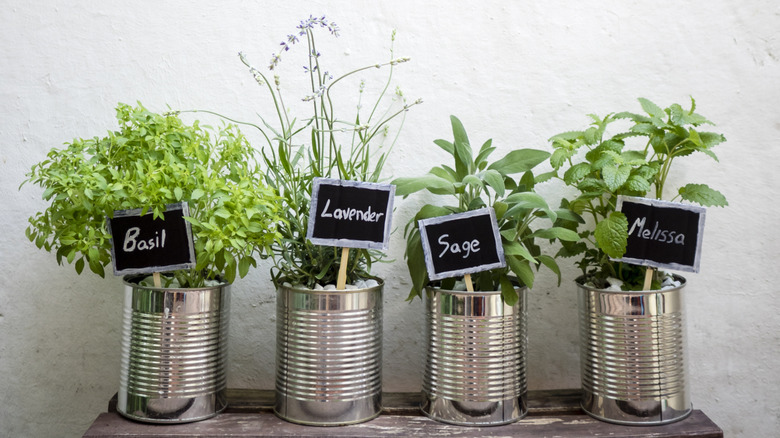
When choosing which herbs to grow, pick ones you use often, as you will need to prune them. Pruning herbs is important, as this will keep them growing bushy and attractive while staying productive. When harvesting, cut sprigs right above a set of new leaves (known as a node) to encourage branching. This is especially useful to ensure a good basil harvest, but it provides similar benefits for most herb plants.
Place your herb tins on a sunny windowsill, preferably where they'll get at least six hours a day. Give them a quarter turn whenever you water so they grow evenly on all sides. Water only when the top inch of soil feels dry, and put a tray underneath the tins to catch any water that may drain, discarding the water so the roots don't get waterlogged. Some herbs, like basil and parsley, do well with more moisture in the soil, but others, like rosemary, thyme, and sage, prefer drier soil.
Look for compact varieties if possible. Some suggested varieties include Spicy Globe or Greek mini basil; Blue Boy rosemary; Italian oregano; Windox Box sage; Extra curled dwarf parsley; English, lemon, or silver thyme; and regular or garlic chives. If you'd like to grow herbs for a cozy indoor tea garden, look for Roman chamomile, ginger mint, and lemon balm. For the latter two, you might need to prune more often, as even compact varieties are fast growers and can spread.
It's important to note that the larger the can, the better the herbs will thrive, as roots like space to grow. Coffee cans are ideal, but you can also use 28-ounce food cans. Ask your neighborhood restaurant to save their empty food service cans for you, such as gallon tins of olive oil or #10 cans of ketchup. Keep your eye open at garage sales and thrift shops for vintage tea tins, too.