

Don't Reuse Containers In Your Vegetable Or Herb Garden Unless They Meet This Standard
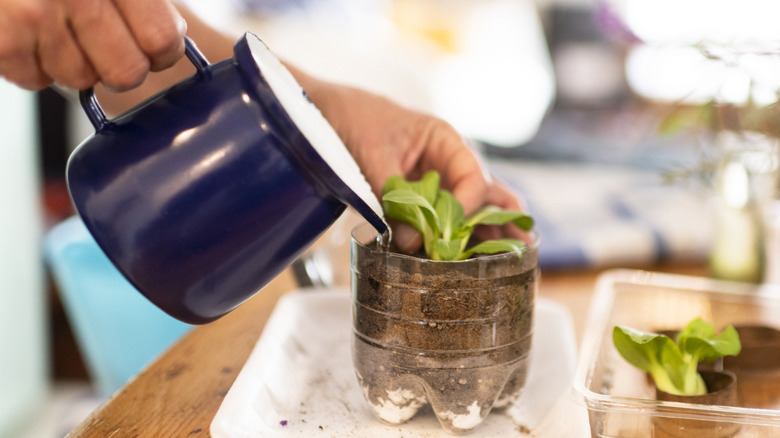
Container gardening has been having a moment, and thrifty foodies can assemble a totally recycled container garden from plastic fruit containers, extra glass jars, or even old muffin tins and colanders. With a little imagination, there's no need to shell out $20 or more on a dedicated planter. However, just any old, random plastic tub with a hole drilled in the bottom is not going to cut it. Make sure that the containers you use as planters are made of food-safe material and never came into contact with toxins.
Avoiding toxins is especially crucial when planting an edible garden. Any harmful chemicals in the container are liable to leach into the soil and up the roots of your veggies or herbs. Was that vintage enamel coffee mug decorated with lead paint? Did that roomy plastic container once hold an unsafe chemical that you might not want to ingest? Even after a thorough washing, chemical and cleaning-agent containers can contain antimicrobial coatings or stabilizers. Similarly, steer clear of ceramics with excessive signs of wear, which can be a warning sign of leachable lead contaminants. For this reason, it's also a good idea to pass over cute antique planters from thrift stores (some of which are even made from asbestos).
In order for a material to be classified as "food safe," it must not contain any harmful chemicals including cadmium and lead, and must be suitable for direct contact with food. In the grocery store, these standards help ensure that food packaging does not carry harmful substances or allow bacterial growth that could impact consumer safety.
Use food-safe materials for recycled container gardening
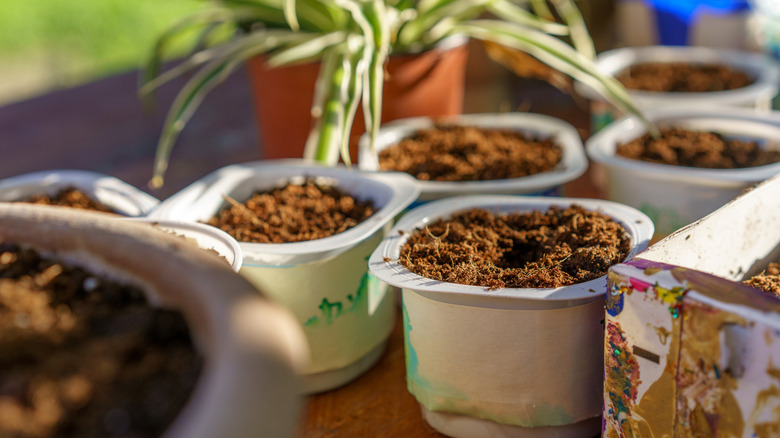
As a general rule, if your food has already come into direct contact with a container in the grocery store, then it will be safe for use in your edible garden. Empty yogurt, butter, and frosting tubs make ideal repurposed planters. Just be sure to avoid any plastics made with BPA, as well as food packaging made from plastic #7, which contains polycarbonate. The plastics labelled with numbers 1 through 5 are considered to be safe. However, avoid any with a number 3 or 6, as they contain toxins including lead and styrene.
Lightweight and flexible, polyethylene (PE), polypropylene (PP), and polycarbonate (PC) plastics are widely-used and approved to come into direct contact with food. Glass, lead-free ceramic, and stainless steel are also all food-safe materials. Although, when it comes to container gardening, malleable plastic boasts the advantage over harder materials of being able to get poked with drainage holes. Some veggies and herbs, such as rosemary, require well-draining soil. But, if you're planting crops that prefer wet soil — such as carrots, beets, radishes, mint, and chives – then metal loaf pans, old enamel teapots, and glass coffee carafes can all be enlisted as kitschy, functional planters.
Planting larger crops, like fruit trees or tomato plants? A Reddit thread in r/gardening recommends hitting up your local sandwich shop or burger joint. Many of these establishments receive their pickles in five-gallon buckets, and they may give you the empties for free. Plus, foodies can feel confident that those buckets are made from a food-safe plastic grade, since the bucket already came into direct contact with the pickles.