

12 Ways For Beginners To Identify High-Quality Whiskey
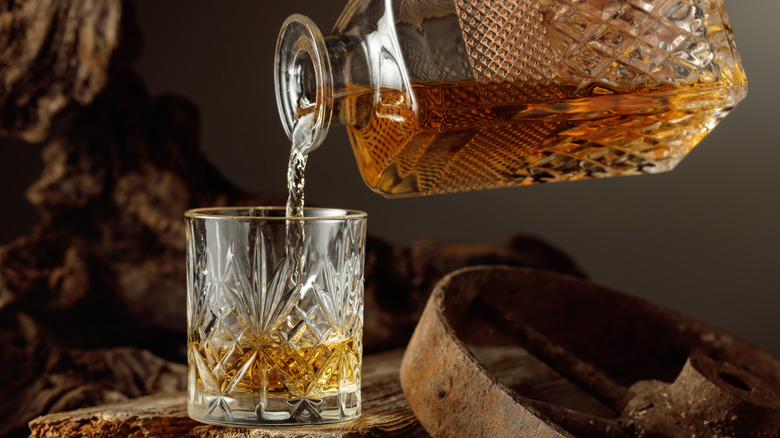
If you're exploring whiskey, it can be a little intimidating at first. There are seemingly countless bottles on store shelves, and it's difficult to know what to choose. When it comes to tasting, without experience, it can be hard to tell the good from the bad. How are experts able to do this while making confident judgments? In terms of my own expertise, the answer comes from many years of acquired knowledge, speaking with industry experts, and tasting all kinds of whiskey. I have around two decades of tasting experience and have sampled a huge number of bottles in that time. Along with studying and writing about whiskey, it gives me a clear insight into what makes a good bottle.
Thankfully, you don't need decades of experience, as there are a few shortcuts that allow you to quickly identify high-quality whiskey. As you'll see, these tips aren't perfect, as they come with plenty of nuance. Instead of treating them as gospel, it's best to see them as a crash course before you develop your own expertise and experience. Very few whiskey rules are absolute, but knowing some basic signs can point you in the right direction.
Here, I'll begin with factors that you can use to evaluate bottles before making a purchase, and then switch to tips to help you better understand the tasting experience. By the end, you'll have a great base of knowledge you can use to find those high-quality bottles.
Seeing the whiskey isn't blended
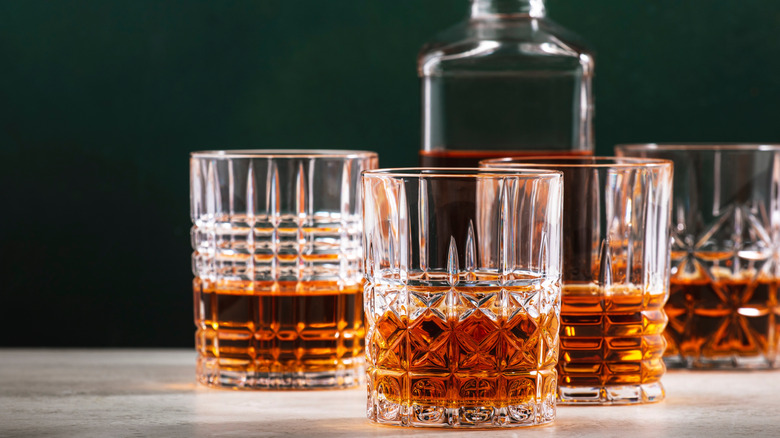
One of the quickest ways to see if a whiskey is high quality is to see if it's blended or not. A large proportion of the low-cost, mass-produced bottles available are blends. These are designed to be simple yet consistent, appealing to those who just want to buy alcohol to have with a mixer. Quite often, they'll be made with cheaper ingredients and a simpler manufacturing process. For the consumer, this can be a good thing as it means these bottles can be sold cheaply. Yet, this isn't what you want if you're looking for a high-quality whiskey.
Now, this doesn't mean that blended whiskey is automatically bad. As stated in the introduction, it's important to appreciate the nuance here. There are many blended whiskeys out there that can be outstanding and outperform non-blended bottles. Johnnie Walker Black Label is a hugely popular whiskey that happens to be blended, and it's one of many examples. But it's hard to know what you're looking for in this respect. As you develop your whiskey knowledge, you'll learn that blended whiskey shouldn't be dismissed. But, for now, avoiding it gives you a better chance of getting a high-quality whiskey.
Look for an age statement or legal designation
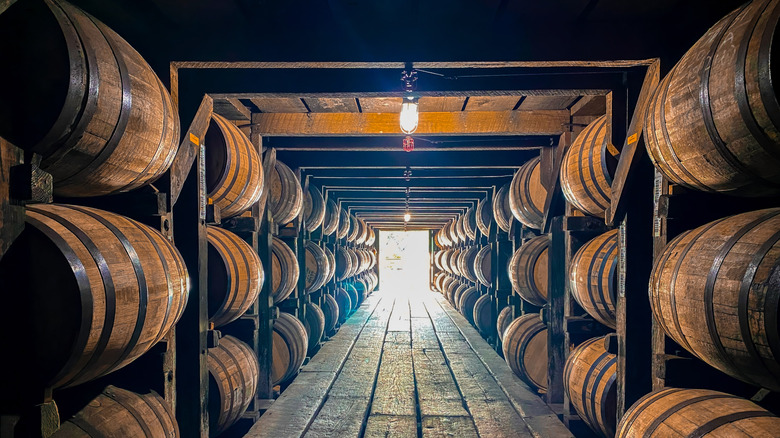
Age is perhaps the most nuanced aspect of whiskey. The reality is far more complex than age equals quality, but it's a useful assumption to start with, as a whiskey should have at least a few years of aging. The reason I've said "or legal designation" in the title here is that you can spot a minimum age without a number. Something can be sold as "bourbon" regardless of whether or not it has been aged. But "straight bourbon" needs to be aged for at least two years, and "bottled-in-bond" bourbon for at least four. At the very least, make sure you're getting "straight bourbon." Similarly, "Scotch" must be aged for at least three years. It's the same story for "Irish whiskey" and "Canadian whisky".
Due to it aging faster than other whiskeys (mainly due to the Kentucky climate and the use of new barrels), you may notice that many bourbon brands don't use an age statement, so don't be put off by that. There are many intricacies to this. For example, Maker's Mark is thought to be around six or seven years old, but it doesn't state that on the bottle. Nor is it bottled-in-bond, as there are other rules to follow for that designation, such as being 100 proof. I've tried not to overcomplicate it too much. But at the minimum, look for a legal age marker, as that ensures it meets a basic standard of quality.
See if it comes from a reputable brand
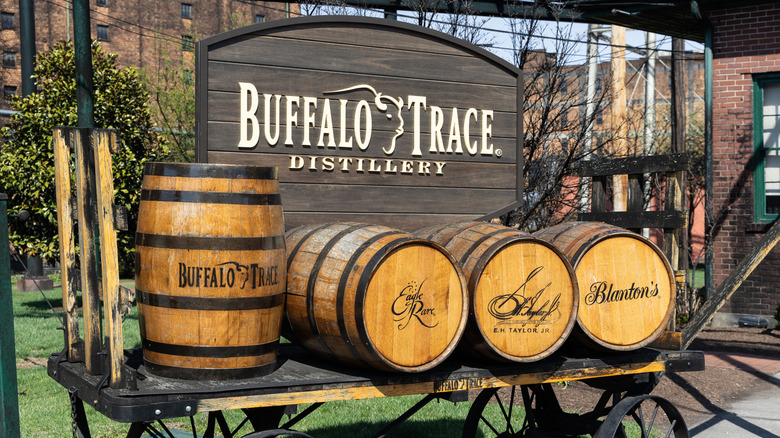
There is a lot of joy to be found in lesser-known brands. Sadly, there is a lot of slop as well. Established distillers have earned their reputation through decades, or sometimes even centuries, of commitment to standards. A gargantuan brand such as Jack Daniel's would have a lot to lose if it started messing with its core product. Great distilleries such as Buffalo Trace pride themselves on having a strong lineup of brands. Customer trust is important for these companies and, for the most part, they deliver. What you get is reliability and consistency, even if they aren't always the most exciting or adventurous bottles.
If you're getting into whiskey, it can be a good idea to look into the offerings from one renowned distillery. I mentioned Buffalo Trace there, but there are a few other examples, such as Heaven Hill. For Scotch, you can look at what the big names, such as Glenfiddich and The Glenlivet, have to offer. That brand that you don't know could be a hidden gem. Yet, it might be a bottom-shelf bottle of glorified moonshine. Sticking with brand reputation is a risk-reduction tool. It's the safe, shallow end before you venture into deeper waters.
Check it's not flavored whiskey
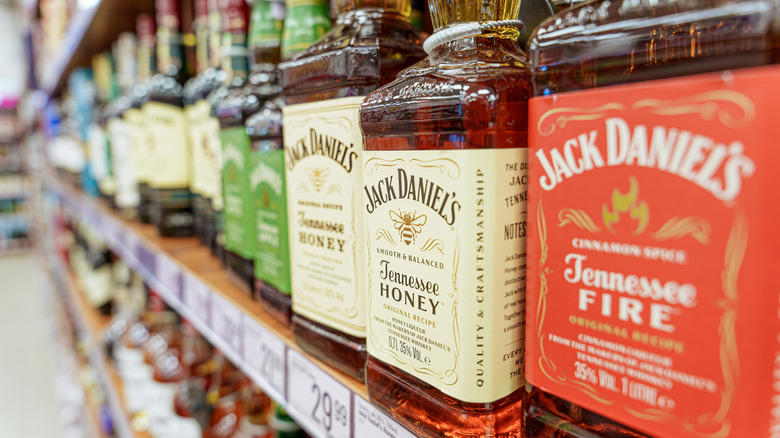
Flavored whiskey can be fun, but it's a different product. Jack Daniel's is a good case study here as it has an excellent range of flavored whiskeys along with its other expressions. For example, Jack Daniel's Honey is lovely, but it's 70 proof, so technically it's a honey liqueur and can't be labeled as the likes of Tennessee whiskey. While it's a bottle I'd recommend for anyone interested in such drinks, it's not something I'd recommend for anyone wanting to sample high-quality whiskey.
True whiskey has nothing added to the flavor at all. A high-quality whiskey will stand on its own, ready to be judged solely on the craftsmanship of the distiller. When tasting a whiskey, you want to taste its raw beauty. There is a romance to its nakedness. A spirit that is open to being judged without anything to hide any flaws. Flavored products have their place, but not in the discussion of what makes a great whiskey. If you were to buy one based on the assumption that you may be expanding your or someone else's whiskey knowledge, you'd be making a mistake. I like flavored whiskey; it suits certain occasions. But it's best to view it as a completely separate thing, uncoupled from anything that might constitute a great whiskey.
Check that the whiskey isn't sourced

When you deepen your knowledge of whiskey, you'll begin to understand how its world can get a little, let's say, murky. Sourcing is something that can happen a lot, especially in the world of bourbon. Let's say you wanted to sell your own whiskey. Building your own distillery from scratch, making a high-quality product, and waiting years for it to mature takes an incredible amount of work. An easier idea would be to buy whiskey from somewhere else, bottle it under your name, slap on some fancy marketing, and sell it on. There is nothing inherently wrong with this practice in my book, as long as you're honest about it. But some aren't.
Unsurprisingly, these are the ones that are often inferior and deliver generic whiskey. Thankfully, we have laws for this on both sides of the pond. If the brand has made the product itself, it will say "distilled by" on the bottle. If you see terms such as "bottled by," then it's probably sourced. There are quite a few impressive sourced bourbons out there. Also, new distilleries often rely on sourcing while they are building up manufacturing. But for beginners, choosing a whiskey that is distilled by the company selling it is a safe move. Make sure to check the bottle. It will tell you everything you need to know.
Be cautious of marketing hype
I recently saw a new brand pop up on U.K. supermarket shelves called Bankhall British Single Malt. It piqued my interest as I got the sense it was meant to evoke a patriotic fervor. Single malt isn't generally marketed as British. Scotch whisky is proudly, well, Scottish. So was this a new English distillery I didn't know about? No. Thanks to those pesky laws again, I could see it was sourced from the Welsh distillery Aber Falls. The same Aber Falls that was recently taken off supermarket shelves when branded as itself. I've tasted this whisky, and it's nice, but I wanted to use it as an example of how important it is to look beyond the branding and beyond the hype. Sometimes it's the same old whiskey dressed in new clothes.
It's easy to get wrapped up in a story. When I saw that whiskey, I was excited because I thought it was something new. When I read the label, I was disappointed, but at least I knew what to look for before making a decision. Marketing sells, but it's best to be cynical of an elaborate backstory or eye-catching packaging. If something looks too good to be true, do a little digging. Look for information that will actually tell you about the quality of the spirit itself. If you struggle to find such information, it's often a warning sign that you're being distracted from an ordinary whiskey. As I said, the world of whiskey can sometimes get a little murky. Ignoring marketing hype can make things a little clearer.
Ask a whiskey friend

Perhaps the simplest way to identify a high-quality whiskey is to ask someone who already knows about it. I find that whiskey enthusiasts love discussing bottles, distilleries, and tasting notes. If you have a friend who enjoys whiskey, that's a good place to start. A quick conversation can be enough to save you from spending money on an overpriced bottle. But you don't even need a friend to help you; plenty of others would be happy to provide recommendations. Staff at liquor stores will usually be happy to offer their advice, or if you're at a bar, a bartender will usually talk you through their selection. Fellow shoppers are also a valuable resource. There have been countless times when I've seen people in a store looking unsure about what to buy.
As with me, many enthusiasts genuinely enjoy helping beginners and sharing their favorite discoveries. Personal taste will always play a role in identifying your favorite whiskey, but an experienced drinker can help steer you away from making key mistakes that may have led you to a low-quality bottle. As you may have already gathered here, there is a huge amount to learn when it comes to the nuances of whiskey, but you don't need to figure out everything alone. A few minutes of advice can be all you need to find a high-quality whiskey.
Read independent reviews

You can get whiskey reviews and tasting notes from a wide range of sources. Not all of them are independent and therefore can have limited value. For example, a producer will often provide its own detailed tasting notes and background information. This can be useful to an extent to understand the nature of the whiskey, such as whether it's spicy or mellow. But it's always important to consider how their job is to sell the product, which means there won't be any negatives on their part. This is a similar story to online retailers, especially those that don't showcase user reviews. After all, any negativity could harm sales.
This is why independent reviewers can be so valuable. Without blowing our own trumpet too much, Tasting Table is such an example. For our bottle guides, such as The Glenlivet 12-Year, we always use first-hand tasting experience without any influence from the manufacturer. Of course, we're not the only ones to provide independent reviews. Look for ones that provide an honest assessment or display user reviews so you can reach a consensus. This is the best approach, but it's still important to understand that taste remains personal, so what works for one person may not work for you. Yet, independent reviews can help you cut through marketing noise to get a clearer picture of what you'll actually be tasting.
Analyze if the flavors feel balanced with some complexity
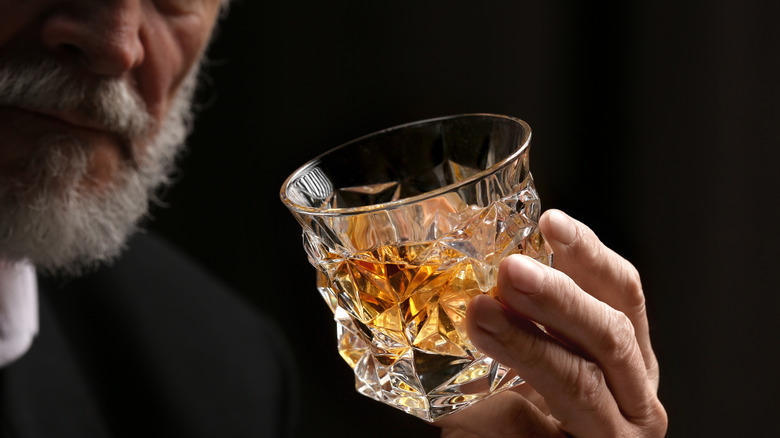
It's at this point that I move to the ways to identify high-quality whiskey when tasting. Each whiskey will be slightly different, but the best ones will have well-balanced flavors that offer at least some depth and complexity. You should check that no single flavor dominates the experience. The biggest culprit here is sweetness. The worst bottles have an almost artificial-tasting sweetness that is only vaguely reminiscent of any single flavor. Yet, a whiskey can be unbalanced in many other ways, such as with oak, spice, grain, or smoke. If one of these flavors is prominent, you want it to be complemented by other areas of the whiskey.
For example, a spicy whiskey will often still have sweetness to offset the heat. Also, with these bottles, a richer mouthfeel can also make that spice feel warming, rather than aggressive. This is where balance is linked with complexity. A high-quality whiskey won't overwhelm you with a wall of flavor. Instead, it will reveal itself throughout the tasting experience and throughout multiple sips. These flavors will feel layered, with different notes emerging. For example, you may get vanilla sweetness on the lips, an oak influence on the mid palate, and cinnamon on the finish. Not every great whiskey needs to be incredibly complex. Yet, it should feel balanced with the ability to reveal multiple distinct flavors.
Check for an absence of ethanol burn

This one can be difficult to describe if you have limited experience with whiskey, as even well-made alcohol can burn an untrained palate. Yet there can be a clear difference in how the whiskey presents itself. While some degree of warmth is to be expected, a harsh ethanol burn shows a lack of refinement. This is a sharp and aggressive heat that can overwhelm the palate and almost numb the back of your throat. It leaves a pricky and raw alcohol sensation that isn't pleasant. It isn't exclusive to whiskey and will show up in any poorly made or raw spirit.
Spicy whiskey will deliver heat, but does so with specific flavors such as black pepper or cinnamon. The heat is more controlled, and it doesn't give you that sharpness or stinging sensation. Everyone will have a different sensitivity to whiskey, and if you're jumping straight into a high-rye, high-proof whiskey, then it may be hard to tell the difference between a low- and high-quality whiskey. If you're staying in the 80 to 90 proof region, the difference is a lot easier to spot for beginners. If you're around that proof and still getting a harsh burn, it's a bad sign. As your tasting experience develops, the distinction becomes easier to recognize. For now, try to spot the difference between a whiskey that burns with no nuance and one that is hot but still carries a unique flavor.
Look for a fuller mouthfeel

The mouthfeel generally refers to how full the texture of the whiskey feels in your mouth. Different styles naturally vary in this respect, but you expect a base level of quality. When you take a sip, pay attention to whether or not the whiskey feels thin. At its worst, it feels as though you're drinking flavored water rather than anything resembling a well-crafted spirit. A full texture not only feels more pleasant in your mouth, but it's better able to carry the flavors to give you more depth and substance. This then gives you a much more satisfying tasting experience.
Some whiskeys can be oily or creamy, but the mouthfeel doesn't even need to go this far to be considered good. With thin whiskey, the flavors seem to escape quickly, and you're left with that ethanol burn I described above. Again, this can be a fine line, as some whiskey styles are naturally lighter. Yet even with those lighter whiskeys, they don't feel watery, and the flavors can rest in your mouth. Due to this, it's best not to view mouthfeel in isolation. If you're getting a lighter mouthfeel without any alcoholic burn and layers of flavor, it's likely still a high-quality whiskey. If you get a similar mouthfeel with a little burn and it's hard to pick out flavors, it's probably low quality.
Study how long the finish is

The finish constitutes the flavors and sensations that will remain after you've swallowed the whiskey. The better whiskeys tend to have a longer finish that continues to develop after you've finished your sip. Often, this is where the ethanol burn mentioned above will linger. What you want to see instead are unique tasting notes that nicely conclude the tasting experience. Spicy notes usually come to the fore here, but you can sometimes taste even deeper notes, such as chocolate, nuts, and toasted oak. This lingering complexity is often one of the hallmarks of a well-crafted spirit.
The length of the finish is also important. A decent whiskey may not have any burn but finishes up quickly. By contrast, a high-quality whiskey can often linger there for a long time until you're ready to take your next sip. Due to this, you want a finish that is both long and pleasant. Some tick one of these boxes but not both. The worst don't meet either mark, but the best give you both. As mentioned with the mouthfeel, the finish is just one part of the experience, and a whiskey should be judged based on many factors. And as with all of these tips, the more experience you get, the more nuances you'll appreciate.