

How To Upgrade The Flavor Of Prime Rib By Poking Holes In It
We may receive a commission on purchases made from links.
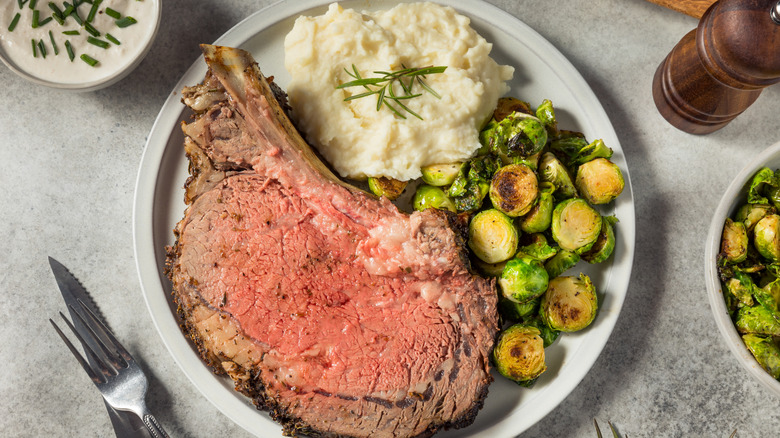
There are myriad ways one can employ to imbue meat with greater flavor, from marinating pork chops in ginger beer to using a culinary syringe to inject your turkey with Cajun butter. However, you may find the best prime rib too large and dense for methods like these. Instead, try picking up a blade and start poking holes in the beef — not out of frustration, but so you can stuff these openings with garlic, herbs, and other ingredients to ensure your prime rib is richly flavored both inside and out.
Fortunately, a simple demonstration of this method has been provided on TikTok by Cassie Yeung, author of the New York Times bestselling cookbook, "Bad B*tch in the Kitch." In the video, Yeung describes her "favorite thing to make for Christmas" — prime rib cooked to medium-rare, accompanied by au jus and a horseradish cream sauce. Yeung begins by combining a stick of softened butter with chopped rosemary and thyme, along with garlic powder, onion powder, Tony Chachere's seasoning (though she does not specify what variety), Dijon mustard, Worcestershire sauce, salt, and pepper.
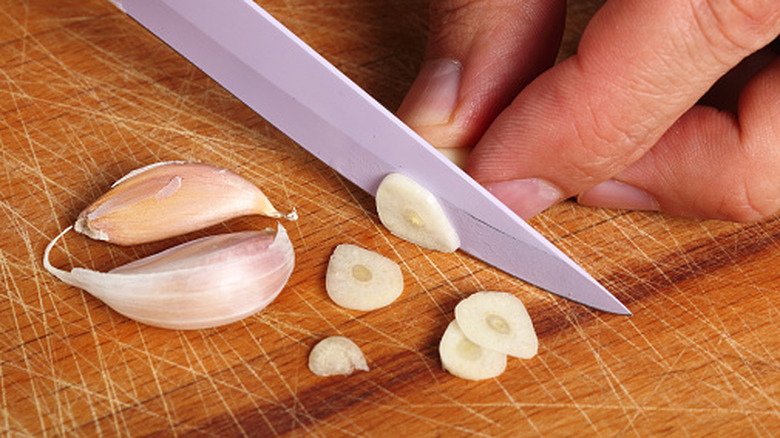
With a paring knife, Yeung then carefully stabs holes over the upper surface of her patted-dry rib roast, dips slivers of garlic in her butter mixture as a lubricant, and then sandwiches the garlic around some extra rosemary before shoving it in one of the holes. Repeating the process, Yeung adds that a chopstick can be used to push these flavor bombs into place. The beef is then slathered with the remaining butter mixture and placed in a pan with chopped vegetables and the remaining herbs, before heading into a 500-degree Fahrenheit oven for 15 minutes, followed by an extra 13 minutes per pound at 325 degrees Fahrenheit.
@cassyeungmoney prime rib has to be on the table for the holidays i will not argue!! #primerib #aujus #horseradishsauce
Choosing the right butter, sides, and cooking method for your garlic-stuffed prime rib
While the butter mixture prepared by Cassie Yeung sounds absolutely gorgeous (especially as Dijon mustard is prime rib's best friend when it comes to achieving a delicious dark bark on the beef's exterior), making use of the method she outlines is nevertheless the perfect opportunity to acquaint yourself with the fabulous world of compound butters. So you may want to delve into our eclectic selection of differently flavored compound butters we recommend for steak, but some of which could easily be adapted for prime rib (for the real umami freaks out there, we would recommend anchovy butter, but you'll know your own palates best).
If you have the option, you might also consider the added complexity your rib roast can achieve by cooking it on the smoker instead of in the oven. Bear in mind, though, that this may significantly affect your cooking time, as a smoker prepped to a consistent 225 degrees Fahrenheit will take roughly 35 minutes per pound for the prime rib to even be cooked rare.
Whatever cooking method you choose, remember that after the prime rib is ready and rested, the garlic stuffed inside of it does not need to be eaten — while some of us here at Tasting Table cannot imagine the idea of such a meal being too garlicky, we know there are others who might prefer not to eat the garlic itself, but merely enjoy the more subtle notes of flavor it leaves behind. Of course, any prime rib is going to need some sensational side dishes, with one of our favorites being the steakhouse-endorsed choice of fat-roasted potatoes.