

10 Major Fast Food Scandals We Still Think About Today
Most of us enjoy fast food every now and then. In fact, according to a 2025 Zappi survey, 40% of Americans eat it four or more times every month. But while fast food might be associated with happiness for millions of people, this industry has been through some serious lows in its time. Over the years, there have been multiple major fast-food scandals. From spreading foodborne illness to million-dollar lawsuits to horse meat and animal rights exposés, this industry really has seen it all.
Here, we take a look at some of the biggest fast food scandals that we can't stop thinking about today. Just a warning before we start: Some of these incidents might seriously turn your stomach (looking at you, Wendy's), while others might jog your memory and make you rethink your fondness for old commercials (ahem, Subway).
The Jack in the Box E. coli outbreak
In 1993, just after he had been sworn in as the 42nd president of the United States, Bill Clinton was faced with a major public-health scandal. During his very first cabinet meeting, Clinton would discuss the ongoing outbreak of E. coli, which had sickened hundreds of people, and left four children dead. It was one of the worst outbreaks of foodborne illness the country had ever seen, and the culprit? Undercooked burgers sold at more than 70 Jack in the Box restaurants in Idaho, Washington, California, and Nevada.
E. coli, a type of foodborne pathogenic bacteria, is dangerous, but it is not invincible. When ground meat is cooked to an internal temperature of 164 degrees Fahrenheit, the bacteria will die. Unfortunately, though, Jack in the Box decided that its burgers didn't taste as good when they were cooked thoroughly, so it instructed its team members to undercook its burgers — with catastrophic results.
The incident changed public health in the U.S. significantly, New rigorous beef production regulations and testing rules were introduced and the Centers for Disease Control (CDC) started prioritizing tracing and investigating foodborne illnesses like never before. Jack in the Box survived the scandal of course (there are still more than 2,100 locations across the country), but it did face major consequences. In one of the biggest chain restaurant lawsuits of all time, it had to pay out more than $50 million in individual and class-action settlements.
Suppliers in China sold multiple fast-food chains expired meat
More than 20 years after the Jack in the Box scandal in the U.S., another major food safety incident hit the fast food industry, although this time, it was in China. In 2014, investigators went undercover at a meat supplier working for popular chains like McDonald's, Pizza Hut, and KFC, and uncovered some extremely troubling practices.
According to the investigators, who were working for a Chinese television network, workers at Shanghai Husi Food Company were allegedly seen picking up meat from the floor and placing it back on the production line. They were also allegedly seen processing bad-smelling, potentially rotten beef, as well as chicken that was half a month post-expiration. Needless to say, selling spoiled meat is a major public-health risk. When meat has expired, it has a higher risk of containing harmful bacteria, like E. coli and Salmonella.
As a result of the investigation, Shanghai authorities ordered Husi Food Company to suspend all operations, while KFC and McDonald's both cut ties with the supplier. The Chinese police also detained multiple workers amid an investigation into Husi Food and seized around 100 tons of meat. The incident had a major impact on consumers. A subsequent study by Sina Shanghai, shared by the South China Morning Post, found that nearly 70% of the surveyed Chinese population no longer wanted to eat at the chains involved in the outbreak.
The arrest of Subway spokesperson Jared Fogle
Many mistakes have haunted Subway over the years, but one of the biggest has to be choosing Jared Fogle to be the face of the brand. If you watched television in the early 2000s, you might remember Fogle's commercials, which focused on Subway's role in his weight-loss journey. The commercials helped position Subway as a healthy, low-fat fast food option, and they were a hit. As a result of increased sales from his commercials, Fogle ended up being the face of Subway for 15 years.
But in 2015, the sandwich chain likely realized it had made a grave error when Fogle was arrested and jailed for the distribution of child sexual abuse material and engaging in inappropriate relationships with minors. After his home was raided by police, Subway cut ties with Fogle, but the chain didn't emerge unscathed, and the scandal had a knock-on effect on Subway's reputation. Declining reputation scores indicate that customers might have been less willing to spend money at Subway because of Fogle's arrest.
Of course, the chain pulled through. But the scandal has stuck with Subway since and it is still frequently discussed on social media platforms, like Reddit and Facebook. This is partly because in 2023, Investigation Discovery released a three-hour-long docuseries called "Jared from Subway: Catching a Monster."
If you or someone you know may be the victim of child abuse, please contact the Childhelp National Child Abuse Hotline at 1-800-4-A-Child (1-800-422-4453) or contact their live chat services.
McDonald's hot coffee lawsuit
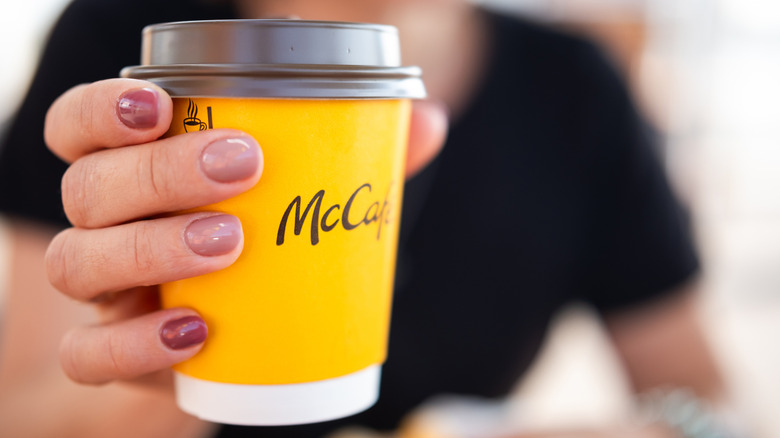
Of course, Subway isn't alone in its history of major scandals. McDonald's has faced multiple lawsuits over the years due to issues like discrimination, harassment, and failing to pay overtime. But one of the most famous lawsuits in McDonald's history is the hot coffee incident, which happened back in the 1990s.
In 1992, the year before Clinton was discussing Jack in the Box and E.coli, a 79-year-old woman named Stella Liebeck spilled McDonald's coffee over her lap while sitting in a parked car. Sounds like nothing, right? Wrong: The coffee was so hot that Liebeck suffered third-degree burns and needed skin grafts on her thighs. Liebeck, who bought the coffee from a McDonald's in Albuquerque, New Mexico, was initially awarded nearly $3 million in punitive damages by a jury in a subsequent lawsuit. This was later reduced to $480,000 by a trial court.
The lawsuit quickly gained notoriety, and some viewed it (and many still view it) as an example of increasing frivolity in the legal system and people trying to make a quick buck out of major corporations. It's important to note, however, that the impact of the coffee spill on Liebeck was significant. She had to spend eight days in hospital immediately after the incident, followed by two years of medical treatment.
The Wendy's severed human finger fraud
It's widely accepted by experts that Liebeck was not exaggerating with her legal case against McDonald's. But there have been other cases in the past when consumers have tried to fraudulently gain compensation from fast-food companies. In March 2006, for example, Anna Ayala and her husband Jamie Plascencia were sent to prison for trying to extort money from Wendy's. Their method? Plant a severed finger in a bowl of chili from the chain, and then attempt to claim compensation.
It turns out, the finger wasn't from a Wendy's employee, but an industrial worker who had lost his fingertip in an accident and sold the finger to the couple for $100. But in the time between Ayala and Plascencia making the allegations and the truth coming to light, Wendy's lost around $21 million in business as a result of the media storm surrounding the incident. In the end, Ayala was sentenced to nine years in prison, while Plascencia was sentenced to 12 years.
The scandal might have happened more than 20 years ago, but it's still being talked about on social media. "Definitely remember this as it was all over the local news," wrote one Reddit user. "Our family stayed away from Wendy's for [a while] after it happened."
The Denny's $54 million lawsuit over racism
Denny's has faced some major legal challenges over the years, including a huge $54 million racism settlement in the 1990s. Unlike the Wendy's incident of the early 2000s though, this was no hoax — the allegations were real and very serious.
In multiple lawsuits against the chain, thousands of Black customers alleged that Denny's workers had been racist toward them. They claimed that the chain frequently gave preferential treatment to white people, forced Black people to pre-pay for their orders, and made Black customers wait excessive amounts of time for their orders. As a result, Flagstar Companies of Spartanburg, South Carolina, the owner of Denny's, was forced to pay out more than $45 million in damages to its customers, as well as nearly $9 million in legal fees.
While some may have forgotten about the lawsuit, for others, there have been some all-too-recent reminders. In 2023, Denny's came under fire for racism once again when a white server allegedly refused to serve Black men at a location in South Dakota. For some, the incident was a painful reminder of Denny's racist history.
Horse meat at Burger King
Back in the early 2010s, horse meat was discovered in meat products sold across Europe, and chaos ensued. Millions of products were removed from grocery stores across the region, including popular discount retailer Aldi. Fast food chains weren't exempt from the scandal, either. Burger King was dragged into the chaos when tests found traces of horse meat in meat that was being processed at one of its suppliers. Fortunately though, test results on burgers from its restaurants tested negative for horse DNA.
It turns out, Silvercrest, one of Burger King's suppliers, was using small amounts of beef imported from Poland, despite promising that all of its meat came from British and Irish farms. As a result, Burger King cut ties with the supplier, and disposed of thousands of beef burgers.
The culprits behind the scandal? Multiple meat processing companies across the U.K., France, and the Netherlands, who were involved in money laundering and fake labeling as part of an illegal meat shipping network.
Subway bread declared as not actually bread
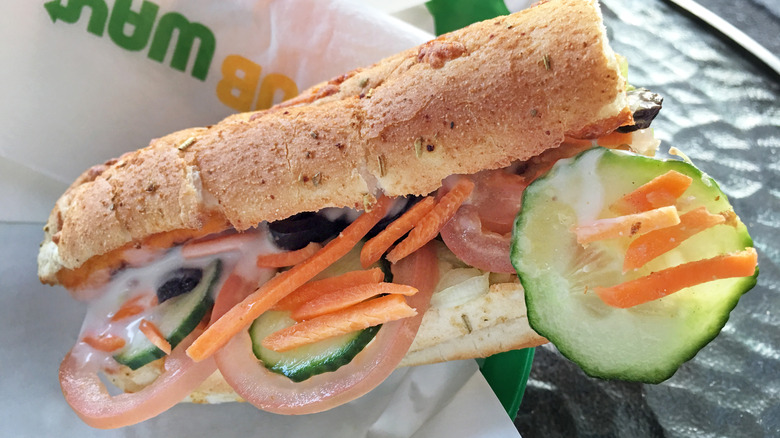
Earlier, we mentioned that multiple scandals haunt Subway. And after Fogle, its bread controversies have to be among the worst. Yes, controversies — plural.
In 2014, Subway's bread came under fire because it contained azodicarbonamide, a chemical used in yoga mats and shoes to improve elasticity. The fast-food chain maintained that azodicarbonamide was safe for consumption, but removed it from the bread recipe anyway in response to the backlash. But this wasn't the end of the bread-related drama. In 2020, an Irish court declared that Subway's bread wasn't really bread.
Yep, according to an Irish Supreme Court judge, Subway's bread contains far too much sugar to be considered real bread under Irish law. This is because Ireland's Value-Added Tax Act of 1972 dictates that the sugar in bread should not exceed 2% of the weight of its flour, and the sugar content in Subway's bread is 10% of the weight of the flour. Therefore, in Ireland anyway, Subway's bread is not really bread.
Multiple global chains were accused of abusing billions of chickens
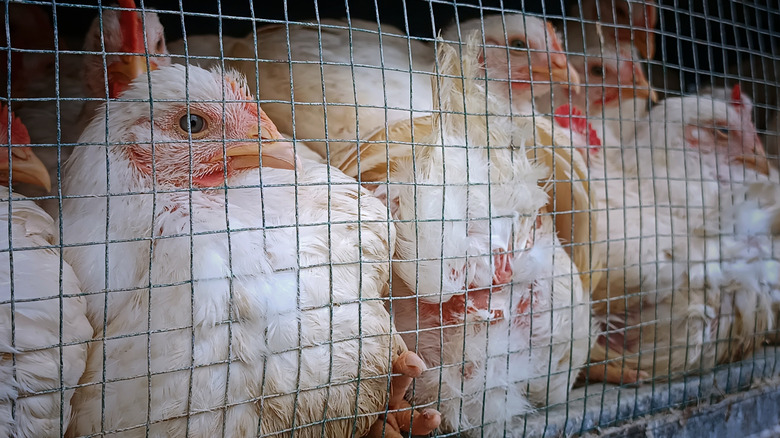
Let's be honest, the fast-food industry is no stranger to animal welfare controversies. But in 2019, one of the biggest global scandals surrounding the sector's treatment of animals erupted. No less than nine of the world's biggest fast-food chains, including Subway, McDonald's, KFC, and Burger King, were accused of abusing billions of chickens and hiding it from their customers.
A report published by World Animal Protection noted that the nine chains were either rated "poor" or "failing" in terms of chicken welfare. It accused the companies of working with suppliers that raised birds in overcrowded factory farms, and failing to be transparent about these conditions to consumers.
Despite the scandal, in 2021, another report by World Animal Protection found that U.S. fast-food brands had still made very little progress on chicken welfare. Another report by the animal welfare organization in 2025 found that Europe's largest fast-food companies were also at risk of not meeting their chicken welfare goals.
The release of 'Super Size Me'
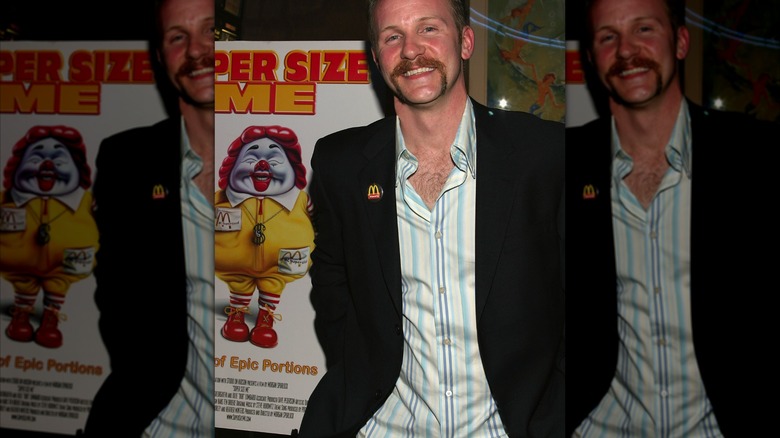
In the early 2000s, McDonald's had a major scandal on its hands when "Super Size Me" hit theaters. The movie followed controversial filmmaker Morgan Spurlock as he embarked on a self-sacrificial experiment in a bid to raise awareness of the harms of fast food. He ate nothing but McDonald's for a month, and as a result, gained 24 pounds and started suffering from headaches, fatigue, and low libido. The movie was Oscar-nominated, and, just as Spurlock intended, shocked the world into facing the realities of fast food.
McDonald's suffered as a result. It quickly stopped offering supersize options, but its profits still took a major hit. In the U.K., they plummeted to the lowest they'd ever been in the country. Of course, we all know now that McDonald's more than survived the scandal — it thrived. In fact, as of 2024, it had more than 40,000 locations globally. But "Super Size Me" is still remembered as a major cultural moment, and a thorn in the side of the global juggernaut. In our list of the best food movies, our reviewer ranked the movie at number five, calling it a "well-made film that might have you think twice before pulling up to the next drive-thru window."