

8 Cooking Shows From The '80s That Are Still Worth Watching
We may receive a commission on purchases made from links.
Memories are a powerful thing, especially when they're connected to food. No matter when or where you grew up, we can almost guarantee that there are nostalgic recipes that will take you right back to childhood. The same can be said for our favorite cooking shows: Those of us who grew up watching food shows can still find something comforting about the old classics. Whatever decade you associate with your formative years, there are probably some cooking shows that you remember playing in the background.
The good news is that there are plenty of old-school favorites that are still worth the watch. Head back to the 1980s, and you'll find some shows that can not only still teach you plenty of practical tips, tricks, and recipes that still have a place in today's kitchen, but that also come with a brilliant sense of the time.
Let's talk about some of them, as we'd argue that catching even a few episodes of these shows is well worth it for a few reasons. Sure, you'll learn about some wonderfully nostalgic cooking trends and recipes that still hold up today, but you'll also learn about a decade when certain cuisines were being introduced to the masses on a huge scale. Some of the era's cooking shows helped bring things like Indian and Cajun cuisines mainstream, and without them, our foodie landscape might look a little different today. History is important, and fortunately, these shows make it accessible and fun even decades after they first aired.
Yan Can Cook
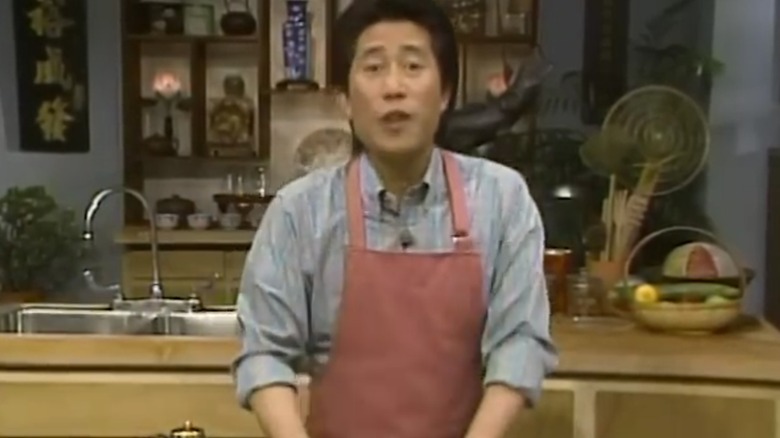
We'll go out on a limb and suggest that anyone who grew up in the 1980s knows Martin Yan and remembers watching "Yan Can Cook." The show got started in Canada back in 1978, but in 1982, it was picked up by PBS and got absolutely massive. It's credited with helping to take Chinese cuisine mainstream, introducing dishes and ingredients in a way that's still incredibly watchable and fun today.
In an interview with KLCS PBS, Yan explained: "When I first started, Chinese food was still not very popular. ... Now 40 years later, you go to any supermarket, there's an entire aisle of Asian seasoning and items. ... I look at myself more as an ambassador of goodwill because food and cooking brings people together, not just your family and friends, but brings people around the world together." That's a lovely sentiment, and if you're wondering how influential the show has been, Martin Yan was honored with the prestigious lifetime achievement James Beard award in 2022.
Episodes of "Yan Can Cook" — along with his many other shows — can still be found on YouTube, and you can also find them streaming on PBS. They hold up really well: Yan is super fun. We have more good news for fans, too: "The Yan Can Cook Book" is available on Amazon and features hundreds of his recipes. That's just a fraction of what's been featured on the show, and Yan has estimated he's shown us how to make more than 10,000 dishes.
Con las Manos en la Masa
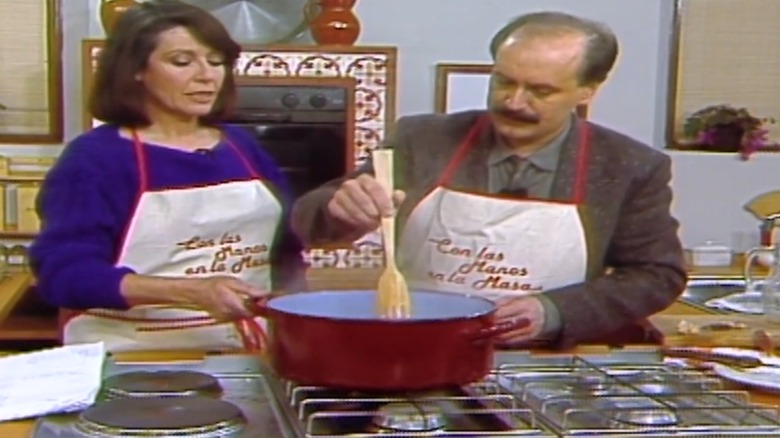
The premise of Spain's "Con las Manos en la Masa" will sound really familiar to fans of cooking shows: A charismatic host welcomes a revolving line-up of celebrity guests who join her to cook a myriad of inevitably personal and meaningful dishes. It debuted in 1984 and ran for an impressive eight years, and both its longevity and popularity were credited to Elena Santonja, the Spanish-born actor, painter, musician, and presenter who was one of the most famous personalities of Spanish television.
"Con las Manos en la Masa" translates to "With Your Hands in the Dough," and the idea was to present accessible dishes that would shine the spotlight directly on cuisine from areas across Spain. Santonja kicked off the series by saying that she wanted to preserve the kind of foods that were handed down through the generations, and the seasons saw guests and dishes from Catalonia and Castile to Basque Country.
Santonja and her guests whipped up stews and potatoes, filled pancakes, fritters, and croquettes in a kitchen that was absolutely relatable and wonderfully welcoming. The resulting program isn't just a cooking show; it's credited with being a brilliant example of food as a cultural touchstone and history that's still invaluable decades later. You can find episodes on YouTube, as well as on RTVE Play.
Dinner at Julia's
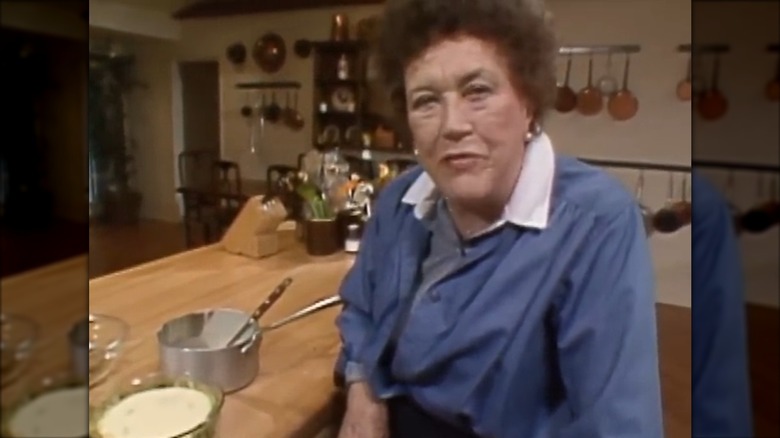
Julia Child has shared countless cooking tips with her fans, who know that she was wonderfully down-to-earth. (Child did, after all, love to pair cocktails with Goldfish crackers.) By the time "Dinner at Julia's" hit small screens everywhere in 1983, she was already a well-established presence. Her popularity buoyed a show in which Child and her crew headed to a California mansion, where she shared the scene with celebrities — including Wolfgang Puck and James Beard — as they demonstrate techniques, talk about where food comes from, and bring everything together in the pièce de résistance of every episode: a dinner party.
Episodes feature different dishes, of course, including familiar proteins like salmon, chicken, and beef, but also veal, rabbit, and sweetbreads. There's a barbecue episode, as well as bouillabaisse and pork Wellington. In other words, there's something for everyone, and it's all anchored by Child's familiar presence.
Behind-the-scenes peeks into the making of the show reveal that Child had more happening under her counter than on it during shooting. "Dinner at Julia's" was shot with a large crew, and for the first time, hand-held cameras (held by crewmembers hiding under the counter) allowed viewers to get up close and personal with what's being made. Filming in short segments makes for a differently paced show than Child's older series, and the result is something that is still very watchable. At the time of this writing, you can find it streaming on Apple TV, and episodes have also made their way to YouTube.
Floyd on Fish and Floyd on France
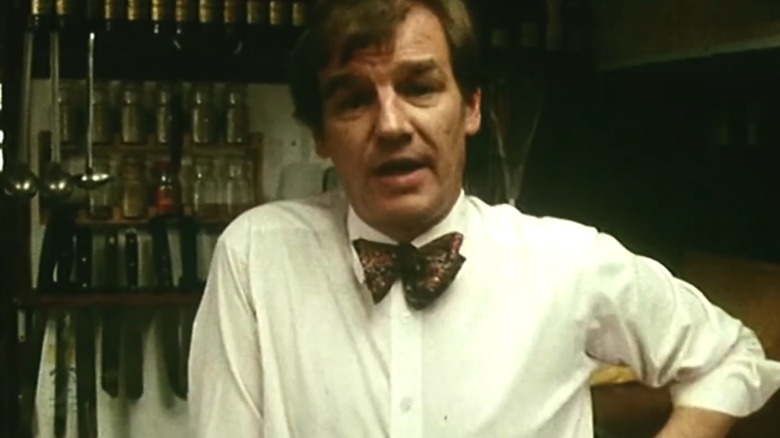
If you're not familiar with Keith Floyd, we hope we can convince you to change that. Floyd was one of the pioneers of food television, and you'll even hear him be described as one of the first celebrity chefs to hit it really, really big. Seven episodes of "Floyd on Fish" ran in the UK in 1985, and that was followed by seven episodes of "Floyd on France" in 1987. They're exactly what they sound like, and it's Floyd himself who makes these shows infinitely watchable in an oftentimes hilarious way.
Floyd's story is wild: Born to a working-class family in West Berkshire, his resume includes some time in the army, working as a reporter, and at one point, just saying the heck with everything and spending a few years sailing the seas. He eventually became a restaurateur and television personality, and his shows are anything but boring. Words like "chaotic" come to mind, and he asks the questions we all want to. (For example, did French monks indulge in wine for fun?)
His unique kind of chaos is perfectly demonstrated by a scene from Alsace. That episode features a balloon ride that's narrated by a wine-drinking Floyd, who spends most of the segment condemning the crew for making him participate knowing he hates heights. Because this is no normal cooking show, yes, it ends in a crash landing. Floyd is an absolute riot to watch, and fortunately, episodes of both shows have been uploaded to YouTube.
Hudson and Halls
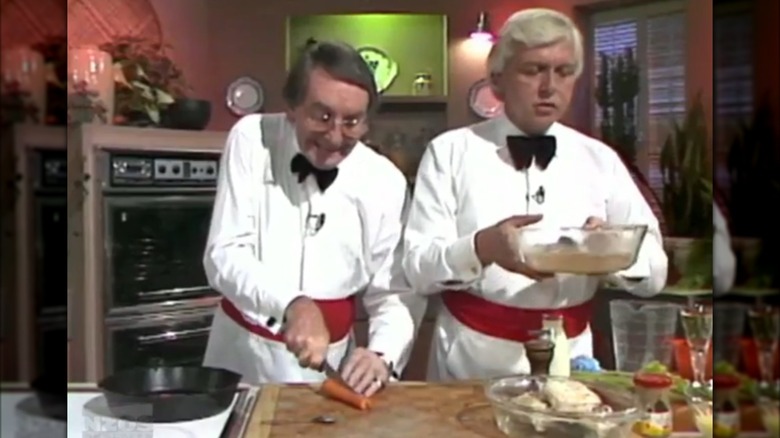
We're going to have to go — initially, at least — all the way to New Zealand for what might still be one of the most fun cooking shows of them all. "Hudson and Halls" debuted in 1976 and was a riotous show buoyed by two large personalities. It was a huge departure from a time when cooking was serious business, and Peter Hudson and David Halls made it fun: They drank wine, set things on fire, burned food, and bickered with each other in that way that clearly came from a place of love.
The show lasted until 1986, and by 1987, the real-life couple was back on television half a world away. They became a massive hit in the UK, where their show ran until 1990. Sadly, Hudson died in 1992 following a cancer diagnosis, and Halls died by suicide in 1993. They've been subjects of documentaries and biographies, including "Hudson & Halls: The Love of Food," which is available on Amazon.
We also have to say that this one is much more than just a cooking show. When "Hudson and Halls" premiered in New Zealand, it was several years before the country would overturn laws that made LGBTQ+ relationships the stuff of scandal and indecency. They're credited for helping popularize the idea that cooking shows can be just as fun and funny as they are informative, and they kicked taboos to the wayside in the process. You can find clips on YouTube.
If you or someone you know is struggling or in crisis, help is available. Call or text 988 or chat 988lifeline.org.
Madhur Jaffrey's Indian Cookery
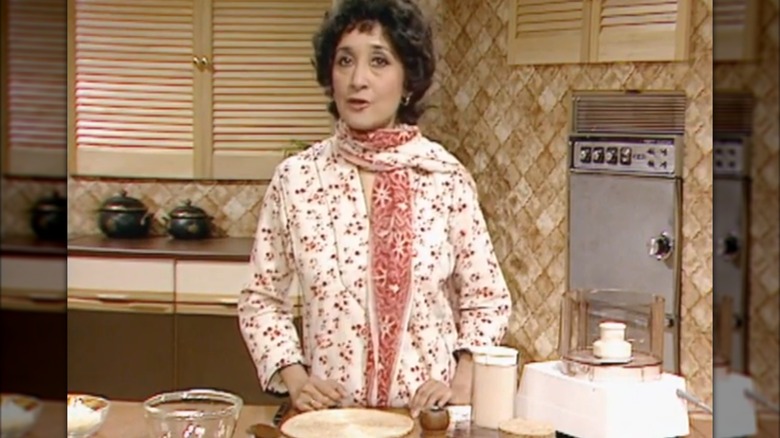
Madhur Jaffrey's impact on the culinary world is a global one. She's one of the women who changed the American food industry for the better when she helped popularize Indian and South Asian cuisines in the U.S., and she's credited for doing the same in the UK. Her "Indian Cookery" television show launched in 1982, and those who tuned in to the BBC to watch found themselves presented with a show unlike any other, teaching viewers all about a cuisine that was completely new to many.
Some clips have been preserved by the BBC's Good Food channel on YouTube, and you'll be able to find step-by-step instructions on things like fruit chutney, tandoori chicken, onion relish, and lemon chicken. Jaffery's presentations are lovely, particularly because she touches on the reasonings as to why certain pots need to be used, or what dimensions certain ingredients will bring to the final dish.
You'll hear Jaffrey's shows, cookbooks, and insights as being credited for exposing viewers to new and exciting spices, as well as encouraging them to look for recipes from around the globe. Some of the dishes have turned into beloved favorites, and since then, she's been recognized with seven James Beard awards for her culinary contributions. While it's disappointing that more of Jaffrey's 1980s show isn't readily available, we do have some good news: Her "Indian Cookery" series companion cookbook is available on Amazon and features 125 dishes.
Justin Wilson's Louisiana Cookin'
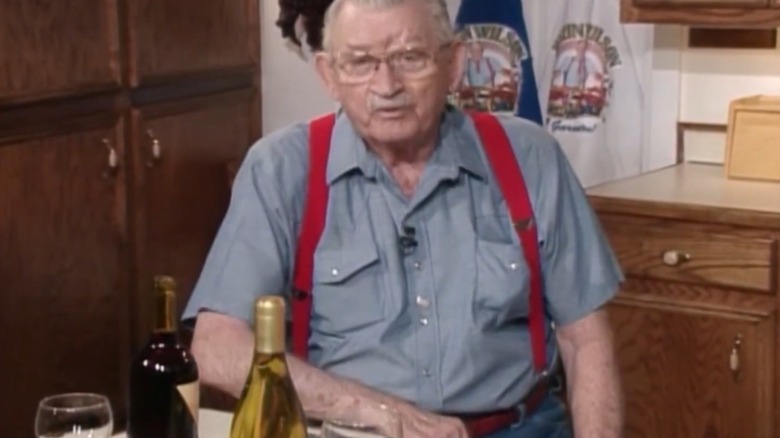
New Orleans locals know there are no shortage of spots serving up some outstanding Cajun and Creole food in the city, but back in the 1980s, it was still a cuisine that many in other parts of the country hadn't been introduced to. That was changed in a big way by Justin Wilson and his "Louisiana Cookin'" series, and it was one of the shows that was the source of some core memories for legions of viewers.
Wilson had a larger-than-life, ultra-friendly personality that made you feel as though you were hanging out with the best grandpa in the world, learning all about using "ON-yawns" and "wiiiiiine" to make some seriously delicious food — and that, he would "guar-on-TEE!" Those of a certain age remember his show following Saturday morning cartoons, and years later, they still remember lessons about cooking jambalaya, how to make a great roux, and how to measure salt in the palm of your hand.
Justin Wilson Southern Products LLC has a channel on YouTube, with plenty of videos that are still all well worth the watch. Cooking segments have been uploaded alongside some absolutely wonderful StoryTime segments, which make it very clear why so many folks who grew up in the 1980s have so many fond memories of his PBS cooking show. Looking for the perfect present for that '80s kid? The companion cookbook, "Justin Wilson's Homegrown Louisiana Cookin'," is available on Amazon.
Come and Get It
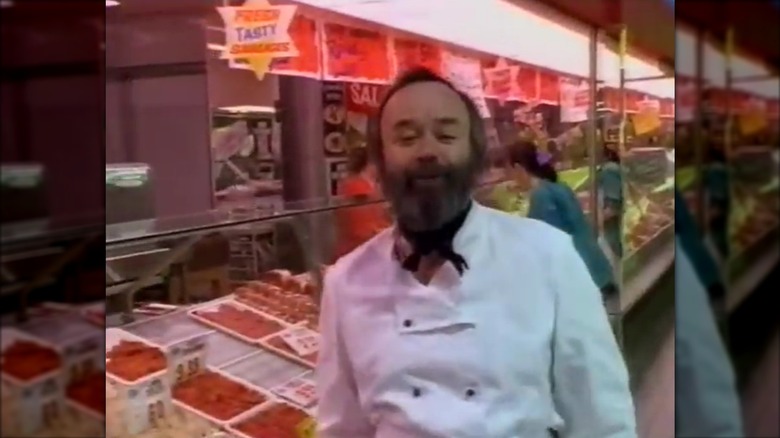
If you're the type who loves taking the occasional five-minute break from life to decompress, we have the perfect show for you. "Come and Get It" is an Australian series that ran from 1983 to 1992, and there are a ton of the five-minute episodes available on YouTube. That's not an exaggeration, as it's estimated that writer, creator, and host Peter Russell-Clarke starred in somewhere around 900 of the shorts.
We're not responsible for the fact that you'll likely have the jaunty, fun little theme tune stuck in your head after just a few episodes, and you're definitely going to want to keep watching. Topics are all over and range from interviewing representatives of the Australian Natural Therapists Association about the importance of quality foods and how individual people have different dietary needs to talking to professional long-distance runners about sleep, food, and recuperation from extreme activities.
Russell-Clarke was an outspoken proponent of Australia's farmer of food producers, and he had said that his work — including "Come and Get It" — was always about educating in a fun and accessible way. His death in 2025 was met with an outpouring of nostalgia from fans who could still sing that theme tune and had plenty of fond memories of catching his shorts in between cartoons. (Be warned, though: The outtakes that didn't make it to the screen have language that we'll describe as surprisingly and hilariously colorful.)