

6 Plant-Based Hot Dogs, Ranked
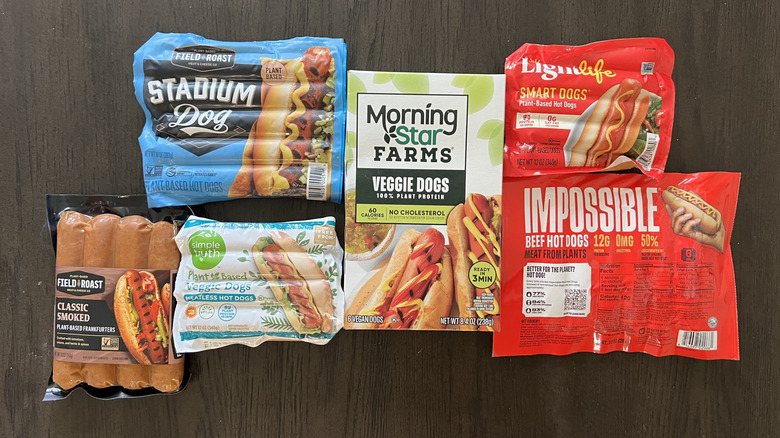
Quite frankly, hot dogs are a national treasure. Whether it's enjoying one of the bun-wrapped staples to the tune of "Take Me Out to the Ball Game" or grabbing one at a cookout, hot dogs play an important part in the all-American experience, so much so that Americans consume roughly 20 billion hot dogs annually. That works out to around 70 dogs eaten per person throughout the year (or in Joey Chestnut's case, in just one day at the Fourth of July Nathan's Famous Hot Dog Eating Contest).
But what about those who don't eat meat or are looking for a healthier alternative? They can still get in on the backyard barbecue tradition thanks to the ever-expanding world of plant-based meats. Brands like Impossible and MorningStar Farms, which have led the way in this category of meat alternatives, are now producing veggie hot dogs alongside other popular products like meatless burgers and chicken-less chicken.
We all know imitation is the highest form of flattery, but recreating the one-of-a-kind taste and texture of a classic hot dog is easier said than done. Some adaptations come close to that juicy, smoky ballpark flavor, while others miss the mark. I recently tried six different options from five popular brands to find the absolute best, most convincing plant-based hot dog — the kind that makes you double-check the ingredient list to make sure meat wasn't included.
6. Field Roast Stadium Dogs
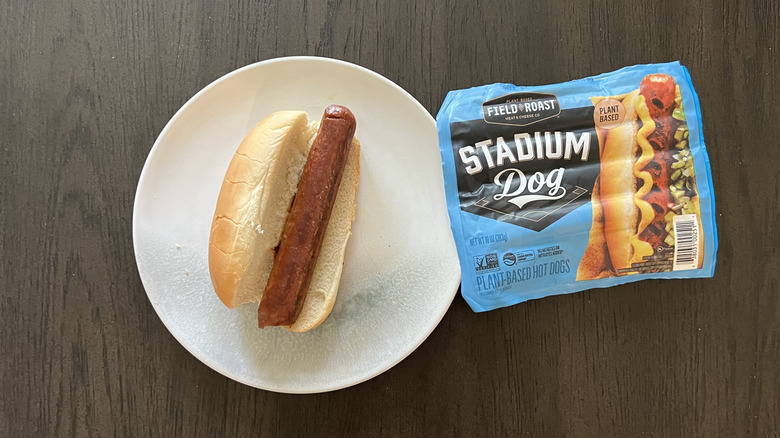
Field Roast specializes in not only plant-based meats — and a large variety of them — but also dairy-free cheeses. It fuses together European charcuterie methods and Asian mien ching traditions to craft meat and cheese from ingredients like grains and veggies. I wasn't surprised in the slightest to find a hearty stock of the brand's products at my local Fresh Thyme Market. What started as just three flavors of grain loaves has turned into a feast of meat alternatives, from burgers and roasts to deli slices, sausages, and, of course, a humble stadium-inspired hot dog.
Right away, it doesn't behave like a normal hot dog. The package recommends either flame-grilling or a simple pan fry, and I opted for the latter. Before it ever hit the skillet, though, it was falling apart, like a sausage link with a broken casing. Despite its promising charred look right off the stove, it didn't taste like a normal hot dog. Made from ingredients like pea protein, potato starch, and brown rice protein, it's dry with a strangely artificial or packaged taste. Natural smoke flavor, garlic, and paprika don't help its case, and the texture almost reminded me of smooshed together Play-Doh. That was three strikes, you're out for Field Roast's stadium dogs. I'd rather reach for just about any other plant-based frank.
5. Kroger Simple Truth Plant-Based Veggie Dogs
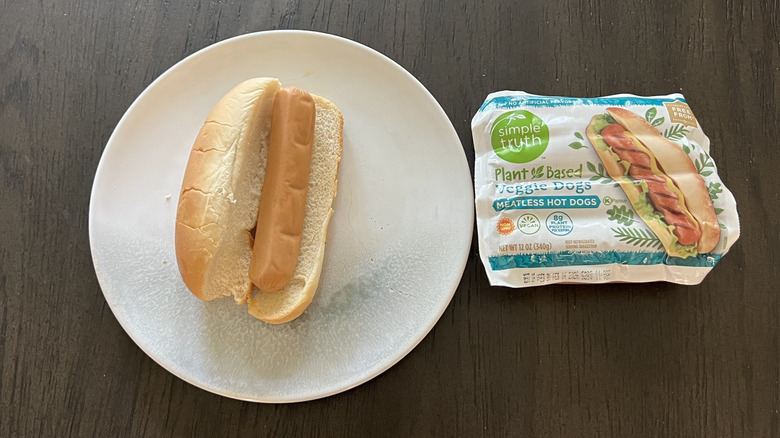
Clean eating is Simple Truth's entire M.O. Stamped with an appropriately colored green logo, its products can be found all over Kroger's supermarkets, boasting organic ingredients and "free-from" commitments. Clearly, the line is full of more wholesome alternatives, and that extends into plant-based options as well, including these veggie dogs.
Be aware that these aren't the easiest to track down. You won't find them buddied up next to traditional hot dogs in the deli meats section. Instead, I found them in the prepared foods area, tucked into a small corner dedicated to plant-based products.
They're shorter and stubbier than Field Roast's offering, though they still look the part of a fairly standard light pink hot dog. Where things start to go awry is, once again, with the texture. Getting the texture right is half the battle, and these first few brands didn't put up a good fight. This dog came out of the boiling pot extra jiggly wiggly, and on the inside, it could be chalked up to a paste that lacked moisture. The flavor is at least an improvement over Field Roast's stadium dogs, largely because it's more muted and less smoky, yet it could still use some improvements. Simple Truth uses soy protein isolate, but the main flavor profile is an odd sweetness coupled with the unmistakable taste of pea protein that leaves behind an earthy, beany aftertaste.
4. LightLife Smart Hot Dogs
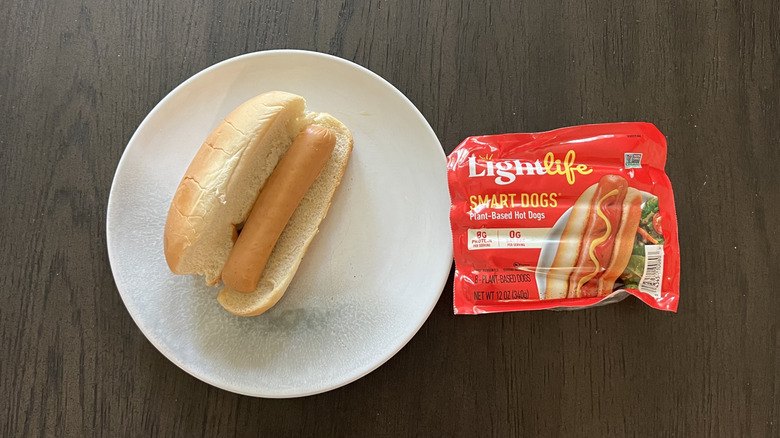
If I didn't know any better, I would say that Simple Truth's franks were modeled after LightLife's smart hot dogs. The two share many similarities, starting with their look and gelatinous composition. LightLife has its dogs priced just a few cents higher, however, and they taste just a wee bit better.
The Smart Dogs have been around since 1993, and I've spotted these red packages at nearly every grocery store I've visited. Kroger, Walmart, Giant Eagle, Fresh Thyme — they're all on the LightLife train. I could also see people gravitating toward LightLife because it gets closer to that true hot dog consistency. They're more soft than snappy but give some juiciness to work with — a big relief after the previous two dogs.
That said, the taste still isn't quite right, and it's missing that meaty factor. The ingredients are very similar to Simple Truth. The main five are water, soybean protein isolate, soybean oil, raw cane sugar, and salt. Pea protein is also packed in, but it doesn't come through as much in the flavor. It's mild overall, though I picked up on a metallic or chemical taste that reminded me a bit of chlorine. It's faint but enough to set this hot dog back a few spots in the rankings, despite its popularity.
3. Field Roast Classic Smoked Frankfurters
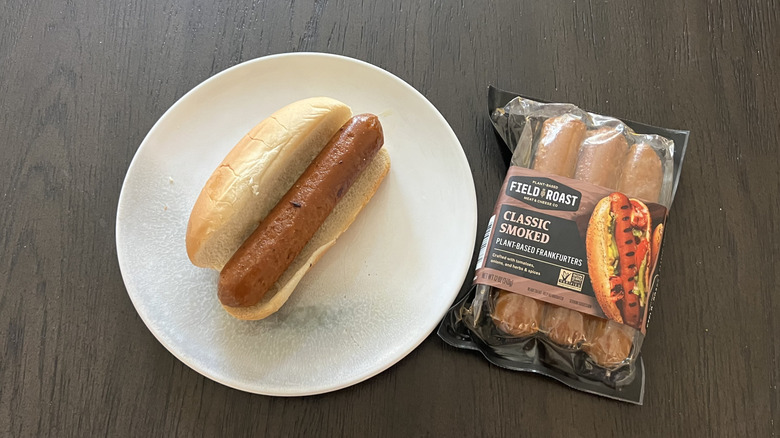
Field Roast makes up for its stadium dogs with these smoked frankfurters. They're large, in charge, and much more approachable. They're actually listed among the brand's sausages, and their size reminded me more of a brat than a classic hot dog.
I cooked them in a stovetop pan, just as I did the stadium dogs, so they came out with a bit of a crisp around the edges and a smokiness that further accentuated the natural smoke flavor piped in. As for the overall flavor, it's far more robust than any of the previous options, likely thanks to additions like tomato paste and onions alongside classic spices such as paprika and garlic. Instead of leaning on pea protein and potato starch like the stadium dogs, these smoked frankfurters focus more heavily on wheat gluten and wheat flour for their base, and that definitely comes through in the taste. Each bite has a distinctly wheaty, almost bread-like quality, and it falls toward the chewy side. It was hard to tell if that chewiness was a by-product of the cooking method or just its natural state.
This isn't the kind of plant-based frank you would chomp down on and think, "Wow, it tastes just like the real thing." The differences are clear. But if you were to load it up Chicago-style with peppers and onions, as the brand suggests, it could still make for a satisfying meal.
2. MorningStar Farms Veggie Dogs
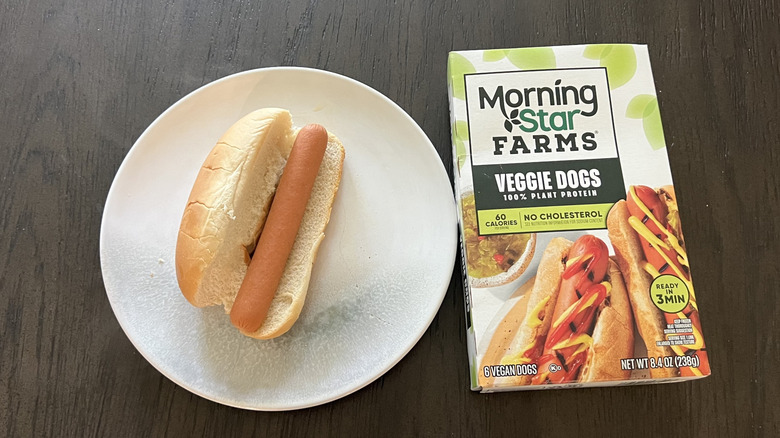
You can find MorningStar Farms veggie dogs in the freezer section. They occupy a spot right next to the brand's plant-based burger patties, meatless sausage links, and vegetarian corn dogs — which, by the way, do not make a strong impression next to other store-bought corn dogs. Thankfully, these hot dog lookalikes fare much better.
They can be cooked right from frozen, and I committed to the classic boil method recommended on the back of the box. It has to be submerged for about 8 minutes, and it comes out looking like an average, everyday hot dog — more specifically, like a hot dog you would buy at a sports event concession stand. Its taste isn't too far off, either. The texture is moist and emulsified, making it much closer to real meat. It contains wheat gluten, pea protein, and yeast, but it doesn't taste gluten-forward or grainy. The spices like onion powder and garlic do a good job masking the plant protein aftertaste, creating a very easy-to-eat ballpark-style dog.
Honestly, if I plopped these veggie dogs on a bun and slathered them in a generous zigzag of stadium mustard (the best hot dog condiment, don't fight me on this), I'm not sure I would have been able to tell they were meatless. Plus, they come at a really reasonable price for a box of six.
1. Impossible Beef Hot Dogs
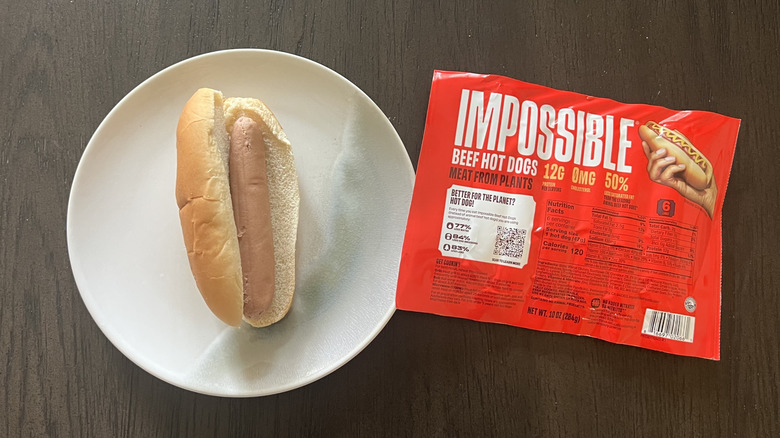
Impossible Foods originally made a name for itself with its Impossible Burger patties. Launched in 2016 as the brand's very first product, the burgers gained national attention for their use of soy leghemoglobin — or "heme" – to create a more realistic, meat-like experience. So it only makes sense that Impossible would carry that same approach into its plant-based hot dogs. Unlike many of the other vegan franks on the market, these are specifically designed to imitate all-beef hot dogs rather than pork or a blend of mystery meats, and that makes all the difference.
The dogs have a similar texture to those of MorningStar Farms: juicy, compact, and not necessarily a dead ringer for a real hot dog, but it's about as close as you can get in the plant-based world. However, they also have a richer, more convincing taste thanks to the heme at work alongside additions like garlic and an applewood-smoked flavor. They're wheat gluten- and oil-based but also get protein from soy protein specifically.
The Impossible hot dogs come frozen, like the MorningStar Farms dogs, and you have to go through the extra trouble of thawing them before cooking. Plus, they're also one of the most expensive options out there, but it's all well worth it. I, for one, am willing to endure a little more prep time and a higher price tag for a vegan product that actually captures the spirit of a classic beef frank.
Methodology
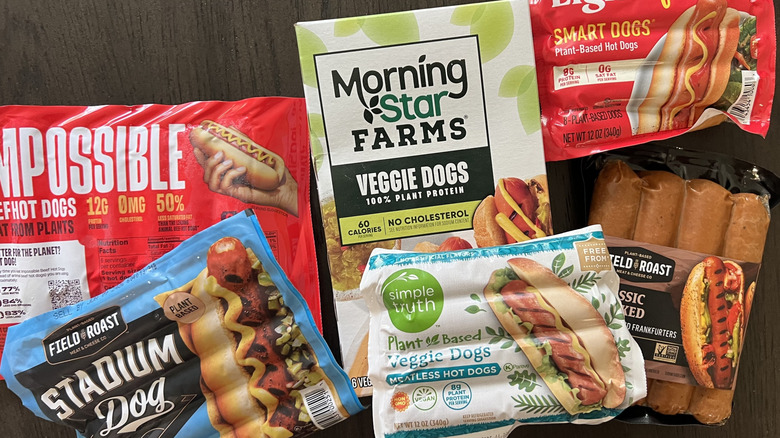
I found six plant-based hot dog options from the grocery store, in the freezer aisle and various refrigerated sections. The biggest thing I learned is that none can be found next to normal hot dogs — they're a bit harder to sniff out. Once I got everything home, I prepared each hot dog according to the instructions listed on the packaging. For both Field Roast options, that meant cooking them in a skillet on the stove, since the recommended methods were either pan-frying or grilling, and I don't happen to own a grill. For the remaining brands, I stuck with a standard boiling method.
I sampled each veggie dog both on its own and inside a fluffy bun to better mimic the traditional hot dog experience. However, I resisted adding condiments or extra garnishes because I wanted a true sense of each product's flavor without ketchup, mustard, or relish covering anything up. Before I even got to the taste, though, I typically noticed the texture first. It was obvious when the veggie dogs didn't offer that hot dog consistency, and I relegated picks to the bottom of the ranking that were overly dry, chewy, or pasty. Flavor-wise, I generally found that milder worked better, especially when subtle spices helped to mask those plant protein aftertastes. Ultimately, I judged each product on how closely it resembled a true hot dog while also considering how enjoyable it was on its own.