

6 Best Calming Teas For Stress Relief
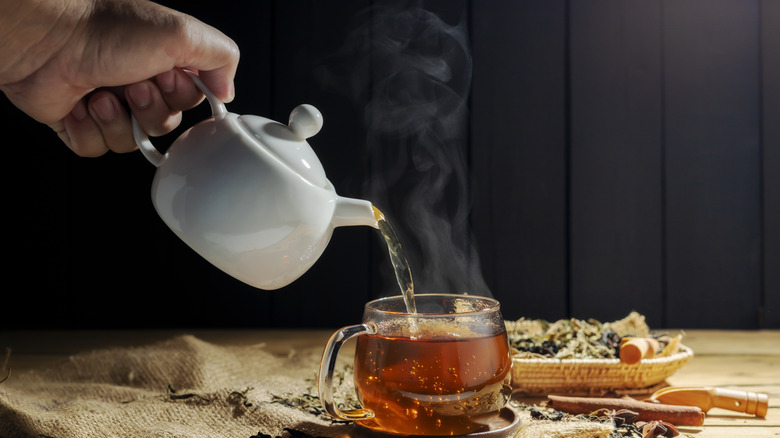
Wellness trends are notoriously inconsistent, yet one ritual has quietly endured across cultures for centuries — the simple art of brewing a warm cup of tea. In the contemporary climate of endless notifications, overflowing inboxes, and mental strain, stress can sometimes feel like a constant companion, which leaves us desperate for ways to remove it from our lives. Brewing a cup of tea has long been considered an antidote to that problem.
The ritual of brewing, heating the water, steeping the tea, allowing it to cool, then slowly sipping, can be considered self-care. The act requires time, meaning almost by its very nature it provides pause, a quiet break in the busy day to reflect, breathe, or simply be. Beyond that, science is increasingly supporting what generational wisdom has long known. Teas like chamomile, jasmine, and mint, among others, contain compounds that may have calming effects on our nervous systems.
To better understand the connection between tea and stress relief, we reached out to an expert tea master from the Shang Palace in Istanbul, a restaurant dedicated to the traditional Chinese tea experience. From lesser-known infusions with restorative benefits to timeless herbal favorites, we examine why and how these comforting brews could mitigate some of the pressures of today's fast-paced environment. These are the six best calming teas for stress relief.
Milk oolong tea
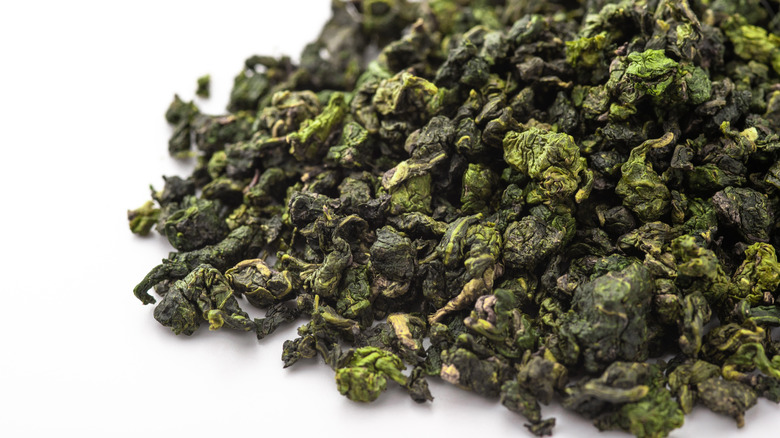
Milk oolong tea is a fairly balanced tea, falling between black and green teas. It has a smooth, lightly floral flavor profile, and the 'milk' in its name refers to its creaminess. It hails from Taiwan and is made from a process of light oxidation, twisting, and firing. According to the Shang Palace tea master, milk oolong tea is a "premiere [sic] recommendation for those seeking comfort." Its primary form of stress relief is a result of its aromatherapy qualities. According to the tea master, "The unique, velvety texture demands sensory attention. This gentle complexity encourages slow, intentional sipping, effectively pulling the mind out of a high-stress headspace and into the present moment."
Another reason milk oolong tea might be considered calming is due to its chemical makeup. The tea contains moderate caffeine as well as an amino acid called L-theanine. This means that, unlike highly caffeinated drinks, milk oolong tea provides a steadier, less jittery release of caffeine for those who may already drink too much caffeine. And, L-theanine has been shown to promote relaxation by reducing anxiety and cortisol. Milk oolong tea is also packed with antioxidants, which are known to impact anxiety and depression. In sum, milk oolong provides stress relief through various mechanisms, everything from its aroma to its components, and the gentle act of brewing a cup can serve as a much-needed way to calm your nerves, making it (as our tea master expert puts it), "the mindful choice."
Jasmine tea
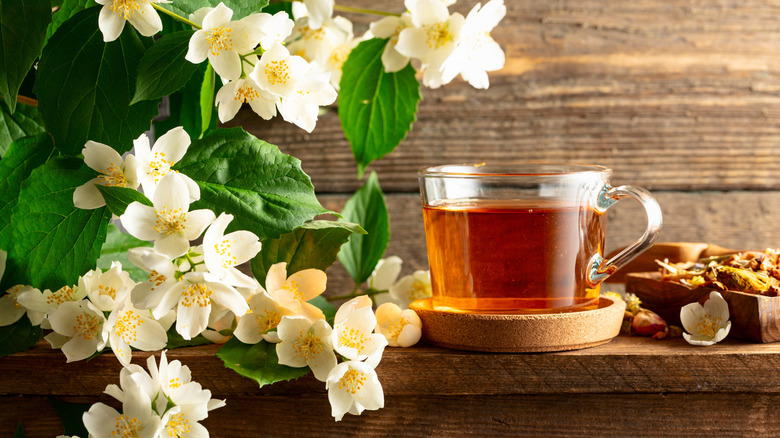
Jasmine tea comes in several assortments; most commonly, it is made from a base of a type of white tea or green tea. Jasmine white tea is made from a blend of juvenile tea leaves and jasmine flower buds, while the green tea variety comes from integrating the flowers with steamed green tea leaves. Irrespective of the base, jasmine tea is a soothing and delicate aromatic brew with several stress-relieving properties. Jasmine tea is loaded with polyphenols, plant-based compounds known to reduce anxiety and stress. Further, a cup of jasmine tea may lower inflammation, a primary cause of many stress-related diseases, including depression.
However, its most powerful form of stress relief might just be in its aromatherapy properties. In other words, the tea has a very strong sensory impact. According to the tea master at Shang Palace in Istanbul, the restaurant's jasmine green tea "offer[s] a delicate infusion of night-blooming jasmine, scenting the air as [it] unfurl[s] in hot water." The tea master goes on to say that "aromatherapy is central to the tea ritual. The scent of jasmine is traditionally associated with emotional relaxation ..." In fact, the smell of jasmine tea has been shown to lower one's heart rate and reduce stress by inducing a sense of calm and ease. Meaning, in the midst of an overwhelming day, find some jasmine tea, steep the leaves, and even just inhaling its aroma can positively impact your mood.
Green tea
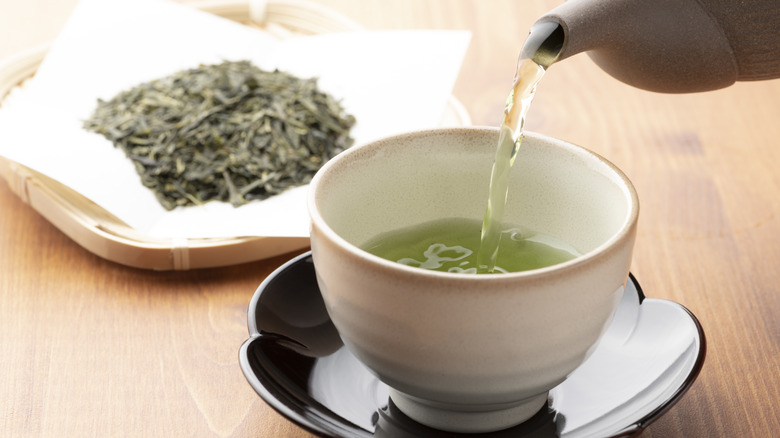
Green tea has long been celebrated for both its antioxidant properties and its calming effects on the mind and body. Originating from the camellia sinensis plant, green tea is packed with chlorophyll, polyphenols, and antioxidants. Green tea's myriad benefits may be due to the way it is made. While it comes from the same plant as black tea, it is less oxidized, preserving the effects of its healthful compounds. Drinking green tea has been linked to lower cortisol, our principal stress hormone. This is because the tea contains epigallocatechin-3-gallate (ECGC), an antioxidant known for its stress-reducing and calming properties.
ECGC is also known to lower inflammation, and excess inflammation has been found to contribute to anxiety and depression. Primarily, however, green tea contains L-theanine, an amino acid known to improve sleep, improve anxiety and stress, and boost mental clarity. Finally, green tea contains less caffeine than a cup of coffee, providing steadier mental clarity for those looking for a boost.
According to the Shang Palace tea master, green tea "provides refreshing mental clarity without the 'jitters' often caused by coffee." Overall, with its comforting warmth, green tea offers a soothing daily ritual packed with antioxidants and natural compounds that gently support the mind and body. With each sip comes a steady sense of mental clarity, emotional ease, and enduring calm. There is no simpler tool for stress relief.
Spearmint tea
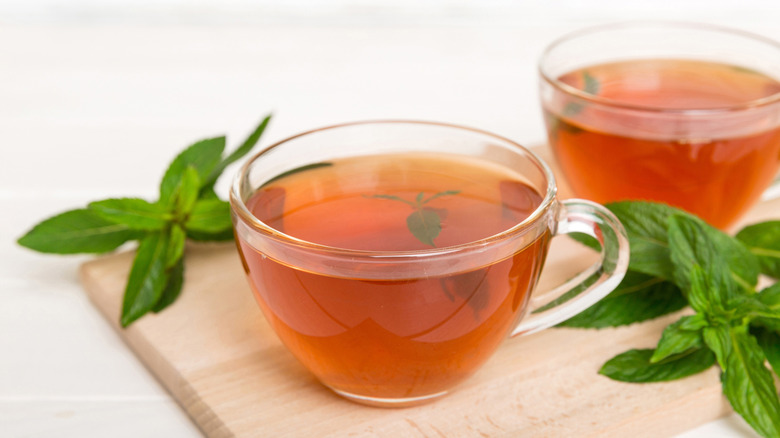
You might be familiar with spearmint in products like toothpaste and chewing gum, where the plant is commonly used for its cool, zingy flavor. However, in tea form, the plant provides a fresh, soothing flavor, making it a great choice for relaxation. Spearmint is similar to peppermint and is named for the 'spear-like' shape of its leaves. While spearmint provides a multitude of health benefits, its calming properties make it particularly special.
According to the expert tea master from Shang Palace, "Unlike pungent peppermint, spearmint provides a clean, cooling sensation. It is particularly effective for 'cooling down' the body and mind during moments of frustration, refreshing both the palate and the spirit." This cooling sensation might be the result of one of spearmint's primary compounds, menthol, which is known for its crisp flavor and relaxing impact. Menthol is also known for having a slight sedative effect, and one study revealed that the people of the Colombian Caribbean coast believe that it might help reduce bouts of insomnia. Spearmint is also packed with calming antioxidants, such as flavones, flavanones, and rosmarinic acid, which can reduce stress and have positive effects on anxiety.
Finally, with its gentle, cool aroma, spearmint is also the perfect choice for a calming tea ritual. Naturally caffeine-free, the tea has become popular with wellness enthusiasts hoping for a moment of respite in their busy lives. Perfect the temperature, let steep, and take a deep breath as the warming beverage and soothing aroma work wonders on your nervous system.
Chamomile tea
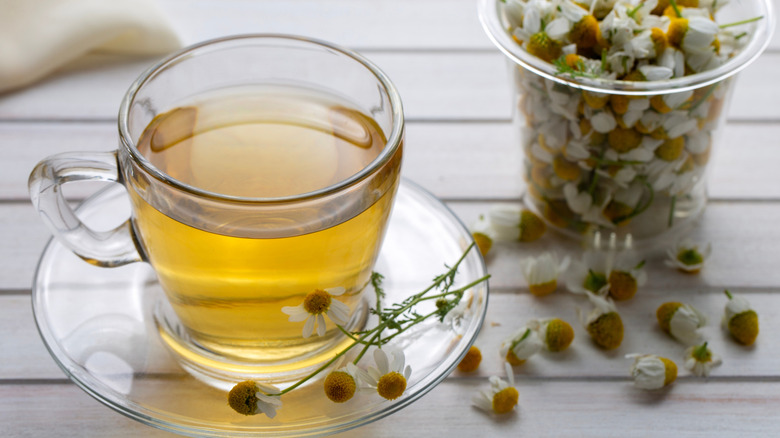
Chamomile tea is calming, soothing, and potentially the popularity front-runner when it comes to stress-relieving teas. So popular, in fact, our expert, the tea master at Shang Palace, calls chamomile "a timeless choice." So timeless that its use dates back to ancient Egypt, Rome, and Greece. Chamomile is naturally caffeine-free and produces small, daisy-like flowers that are used to make the tea. Chamomile tea is rich in antioxidants known to lower inflammation. Significantly, in a scientific review of studies on the effects of chamomile, the majority found the plant to have substantial anti-anxiety properties.
According to the tea master, chamomile tea is "defined by a soft floral character and naturally calming properties ... [it] remains the gold standard for physically unwinding the nervous system. It is the ideal choice for a sensory 'reset' before sleep or after a demanding meal."
It is commonly recommended to enjoy a cup of chamomile tea before bed, and the recommendation is not just an old wives' tale. The plant is quite literally a sleep aid. Chamomile contains an antioxidant called apigenin, a compound that binds to sleep-promoting receptors in your brain. Overall, this heavy-hitter in stress reduction calms the mind, improves sleep, and is the perfect choice for a night-time tea ritual. Its gentle, sweet aroma with floral hints is comforting, and it won't rile you up with caffeine before bedtime.