

18 Of The Most Bizarre Food And Drink Laws Across The US
We may receive a commission on purchases made from links.
People are, to put it bluntly, weird. An almost infinitely entertaining illustration of just how strange humans can be is the laws that have been put on the books over the years to stop them from doing their bizarre things. When you start talking about food and drink? Things get freaky, fast.
We took a look at some of the strangest laws written to govern what goes on with our food and drink. Trust us when we say we weren't disappointed — especially when we looked at laws that have been repealed. For example, we never thought we would be writing about margarine smugglers, but here we are.
This does come with a bit of a disclaimer: Many of the oft-repeated stories about bizarre food laws — like the one about Connecticut pickles needing to pass the bounce test — aren't actually laws, but stories that took on a life of their own. We're not going to include those, and instead, we're only talking about legit laws that actually made it into the books. Truth, it turns out, is stranger than fiction.
Wisconsin has passed laws against the use of margarine
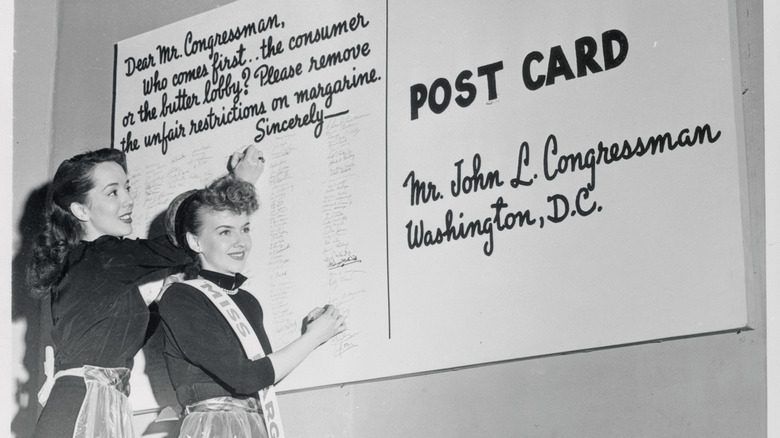
Fun fact: Margarine was created for an 1869 competition, but if you're a champion of real butter, you're in good company. The dairy-centric state of Wisconsin (and several others) made it illegal to make or sell margarine, and it was controversial in an epic way. It's a sentence that we never expected to write, but margarine smugglers who crossed state lines to bring back illicit margarine became such a problem that law enforcement got involved.
In 1964, the Wisconsin Federation of Women's Clubs became one of the most outspoken pro-margarine groups, and Wisconsin became the last state to legalize margarine in 1967. It's still illegal for restaurants — as well as school and institutional cafeterias — to serve only margarine.
Interestingly, it might not be over yet. Lawmakers introduced legislation in 2025 that would restrict margarine sales again in a move to give a much-needed boost to the state's dairy farmers. Time to dust off that 1977 Firebird for a little "Smokey and the Bandit" action, friends.
One Georgia city made it illegal to use a fork with your fried chicken
Gainesville, Georgia, gained the title of Poultry Capital of the World after the chicken industry took over the area during the Great Depression, and it takes its birds very seriously. So seriously, in fact, that in 1961, the city outlawed the usage of forks with fried chicken. Strange? Absolutely, and occasionally, when you see this one popping up on social media, it's along with some comments from people hilariously outraged that such a law exists. Never mind the lobby that's outraged by anyone eating fried chicken with anything but their hands.
Those people can settle down, because the entire thing was done purely to publicize the city's poultry industry, even though it has technically been enforced at least once. The arrest of a 91-year-old woman in 2009 really did happen, but it was a prank organized by her friends. The hooligan was immediately pardoned, and everyone had a good laugh.
California gas stations can't have alcohol within five feet of a cash register, unless ...
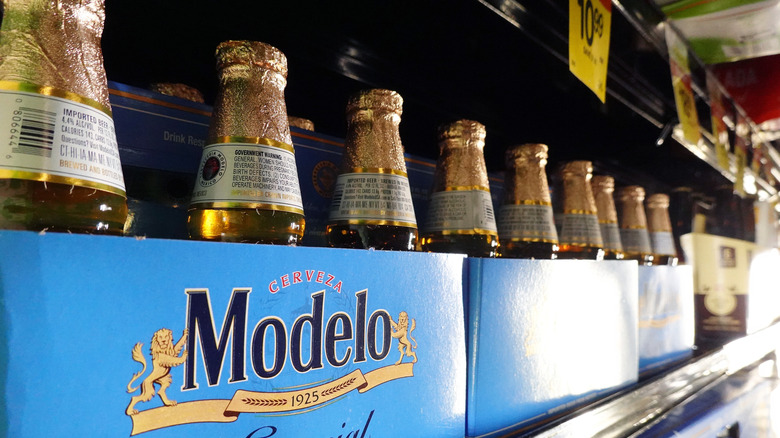
Alcohol laws vary greatly by state, and there's one California statute that is strange, to say the least. In 1988, it became illegal for a gas station to sell alcohol from displays that were less than five feet from registers and doors. There was a caveat, though: If the alcohol was being kept in a permanent cooler, then it was fine.
Why? Honestly, we have no idea, because doesn't that just make the beer even more frosty and ready-to-drink? That's what we thought. Interestingly, the state code also outlaws things like alcohol displays made from ice buckets and advertising alcohol at the gas pumps. This law is strictly enforced, and in 2017, Los Angeles lawmakers made headlines when they called for stricter monitoring of gas stations that sell alcohol to ensure they were in compliance.
Fenwick, Delaware has outlawed using your car to picnic between midnight and 6 a.m.
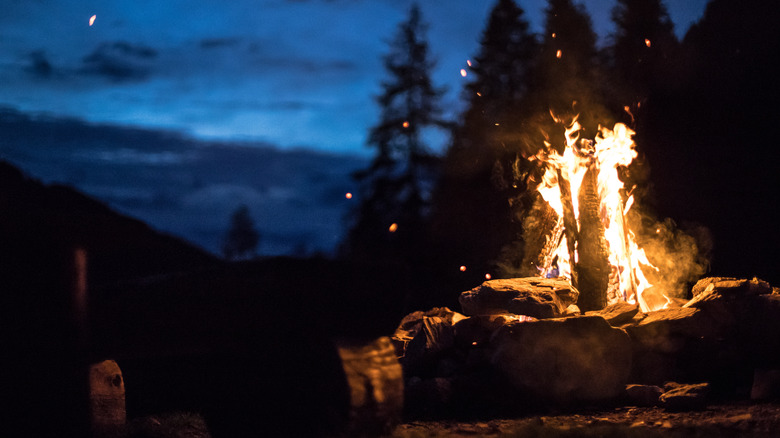
Take a look at Fenwick, Delaware, and you'll see that it's a pretty spot with long sandy beaches and lovely views of the water. It's the perfect place for some fresh air and vibes, but it takes pedestrian safety seriously — so much so that government websites warn that you are absolutely not allowed to park your car and use it as a picnic spot.
That includes pulling into a parking lot and posting up to do a little tailgating, which is kind of a bummer. Check out the specifics on the town's laws, and you'll see that this one technically covers the hours between midnight and 6 a.m. Unfortunately, that means if you're the type that likes a little nighttime tailgating and beachside stargazing from the hood of your car, you're out of luck in Fenwick.
Margarine couldn't be dyed yellow ... and was once pink
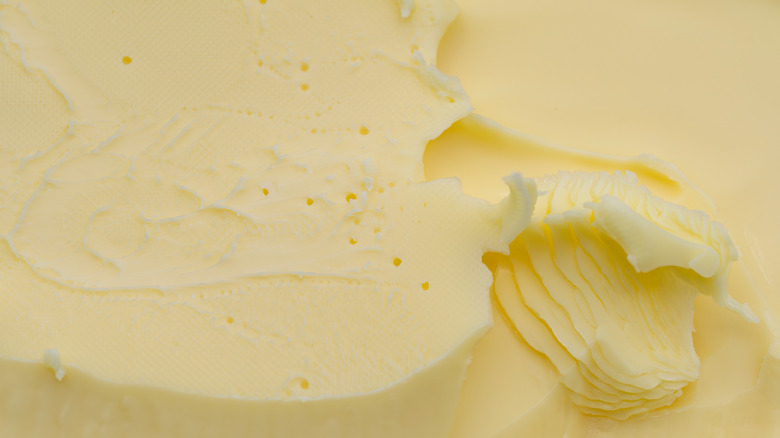
The butter vs. margarine debate is a shockingly long one, and it's full of frankly bizarre attempts by both sides to get ahead of the competition. We all know there's something lovely about the deep yellow color of good butter, and when margarine companies started dying their naturally white product yellow, Big Butter was having none of that. At the height of the pushback against this attempt to look more buttery, 32 states had legislation restricting the use of color in margarine.
White margarine is weird and unappetizing enough, but some states — including New Hampshire — went just one more step with a short-lived law that made it illegal to sell any margarine that wasn't pink. Big Margarine, however, wasn't about to take restrictions in stride and started selling yellow dye that allowed customers to add their own color at home.
Ice cream trucks have been or are banned in a surprising number of towns
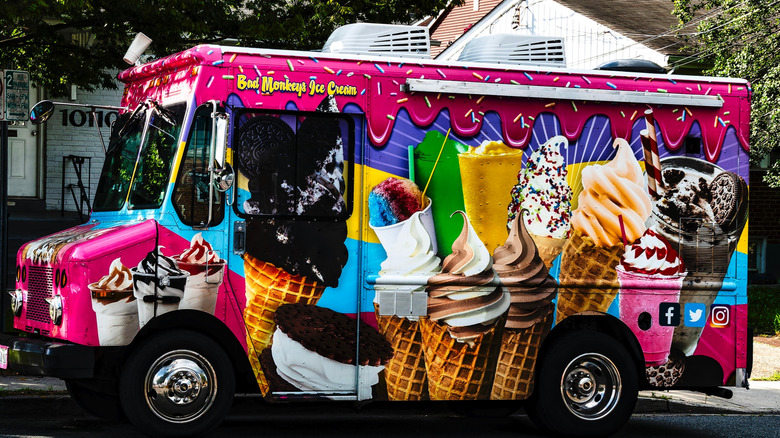
Few things define summer afternoons like the tinkly tones of the local ice cream truck, but not everyone loves the ice cream man. There are a surprising number of towns that have had laws banning them from delivering frozen joy to kids and adults alike.
Let's take just a few examples, including Aurora, Colorado. The town outlawed ice cream trucks back in 1957, with a law that claimed it was (via Sentinel Colorado), "necessary to control injury, death or accident." Yikes? That got overturned in 2022, but the town isn't alone. Similar bans have existed in Des Moines, Iowa, as well as Elgin and Mundelein, Illinois. In 2001, laws were changed in West Bloomfield, Michigan, after a nine-year-old resident's year-long crusade, and it's the subject of the children's book "I Campaigned for Ice Cream: A Boy's Quest for Ice Cream Trucks." (You can pick it up on Amazon for $8.99.)
It's illegal to sell alcohol in the county that's home to Jack Daniels
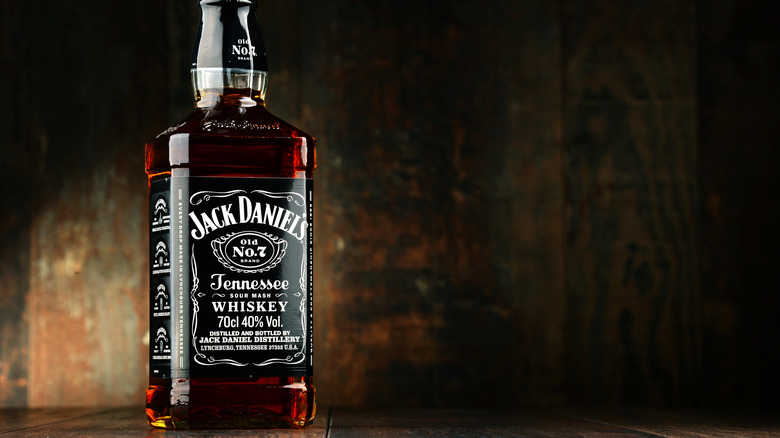
Prohibition hurt the U.S. in myriad ways that are still felt today, and there are still a number of areas that are officially dry. What's strange is that one dry county is home to one of the most famous distilleries in the country: Jack Daniel's. We're talking about Moore County, Tennessee, and it's worth noting that Jack Daniel's home of Lynchburg was initially part of Lincoln County until the boundaries were reworked.
The manufacture of alcohol was prohibited in Tennessee from 1909 to 1937 (in contrast to the federal Prohibition that ran from 1920 to 1933). Distilleries in Moore, Lincoln, and Coffee Counties were up and running quickly, but as for 41 other counties in Tennessee? That took until 2009. But let's talk about Moore County. There are no liquor stores, most restaurants don't serve alcohol, but Jack Daniel's is exempt.
It's illegal to fish for oysters in Maryland to use for chicken feed or road construction
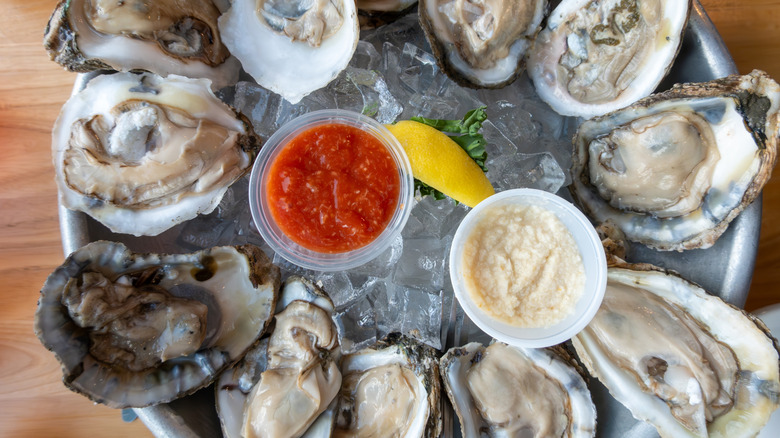
We can thank Maryland fishermen for supplying some of the best oyster bars in the U.S., and what fishermen pull out of the state's coastal waters is often lauded as some of the most delicious, flavorful oysters you can find. Chesapeake Bay, in particular, is known for its oysters; there's no denying that. It's not a huge leap to assume that the oysters plucked out of Maryland waters are headed for the dinner table, but that apparently was not always the case.
It's written into Maryland state law that oysters can't be used for chicken feed, and they also can't be pulverized for lime or used in building roads. It seems almost sacrilegious, and if you're wondering how big a problem this was that it needed to be outlawed, you're certainly not alone in that.
Alcohol can't be served at bingo games or raffles in North Carolina
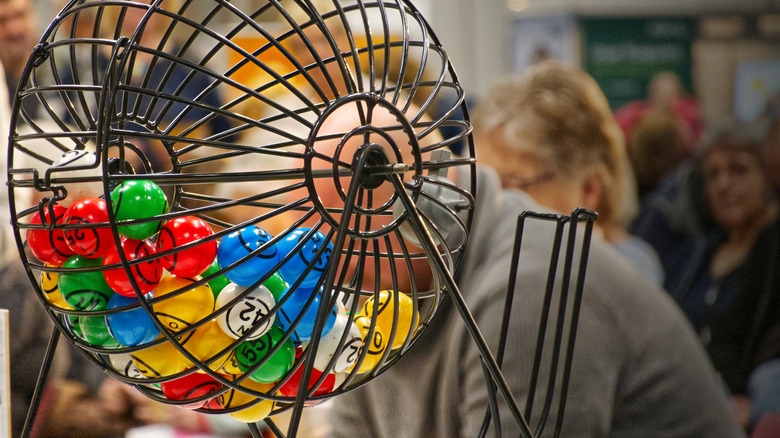
Here's another one that makes us very certain there's a great story behind this, but it's sadly been lost to the sands of time. North Carolina apparently had something of a bingo problem, as it's written into statutes that not only is it illegal to sell alcohol at bingo games and raffles, but you can't bring your own to the party, either.
Why? We couldn't find any salacious stories, but we did find an explanation from some purported legal experts. Bingo is gambling, and the law was simply put in place to keep gamblers at the bingo table sober. And that's not the only bingo-related legislation on the books. It's also illegal to play a bingo game that lasts more than five hours, hold games more than twice a week, and schedule games less than 48 hours apart. Who knew?
Age limits on trick-or-treaters in Chesapeake, Virginia might result in misdemeanor charges

Trick-or-treaters might find some truly terrible candy in their goodie bags, but it's possible that the very worst thing to get on Halloween is a misdemeanor charge on your record. That could — in theory — happen in Chesapeake, Virginia, where it's officially illegal to go trick-or-treating if you're older than 14. You can also get in trouble for being out later than 8 p.m., and that kind of makes Chesapeake the place where fun went to die.
In all seriousness, law enforcement and officials have said the 1970s-era law won't be enforced, so that's something. It's also worth noting Chesapeake isn't alone in having age limits on the books. The age limit in Jacksonville, Illinois, and Rayne, Louisiana, is 13. It's 16 in Charleston, South Carolina, and 12 in a handful of Virginia cities, including Virginia Beach, Norfolk, and Newport News. No treats for teens? Well, tricks, it is!
Brunches with bottomless cocktails are illegal in NYC
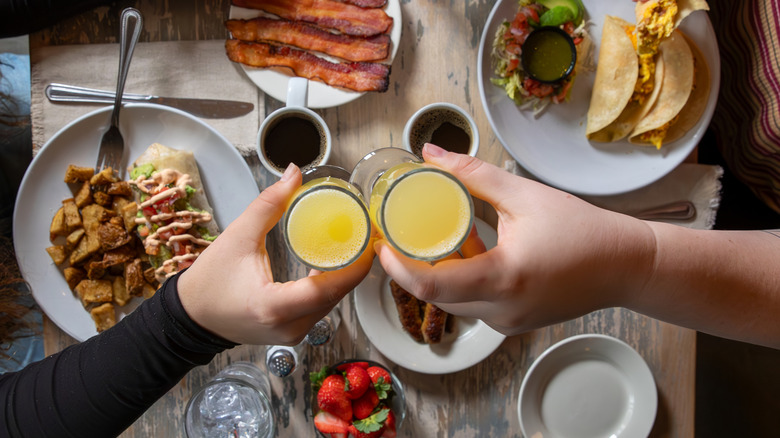
Back in 2014, brunch-loving New Yorkers heaved a collective gasp when a long-overlooked law made headlines. According to CBS News, it simply stated that it's illegal to offer an "unlimited number of drinks during any set period of time for a fixed price."
The law was meant to help stop restaurant and bar customers from over-indulging, and the state's Liquor Authority actually weighed in. It said that since bottomless cocktails were offered as part of the event — that is, brunch — it's all good.
That's not the end of the story. In 2017, there was a movement in the East Village trying to ban brunches, and it cited the no-bottomless-drinks law while arguing that it should apply here, too. Don't worry, mimosa lovers. The state passed a law in 2022 that allowed liquor stores to open two hours earlier on Sundays, suggesting brunch drinks are here to stay.
No alcohol can be served at funeral homes in Massachusetts
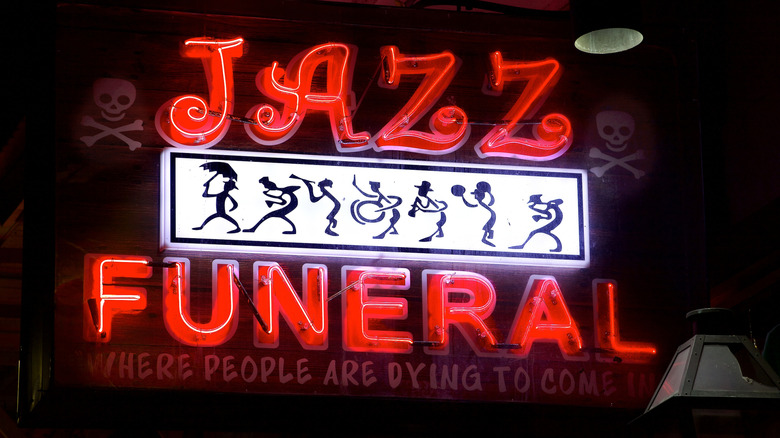
Is there a story here? Undoubtedly, yes. Are we salty that we couldn't find exactly what that story is? Also, yes. In laws regarding funeral homes in Massachusetts, it's clearly stated that alcohol is not to be served at a licensed funeral parlor. Interestingly, that's not nationwide. In Utah, for example, saying farewell to loved ones with the help of a drink or a few is fine.
Boston has a history of forbidding food at funerals or wakes. It has been cited as a safety concern, but the idea of grieving friends and family attending an eight- or 10-hour wake with no refreshments was abhorrent to one state senator in particular. State Senator Thomas Kennedy championed a bill that would allow things like coffee and sandwiches to be served, and after around a dozen attempts at getting a bill passed, funeral homes can now serve food, as long as it's supplied by a third party.
West Virginia has laws about what roadkill can and can't be taken home

The idea that West Virginia has laws regarding the use and consumption of roadkill sounds like it has to be a "Saturday Night Live" sketch, but it's not. State law says that if you hit and kill an animal while driving, you can absolutely take it home with you. There are exceptions: Fawns young enough to have spots, bear cubs, and certain birds are exempt, and you'll technically need to report the incident to law enforcement.
The law has been around since 1998, and yes, we are still talking about bizarre food and drink laws. Eating roadkill is a perfectly acceptable reason to take it home, and West Virginia's not shy about that. The Autumn Harvest Festival and Roadkill Cook-off has been held in Marlinton for years, and visitors can try everything from snapping turtles to possum, black bear, and quail. Take me home, country roads.
There shall be no tooting of car horns around restaurants in Little Rock, Arkansas
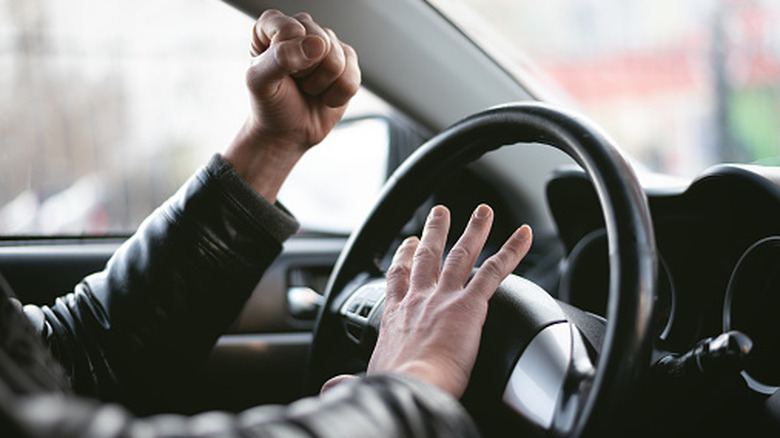
Head to Little Rock, and you'll find that there's a super weird law that Arkansas residents are required to follow at certain restaurants. Written into the municipal code for the city is a single, one-line law that outlaws honking car horns outside sandwich shops after 9 p.m.
It's an oddly specific thing, and yes, we wonder what horn-tooting delinquent was responsible for that one. It comes right after a slew of similar laws specific to drive-in restaurants: Not only is it illegal to make any car-related loud noises, like revving the motor, racing, and — presumably — honking the horn, but there are also specific mentions of offensive and loud conversations and threats. You're also forbidden from pulling into a drive-in restaurant and leaving before you park, so a word to the wise: No U-turns here, please.
Mississippi's Anti-Bloomberg law makes it illegal to regulate soda and other portion sizes
Back in 2013, a bill championed by Michael Bloomberg got hit with the legal ban hammer when a court ruled that the attempt to limit sodas to 16-ounce servings was a vast overstep by the government. New York's giant sodas were safe, and down in Mississippi, authorities were taking steps to safeguard their sodas, too. That led to the Anti-Bloomberg law, which passed at about the same time.
In addition to ensuring that there are no limits placed on soda and portion sizes, the law provided a loophole that would allow restaurants not to post mandated calorie counts. It also protected fast food chains' right to put toys in kids' meals — a long-controversial practice — and yes, Mississippi signed the bill into law. Naysayers were quick to point out that Mississippi had some of the lowest life expectancy and highest obesity rates in the country.
Frog-jumping contestants in California cannot be eaten
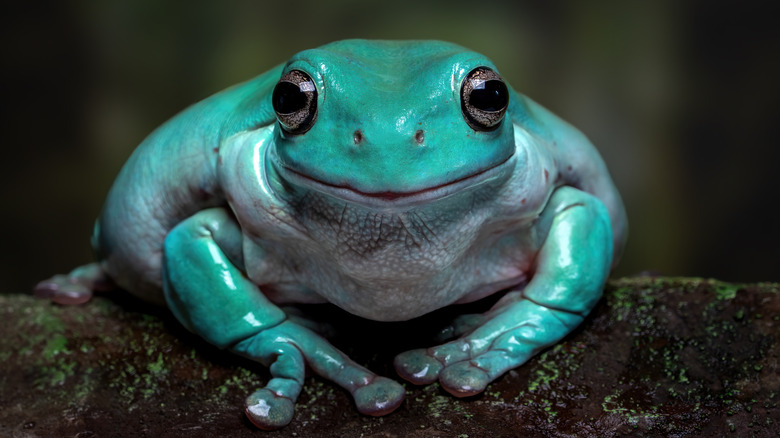
Sure, there are a lot of outdated laws on the books, but before you scoff at this one, we'd like to point out that frog jumping contests are still very much a thing. Sacramento's 50th Capitol Frog Jump was held in 2026, and yes, there were plenty of costumes and totally adorable frogs. If you're worried any of those little sports stars are going to get turned into the star of the dinner table, we have some good news for you.
It turns out that frog jumping contests are apparently much more serious than you might think, and any frog that competes in a jumping contest is legally protected from being eaten. It's written into California's Fish and Game Code, which says that whenever and however a competitor in a frog jumping contest dies, it can't be turned into dinner. There. That's a thing you know now!
Prohibition in Kansas lasted a long, long time
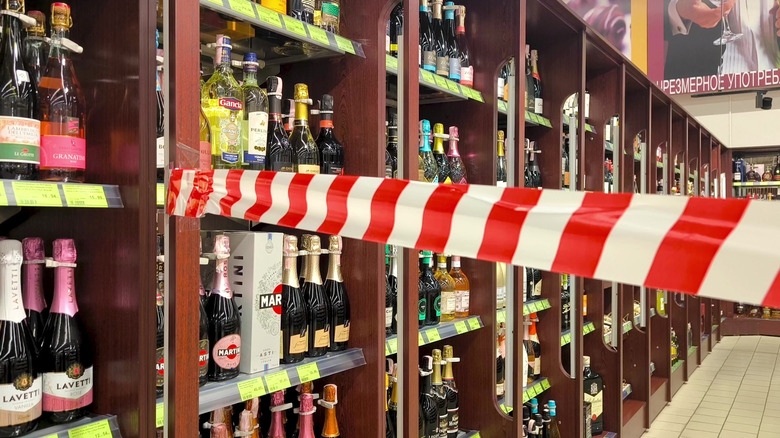
On a federal level, Prohibition lasted from 1920 to 1933. They were long, strange years of rum-running and speakeasies, but different states also had their own interpretation of Prohibition. Kansas is arguably the strangest example, as its statewide ban on alcohol went into effect way back in 1880. That was driven in part by a large Mennonite population and a governor from the Prohibition Party, and anti-alcohol laws stayed in place through and past World War II.
Even then, there was a massive catch. When Kansas finally opened the door for liquor stores in 1949, that came with a caveat that forever, permanently, and indefinitely banned places where customers could pull up a chair, order a beer, and drink in public. Perhaps unsurprisingly, people just kind of ignored that, but fun facts: Microbreweries were banned until 1987, and happy hours were illegal until 2011.
Defacing milk cans in Massachusetts can get you a $10 fine
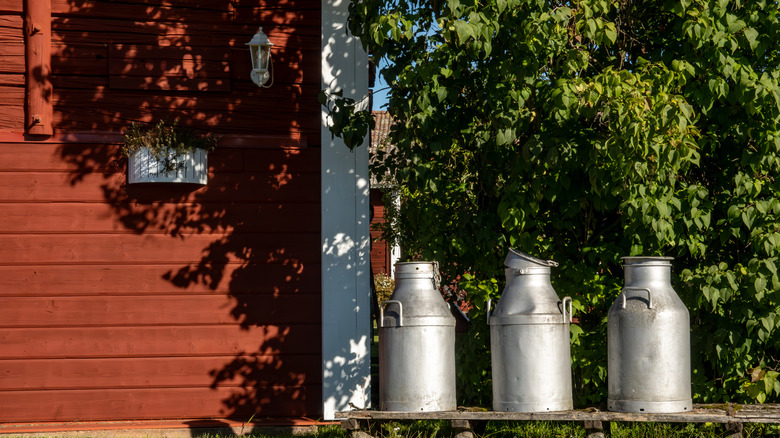
When was the last time you saw a milk can in the wild? If you're not sure, then at least you're not going to be running the risk of breaking a Massachusetts law that makes it illegal to deface or alter milk cans in pretty much any way. The biggest concern seems to be that the name of the supplier would be changed, and it was apparently a big deal.
While we couldn't find a reason this made it into the law books, we did find legal experts who confirmed the law doesn't extend to modern milk containers. That sort of serves to make this one weirder, but we do have a little bit of good news. If you do happen to tangle with a milk can and render it illegible, don't worry — it's not going to be more than a $10 fine.