

The 9 Worst Candies To Give Out To Trick-Or-Treaters On Halloween
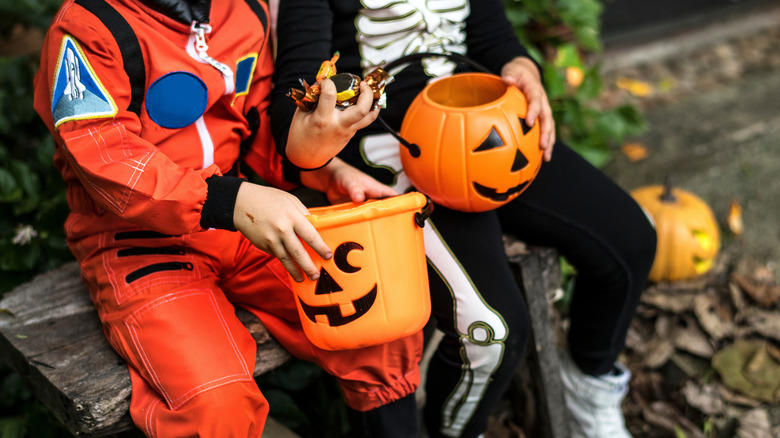
As any cunning and candy-crazed child knows, the time-honored tradition of trick-or-treating requires strategy, stamina, and a keen eye for candy profits. I would know — I was once one of these masterminds, and I had it down to a science. First, it is imperative to target the right neighborhood: dense, walkable, and rich in porch lights. Next, scout for the houses with over-the-top decorations; anyone who cashes out on giant inflatable skeletons probably doesn't cheap out on the treats. And lastly, of course, the most seasoned trick-or-treaters keep meticulous mental records of which houses hand out the good stuff and which ones most certainly do not.
Now, at the ripe old age of 27, I've long since hung up my pumpkin bucket. But I still remember the epic highs (a full-sized Snickers bar!) and the crushing lows (a sad little box of Sun-Maid raisins) of post-haul candy sorting. In the spirit of those memories, let's revisit the true scary villains of Halloween night: the worst candies to give to young trick-or-treaters on Halloween.
Circus peanuts
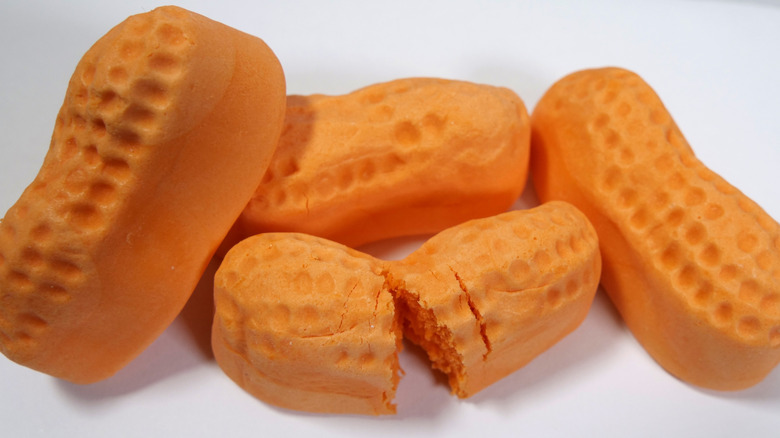
It's genuinely surprising to learn that circus peanuts are still being produced in the year 2025. Who exactly is buying these? This was the default "candy" at my grandparents' house when I was a kid, and even then, it felt like a relic. I still remember biting into one, expecting something light and fruity, maybe like a marshmallow Peep. Instead, I got a dense, chewy, vaguely banana-flavored mouthful of disappointment.
Yes, despite being bright orange and shaped like a peanut, these bizarre foam candies are unmistakably flavored with artificial banana flavor. And there is no consensus on why they were made to taste like bananas, either. It also doesn't quite feel right to call them "marshmallows," since they're significantly chewier than your average Jet-Puffeds, but they're too soft to be called a taffy. Circus peanuts live somewhere in the uncanny valley of candy. According to legend, circus peanuts were first made in the 1800s and were one of the first types of "penny candy." No one's really sure why they were invented in the first place, although they might have originated with traveling circuses. I can't imagine anyone hands these out anymore, unless you happen to be trick-or-treating in a remote Mennonite village or a retirement community.
Candy corn
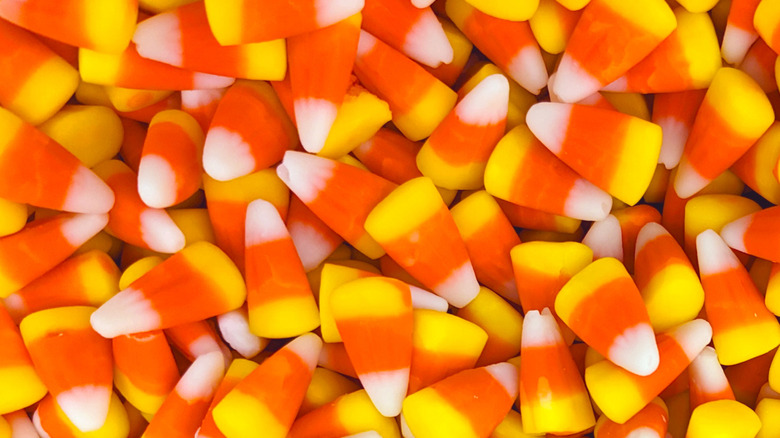
Candy corn might be the most visually iconic Halloween candy, yet it's also one of the most controversial. Much like circus peanuts, it suffers from a serious case of mismatched flavor and texture. It looks festive and inviting, but once you bite in, the illusion is all over. Grainy sugar meets waxy marshmallow, with a generally artificial taste.
According to candy lore, George Renninger of the Wunderlee Candy Company in Philadelphia first created the candy in the 1880s. It was later popularized by the Goelitz Confectionery Company under a far less appetizing name: "Chicken Feed." The recipe hasn't changed much since then; it's still sugar, fondant, corn syrup, and marshmallow creme, all coated in an edible wax to give it that telltale shine.
Older generations might find candy corn charmingly nostalgic, but to kids, it's just a seasonal decoration masquerading as food. Who would want to eat a bite-sized Yankee Candle?
Nik-L-Nip
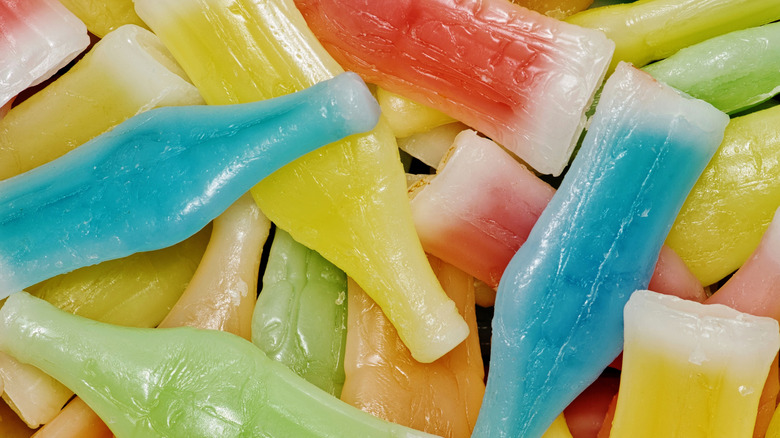
Nik-L-Nip is the brand name of those tiny wax bottles filled with brightly colored, mysterious liquid. First made in the early 20th century, the name came from their original price (a nickel) and the nibbling method required to open them. They were most popular in an era when no one batted an eye at kids ingesting high-fructose corn syrup, artificial dye, and paraffin wax.
To be honest, I didn't hate finding these in my Halloween bucket. They looked cool, like mini potions or rainbow soda bottles for dolls. But the taste was a sensory betrayal. You start with a mouthful of wax, which is all right if you're the type of kid who also ate crayons. Then, you get a mouthful of indistinguishable sugary goo that somehow manages to taste like nothing and everything all at once (despite the fact that there are different flavors). You're left with a stained tongue, a bad taste in your mouth, and a chewed-up wad of wax. From a culinary perspective, these are pure chaos.
Good & Plenty
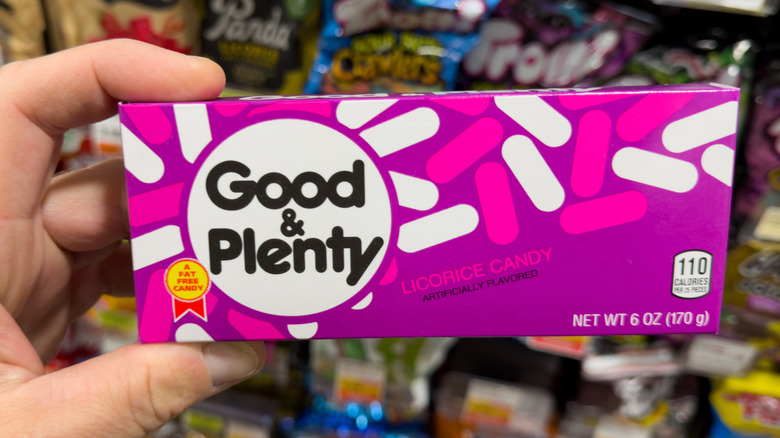
Good & Plenty is a brightly colored, licorice-flavored candy. Licorice is one of those "love it or hate it" flavors among adults, but does any kid love licorice? I always associated the taste with lozenges and grandparents. I can't imagine modern children, raised on a diet of Sour Patch Kids and Skittles, feel any differently. Yet somehow, these pastel pink and white capsules can sneak their way into Halloween candy bags.
First made in 1893, Good & Plenty is one of the oldest branded candies in the United States. Before it was a candy, licorice was used for centuries as a medicine. The flavor itself, a mix of anise and fennel, may evoke the taste of NyQuil, Jägermeister, nostalgia, or general disgust, depending on your palate. Even Hershey's, the brand's current owner, leans into the nostalgic aspect, calling it "retro" and an "old-fashioned treat." Which is just another way of saying, "We know kids hate it, but your grandma might still buy some."
Raisins and Raisinets
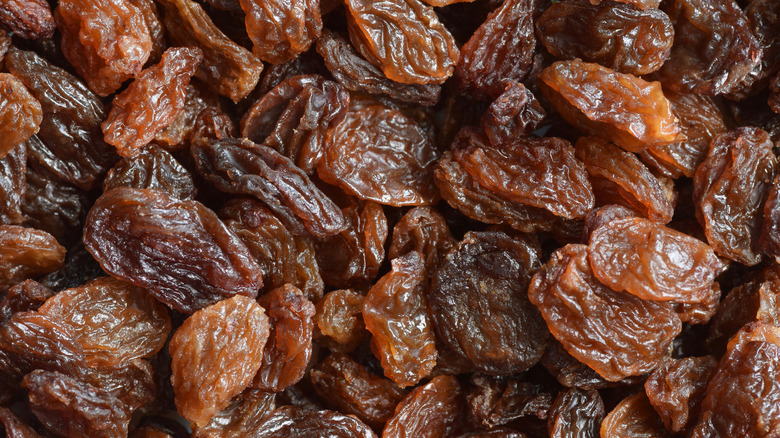
Raisins, in any form, have no place in a Halloween candy bowl. On any other day of the year, they're a perfectly respectable snack for kids and adults alike. But on Halloween? Handing out Sun-Maid boxes will instantly make you the neighborhood villain. You might as well toss a stalk of celery into their Jack-o'-lantern bucket and call it a day. Kids aren't roaming the streets in costume to meet their fiber goals!
Raisinets are a slight improvement, if only because they're dipped in chocolate and therefore qualify as actual candy. But even then, they exist in a strange no-man's-land between dessert and health food. They're the kind of thing you buy at a movie theater when you're trying to eat healthy-ish, not the kind of thing a seven-year-old wants after trekking three blocks dressed as Spider-Man.
Smarties
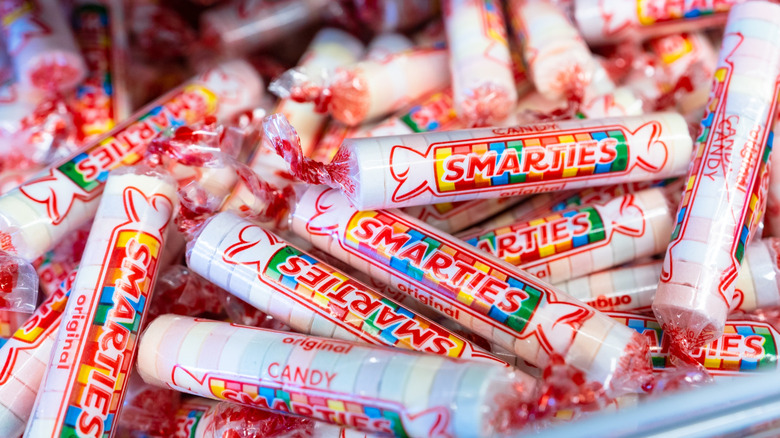
Of all the candies on this list, Smarties are probably the least offensive. They're not bad — most kids like them well enough — but no one's ever thrilled to see them. Ever since the 1940s, Smarties have been a staple in American candy stores and classrooms alike. I personally associate them with acing a 5th-grade spelling test (teachers love the name). The flavor is sugary-sweet with a citrusy tang, and while the colors technically represent different "flavors," they all seem to taste identical. The texture satisfies that inexplicable childhood urge to eat chalk.
All in all, Smarties aren't awful; they're just very mediocre. Handing them out on Halloween feels a bit low-effort. These kids (well, their parents) spent hours crafting clever costumes to entertain you, and your grand gesture of appreciation is ... a roll of dusty pastel tablets? Smarties won't make the kids recoil in disgust, but they'll definitely wish they'd gone to the house next door.
Necco Wafers
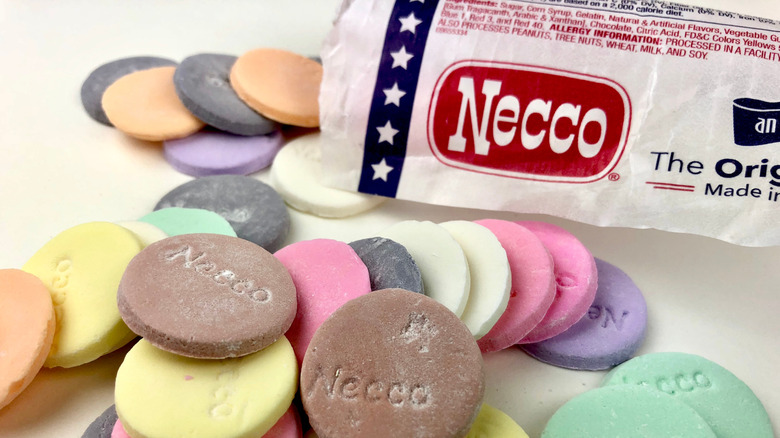
Necco Wafers are like the great-grandparents of Smarties. First invented in 1847, they taste every bit their age. Unlike Smarties, which at least have a whiff of fruitiness, Necco Wafers come in a lineup of flavors that read like a 19th-century apothecary menu: licorice, clove, wintergreen, cinnamon –you know, all the flavors kids love (not!). The texture is harder and chalkier than Smarties, and they have more in common with a Pepto-Bismol tablet than any modern candy.
To their credit, Necco Wafers have an interesting backstory. Their creator, Oliver Chase, invented the first American candy machine, and the wafers were sent to soldiers during World War II. But at the end of the day, interesting history doesn't make them taste any better. These are candies best appreciated by nostalgic older generations; to everyone else, Necco Wafers sort of feel like eating the past — literally.
Bertie Bott's Every Flavor Beans
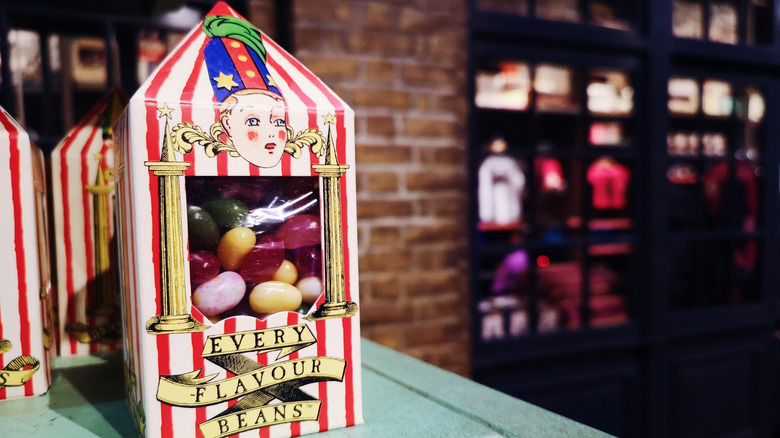
Among the many old-fashioned horrors on this list, Bertie Bott's Every Flavor Beans are a relatively modern menace. Inspired by the "Harry Potter" books, they're a mixed bag of jelly beans that range from tasty to traumatic. The idea is fun ... the first time. For adventurous kids with a sense of curiosity, it's all giggles until someone bites into the vomit-flavored bean. After that, every future encounter is less a treat and more like a gamble with your taste buds.
Here's the official flavor lineup: banana, black pepper, blueberry, booger, candyfloss, cherry, cinnamon, dirt, earthworm, earwax, grass, green apple, lemon, marshmallow, rotten egg, sausage, soap, tutti-frutti, vomit, and watermelon. Out of 20 flavors, about half of these are palatable, and of those, you'll probably dislike one or two anyway (I personally wouldn't touch banana or watermelon). That means you've got roughly a one-in-three shot at getting something that doesn't taste disgusting. In other words, the odds are stacked against you. Ultimately, these beans are more malicious than magical.
Cheap milk chocolate
A plain Hershey's chocolate bar is certainly not the best Halloween candy to find in your pumpkin bucket, but in my opinion, it's not the worst. The real offenders are the off-brand, Dollar Tree-style milk chocolates — the ones wrapped in shiny foil and innocuously shaped like pumpkins, spiders, or gold coins. They look festive enough, but the moment you bite in, it's like chewing on dust-coated mud that's been sitting in a basement for centuries. You eat one piece of that, and suddenly every Reese's in your bucket tastes worse just by association.
If cheap milk chocolate tastes sour or spoiled to you, trust your taste buds. That tang comes from butyric acid, a compound also found in rancid butter, Parmesan cheese, and ... literal vomit.Yep, you read that right. American milk chocolate tends to have more sugar and less cocoa than European chocolate, and some producers even put their milk through a process that creates butyric acid on purpose to preserve it longer. So if your Halloween chocolate tastes like puke, well, you may not be too far off.