

12 Sneaky Details About Aldi's Frozen Section
Aldi's frozen food section is always fun to visit to see what's new, but those who frequently shop at the store may have noticed some sneaky details. Among the enticing deals, cheap clearance items, and fan favorites are some unexpected surprises.
For example, if you've only recently started shopping at Aldi, you may not have yet realized that products will regularly pull a disappearing act. You could buy the same item for weeks, and then one day it's gone — this certainly holds true for the frozen foods. However, vanishing products are just the tip of the iceberg. You might also encounter some "creative" marketing, with misleading product names and packaging occasionally resulting in you buying something that isn't what you expected. And that's not always a bad thing. Reading the labels closely can usually help you avoid being led astray. There have also been size, flavor, and quality discrepancies within the frozen food department, along with a handful of juicy scandals. So, if you're curious to know what secrets might be lurking in the freezer section, we've got the details for you below.
Your favorite frozen items might not be available next visit
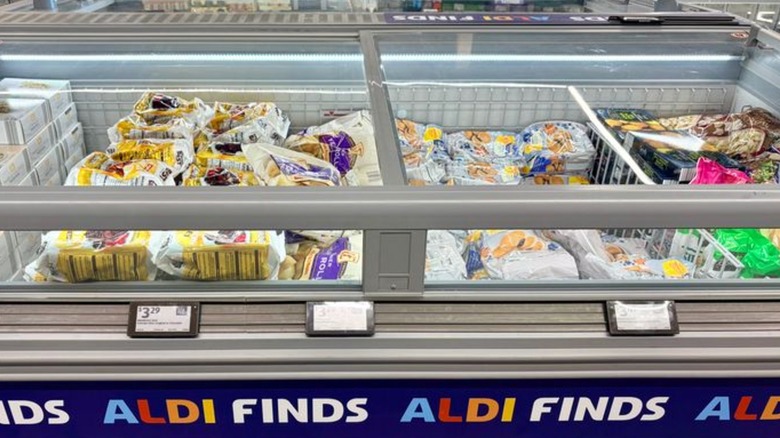
If you're shopping in Aldi's frozen food section, you'll have to get used to the fact that some items will be unavailable on your next visit — even long-time favorites are at risk of being discontinued. This is all part of Aldi's business model.
One of the ways the company keeps its prices down is by cycling through low-cost products. Aldi takes advantage of temporary price drops or limited-time deals with suppliers so it can pass those savings onto its customers. However, this means that if your favorite item becomes more expensive for Aldi, they'll replace it with a more budget-friendly alternative. Popular frozen food items — like vegetables and chicken nuggets — are pretty much always available, but specific brands may disappear. Meanwhile, some items are seasonal, so you'll only see them at certain times of the year.
The store also offers a selection of limited-release products — designated as Aldi Finds – which changes on a weekly basis. The good news is that if an Aldi Finds item sells well, the store is more likely to stock it again. Ultimately, one of the unwritten rules of shopping at Aldi is that it's always best to stock up on the products you like while you can. Luckily, this is much easier to do with frozen items, as long as you have enough freezer space at home.
Some of Aldi's frozen private label items are stealthy dupes
If you've ever wondered why some of Aldi's private-label frozen foods taste familiar, you're not alone. A number of the store's most popular frozen offerings actually appear to be dupes of beloved name-brand products.
Many Aldi shoppers claim that the store's Breakfast Best range is superior to Jimmy Dean's, and it's significantly cheaper, too. If you need your fix of pizza rolls, why not try Mama Cozzi's Pizza Snacks? They're supposedly indistinguishable from Totino's version, and they also cost less.
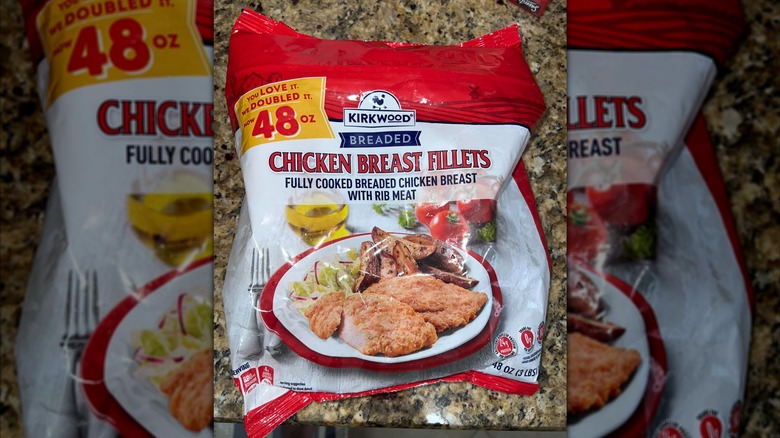
You'll also encounter fast food dupes in Aldi's frozen section. The Kirkwood Breaded Chicken Breast Fillets – known affectionately as "red bag chicken" — and the Kirkwood Crispy Chicken Nuggets are remarkably similar to Chick-fil-A's sandwich fillets and nuggets, according to fans on social media. Both products have a sweet- and dill-pickle-infused crust, just like Chick-fil-A's chicken. Meanwhile, the Season's Choice Extra Crispy Restaurant Fries often remind customers of McDonald's fries, especially when they're cooked in an air fryer. If you see "restaurant" in the name of an Aldi private-label product, it might be worth checking out what it's duping.
Aldi's freezers are located near the registers on purpose
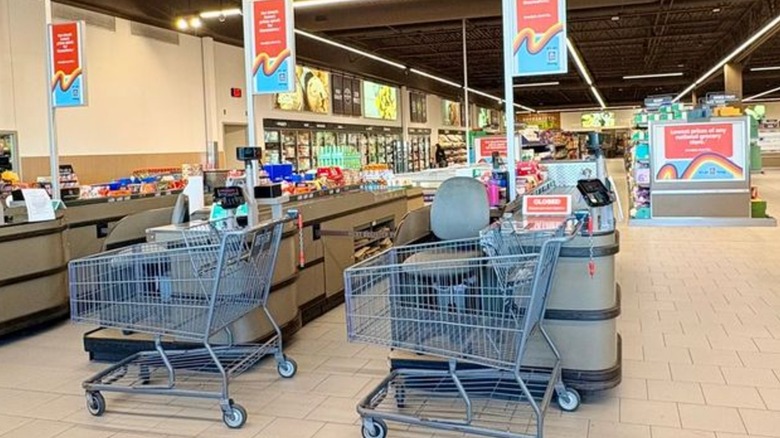
While the layout of individual Aldi stores may vary, it always seems that the upright freezers are situated near the registers at the front of the store. This strikes some people as odd, considering most stores place theirs near the back of the building, but Aldi's approach has several advantages.
Supermarkets generally want the frozen food aisle to be the last stop of your shop. In part, this is because most customers want to be able to head straight from the freezers to the checkout and reduce the chance of their items defrosting before they get home. And technically, your shopping route ends at the register, not at the back of the store. At the same time, the fresh produce that most stores place near the entrance is shifted to the back. According to Aldi, this is all about preventing items from getting smushed before you finish shopping. Instead of filling your cart with soft fruit and vegetables and having to place heavy boxes and cans on top, the more fragile food items appear further down the store. While the store may have a generous returns policy, it's better for everyone if customers don't need to use it too frequently.
You'll also see island freezers in Aldi, and these are typically found in the middle of the store. This is a standard supermarket practice to encourage impulse purchases, and it's normally where you'll spot frozen Aldi Finds items.
Some of Aldi's frozen items are less healthy than you think
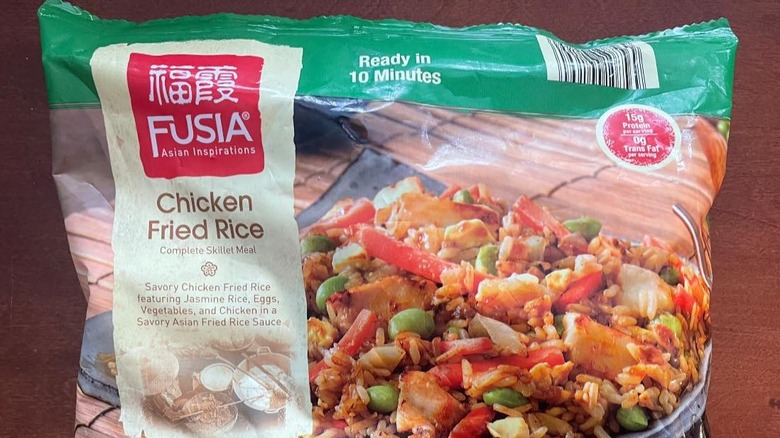
Aldi recently announced plans to cut artificial ingredients from its private-label items, including its frozen food range. While this may be a positive step, removing artificial flavorings, sweeteners, colorings, and preservatives doesn't automatically make something healthier — you might still want to double-check a product's nutritional information before dropping it in your cart.
Whether you're looking for snacks, desserts, or full meals, Aldi's frozen food section contains plenty of items where a single serving may be enough to hit the daily recommended allowance of certain macronutrients. For example, a single Breakfast Best sausage, egg, and cheese biscuit sandwich contains 12 grams of saturated fat and 1010 milligrams of sodium — that's 60% and 44% of the recommended daily values respectively. Meanwhile, a single serving of Fusia Asian Inspirations chicken fried rice contains 730 milligrams of sodium (30% of the daily value), but one serving is considered to be a single cup of rice. The packaging states this is a complete meal, but if you treat it as one, the nutritional totals triple.
And while nobody should be surprised to hear that cheesecake isn't a superfood, a 6-ounce serving of Belmont New York Cheesecake contains 16 grams of saturated fat, or 80% of the suggested daily maximum. It also contains 40 grams of sugar, which isn't far off the recommended limit. So whether you're picking up a sweet treat or a seemingly wholesome dinner, be sure to read the packaging carefully if you like keeping track of your nutritional intake.
There have been several recalls affecting frozen items at Aldi
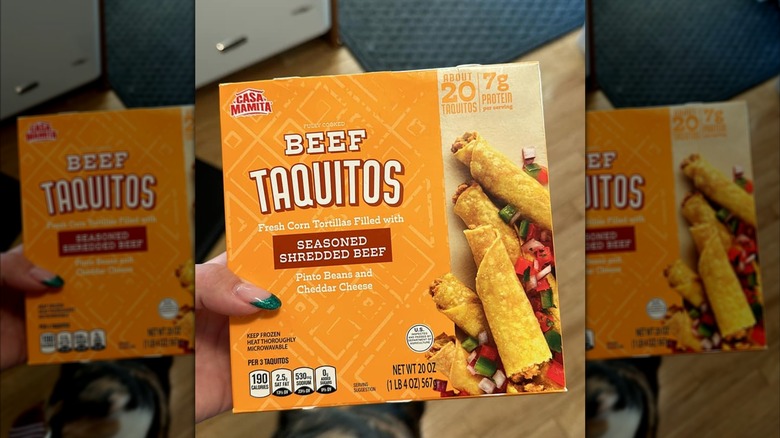
Just because a product is frozen, that doesn't mean it's safe from the kind of contaminants that could necessitate a recall. In fact, some of the biggest recalls in Aldi's history have involved frozen items, with reasons ranging from undeclared ingredients to potential bacterial contamination.
The most common reason for Aldi's frozen products being recalled appears to be due to concerns that they may contain an allergen that hasn't been listed on the packaging. For example, Aldi once voluntarily recalled its Fusia Chicken Fried Rice after a labeling misprint meant milk may have been present but unlisted as an ingredient. There have also been recalls because of the possibility of foreign object contamination. Aldi's Casa Mamita taquitos and Bremer Classic Handheld hot stuffed sandwiches were voluntarily recalled due to fears they may have contained pieces of plastic. The same thing happened with its Kirkwood chicken strips when there was reason to believe some bags may have contained bits of metal. Aldi also once recalled a frozen lasagna after a nationwide scandal, but more on that later.
Microbial contamination can also be a danger, regardless of whether a product is frozen or fresh. Aldi once worked with its supplier to recall multiple flavors of Sundae Shoppe ice cream bars due to the risk of Listeria being present. While Listeria infections are uncommon, they can be severe, especially for pregnant people, newborn babies, adults over 65, and the immunocompromised. It's worth noting that the majority of Aldi's food recalls have been pre-emptive, voluntary, and carried out in cooperation with its suppliers.
Aldi's frozen lasagne once contained horse meat
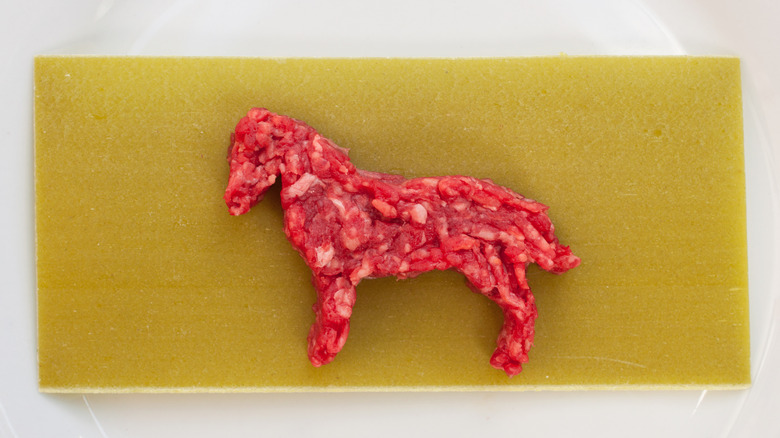
One incident that the internet can't seem to quite forget is the Aldi horse meat scandal. Unlike the mystery meat rumors about the burgers in your school cafeteria, Aldi's frozen Today's Special beef lasagne and spaghetti bolognese were both found to contain actual horse meat instead of beef. It's worth mentioning that this only impacted UK stores, and that Aldi wasn't the only supermarket chain affected.
The 2013 scandal was the result of a serious misunderstanding at the end of a lengthy European supply chain, with a series of events that played out like an old-fashioned game of telephone. The meals in question were to be produced for Aldi by a French company. This company outsourced the job to a subsidiary in Luxembourg, who ordered the meat from a company in France, who reached out to a subcontractor in Cyprus. The subcontractor contacted a trader in the Netherlands, who ordered the meat from an abattoir in Romania.
As it turned out, the Romanian company genuinely believed they were asked to provide horse meat, and the meat left the country labeled as such. However, one of the intermediaries relabeled the meat as beef. The whole affair sparked a significant national discussion about appropriate regulation within the British food industry.
Aldi's frozen seafood was inadvertently funding the North Korean government
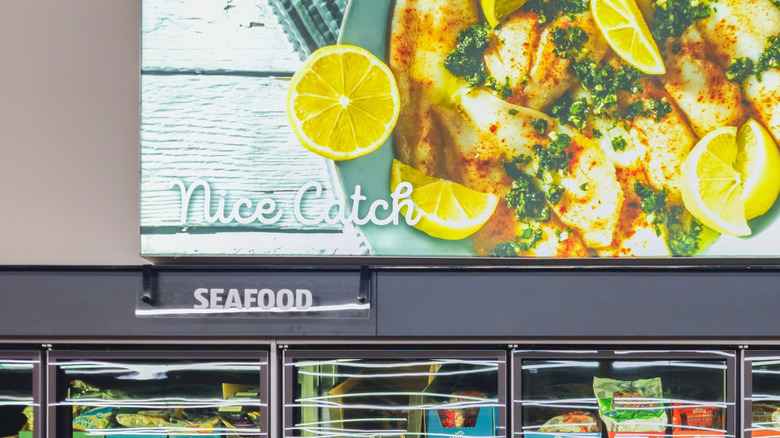
As far as we can tell, Aldi doesn't source any of its products from North Korea. That said, its frozen seafood brand, Sea Queen, was once found to be inadvertently funding the country's authoritarian government. The problem surfaced in 2017, when it was discovered that North Korea was sending workers to China to process seafood for a company supplying Aldi and Walmart.
The Chinese companies using North Korean labor were able to sell their products for much cheaper because they were paying the workers far less than they would a Chinese citizen. The North Koreans were also forced to live and work in squalid conditions, and only allowed to keep a portion of their meager wages — the majority of their pay was funneled back to the North Korean government, totaling as much as $500 million per year.
The scandal caused Aldi and other affected companies to carefully investigate and reevaluate their seafood supply chains, including the working conditions of suppliers' seafood production facilities. Aldi ceased purchasing goods from several questionable suppliers, and now uses transparent product labeling to inform customers where its seafood is farmed or caught.
Aldi's food isn't safe from shrinkflation
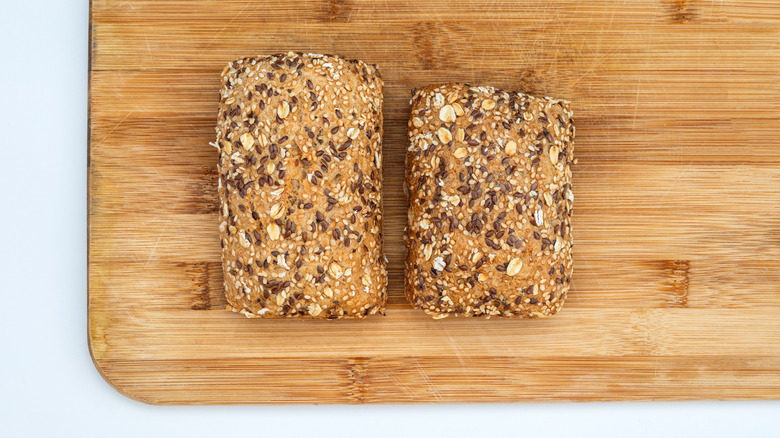
If a manufacturer's costs are increasing due to inflation and it wants to maintain its profit margins, it typically has two choices: it can charge more for its product, or it can reduce the size or quantity of the product without changing the price. Consumers are typically more likely to notice and complain about a price increase, which is why many companies take the latter approach, which is known as shrinkflation.
But consumers still know when they're getting less bang for their buck, and shoppers have noticed that some items in Aldi's frozen range have been gradually getting smaller. Customers on social media have talked about how boxes and bags of products they've bought previously remain the same size, but the contents have shrunk. Many mention how they now have to check the weight and serving amounts on packaging to make sure they have enough of the product for their needs. There appears to be a consensus among customers that it would be better if packaging was shrunk to match its contents, which Aldi has already done with certain items. Plus, smaller packaging helps reduce unnecessary waste, and it could open up more space in Aldi's relatively small freezer section for more products.
Some Aldi customers got less than they paid for

While shrinkflation certainly isn't ideal, at least you can read the product packaging to check the amount of food you're getting. Or rather, you'd hope that's the case — multiple Aldi customers have bought frozen food and later discovered the weight or quantity of the product doesn't match what's on the label.
For example, some customers have shared videos on social media of them counting the number of frozen Aldi chicken fries inside a bag they'd just bought. While the packaging claimed there were around 56 fries within, the real figure was closer to 40. Several customers have also mentioned buying frozen products that seemed a little light, so they weighed them at home and found they'd received less than promised. In some cases, products were a whole serving size short.
In response to online claims of underweight items, one commenter claiming to be an Aldi employee said that this was a relatively common production error, not a case of the company attempting to cheat its customers. Employees try to catch underfilled products before they hit the shelves, but there will always be a few items that slip through the cracks. Luckily, Aldi's Twice As Nice Guarantee means customers can get both a replacement and a refund for items that don't meet expectations. If you get the feeling your purchase might be underweight, it couldn't hurt to check it on the kitchen scales.
Not all of Aldi's frozen German food is authentic
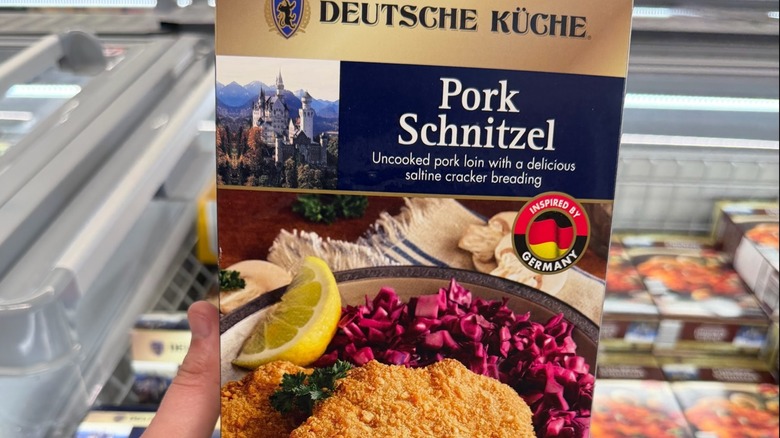
Aldi is a German company, which is why it celebrates German Week multiple times a year, stocking plenty of traditional fresh and frozen foods throughout its stores. However, while some items are authentic German imports, others are German in name only.
Most of Aldi's German food products come under its private-label brand Deutsche Küche — meaning "German cuisine." These items often feature a German flag on the packaging, so it's easy to assume they're the real deal. However, unless the label lists Germany as the country of origin, they're from somewhere else, and may have even been sourced in America.
For example, Aldi's frozen schnitzel is made in the U.S., and although the frozen spätzle is authentically European, it actually comes from France. That said, there are frozen items that are from Germany, like the strudels, Bienenstich almond cake, Black Forest cream cake, and Bavarian pretzels. As it turns out, there's a quick way to tell which products are genuinely German, but it can be tricky to spot if you don't know what to look for. Deutsche Küche products sport a circular graphic of the German flag, but while some feature the text "imported from Germany," others say "inspired by Germany." The labels are identical apart from the wording, so it's easy to miss.
The cooking instructions for Aldi's frozen food can be unclear
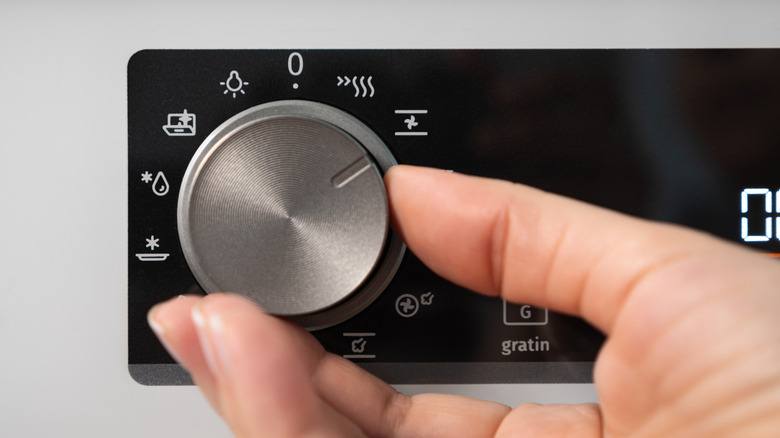
When you're cooking pre-packaged frozen food, it's always helpful to know the recommended cooking times and temperatures, especially if it's not something you've made before. It's pretty standard practice for manufacturers to print cooking instructions on the packaging, but many Aldi customers have complained that these aren't always reliable.
First, there's the issue of instructions lacking information. Take Aldi's seasoned potatoes O'Brien, for example. The package says to cook them in a large skillet for 8 minutes, but there's no mention of temperature. Another common frustration is that many frozen products lack instructions for cooking them in an air fryer, which seems strange considering how many people now favor them over ovens.
There are also examples of cooking instructions that simply don't work. Some customers have noted how despite sticking to the timings and temperatures, their food ended up burned to a crisp — both Deutsche Küche apple strudels and LiveGfree gluten-free chicken breast bites have been called out for this. However, it's worth mentioning that cooking appliances vary, and the instructions that work for one person may not work for another. If you're preparing one of Aldi's frozen products for the first time, it's probably a good idea to monitor it closely while it cooks.
Some customers feel the quality of Aldi's frozen food has declined
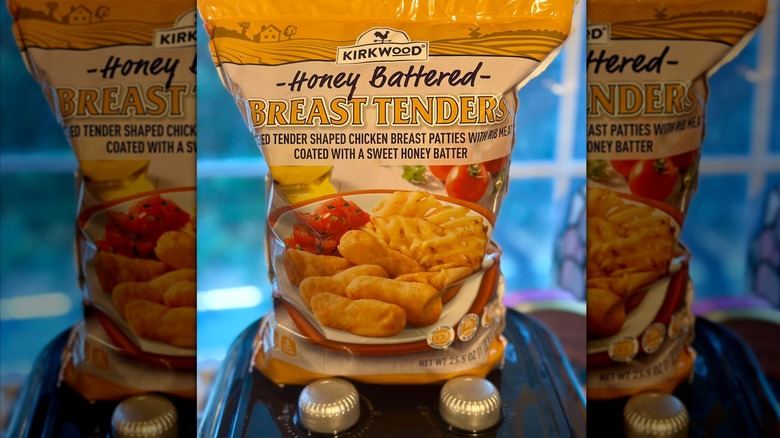
As we mentioned earlier, part of the reason Aldi is able to keep its prices low is that it replaces products when they become too expensive. While it's in the company's best interest to find high-quality replacements, sometimes the new item leaves customers disappointed.
In 2023, for instance, Aldi customers complained about changes to their beloved red bag chicken. Not only were the shape and breading different, but customers claimed it contained a lot more gristle and was far spicier than they were used to. Earlier this year, a 20-year fan of Aldi's Fremont Fish Market cod fillets noted how they've started to find chewy, unpleasant-tasting pieces of cartilage in their fish, and will no longer buy them. Others claim the texture of Kirkwood chicken breast tenders has taken a turn for the worse and that the breading has become greasier. Whether these changes are a result of Aldi switching suppliers or because the suppliers are using lower-quality ingredients to reduce costs is unknown, but both are likely factors.
Once again, this is where Aldi's generous returns policy comes in handy. If you bought the item in-store and you kept the receipt, not only will you get a full refund, but Aldi will provide an alternative free of charge.